So you want to get rid of the unnecessary entries from the Windows registry, here we suggest the free registry cleaners you can use in 2026. Registry cleaners are software or apps designed to remove unnecessary entries. In this article, we have listed the registry cleaner software you can completely download for free. The software on our list are all considered popular options as registry cleaners (free) to help you delete unnecessary entries in your Windows.
Without taking too much time, you can instantly head to the following list of software and find out the one that suits your needs.
What are the benefits of using registry cleaners?
Registry cleaners are software tools designed to scan and optimize the Windows Registry, which is a database that stores settings and configurations for the operating system, hardware, and software applications. While using a registry cleaner can provide some benefits, it’s essential to choose a reliable and reputable tool, as improper handling of the registry can lead to system instability or even failure. Some benefits of using registry cleaners include:
- Improved system performance: By cleaning obsolete, invalid, or corrupt registry entries, registry cleaners can help improve overall system performance and reduce the time it takes for the system to boot up.
- Reduced errors and crashes: Cleaning the registry can help fix errors and prevent system crashes by removing faulty entries and resolving conflicts between different software applications or hardware devices.
- More efficient use of storage space: Registry cleaners can help free up disk space by removing unused, empty, or duplicate registry entries.
- Enhanced privacy: By removing traces of past software installations and activities, registry cleaners can help protect your privacy and ensure that sensitive information is not left behind.
- Easier troubleshooting: A well-organized registry can make it simpler to identify and resolve issues related to software installations, hardware configurations, or system settings.
- Scheduled maintenance: Some registry cleaners offer automatic and scheduled cleaning options, which can help you maintain an optimized registry without manually initiating the process.
How do I choose a registry cleaner?
When choosing a registry cleaner, it’s essential to select a reliable and reputable tool to ensure the safety and efficiency of your system. Here are some factors to consider when selecting a registry cleaner:
- Reputation: Look for well-known and trusted registry cleaners with a proven track record.
- Compatibility: Ensure that the registry cleaner is compatible with your Windows operating system version.
- Ease of use: The interface should be user-friendly and intuitive.
- Backup and restore options: A good registry cleaner should provide the ability to back up your registry before making changes.
- Comprehensive scanning and cleaning: It should detect invalid entries, missing references, and uninstall leftovers.
- Customization and control: Prefer tools that let you review items and exclude certain entries.
- Support and updates: In 2026, tools that still get maintenance tend to be safer for modern Windows changes.
8 Best Free Registry Cleaners To Clean Junk and Registry on Windows PC
1. CCleaner

CCleaner
CCleaner is still one of the most recognizable Windows cleaning tools in 2026. It’s best known for removing junk files (temporary files, cache, logs) and offering a straightforward registry cleaner for basic invalid entries. If you want something that feels simple—scan, review, clean—CCleaner is often the easiest place to start.
It works best when you treat it as a general maintenance tool instead of a “magic speed booster.” Personally, I’ve found the biggest real-world improvements usually come from cleaning storage junk and trimming startup apps, while registry cleaning should be a careful, secondary step with a backup.
Key Features
- Registry Cleaner: Scans common categories like missing shared DLL references, unused file extensions, invalid application paths, and obsolete uninstall entries.
- Registry Backup Prompt: Offers to save a backup before applying fixes, helping you roll back changes.
- Custom Cleaning Controls: Choose exactly what to remove from Windows and third-party apps.
- Guided “Health Check” Style Cleanup: A simplified workflow for beginners.
- Junk File Cleanup: Clears temp files, caches, logs, crash leftovers, recent lists, and other clutter.
- Browser Privacy Cleaning: Clears history, cookies, trackers, sessions, and site data (depending on what you select).
- Startup Manager: Disables unnecessary startup entries to improve boot speed.
- Uninstaller: Helps remove installed programs and reduce leftover clutter.
- Disk Space Analysis: Highlights what’s taking up storage.
- Duplicate File Finder: Helps find duplicates to free space safely.
- Portable Version: Useful for running cleanup without a full install (where available).
Compatibility
- Works on modern Windows PCs, commonly used on Windows 10 and Windows 11.
- Some distributions also provide options for older systems, but in 2026 it’s safest to use the most current compatible build for your OS.
Best for
- Users who want an all-in-one cleaner (junk + privacy + startup) with optional registry cleanup.
- Beginners who want a simple interface and quick maintenance wins.
Pros and Cons
Pros:
- Very easy to use and fast scanning.
- Great for freeing disk space and cleaning common clutter.
- Backup prompt makes registry fixes safer.
- Extra tools (startup, uninstall, duplicate finder) add real value.
Cons:
- Registry cleaning is not a guaranteed performance boost and can be risky if overused.
- Some advanced automation features are in paid editions.
- May show upgrade prompts depending on edition/distribution.
2. JetClean
Best Free Registry Cleaners
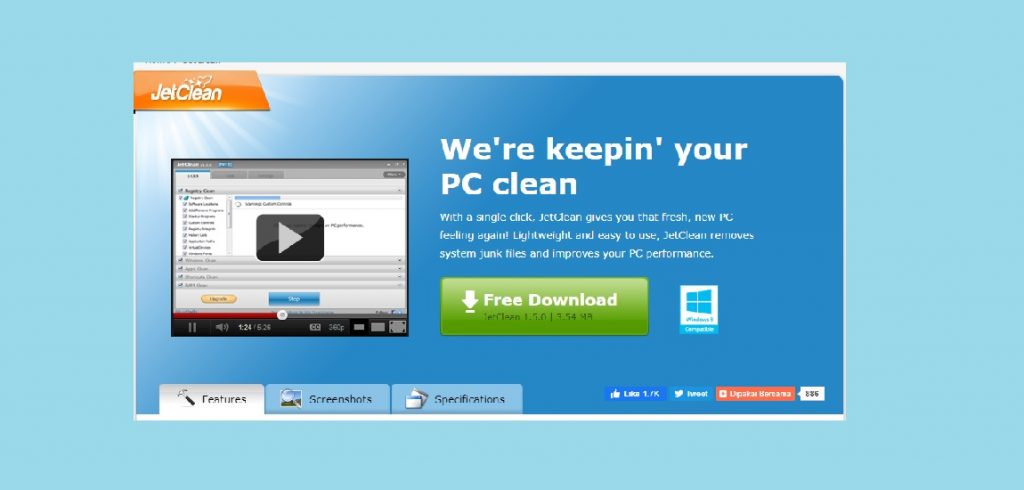
JetClean is a lightweight “toolbox” cleaner that combines registry cleanup with other performance utilities like startup management and uninstall tools. In 2026, it’s mainly attractive if you want something small, fast, and simple—especially on older or lower-spec PCs where you don’t want a heavy suite running in the background.
It’s best treated as a basic maintenance utility. JetClean can be helpful for removing obvious leftovers and clutter, but you should stay conservative with what you delete—especially registry items—because its cleaning rules may not feel as modern as newer products.
Key Features
- Registry Cleanup: Finds invalid keys such as broken paths, leftover uninstall entries, missing references, and obsolete program traces.
- Junk File Removal: Clears temporary files, caches, logs, and other non-essential clutter.
- Privacy Cleanup: Removes browser traces and app usage traces (based on enabled categories).
- Startup Manager: Disables non-essential startup apps to speed up boot time.
- Uninstaller Tool: Helps remove programs and reduce leftover traces.
- Memory/RAM Tool: Offers basic memory freeing for short-term responsiveness.
- Registry Defrag/Compact: Optional registry compaction feature (use sparingly).
- One-Click Cleaning: Quick scan-and-clean workflow for beginners.
- Portable Option: Can be used in portable form (helpful for USB toolkits).
- Toolbox Layout: Groups utilities into simple sections so you don’t hunt for features.
Compatibility
- Often used across Windows 7 to Windows 11, depending on the build, but update cadence can be slower than some competitors.
Best for
- Users who want a fast, lightweight cleaner with extra tools built in.
- Older machines that benefit from quick cleanup and startup trimming.
Pros and Cons
Pros:
- Small footprint and fast scanning.
- Useful “all-in-one toolbox” feel.
- Good for basic cleanup and startup management.
Cons:
- Not known for rapid modernization in 2026; may feel dated in places.
- Registry defrag/compaction isn’t necessary for many users.
- You must review registry results carefully to reduce risk.
3. Wise Registry Cleaner

Wise Registry Cleaner
Wise Registry Cleaner is a registry-focused tool that leans heavily into safety: backup, restore, and controlled cleaning. In 2026, it’s a strong pick if you want a tool that’s not just “delete everything,” but instead tries to help you clean up registry clutter without turning the process into guesswork.
It’s also a practical option for ongoing maintenance because it supports scheduling and can handle multi-user cleanup. If your PC gets lots of software installs/uninstalls (or you manage a shared family PC), those features can keep things tidy without you having to remember to do it manually.
Key Features
- Registry Scan + Cleanup: Finds invalid entries, broken paths, missing references, and uninstall leftovers.
- Automatic Backup: Backs up entries before removal so changes are reversible.
- Restore / Rollback: Lets you undo fixes if you notice problems later.
- System Restore Point Support: Helps add an extra safety layer before major changes (when enabled/available).
- Scheduled Cleaning: Automates maintenance runs.
- Multi-User Registry Cleaning: Cleans across user accounts for shared PCs.
- Custom Scan Areas: Target specific registry sections instead of scanning everything.
- Exclusions: Skip entries containing certain words/paths.
- Registry Optimize/Defrag Option: Optional compaction for specific cases (not required for most users).
- System Tune-Up Tools: Includes reversible optimization toggles.
Compatibility
- Commonly used on Windows 7, 8/8.1, 10, and 11 (varies by version/edition).
Best for
- Users who want a registry-first tool with safety features (backup/restore).
- Shared PCs where multi-user cleanup and scheduling matter.
Pros and Cons
Pros:
- Safety-focused workflow (backup + restore options).
- Scheduling is convenient for hands-free maintenance.
- Good balance between beginner usability and advanced control.
Cons:
- Some features may be tied to paid editions depending on distribution.
- Registry “optimization/defrag” is not necessary for many PCs.
- You still need to review results—no cleaner is perfectly risk-free.
4. Auslogics Registry Cleaner

Auslogics Registry Cleaner
Auslogics Registry Cleaner is designed for users who want a structured “scan → review → fix” approach with clear categories. In 2026, it remains popular because it focuses on common registry clutter problems like uninstall leftovers, outdated software paths, and broken references that can contribute to errors or annoying prompts.
It’s a good choice if you want clarity and control. Instead of pushing you to blindly fix everything, it typically presents problems in a way that helps you understand what’s being removed—useful if you’re trying to be careful (which is the right mindset with the registry).
Key Features
- Registry Error Cleanup: Targets invalid keys, broken references, and leftover traces from removed programs.
- Category Grouping: Organizes found issues so you can decide what to fix.
- Backup Before Fixing: Helps ensure changes can be reversed.
- Restore Function: Roll back if a fix causes unexpected behavior.
- Custom Scan: Scan selected areas for more controlled cleaning.
- One-Click Fix Option: Convenient after you’ve reviewed and trust the results.
- Reports/Logs: See what was detected and removed for troubleshooting.
- Common Targets: App paths, uninstall entries, file associations, shared components, and obsolete keys.
Compatibility
- Typically supports Windows 7, 8/8.1, 10, and 11 (varies by edition/version).
Best for
- People who want a clear, category-based registry cleaner.
- Fixing leftover traces after uninstalling many apps over time.
Pros and Cons
Pros:
- Clear presentation that encourages safer decisions.
- Backup/restore helps reduce risk.
- Good for uninstall leftovers and common invalid references.
Cons:
- Installers may promote other products; you must opt out carefully.
- Some deeper optimization features may be tied to paid bundles.
- Won’t fix hardware issues or replace proper troubleshooting.
5. Registry Repair

Registry Repair
Registry Repair is a straightforward registry cleaning utility that focuses on scanning multiple registry areas and fixing common error types. In 2026, it’s appealing if you want a simpler tool that doesn’t feel like a massive suite—just scan, review, repair, and keep moving.
It can be a good fit for routine cleanup after lots of installs/uninstalls, especially when you want something that emphasizes backup safety. Like any registry tool, it’s best used calmly: fix obvious invalid entries, don’t over-clean, and keep your rollback options available.
Key Features
- Multi-Area Registry Scanning: Checks multiple registry sections to find common problems.
- Error-Type Detection: Identifies invalid entries, broken references, and other typical registry issues.
- Automatic Backup: Creates backups before applying repairs.
- Whitelist/Safe Keys Options: Helps reduce accidental removal of important keys (where available).
- Fast Scan Mode: Quick scanning for routine maintenance.
- Detailed Results View: Shows detected items so you can review before repair.
- Simple Workflow: Designed for users who want minimal complexity.
Compatibility
- Commonly used on Windows 7, 8/8.1, 10, and 11 (varies by version).
Best for
- Users who want a simple registry repair tool with backup safety.
- Routine maintenance after software changes.
Pros and Cons
Pros:
- Simple to understand and quick to run.
- Backup-first approach makes it safer than “no backup” tools.
- Good for basic registry housekeeping.
Cons:
- Fewer “all-in-one” extras than some competitors.
- Registry cleaning still requires careful review.
- May not feel as modern as newer maintenance suites.
6. AML Registry Cleaner

AML registry Cleaner
AML Free Registry Cleaner is an older-style registry tool that still shows up in “free cleaner” lists because it’s lightweight and includes extra utilities like startup management and junk cleanup. In 2026, it can still work for basic tasks, but it’s best approached as a legacy utility: be more careful, don’t rush, and always make a backup yourself if the tool doesn’t do it automatically.
It can be useful if you like the idea of a registry cleaner that also helps you control startup programs (one of the most common real causes of “slow boot”). Just keep expectations realistic: older tools may not fully understand modern app footprints, and you should avoid removing anything you don’t recognize.
Key Features
- Registry Cleaning: Removes invalid keys, broken references, and obsolete entries.
- Startup Manager: Lets you view and disable startup programs to improve boot speed.
- Junk File Removal: Clears disposable file types (and may allow adding custom file types).
- Filters/Exclusions: Helps avoid cleaning specific keys/areas when configured.
- Registry Search: Search registry entries by keywords for troubleshooting.
- Program Association View: Helps relate entries to apps for safer decision-making (where available).
- Uninstaller Utility: Can assist with removing programs and traces (where available).
Compatibility
- Often runs on a wide range of Windows versions, but as a legacy tool it may be best suited to older setups.
Best for
- Older PCs where you want a lightweight tool and you’re comfortable being cautious.
- Users who specifically want startup management + basic registry cleanup in one place.
Pros and Cons
Pros:
- Lightweight and simple.
- Includes startup management (high-impact for boot speed).
- Useful for basic housekeeping when used carefully.
Cons:
- Legacy feel; may not be ideal for modern Windows app footprints.
- May require manual backups depending on configuration/version.
- Not the best choice if you want frequent modern updates.
7. SlimCleaner Free

SlimCleaner Free
SlimCleaner Free is more of a general PC cleanup and optimization utility than a registry-only tool. It combines junk cleanup, startup management, and extra utilities in one interface. In 2026, this is a decent option if your goal is an “all-in-one maintenance dashboard” rather than a specialized registry repair application.
It’s most useful when you want one program that can help you tidy up clutter and manage everyday performance factors. If you mainly care about safe registry cleaning with strong backup workflows, you may prefer a registry-focused tool instead—but if you like toolboxes, SlimCleaner’s broader feature set can be convenient.
Key Features
- Registry Cleaning: Scans for broken entries and leftover registry traces (use with caution and review results).
- Junk Cleanup: Removes temporary files, caches, and other clutter.
- Startup Manager: Disable/restore startup items to improve boot time.
- Software Updater: Checks installed programs for updates (helps security and stability).
- Duplicate Finder: Finds duplicates to free storage.
- Optimization Tools: Includes additional utilities for system maintenance (varies by edition).
- Browser Cleaning: Helps remove common browsing traces and clutter.
- Uninstaller: Helps remove programs and reduce leftovers.
Compatibility
- Commonly used on Windows 7, 8/8.1, 10, and 11 depending on version.
Best for
- Users who want a general cleanup toolbox with multiple utilities in one place.
- Beginner-friendly maintenance (junk cleanup + startup trimming).
Pros and Cons
Pros:
- All-in-one toolbox with multiple utilities.
- Useful startup manager and cleanup features.
- Good for routine, general maintenance.
Cons:
- Not a dedicated registry specialist tool.
- Some features may be less effective than standalone best-in-class tools.
- Registry cleaning still requires review and caution.
8. Kingsoft PC Doctor

Kingsoft PC Doctor
Kingsoft PC Doctor is a legacy-style PC utility that includes cleaning and optimization features (including registry cleaning) plus extra system utilities. In 2026, it’s mainly for users who like older “do-it-all” maintenance programs and don’t mind a dated interface.
Because it’s an older tool, it’s important to be extra careful on modern Windows installs. If you use it, stick to the safer cleanup options and always ensure you can undo changes. If your main goal is modern compatibility and actively maintained cleaning rules, you’ll typically be better served by a more current utility.
Key Features
- Registry Cleaner: Finds invalid keys, broken links, and old program traces.
- Junk File Cleanup: Removes temporary files, internet clutter, and system leftovers.
- Startup Booster: Helps disable startup items to improve boot speed.
- Privacy Cleaner: Clears traces of browsing and certain usage history.
- One-Click Fix: Quick scan that bundles common maintenance checks.
- Problem Details: Shows what it detects so you can understand what’s being changed.
- Backup Option: Where supported/enabled, helps you roll back changes.
Compatibility
- Often associated with older Windows generations; compatibility on newer Windows versions can vary.
Best for
- Users who want a legacy “PC doctor” toolbox and are comfortable being cautious.
- Basic cleanup on older systems where modern tools may feel heavier.
Pros and Cons
Pros:
- Multiple utilities in one package.
- Simple workflows like one-click scanning.
- Can be useful for basic housekeeping on older PCs.
Cons:
- Legacy nature means modern Windows/app compatibility may be limited.
- Dated UI and fewer modern maintenance conveniences.
- Not ideal if you want actively updated cleaning logic.
Conclusion
Finally, you can always expect to clean unnecessary entries out of the Windows Registry using the proper free registry cleaner. In 2026, the safest strategy is simple: choose one reputable tool, back up first, clean conservatively, and don’t chase “zero errors”. One more human tip: if you run a registry cleaner and your PC already feels fine, stop there—more cleaning isn’t always better.
FAQS: Best Free Registry Cleaners
What are registry cleaners?
Registry cleaners are software applications designed to scan and clean up the Windows registry, which is a database that stores information and settings for the operating system, applications, and hardware installed on a computer.
How do registry cleaners work?
Registry cleaners typically scan the Windows registry for entries that are no longer needed or could cause problems, such as leftovers from uninstalled programs or invalid file paths. After scanning, the tool lists the issues and lets you choose whether to delete or repair them. Many tools offer backups so changes can be reversed if needed.
Can registry cleaners clean junk files on my PC?
Some registry cleaners include junk file cleanup features, but registry cleaning and junk file cleaning are different tasks. Junk cleanup targets temporary files, caches, and logs, while registry cleaning targets invalid or leftover registry entries. Many all-in-one tools do both.
You May Also Like
 Best Software
Top 10 Free & Open Source Inventory Management Software in 2026
 Best Software
10 Best Inventory Control Software for Small Business in 2026
 Best Software
12 Best AI Chatbot Software To Increase Your Conversions In 2026
 Best Software
23 Best Free Avatar Creator Sites Online To Create Your Own Avatars
 SaaS
SaaS11 Best VoIP Call Center Solutions for Small Business 2026 (Comparison Guide)
 Best Software
6 Best Software to Record Mouse and Keyboard Actions and Automate Repetitive Tasks
 Best Software
Jira vs Hive: Which Project Management Tool is Right for Your Team?
 Best Software
12 Top Plumbing Management Software Solutions for 2026
 Best Software