Two-factor authentication (2FA) on Facebook adds extra protection to your account by needing two types of verification for login. This helps keep your Facebook account safe from hackers and unauthorized access, even if someone has your password.
Enabling two-factor authentication on Facebook takes under 5 minutes. It greatly boosts your account security. Facebook offers several 2FA methods, like text messages, authentication apps, and security keys. With cyber attacks up by 38% in 2024, securing your social media accounts is more crucial than ever.
Setting up 2FA on Facebook is free and works on all devices: smartphones, tablets, and computers. After you enable it, you’ll need your password and a second verification method to access your account. This easy step can stop 99.9% of automated attacks on your Facebook profile.
What is Two Factor Authentication on Facebook?
Two-factor authentication (2FA) on Facebook adds extra security to your account. It needs two types of information to log in. The first is something you know, like your password. The second is something you have, such as your phone or an authentication app.
When you enable 2FA, Facebook will ask for your password plus a special code. This code changes every 30-60 seconds. You can get it from a text message, an authentication app, or a physical security key. Even if someone steals your password, they still can’t access your account without this second step.
How Facebook Two Factor Authentication Works
Facebook’s 2FA system creates a secure login process that happens in two steps. First, you enter your email or phone number and password like normal. Then, Facebook asks for a verification code that only you can access through your chosen second factor method.
The verification codes are time-sensitive and can only be used once. This means hackers cannot reuse old codes to break into your account. Facebook generates new codes every 30 seconds for authentication apps or sends fresh codes via text message each time you log in.
Why You Need Two-Factor Authentication on Facebook
Facebook accounts hold personal information, photos, messages, and links to friends and family. Hackers aim for these accounts to steal data, impersonate users, or spread malware through fake posts.
Without two-factor authentication (2FA), your account is at risk if your password is compromised. This can happen through data breaches, phishing, or guessing. In 2023, Facebook reported that over 50 million accounts were compromised in security incidents. Most attacks were blocked by 2FA.
Common Facebook Security Threats
Password Attacks: Hackers use stolen passwords from other websites to try accessing Facebook accounts. Many people reuse passwords across multiple sites, making this attack method very effective.
Phishing Scams: Fake emails and websites trick users into entering their Facebook login credentials. These convincing fakes can fool even careful users.
Social Engineering: Scammers contact users pretending to be Facebook support or friends to trick them into revealing login information.
Public Wi-Fi Risks: Using Facebook on unsecured public networks can expose your login credentials to nearby hackers using network monitoring tools.
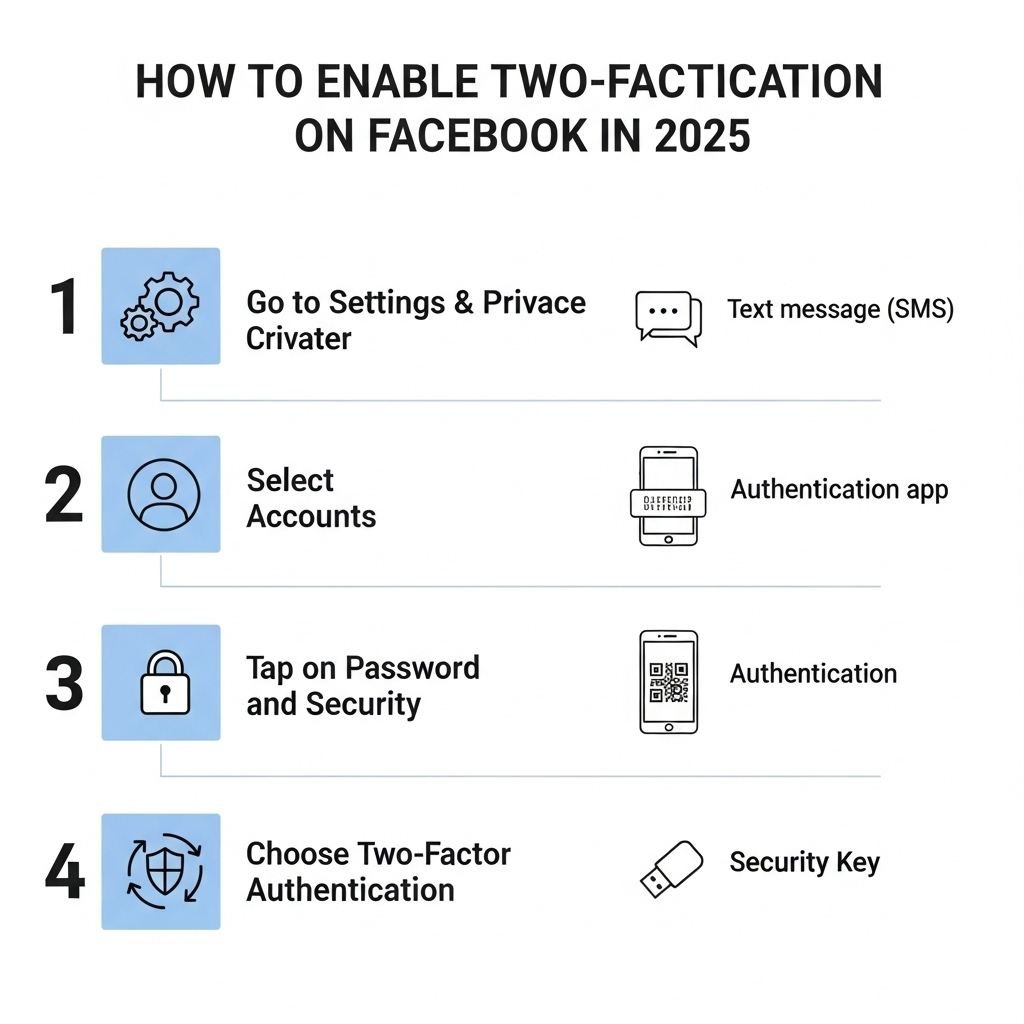
Step-by-Step Guide: Enable 2FA on Facebook Mobile App
Setting up two-factor authentication using the Facebook mobile app is the easiest method for most users. The app offers a clear interface and guides you through each step with helpful prompts.
For iPhone Users
Step 1: Open Facebook App Launch the Facebook app on your iPhone and make sure you’re logged into your account. The app should be updated to the latest version for the best security features.
Step 2: Access Settings Menu Tap the menu button (three horizontal lines) in the bottom right corner of your screen. Scroll down and tap “Settings & Privacy,” then select “Settings” from the dropdown menu.
Step 3: Navigate to Security Settings Look for “Security and Login” in the settings menu and tap it. This section contains all the security options for your Facebook account including password settings and login alerts.
Step 4: Find Two-Factor Authentication Scroll down until you see “Two-Factor Authentication” and tap on it. Facebook will show you the current status of 2FA on your account and available setup options.
Step 5: Choose Authentication Method Select your preferred 2FA method from the available options. Facebook offers authentication apps, text messages, and security keys. Authentication apps are generally the most secure option.
Step 6: Set Up Your Chosen Method Follow the on-screen instructions to complete setup for your selected method. This may involve scanning a QR code, entering your phone number, or connecting a security key.
For Android Users
Step 1: Open Facebook App Open the Facebook app on your Android device and ensure you’re signed in. Check that your app is updated to access the latest security features.
Step 2: Access Menu Options Tap the menu icon (three horizontal lines) typically located in the top right corner. Navigate to “Settings & Privacy” and then select “Settings.”
Step 3: Security and Login Section Find and tap “Security and Login” in the settings list. This area manages all login-related security features for your account.
Step 4: Two-Factor Authentication Setup Locate “Two-Factor Authentication” in the security options and tap it. You’ll see current 2FA status and setup options available for your account.
Step 5: Select Verification Method Choose between authentication apps, SMS text messages, or security keys based on your preference and available devices.
Step 6: Complete Setup Process Follow Facebook’s guided setup process for your chosen method. Each method has specific steps, but Facebook provides clear instructions throughout.
How to Set Up 2FA on Facebook Desktop
Desktop setup offers a larger screen that makes it easier to see QR codes and follow detailed instructions. The desktop interface also provides more detailed explanations of each security option.
Using Facebook Website
Step 1: Log Into Facebook Open your web browser and go to facebook.com. Sign in with your current username and password to access your account.
Step 2: Access Account Settings Click the small downward arrow in the top right corner of the Facebook page. Select “Settings & Privacy” from the dropdown menu, then click “Settings.”
Step 3: Security and Login Tab Look for “Security and Login” in the left sidebar menu. Click on it to access all security-related settings for your Facebook account.
Step 4: Two-Factor Authentication Section Scroll down to find the “Two-Factor Authentication” section. Click “Edit” next to this option to begin the setup process.
Step 5: Choose Authentication Method Facebook will present you with different 2FA options. Select the method that works best for your situation and available devices.
Step 6: Follow Setup Instructions Complete the setup process by following Facebook’s step-by-step instructions. The desktop interface provides detailed explanations for each step.
Facebook 2FA Methods: Which One to Choose
Facebook has three main types of two-factor authentication. Each offers different security levels and convenience. Knowing these options helps you pick the best method for your needs.
Authentication Apps (Most Secure)
Authentication apps like Google Authenticator, Instagram, Microsoft Authenticator, and Authy create codes that change every 30 seconds. These apps don’t need an internet connection. They are the most secure method for two-factor authentication (2FA).
Advantages:
- Works without cellular service or internet
- More secure than SMS text messages
- Free to use with any compatible app
- Cannot be intercepted by hackers
Disadvantages:
- Requires installing a separate app
- Codes expire quickly (30 seconds)
- Can be lost if phone is damaged or replaced
SMS Text Messages (Most Convenient)
Text message 2FA sends verification codes directly to your phone via SMS. This method is convenient because most people always have their phone with them, and no additional apps are required.
Advantages:
- No additional apps needed
- Works on any phone that receives texts
- Easy to set up and use
- Familiar to most users
Disadvantages:
- Less secure than authentication apps
- Requires cellular service to receive codes
- Can be intercepted by sophisticated hackers
- May have delays in message delivery
Security Keys (Highest Security)
Physical security keys are small devices that plug into your computer’s USB port or connect via Bluetooth. These provide the highest level of security but require purchasing additional hardware.
Advantages:
- Highest security level available
- Cannot be hacked remotely
- Works without internet or cellular service
- Protects against phishing attacks
Disadvantages:
- Costs money to purchase keys
- Can be lost or forgotten
- Not compatible with all devices
- Requires carrying additional hardware
Setting Up Authentication Apps for Facebook
Authentication apps provide an excellent balance of security and convenience for Facebook 2FA. These apps work offline and generate unique codes that hackers cannot intercept.
Recommended Authentication Apps
Google Authenticator: Free app available for iPhone and Android devices. Simple interface with reliable code generation. Works well for users who only need basic authentication features.
Microsoft Authenticator: Offers additional features like backup and sync across devices. Good choice for users who use other Microsoft services.
Authy: Provides cloud backup and sync features that make it easier to recover access if you lose your phone. Offers desktop versions for computers.
Setting Up Google Authenticator
Step 1: Download the App Install Google Authenticator from the App Store (iPhone) or Google Play Store (Android). The app is free and does not require account creation.
Step 2: Begin Facebook Setup Go to Facebook’s two-factor authentication settings and select “Authentication App” as your preferred method.
Step 3: Scan QR Code Open Google Authenticator and tap the “+” button to add a new account. Use your phone’s camera to scan the QR code displayed on Facebook.
Step 4: Enter Verification Code Google Authenticator will generate a 6-digit code for Facebook. Enter this code in the Facebook setup page to confirm the connection.
Step 5: Save Backup Codes Facebook will provide backup codes that you can use if your phone is unavailable. Write these codes down and store them in a secure location.
Configuring SMS Text Message 2FA
SMS text message authentication is the most straightforward 2FA method to set up. This option works well for users who prefer simple solutions and always have their phone available.
SMS Setup Process
Step 1: Access 2FA Settings Go to Facebook’s two-factor authentication settings. You can do this on the mobile app or the desktop site. Step 2: Select Text Message Option Pick “Text Message (SMS)” as your preferred method for authentication.
Step 3: Enter Phone Number Provide your mobile phone number where you want to receive verification codes. Make sure to enter the correct number with proper country code.
Step 4: Verify Phone Number Facebook will send a test code to your phone number. Enter this code to confirm that your phone can receive messages from Facebook.
Step 5: Complete Setup Confirm your settings and save the changes. Facebook will now send verification codes to your phone for future logins.
SMS Security Considerations
While SMS authentication is convenient, it has some security limitations. Text messages can be intercepted through SIM swapping attacks where hackers transfer your phone number to their device.
Phone carriers sometimes experience delays in message delivery, which can prevent you from logging in when needed. Consider having a backup authentication method available in case SMS fails.
International travelers may experience issues receiving SMS codes when roaming on foreign networks. Authentication apps work better for frequent travelers.
Using Security Keys with Facebook
Security keys provide the strongest protection against account takeover attacks. These physical devices create cryptographic signatures that prove your identity without transmitting codes that can be stolen.
Supported Security Key Types
USB-A Keys: Traditional USB keys that plug directly into computer USB ports. Work well for desktop and laptop computers with standard USB connections.
USB-C Keys: Newer keys designed for modern devices with USB-C ports. Compatible with newer laptops, tablets, and some smartphones.
NFC Keys: Near-field communication keys that work by tapping them against compatible devices. Good for smartphones and tablets with NFC capability.
Bluetooth Keys: Wireless keys that connect via Bluetooth. Work with a wider range of devices but require battery power and pairing setup.
Setting Up Security Keys
Step 1: Purchase Compatible Key Buy a FIDO2-compatible security key from trusted brands like YubiKey, Google Titan, or Feitian. Prices usually range from $25 to $50.
Step 2: Access Facebook Security Settings Go to Facebook’s two-factor authentication settings. Choose “Security Key” as your authentication method.
Step 3: Register Your Key Follow Facebook’s steps to register your security key. This often means plugging it in and pressing its button when asked.
Step 4: Test the Key Facebook will prompt you to test the key by logging in. This confirms the key is registered and working well.
Step 5: Register Backup Key Think about registering a second security key as a backup. This helps if you lose or damage your main key.
Managing Recovery Codes and Backup Options
Recovery codes serve as backup access methods when your primary 2FA method is unavailable. These codes are essential for maintaining access to your Facebook account.
Generating Recovery Codes
Facebook automatically generates recovery codes when you enable two-factor authentication. Each code can only be used once, and Facebook provides 10 codes initially. You can generate new codes at any time through your security settings.
Accessing Recovery Codes:
- Go to Facebook Security Settings
- Find Two-Factor Authentication section
- Click “Recovery Codes” option
- Generate new codes if needed
Storing Recovery Codes Safely
Physical Storage: Write codes on paper and store in a secure location like a safe or locked drawer. Keep copies in multiple secure locations.
Password Manager: Store codes in a reputable password manager like LastPass, 1Password, or Bitwarden. This keeps them encrypted and accessible from multiple devices.
Secure Digital Storage: Save codes in encrypted files or secure note-taking apps. Avoid storing in plain text documents or regular cloud storage.
When to Use Recovery Codes
Recovery codes should only be used when your normal 2FA method is unavailable. Common situations include lost phones, broken authentication apps, or traveling without your security key.
Each recovery code works only once, so generate new codes after using any backup codes. Facebook will warn you when you’re running low on unused recovery codes.
Troubleshooting Common 2FA Issues
Two-factor authentication problems can prevent you from accessing your Facebook account. Understanding common issues and solutions helps you resolve problems quickly.
Authentication App Problems
Codes Not Working: Check that your phone’s time and date are set correctly. Authentication apps rely on accurate time to generate valid codes.
App Deleted Accidentally: Use recovery codes to log in, then set up authentication app again. Consider using apps with cloud backup features to prevent future data loss.
Phone Replaced or Damaged: Recovery codes provide access when your authentication device is unavailable. Always keep current recovery codes in a secure location.
SMS Text Message Issues
Not Receiving Codes: Check that your phone has cellular service and can receive text messages from other sources. Contact your phone carrier if problems persist.
Delayed Messages: SMS delivery can be delayed during high network traffic. Wait a few minutes before requesting a new code.
Wrong Phone Number: Update your phone number in Facebook security settings if you’ve changed numbers. Verify the new number before removing the old one.
General Login Problems
Locked Out Completely: Use Facebook’s account recovery process if you cannot access any 2FA methods. This process may require identity verification.
Multiple Failed Attempts: Facebook may temporarily lock your account after several failed login attempts. Wait 24 hours before trying again.
Browser or App Issues: Clear browser cache and cookies, or update the Facebook app to resolve technical problems with 2FA prompts.
Best Practices for Facebook 2FA Security
Following security best practices maximizes the protection that two-factor authentication provides for your Facebook account.
Multiple Authentication Methods
Set up more than one 2FA method to ensure you can always access your account. Use an authentication app as your primary method with SMS as backup, or register multiple security keys.
Having backup methods prevents lockouts when your primary authentication method fails. This redundancy is especially important for business accounts or accounts with important information.
Regular Security Reviews
Check your Facebook security settings monthly to ensure all information is current. Review active sessions, update phone numbers, and regenerate recovery codes regularly.
Remove old or unused authentication methods to reduce potential security risks. Keep only the methods you actively use and can access reliably.
Keep Recovery Information Updated
Update your recovery email address and phone number whenever you change contact information. These details are crucial for account recovery if you lose access to all 2FA methods.
Test your recovery methods occasionally to ensure they work when needed. Send yourself test messages or emails to verify you can receive recovery information.
Monitor Account Activity
Enable Facebook login alerts to receive notifications when someone accesses your account from a new device or location. These alerts help you detect unauthorized access attempts.
Review your active sessions regularly and log out devices you no longer use. This reduces the number of places where your account remains logged in.
Facebook 2FA for Business Accounts
Business Facebook accounts require enhanced security measures due to their higher value and visibility. Two-factor authentication is essential for protecting business pages, advertising accounts, and customer data.
Business Account Security Requirements
Many businesses must meet specific security standards for customer data protection. Facebook 2FA helps satisfy compliance requirements for industries like healthcare, finance, and e-commerce.
Business accounts often have multiple administrators and team members with access. Each person should have their own account with 2FA enabled rather than sharing login credentials.
Team Management with 2FA
Individual Accounts: Each team member should have their own Facebook account with 2FA enabled. Shared accounts create security risks and make it difficult to track who performed specific actions.
Role-Based Access: Assign appropriate permission levels to team members based on their job responsibilities. Not everyone needs full administrative access to business accounts.
Regular Access Reviews: Audit who has access to business accounts monthly. Remove access for former employees and update permissions when roles change.
Business Account Recovery Planning
Develop procedures for account recovery when team members leave or lose access to their authentication methods. Designate multiple administrators who can maintain account access.
Keep business recovery codes in secure business storage systems rather than personal devices. Use business password managers or secure document storage systems.
Document 2FA procedures in your business security policies. Train team members on proper authentication practices and recovery procedures.
Privacy and Security Considerations
Two-factor authentication improves Facebook security but also raises privacy considerations about data collection and sharing.
Data Collection by 2FA Methods
Phone Numbers: Facebook collects phone numbers used for SMS authentication. This information may be used for advertising targeting and friend suggestions.
Authentication Apps: These apps typically don’t share additional data with Facebook beyond verification codes. Choose apps with strong privacy policies.
Security Keys: Physical keys provide the most privacy since they don’t transmit personal information to Facebook or third parties.
Balancing Security and Privacy
Consider using authentication apps or security keys instead of SMS to minimize data sharing with Facebook. These methods provide strong security without sharing additional personal information.
Review Facebook’s privacy settings to control how your contact information is used for advertising and friend suggestions. You can opt out of some data uses while maintaining 2FA protection.
International Privacy Considerations
Different countries have varying privacy laws that affect how Facebook handles 2FA data. European users have additional privacy protections under GDPR regulations.
Some countries restrict or monitor SMS messages, which could affect SMS-based 2FA reliability. Consider alternative methods if you live in or travel to countries with telecommunications restrictions.
Frequently Asked Questions
Does enabling two-factor authentication slow down Facebook login?
No, two-factor authentication adds only 10-15 seconds to the login process. Most users find this small delay worthwhile for the significant security improvement. Authentication apps generate codes quickly, and modern smartphones make the process very smooth.
Can I use the same authentication app for multiple Facebook accounts?
Yes, authentication apps can manage codes for multiple Facebook accounts and other services. Each account gets its own unique code that updates every 30 seconds. This makes authentication apps convenient for managing multiple social media accounts securely.
What happens if I lose my phone with the authentication app?
Use your recovery codes to log into Facebook, then set up 2FA again with a new device. This is why keeping recovery codes in a secure location separate from your phone is important. You can then re-register your authentication app or switch to a different 2FA method.
Is SMS two-factor authentication secure enough for Facebook?
SMS authentication is better than no 2FA, but authentication apps provide stronger security. SMS messages can be intercepted through SIM swapping attacks, while authentication apps generate codes locally on your device. For most users, SMS provides adequate protection, but high-value accounts should use authentication apps.
Can hackers bypass Facebook two-factor authentication?
Advanced hackers can sometimes bypass 2FA through sophisticated phishing attacks or social engineering, but these attacks are rare and difficult. Two-factor authentication prevents 99.9% of automated attacks and significantly reduces successful account compromises. The security benefit far outweighs the small remaining risk.
Do I need different 2FA methods for personal and business Facebook accounts?
Using the same 2FA method for personal and business accounts is acceptable, but business accounts may benefit from higher security methods. Consider using security keys for business accounts while using authentication apps for personal accounts. The key is ensuring both accounts have some form of 2FA enabled.
How often should I update my Facebook recovery codes?
Generate new recovery codes every 6-12 months or after using any codes for account access. Facebook provides 10 codes initially, and you should generate new ones when you have fewer than 5 unused codes remaining. Regular updates ensure you always have backup access available.
Will two-factor authentication work when traveling internationally?
Authentication apps work worldwide without internet connectivity, making them ideal for international travel. SMS codes may have delays or additional charges when roaming internationally. Security keys work globally but require compatible devices. Plan your 2FA method based on your travel patterns.
Conclusion
Activating two-factor authentication (2FA) on Facebook is an important security measure for your account in 2025. Cyber attacks are increasingly frequent and complex. The extra protection from 2FA helps keep most unauthorized users out of your profile.
Setting it up takes less than 5 minutes, no matter the method you choose. Authentication apps provide the best mix of security and ease for most users. SMS is a simple option for those who want something basic. Security keys offer the highest protection for users needing top security.
Keep in mind that 2FA isn’t foolproof, but it greatly boosts your account security with little hassle. This small extra step at login stops most account takeover attempts. You’ll feel more secure knowing your personal info, photos, and messages are better protected.
Enable two-factor authentication on your Facebook account today. Your future self will thank you for this easy step to protect your digital identity and personal info from cybercriminals.
You May Also Like
 Cyber Security
Can Ransomware Infect iCloud? What Mac and iPhone Users Need to Know
 Data Security & Privacy
Two-Factor Authentication (2FA): How It Works, Which Method to Use, and How to Stay Safe
 Data Security & Privacy
Is a Password Manager Safe? How to Use One Securely
 Data Security & Privacy
19 Best Email Service Providers for Personal and Business Use
 WordPress
12 Best Cheap SSL Certificate Providers To Secure Your Website
 Data Security & Privacy
Is Password Protection the Same as Encryption? Differences in Data Security
 Data Security & Privacy
How Your Digital Footprint Can Make or Break Your Career Opportunities
 Data Security & Privacy
What Is End-to-End Encryption? Your Complete Guide to Secure Communication
 Data Security & Privacy