If you’ve been searching for the best free typing programs, you’re in the right place. I’ve personally tested every tool on this list, and I can tell you firsthand — the right typing program changes everything. Whether you want to build raw WPM speed, nail your touch typing technique, or stop hunting and pecking every time you open a Google Doc, there’s a free tool here that fits.
These programs come as both downloadable software and browser-based platforms you can open right now, no installation required. Some are built for young children. Others are built for developers, office workers, or competitive typists. I’ve used them all, and I’ll tell you exactly what each one is genuinely good for — and where it falls short.
Typing programs sharpen your keyboard skills in ways that passive use never will. The best free typing software tools walk you through structured lessons, timed tests, and finger-placement drills. Students, remote workers, coders, and anyone who spends hours at a keyboard can use them to push their typing speed and accuracy to a new ceiling. With consistent daily practice, you go from slow, two-finger typing to confident, eyes-on-screen touch typing.
Here’s the thing about typing speed that most people overlook: research shows that increasing your WPM from 40 to 60 can save up to 2 hours per workday for knowledge workers. That’s real time back in your day. Free typing programs get you there step by step — starting with home row basics, moving through full keyboard coverage, then drilling speed and accuracy together. You watch your words-per-minute climb, your error rate drop, and your confidence at the keyboard grow.
What Are Typing Programs and Why Do I Need One?
Typing programs are structured training tools that teach keyboard skills from the ground up. They give you sequenced lessons, targeted exercises, and real-time feedback. The best free typing software teaches touch typing — meaning you type without looking at the keys. That builds muscle memory and eliminates the cognitive load of searching for letters, so you can focus your mental energy on what you’re actually writing.
Do you need typing skills everywhere? Whether you’re writing essays, working through emails, filling out forms, or building a project brief, your typing speed is either helping or slowing you down. According to Typing Speed Hub, the average adult types around 40 WPM — while office workers and students should realistically be hitting 45–60 WPM, and writers or heavy keyboard users benefit from 60–80 WPM. Free typing programs close that gap, and they show you measurable progress tracking every session.
How to Pick the Right Free Typing Program for You
Choosing the right typing program comes down to three things: your current level, your learning style, and your goal. Are you a total beginner who needs structured lessons on finger placement? Are you an intermediate typist who wants to break through a speed plateau? Or are you a developer looking to type code faster? Each situation calls for a different tool.
Look for programs that give you adaptive lessons, real-time error feedback, and visible progress metrics. If you get bored easily, pick one with game elements — typing games are surprisingly effective at reinforcing muscle memory through repetition. If you’re more data-driven, look for platforms with detailed WPM charts and accuracy breakdowns. I’d recommend trying two or three before committing — most are completely free, so nothing is stopping you from finding the best personal fit.
Top 17 Best Free Typing Programs Online
1. TypingClub
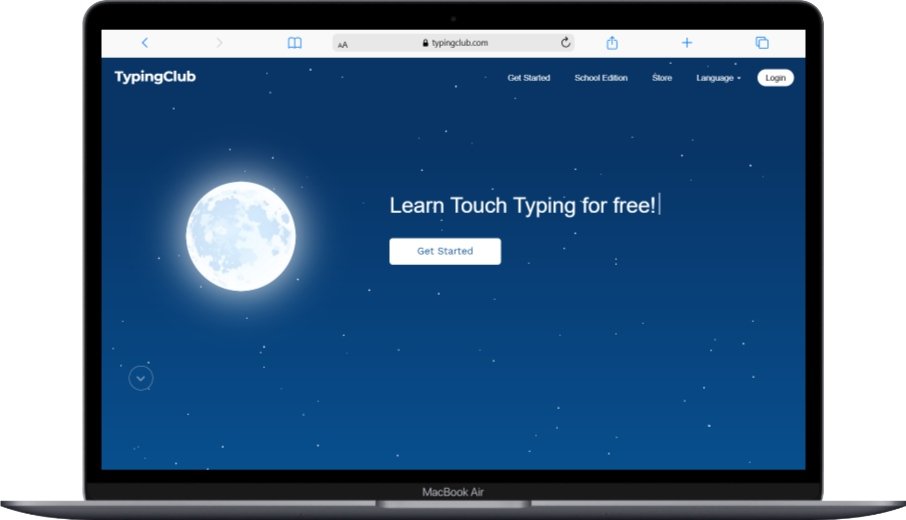
TypingClub is the one I recommend first to anyone starting from zero. It’s one of the most complete free typing education platforms you’ll find, and it’s a Google for Education Partner — which tells you something about the level of quality behind it. The program now walks you through over 650 carefully sequenced lessons, starting with proper finger placement on the home row and building up through every key, number, and symbol on the board.
What I appreciate most is that TypingClub doesn’t just show you text to type — it uses a full visual hand guide to show exactly which finger hits which key, voice-over that reads each word aloud as you type it, and a Typing Playback feature that lets you replay your own past sessions and spot where your rhythm breaks down. That kind of forensic feedback is genuinely rare in a free tool. The platform also has achievements, badges, and a full suite of typing games built in, which keeps the repetitive grind of skill-building from feeling like a chore.
Schools use it at scale because of the robust teacher dashboard and class tracking tools. But for individual learners working on their own — which is exactly how I use it — the self-paced structure works just as well. You pick up where you left off, watch your WPM climb, and adjust your practice based on what the stats tell you.
Features:
- 650+ structured lessons with hand posture guides
- Voice-over support and Typing Playback
- Badges, stars, and skill levels
- Full accessibility features built in
- 100% browser-based — no install needed
- Google for Education Partner
Pros:
- The most thorough free curriculum available
- Visual guides remove all guesswork on technique
- Works for every age and skill level
- Progress tracking is granular and honest
- Huge amount of free content
Cons:
- Ad-free experience and extra games require a Premium subscription
- Can feel repetitive during early lessons
- Needs a reliable internet connection
Best For: Anyone starting from scratch who wants a complete, structured touch typing education.
2. Keybr
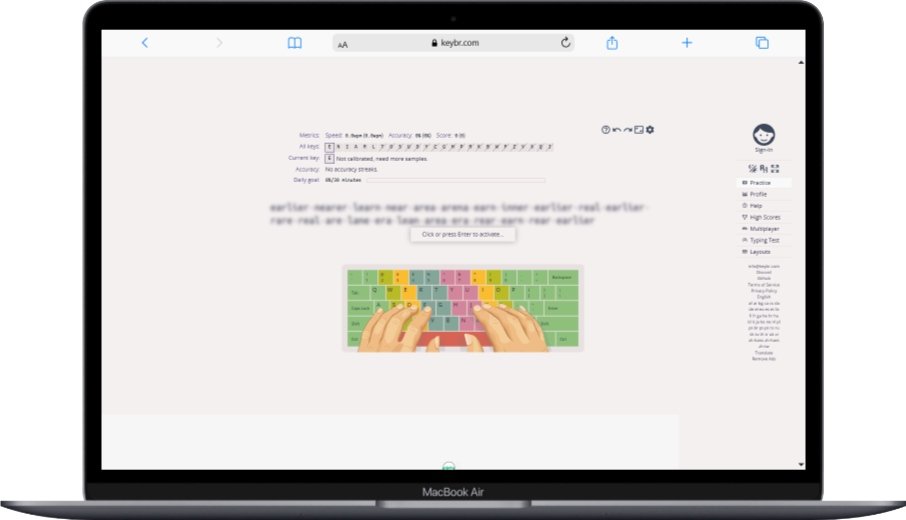
Keybr is what I reach for when I want to tackle a specific weakness rather than go through a full course. Its algorithm watches how you type in real time, identifies which letters or bigrams give you the most trouble, and generates new lessons targeting exactly those gaps. This adaptive approach makes your practice time far more efficient than any fixed curriculum — you’re not drilling keys you’ve already mastered; you’re attacking the ones that are actually slowing you down.
The interface is clean to the point of being almost spartan, which I personally like. There are no cartoon animals, no leaderboards shouting at you — just a clean text input field, real-time stats showing your speed and accuracy, and a running graph of your improvement over time. Keybr also supports multiple keyboard layouts (QWERTY, Dvorak, Colemak) and dozens of languages, making it one of the more internationally accessible free tools on this list. Reddit’s typing community (r/typing) consistently rates it as one of the top tools for unlocking new speed levels once you’ve got the basics down.
Features:
- Adaptive algorithm that targets your weakest keys
- Real-time WPM and accuracy stats
- Support for QWERTY, Dvorak, Colemak, and more
- Multi-language keyboard support
- Clean, distraction-free interface
- Typing test mode with detailed results
Pros:
- Learns what you struggle with and drills it
- Completely free with no paywalled core features
- No clutter — just focused practice
- Ideal for pushing past speed plateaus
Cons:
- Not structured enough for true beginners
- Minimal visual finger guidance
- Fewer game-based engagement hooks
Best For: Intermediate typists who know the basics but want to attack specific problem keys and push their WPM higher.
3. Ratatype
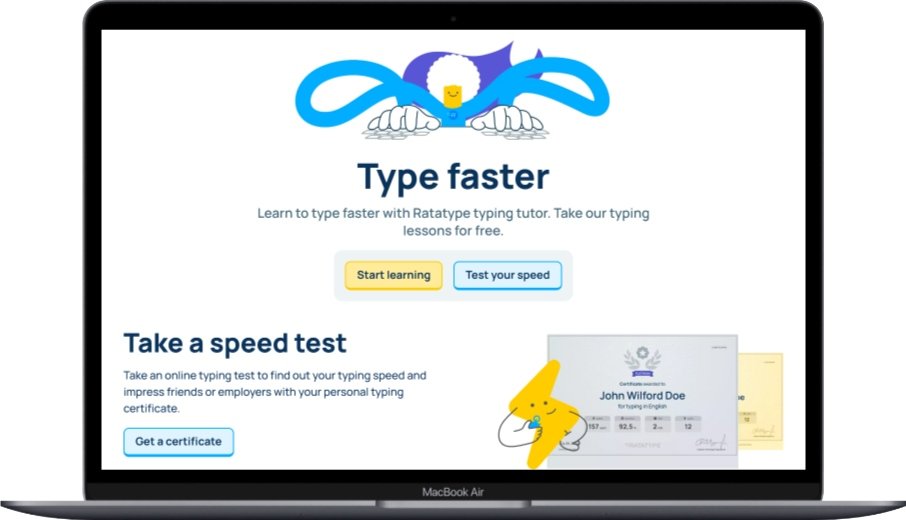
Ratatype is one of the few free typing platforms that gives you something tangible to show for your work. After you complete the initial assessment and work through its touch typing course, you can earn a typed typing certificate — no account required, no paywall, just proof of your skill level that you can download, print, or share with a potential employer. I’ve found this genuinely useful in professional contexts where someone asks about your typing proficiency.
The program opens with a baseline speed and accuracy test that calibrates your starting point and recommends a learning path built around your actual skill gaps. It covers everything from home row basics to number rows, symbols, and punctuation. The feedback is detailed — you see error frequency by key, accuracy trends, and a clearly visible WPM progression over every session. Ratatype’s Typing Racers game is a new addition worth trying: it’s a live multiplayer racing format that makes speed drills competitive without feeling like a distraction. The Ratatype Plus subscription adds an ad-free experience and dark mode if you want to go deeper.
Features:
- Initial skill assessment test
- Personalized lesson path based on your baseline
- Free typing certificates (no registration required)
- Typing Racers multiplayer game
- Detailed per-key accuracy reports
Pros:
- Certificates are genuinely downloadable and shareable
- Starts at your actual skill level
- Good stats visibility
- Game mode adds competitive motivation
- Clean, modern interface
Cons:
- Some advanced features gated behind Ratatype Plus
- Ads present in the free version
- Course variety is more limited than TypingClub
Best For: Students and job seekers who want verified, shareable proof of their typing speed and accuracy.
4. Typing.com
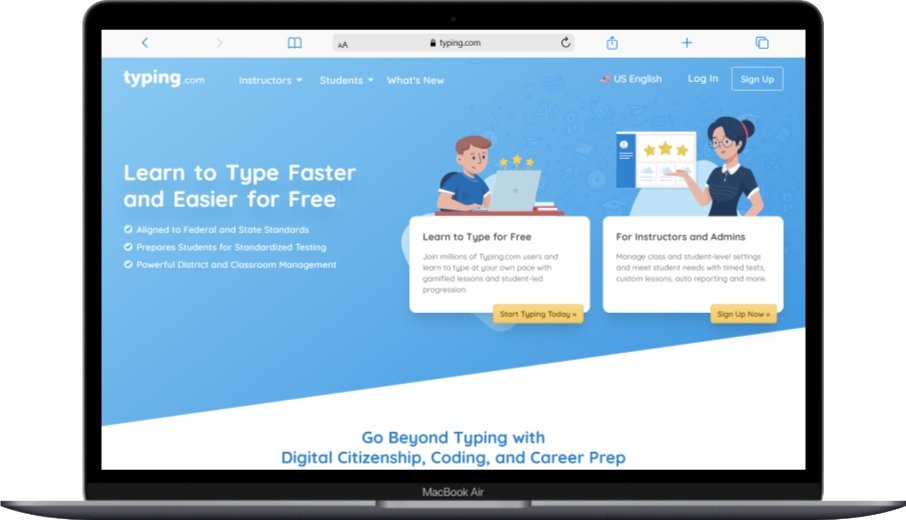
Typing.com serves over 14 million learners worldwide, and once you spend time inside it, you understand why that number is so high. The curriculum is divided into beginner, intermediate, and advanced tracks, and what sets it apart from most other free typing tools is that it uses real-world text for practice — not randomly generated words, but actual news excerpts, scientific passages, and literary content. Typing through a paragraph that’s actually interesting makes the repetition feel less like drilling and more like reading.
For teachers, Typing.com is one of the best free classroom tools available. The educator dashboard tracks individual students, allows lesson assignments, and shows class-wide progress in a way that’s easy to read at a glance. For individuals, the progress reporting is thorough — you see WPM over time, accuracy trends, and which lesson types pose the most challenge. If you’re working toward a professional skill goal, Typing.com also offers typing certificates for completed courses. TechRadar named it the best free typing tutor among its 2026 picks, and from personal experience, that’s a well-earned designation. typing.com
Features:
- Beginner, intermediate, and advanced curriculum tracks
- Real-world text content for practice exercises
- Teacher dashboard for classroom management
- Typing certificates for completed courses
- Built-in typing games and activities
Pros:
- Widely trusted in schools and organizations
- Practice texts are actually engaging to read
- Comprehensive skill progression
- Certificates useful for professional contexts
- Works across all devices
Cons:
- Some school-specific features require educator account
- Interface design hasn’t changed dramatically in recent years
- Less personalization than adaptive tools like Keybr
Best For: Teachers, students, and professionals who want a complete, certificate-backed typing curriculum.
5. Speed Typing Online
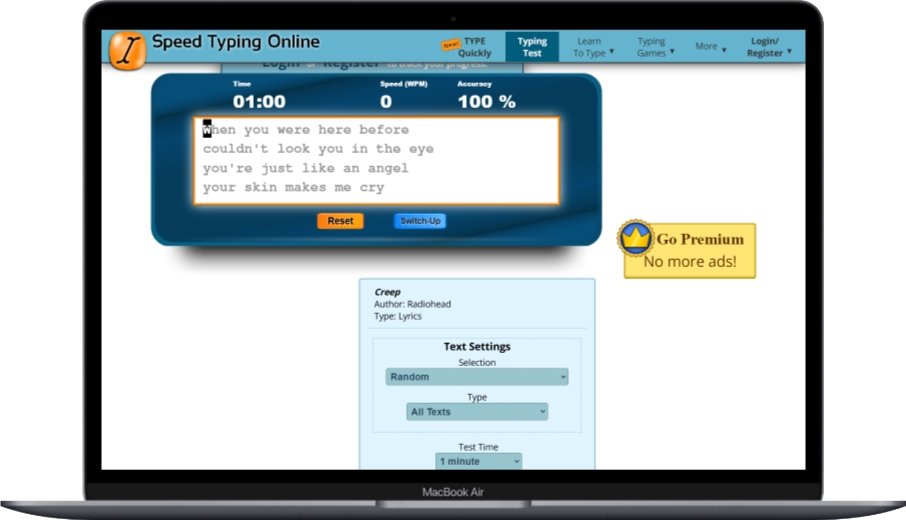
Speed Typing Online does exactly what the name says — it focuses your energy on raw typing speed through a variety of timed tests. When I want a quick, no-setup session to check where my WPM stands on a given day, this is what I pull up. You choose a test length from 1 to 10 minutes, type through the selected text, and immediately get your words per minute and accuracy breakdown. It’s fast, it’s honest, and it doesn’t try to be anything it isn’t.
The platform handles intermediate and advanced typists well. Once you’ve finished learning proper technique elsewhere, Speed Typing Online gives you a clean environment to stress-test your speed without distractions. The customizable text difficulty means you can work through easy paragraphs when you’re warming up or challenging passages when you’re trying to push your ceiling. The performance history lets you track trends over multiple sessions, which is useful for seeing whether your WPM gains from other programs are actually sticking.
Features:
- Timed tests from 1 to 10 minutes
- WPM and accuracy measured per test
- Customizable text types and difficulty levels
- Performance history tracking
- Immediate post-test feedback
Pros:
- Zero friction — start testing in seconds
- Useful WPM trend data over time
- Good for quick daily practice sessions
- No distractions or gamification noise
Cons:
- Not structured for beginners learning technique
- Limited lesson content
- Interface is plain by modern standards
Best For: Intermediate to advanced typists who want a quick, accurate speed benchmark without any frills.
6. Touch Typing Study
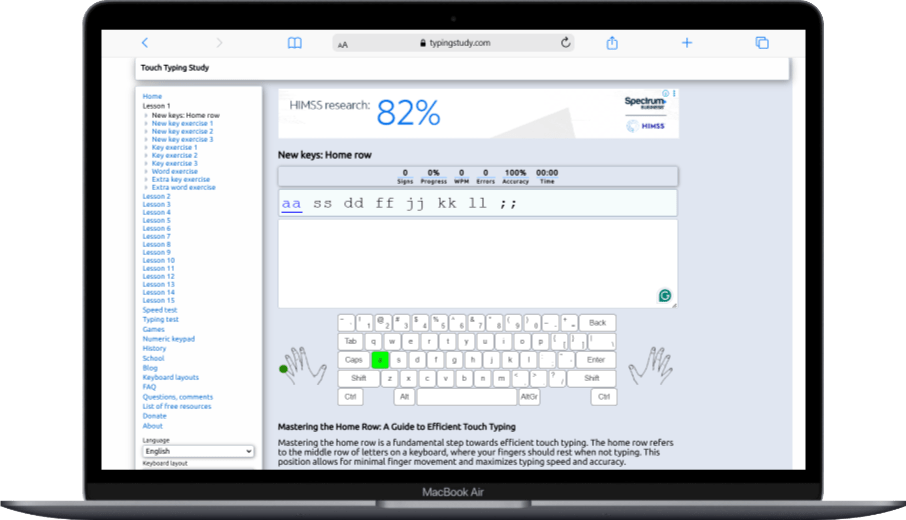
Touch Typing Study is built around one core principle — learning to type without looking at the keyboard, properly, from day one. I find this platform particularly honest in its approach: it doesn’t dress up the fact that touch typing takes deliberate, methodical practice. It puts you on the home row, makes you stay there, and doesn’t let you rush ahead until your fingers genuinely know where they are.
The program offers over 15 lesson types covering letters, numbers, symbols, and common punctuation patterns. Every error gets immediately flagged with visual feedback, and the correction guidance is specific — not just “that was wrong” but showing you what the right finger movement should have been. The statistics tracking covers speed, accuracy, and error rate per key across sessions, so you can see which specific characters are still giving your fingers trouble. It’s not flashy, and that’s a feature, not a flaw. When I want to go back to basics and reinforce proper technique without any gamification pulling my attention sideways, this is where I go.
Features:
- Progressive touch typing lessons from home row up
- Strong emphasis on correct finger placement
- 15+ lesson types covering all key categories
- Immediate visual error feedback
- Per-key accuracy statistics
Pros:
- Forces good habits early
- Error feedback is specific and actionable
- No distractions pulling focus away
- Comprehensive coverage of all key types
Cons:
- Interface is bare-bones
- No game modes for engagement
- Can feel repetitive during early lessons
Best For: Beginners committed to building correct touch typing habits rather than just picking up speed casually.
7. Typing Bolt
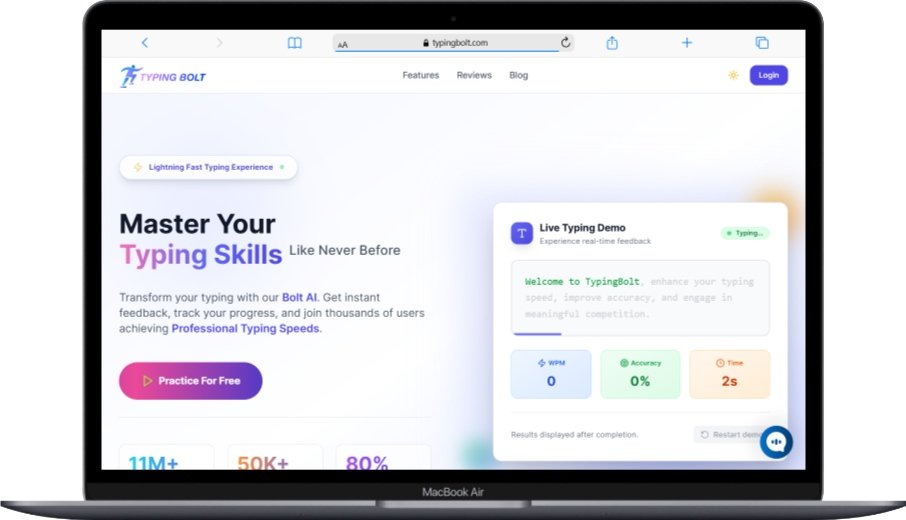
Typing Bolt brings an adaptive learning layer to typing practice that feels noticeably smarter than the fixed-curriculum approach most tools use. Its system analyzes your real-time typing patterns and spots which specific keys, transitions, or letter combinations are slowing you down — then builds practice material around those exact problem spots. Every session is technically personalized, which means your practice time is never wasted drilling keys you’ve already internalized.
The interface is modern and clean, with a live display of your typing speed, accuracy, and an overall “typing score” that factors in both metrics together. The adaptive text difficulty feature is the standout — it shifts harder or easier in real time depending on how your session is going, which keeps you in the zone of productive challenge rather than frustration or boredom. There’s also a leaderboard component if you want to measure yourself against other users, which some people find genuinely motivating. My own use has been most productive in the intermediate phase of skill-building, where targeted drilling makes a real difference.
Features:
- AI-driven adaptive lesson generation
- Real-time typing analysis and performance scoring
- Dynamic difficulty adjustment mid-session
- Leaderboard competition feature
- Modern, minimal interface
Pros:
- Lessons evolve based on your actual weak spots
- Clean visual design with no clutter
- Competitive elements for extra motivation
- Detailed per-session data
Cons:
- Needs an account for full tracking features
- Less structured than curriculum-based tools
- Beginners may need a more guided starting point first
Best For: Intermediate typists who want data-driven, personalized drilling to close specific skill gaps.
8. Sense-Lang
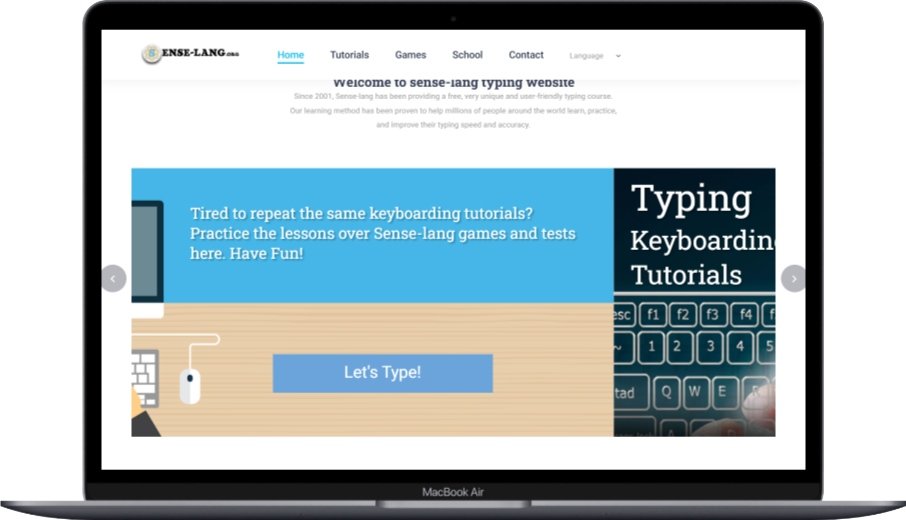
Sense-Lang has been running for over a decade, and it’s one of the more underrated tools in this category. Where it genuinely earns its place is in customization depth and international language support. If you work in multiple languages or need to practice on a non-QWERTY layout — Dvorak, Colemak, AZERTY, or others — Sense-Lang handles that without you needing to modify anything or install extra software.
The exercise variety is broader than most free platforms: warm-up drills, targeted key pair practice, full-text passages, and a range of typing games that reinforce speed without abandoning technique. You can focus sessions entirely on specific problem keys, letter combinations, or entire keyboard zones. For users who find fixed curricula too rigid and want to direct their own practice sessions, this flexibility is a genuine advantage. The interface is older-looking by current standards, but the core functionality is solid and the typing content holds up well.
Features:
- Customizable practice sessions by key, zone, or text type
- Support for 15+ keyboard layouts and multiple languages
- Warm-ups, targeted drills, and full-text exercises
- Typing games for speed reinforcement
- Long-standing platform with proven track record
Pros:
- Deep customization — you control the focus
- Best-in-class international keyboard layout support
- Multiple exercise formats keep things varied
- Reliable and consistently available
Cons:
- Interface looks dated by 2026 standards
- Mobile experience is limited
- Less detailed progress analytics than newer platforms
Best For: Users who type in multiple languages or need to practice non-standard keyboard layouts with custom-directed sessions.
9. Typing Cat
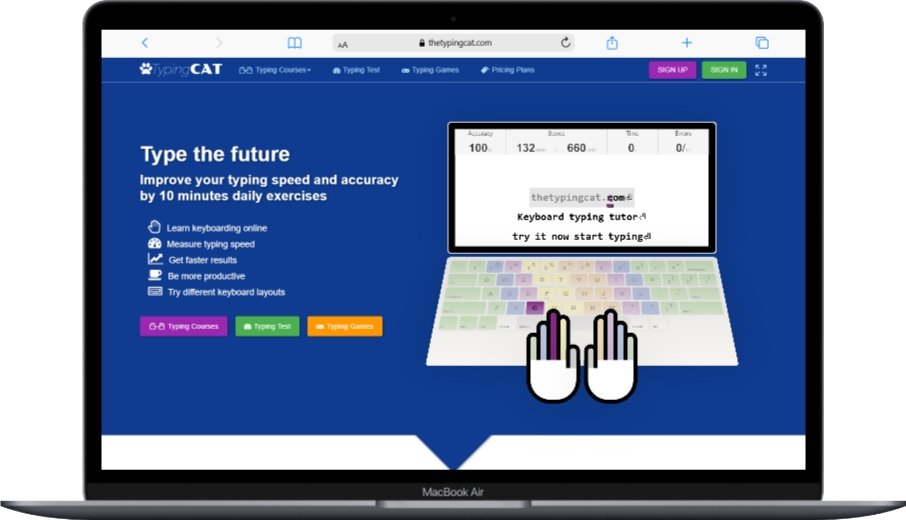
Typing Cat hits a balance point that genuinely works — it’s structured enough to teach you proper technique, but visual and interactive enough that you actually want to come back. The platform offers 25+ sequenced lessons covering the full keyboard, and the interface uses modern design with smooth animations and clear, readable typography that makes extended typing sessions easier on the eyes.
What I find particularly useful is the real-time typing challenge mode, where you can race against other users at your skill level. It’s not as gamified as Nitro Type, so it doesn’t feel like the typing lesson got buried under a game — but it adds a competitive edge that makes speed drills feel purposeful. The stats tracking is detailed, covering WPM trends, accuracy patterns, and error frequency per character. If you need an account to unlock full features, it’s worth creating one — the personalized progress reports are more granular than most free platforms offer.
Features:
- 25+ structured lessons across all key types
- Real-time competitive typing challenges
- Modern visual design with smooth UI
- Detailed WPM and accuracy progress tracking
- Account-based progress saving
Pros:
- Good structural balance between lessons and practice
- Attractive, easy-to-read interface
- Social competition adds real motivation
- Regular content updates
Cons:
- Some features locked behind payment
- Game elements may pull attention from technique
- Full feature set requires account creation
Best For: Learners who want a visually polished experience with structured lessons and competitive typing elements.
10. 10FastFingers
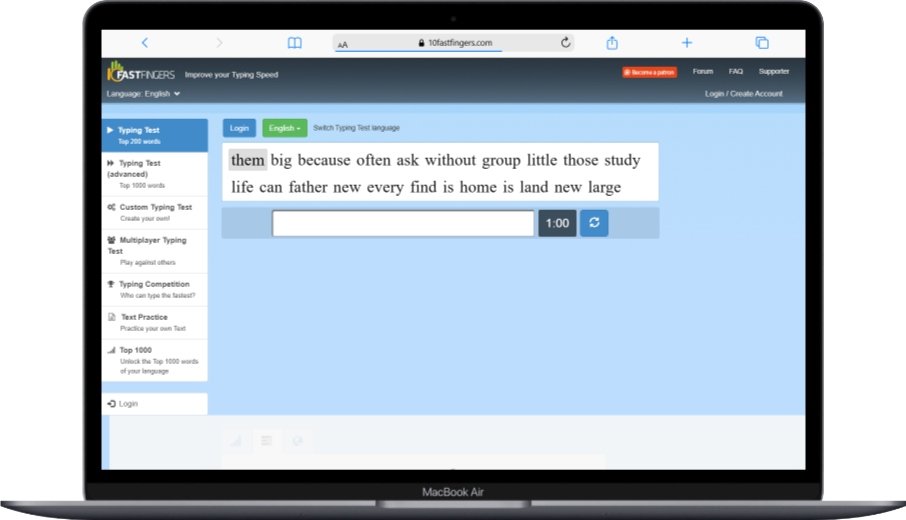
10FastFingers built its reputation on one clean, honest product: a 1-minute typing test that tells you exactly how fast you type and shows you where you rank globally against other typists. I’ve been running tests on this platform for years, and the global leaderboard is genuinely one of the better motivating features in free typing — seeing your real-world ranking against thousands of other users creates a competitive drive that purely internal progress tracking doesn’t.
Beyond the 1-minute standard test, 10FastFingers offers advanced tests with the top 200 and top 1,000 most common English words, custom text tests you build yourself, and a full multiplayer competition mode for races against live opponents. Tests are available in over 40 languages, which makes it useful for non-English users who want accurate WPM data in their native language. It’s not a teaching tool in the traditional sense — there are no structured lessons or finger placement guides — but as a measurement and competitive practice platform, nothing in the free tier comes close.
Features:
- 1-minute standard typing test with global WPM ranking
- Advanced tests with top 200 and top 1,000 word sets
- Custom text test creator
- Multiplayer live typing competition mode
- 40+ language typing tests
Pros:
- Instant results with global percentile ranking
- Multiple test formats for varied practice
- Personal best tracking across sessions
- Excellent for language learners checking non-English WPM
Cons:
- No structured lessons or technique guidance
- Interface is functional rather than modern
- Better as a benchmark tool than a teaching tool
Best For: Anyone who wants to test their true WPM, track personal records, and compete against other typists worldwide.
11. Nitro Type
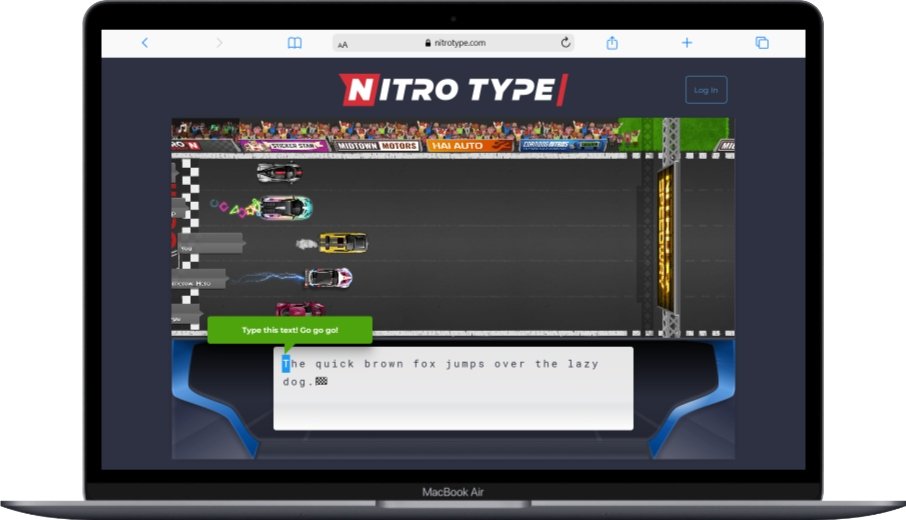
Nitro Type remains one of the most effective tools I’ve seen for getting reluctant typists — especially kids and teenagers — to practice voluntarily and keep coming back. The premise is straightforward: your car’s speed in a race against other players is directly controlled by how fast and accurately you type. The faster your WPM, the faster your car moves. It’s a feedback loop that makes improving your typing speed feel immediately and tangibly rewarding.
Nitro Type added several major updates. Nitro Radio launched in December 2025 with over 6 live stations, adding an audio layer to races. The season system now includes a Toggle Season Perk feature, XP boosters, exclusive sticker sets, and tiered cash rewards for completing seasonal milestones. The social and team race features remain strong — you can race against friends, join teams, and compete in class brackets if you’re a student. It earns in-game currency that lets you buy and customize cars, which creates the kind of progression system that keeps younger users engaged well beyond what a standard typing lesson would.
Features:
- Racing game where typing speed = car speed
- Nitro Radio (6+ stations, launched December 2025)
- Seasonal events with tiered rewards and XP boosters
- Team-based competitions and class racing
- Car customization with in-game currency
Pros:
- Best-in-class engagement, especially for kids and teens
- Real competitive races against live players
- Regular seasonal content keeps it fresh
- Strong motivation to improve WPM naturally
Cons:
- Technique guidance is minimal
- Some premium cars and features require payment
- High game engagement can occasionally overshadow the typing focus
Best For: Children, teens, and anyone who responds well to game-based learning and competitive speed motivation.
12. Typing.io
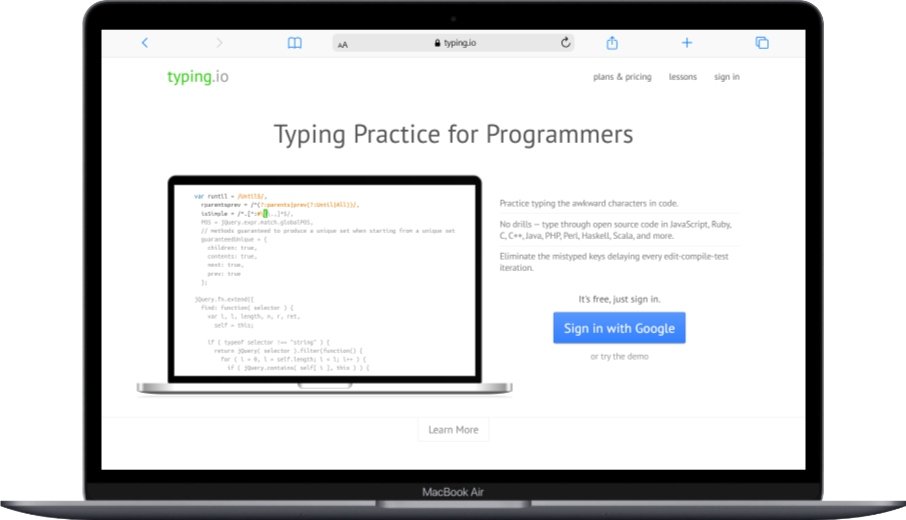
Typing.io solves a problem that most typing programs completely ignore: developers and programmers type fundamentally different content than the average person. Standard typing tests are full of common words, proper sentences, and clean spacing. Real code is full of brackets, underscores, pipe characters, semicolons, and indentation patterns that trip up even fast general typists. Typing.io builds its entire practice library around real open-source code.
As a developer, I found that after a few weeks of sessions here, my comfort with symbol characters and syntax-heavy lines improved noticeably. The platform supports practice in JavaScript, Python, Java, Ruby, C, C++, PHP, Haskell, Scala, and more — each using actual production code from real open-source projects. The interface mimics a code editor environment with syntax highlighting, so the practice context genuinely matches where you’ll use the skill. It measures your WPM specifically for code typing, which is a separate and more honest benchmark than standard-text WPM for developers.
Features:
- Code-specific typing practice in 50+ programming languages
- Real open-source code as practice material
- Syntax-highlighted editor-style interface
- Code typing WPM and accuracy metrics
- Language-specific lessons and challenges
Pros:
- Nothing else on this list addresses developer typing this well
- Authentic practice with real code, not constructed drills
- Measurably improves coding efficiency over time
- Free access to core lessons
Cons:
- Useless for non-programmers
- Narrow scope by design
- Can overwhelm total beginners to coding
Best For: Software developers, computer science students, and anyone who types code regularly and wants to get faster at it.
13. KeyBlaze
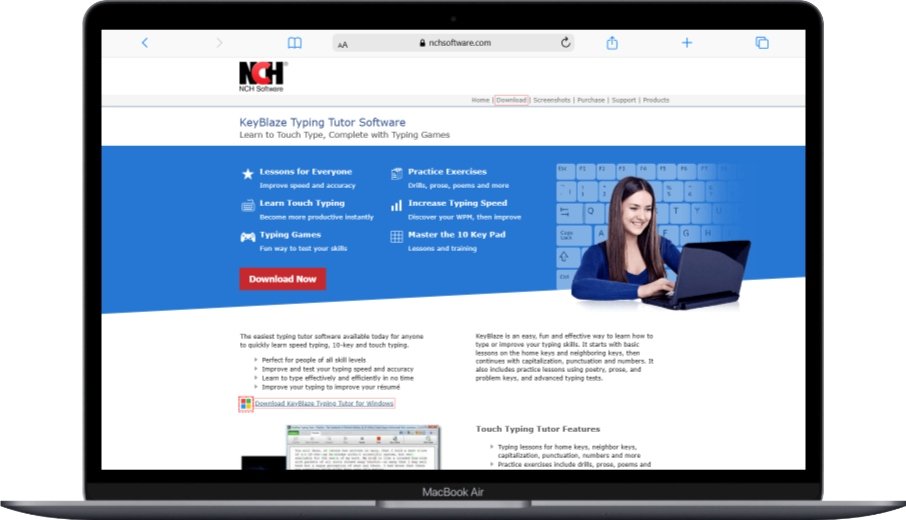
KeyBlaze takes a more traditional desktop-software approach to typing education, and it includes one feature I haven’t found anywhere else on this list: audio dictation exercises. Rather than reading text off a screen and typing it, you listen to spoken content and type what you hear. This is a completely different skill set — transcription typing — and for anyone who works in note-taking, meeting documentation, or audio transcription, it’s a genuinely practical thing to train.
The program opens with a skill assessment that sizes up your starting point, then builds a personalized lesson path from there. The curriculum covers posture, proper hand position, finger movement patterns, and gradual speed building — all the fundamentals — alongside the dictation exercises that make it distinctive. Goal-setting and milestone notifications help you stay on track between sessions. The interface is older in aesthetic, and the free tier has limitations that will push you toward a paid upgrade, but the core structure is solid and the audio feature alone puts it in a category of its own.
Features:
- Initial skill assessment with personalized lesson path
- Audio dictation exercises for transcription skill-building
- Structured curriculum covering posture and technique
- Goal setting and milestone notifications
- Detailed progress reporting
Pros:
- Unique audio dictation feature found nowhere else
- Personalized from your actual starting point
- Useful for transcription-focused professional development
- Covers technique fundamentals thoroughly
Cons:
- Requires software download and installation
- Free version is limited — core features push you to paid tier
- Interface design is dated
- Limited mobile support
Best For: Users who need to develop transcription skills alongside standard typing proficiency.
14. Rapid Typing Tutor
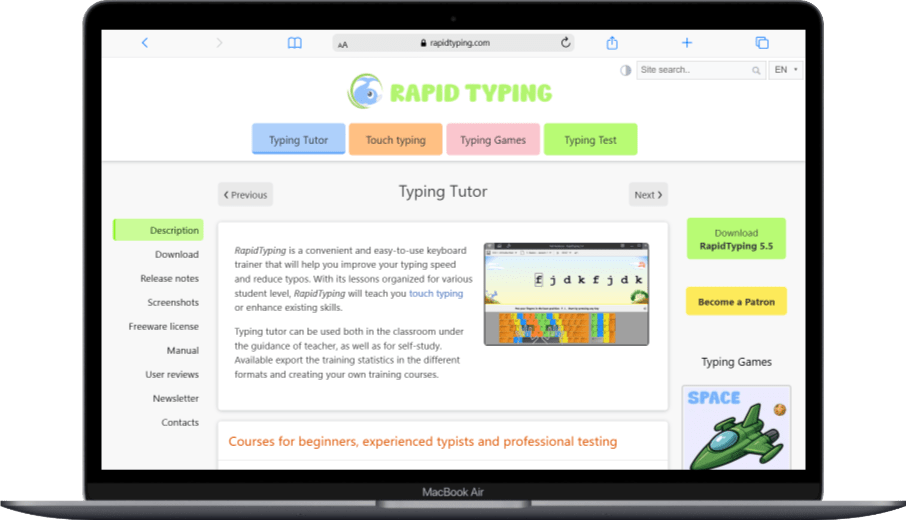
Rapid Typing Tutor gives you a level of customization over your practice sessions that most web-based platforms simply don’t offer. The standout feature is the ability to create your own lessons using any text you choose. I’ve used this to practice with content from my own field — technical documents, emails in my professional domain, specific vocabulary I type frequently. That kind of context-matched practice produces faster real-world improvement than generic word lists.
The platform supports multiple keyboard layouts and languages, including QWERTY, DVORAK, and QWERTZ. The lesson library is large, covering letters, numbers, symbols, and extended punctuation, and the statistics engine tracks your speed, accuracy, and error rate at the individual key level. It does require a software download rather than running in the browser, which some users will find inconvenient, and the interface design reflects its age. But for sheer customization depth — especially the custom lesson feature — it’s hard to beat at no cost.
Features:
- Custom lesson creation with your own text content
- Extensive built-in lesson library
- Multiple keyboard layout support
- Per-key accuracy and error rate tracking
- Full progress reporting
Pros:
- Custom text lessons are genuinely powerful
- Deep keyboard layout flexibility
- Detailed per-key performance data
- Good for field-specific or language-specific practice
Cons:
- Requires software download — no browser option
- Interface is dated
- Some premium features require payment
- No cloud sync or mobile access
Best For: Users who want to train with content from their own professional or personal context, or who need multi-language layout support.
15. BBC Dance Mat Typing
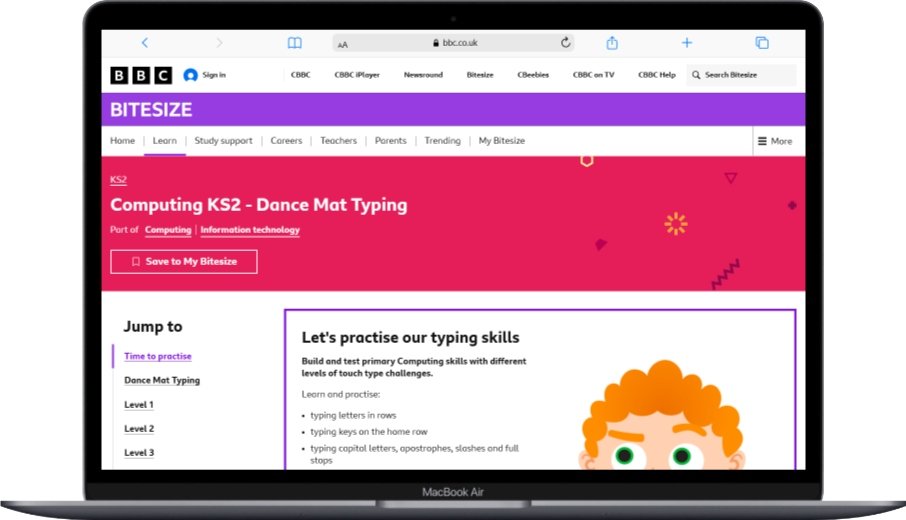
BBC Dance Mat Typing is still my top recommendation for children aged 7–11 in 2026. The BBC Bitesize platform continues to host it, it’s completely free, and it holds up extremely well as an entry-level touch typing introduction for young learners. The four progressive levels — each split into three stages — gradually introduce new key zones while keeping the whole experience grounded in bright visuals, animated animal characters, and short songs that help kids remember key positions.
What makes it work so well for this age group is that it never asks children to do too much at once. Each stage has a very specific, limited goal, and the animal guides provide both instruction and immediate feedback in a way that feels encouraging rather than corrective. The emphasis on correct finger placement starts from stage one, which means kids who finish all four levels walk away with actual touch typing habits, not just hunt-and-peck speed. For any teacher or parent who wants a proven, free-from-the-BBC typing starting point for their child, this is still the answer in 2026.
Features:
- Four levels, three stages each — 12 stages total
- Animated animal character guides and songs
- Progressive key zone introduction
- Age-appropriate visual design for 7–11-year-olds
- Completely free, no account required
- Correct finger placement taught from stage one
Pros:
- Perfect pacing for young beginners
- No reading skill prerequisite to follow instructions
- BBC quality — trusted by teachers and parents
- Teaches proper technique from the very start
- Zero cost, no sign-up
Cons:
- No content beyond the four basic levels — not for adults
- British spelling and accent may be unfamiliar to some users
- Doesn’t track long-term progress across sessions
Best For: Children aged 7–11 being introduced to typing for the first time.
16. Typing Quest
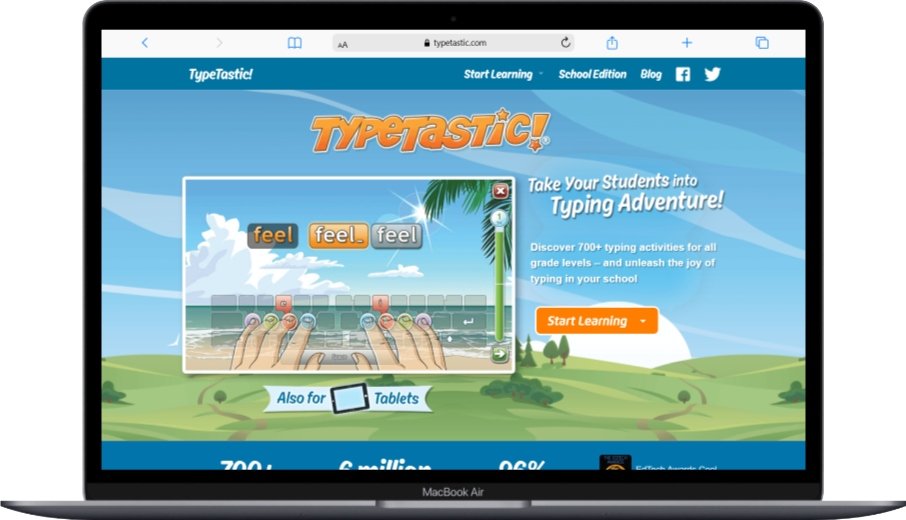
Typing Quest is built around a narrative-driven framework that puts your typing exercises inside a fantasy adventure story. Instead of working through a list of drills, you’re completing quests, advancing through a story world, and unlocking new content as you improve. It’s a structural approach to motivation that actually works — I’ve seen users who couldn’t sustain interest in standard programs stay consistently engaged here because there’s always a story reason to come back.
The adaptive difficulty system is strong: it reads your performance in real time and adjusts how challenging the typing content is, keeping you in a productive challenge zone throughout each session. Rewards come in the form of unlockable story content and in-game items rather than just abstract badges, which gives progress a more concrete feel. The stats tracking covers WPM, accuracy, and improvement trends, and the overall skill coverage spans the full keyboard. Some features do require a paid account, but the free tier offers enough content to determine whether the format suits your learning style before you commit.
Features:
- Fantasy adventure story structure for motivation
- Adaptive difficulty based on real-time performance
- Reward and unlock system tied to story progression
- WPM, accuracy, and improvement tracking
- Full keyboard coverage across difficulty levels
Pros:
- Narrative hook keeps learners engaged longer
- Difficulty adaptation prevents frustration plateaus
- Rewards feel meaningful and tied to progress
- Suitable range from beginners to intermediate
Cons:
- Some content locked behind payment
- Story structure may not resonate with all learners
- Account creation required for full progress saving
Best For: Learners who need narrative and reward structures to stay motivated through the repetition of typing practice.
17. TIPP10
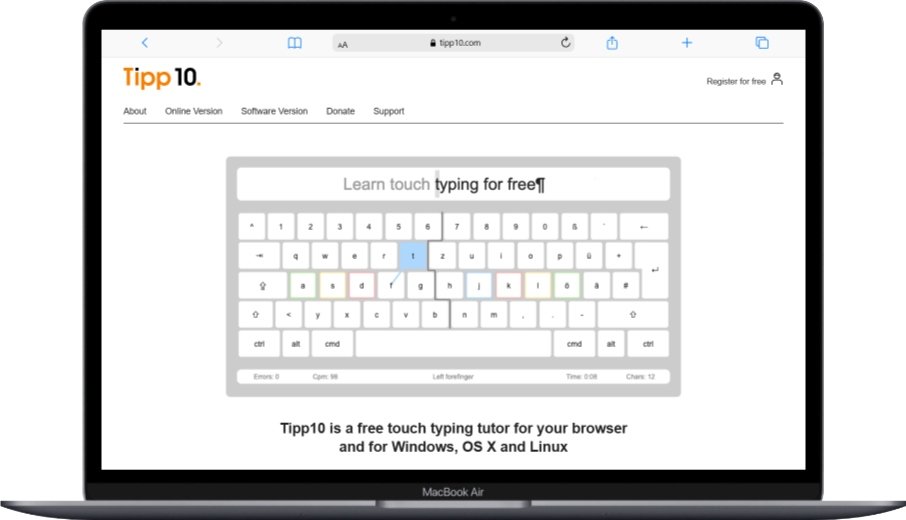
TIPP10 is the program I recommend to people who just want to sit down, practice correctly, and not deal with anything else. It’s completely free, ad-supported without being intrusive, and built entirely around a smart algorithm that tracks which keys you’re getting wrong and feeds those back into your next lesson. There’s no gamification layer, no social competition, no leaderboard — just clean, focused practice that builds technique through intelligent repetition.
The interface is minimal and intentional. Errors get flagged visually in real time, and the performance stats break down your typing speed, accuracy, error rate, and improvement curve across sessions. You can customize lesson duration and difficulty level, and the program is available as both a web version and a desktop download, so your preference for browser-based or offline practice is covered. For learners who find gamification distracting and want a no-nonsense environment where the typing practice itself is the entire point, TIPP10 is one of the best free tools on this list.
Features:
- Smart algorithm targeting your specific error patterns
- Immediate visual error feedback per keystroke
- Available as web platform and desktop download
- Customizable lesson duration and difficulty
- Comprehensive WPM, accuracy, and error statistics
Pros:
- Completely free with no paywalled core features
- Smart error-targeting makes practice efficient
- Works online and offline
- Clean, distraction-free environment
- Teaches proper technique from the start
Cons:
- Plain interface — limited visual appeal
- No game modes or social competition
- Limited engagement hooks for users who need external motivation
Best For: Disciplined learners who want a clean, efficient, technique-first typing environment without gamification or distractions.
How to Actually Get Better at Typing
Getting better at typing comes down to three things that most people skip: daily consistency, correct posture, and not looking at the keys.
Short daily sessions beat long infrequent ones. I saw more WPM improvement from 20 minutes every day than from 90-minute sessions twice a week. Consistency builds the muscle memory that makes typing feel automatic. Aim for 15–30 minutes per day and let the compounding effect do its job.
Your posture matters more than most typing guides admit. Keep your back straight, feet flat, keyboard at elbow height, and wrists relaxed — not resting on the desk between keystrokes. Every time you let your wrists drop and rest, you’re adding a micro-delay to your finger movement. Proper ergonomic positioning reduces fatigue and lets you sustain speed over longer sessions without discomfort.
Most importantly: stop looking at the keyboard. Cover your hands with a cloth, use a keyboard without printed legends, or just force yourself to look at the screen. It feels slow and uncomfortable at first. That discomfort is the learning happening. Your fingers need to own the key positions without your eyes being involved.
Common Typing Mistakes That Kill Your Progress
Hunting and pecking — using one or two fingers and looking between keys — feels fast enough that many people never push past it. But it has a hard ceiling. You can’t break 40 WPM with two fingers. Every free typing program on this list helps you break that habit if you actually commit to not looking at your hands.
Using the wrong fingers for specific keys is a subtler problem that doesn’t feel like an error — until you try to go fast. Every key on the keyboard has an assigned finger from a standard touch typing layout. When you reach for a key with a different finger, you’re adding lateral movement and breaking your hand’s natural resting position. Your typing tutor’s finger guides exist for exactly this reason. Follow them, even when your current method feels faster in the short term.
What the WPM Numbers Actually Mean
Here’s the context on typing speed that’s worth knowing before you set your goals:
The average adult types around 40 WPM, with most everyday typists landing in the 35–45 WPM range. Office workers and students performing well typically hit 45–60 WPM. Writers and heavy keyboard users commonly reach 60–80 WPM. Transcriptionists and data entry professionals often operate at 70–100+ WPM.
For reference — if you’re currently at 40 WPM and you push to 60 WPM, research suggests you can save up to 2 hours per workday. That’s not a trivial gain. And every program on this list can get you there with consistent use.
Typing Programs for Different Ages
Children aged 7–11 need short lessons with immediate rewards, clear visual feedback, and zero text-heavy instruction. BBC Dance Mat Typing and Nitro Type were both built with this in mind. The animal characters, music, and racing-game format give kids a reason to come back without the lesson feeling like homework.
Teenagers and older students typically respond well to competitive elements. Nitro Type, 10FastFingers, and Typing Cat all have real-time or leaderboard competition that makes WPM improvement feel personally meaningful. This age group also benefits from the structured curricula in TypingClub and Typing.com, especially if typing speed is relevant to academic performance or standardized testing.
Adults and professionals usually want measurable outcomes and efficient use of time. Keybr’s adaptive approach, Ratatype’s certificates, and Typing.com’s business-text practice content all speak to what working adults actually need. The goal isn’t just WPM — it’s WPM in professional context, maintained over long sessions, without technique degrading under pressure.
Online vs. Offline Typing Programs
Browser-based typing programs are where most of the best tools live in 2026. They sync your progress across devices, update automatically, and you can start a session from any computer without installing anything. TypingClub, Keybr, Ratatype, and Monkeytype all run entirely in the browser. The only real limitation is that you need an internet connection.
Downloadable typing software like TIPP10 and Rapid Typing Tutor runs locally, which means faster performance and no dependency on your WiFi. Some users prefer keeping their typing data on their own machine for privacy reasons. The tradeoff is that cross-device sync isn’t built in, and you lose the convenience of picking up a session from a different computer.
For most people in 2026, browser-based is the practical choice. But if you’re working in an environment with unreliable internet or you have strong privacy preferences, the offline options are solid.
Using Typing Games for Practice
Typing games get a lot of skepticism from serious learners, but I think that skepticism underestimates how important motivation is in skill-building. Nitro Type, Typing Quest, and Typing Cat’s competitive mode all drive the same fundamental practice — sustained, repetitive keystrokes at varying speeds — that structured lessons use. The difference is that you don’t notice you’re drilling because you’re focused on winning.
The practical approach is to use games strategically. Use structured lessons from TypingClub or Touch Typing Study to learn and reinforce correct finger placement. Then use games like Nitro Type or 10FastFingers’ multiplayer mode to pressure-test your speed in a competitive context. The combination of technique-first learning and game-based reinforcement is faster than either approach alone.
Tracking Your Progress the Right Way
Tracking your progress keeps you honest and motivated. Don’t just look at your WPM on any given day — log it across sessions. Most platforms show you a WPM graph over time, and that trend line tells you far more than a single number. A day where you type 55 WPM after three weeks of averaging 45 WPM means something. A day where you type 55 WPM after a week of 58 WPM means something different.
Set specific, time-bound goals rather than vague improvement targets. “I want to hit 60 WPM by the end of next month” is a goal you can work toward and measure. “I want to get faster” is not. Most of the tools on this list give you enough data to set and track meaningful milestones. Use that data actively — it’s one of the reasons free typing programs outperform casual practice at the keyboard.
Advanced Typing Skills Worth Developing
Rhythmic typing is the difference between burst-and-pause typists and genuinely fast typists. Expert-level touch typists maintain a consistent cadence through entire paragraphs. They don’t speed up on easy words and slow down on hard ones — they keep a steady pace that trades brief acceleration spikes for sustained, reliable throughput. Practicing with a metronome or using Monkeytype’s pace caret feature helps train this rhythm.
Chunking common words is another technique that accelerates progress beyond what key-by-key drilling achieves. Once your fingers have internalized the movement pattern for “the,” “and,” “that,” and “which,” those words stop being four separate keystrokes and become a single fluid gesture. That shift from letter-by-letter to word-level motor patterns is a hallmark of truly fast typists, and programs like Keybr and 10FastFingers — which use high-frequency word lists — accelerate this naturally.
Frequently Asked Questions About Free Typing Programs
Are free typing programs as good as paid ones?
Yes — for most learners, absolutely. TypingClub, Keybr, and Ratatype have collectively helped millions of people improve their typing skills at no cost. Your improvement comes from consistent practice, not from the price tag on the tool you use.
Can kids learn typing with free programs?
Yes. BBC Dance Mat Typing and Nitro Type are both purpose-built for younger learners. The lessons are designed for short attention spans, and the feedback is delivered through characters and games rather than text-heavy instruction.
How long does it take to learn proper touch typing?
Most people see noticeable improvement within 2–4 weeks of daily 20-minute sessions. Full touch typing fluency — where you no longer consciously think about key positions — typically takes 2–3 months of consistent practice. Speed continues to improve well beyond that.
Do free programs help with workplace typing?
Yes. Typing.com in particular builds practice content around business texts, emails, and professional documents. Your workplace WPM gain is measurable and real.
Can you actually learn to type without looking at the keys?
Yes — and every program on this list teaches exactly that. The process is uncomfortable for the first week or two, and then it clicks. Trust the technique, use your program’s finger guides, and resist the urge to look down.
Are there typing programs for people with disabilities?
Yes. Typing.com and TypingClub both include accessibility features: adjustable text size, modified timing, voice-over support (TypingClub), and interface customization. Keybr is also highly adaptable in terms of pacing and difficulty.
Do free programs give certificates?
Yes. Ratatype gives free typing certificates without requiring registration — you download a PDF directly after completing a timed test. Typing.com also offers completion certificates for its curriculum tracks.
Can you use multiple typing programs at the same time?
Yes, and I’d actually recommend it. I use Keybr for targeted key drilling, Nitro Type for speed reinforcement when I want something competitive, and 10FastFingers for weekly WPM benchmarks. Each serves a different function in a well-rounded practice routine.
Are there mobile typing apps?
Yes. TypingClub and Ratatype both work well on mobile browsers and tablets. Keep in mind that mobile typing on a touchscreen develops different skills than physical keyboard typing — for desktop/laptop keyboard training specifically, use the programs with a physical keyboard when possible.
Do you need accounts for free programs?
No, not all of them. 10FastFingers, Speed Typing Online, and BBC Dance Mat Typing all work without signing up. But creating free accounts on TypingClub, Keybr, or Ratatype is worth it — progress tracking and personalized lessons are only available when you’re logged in.
Conclusion
The best free typing programs in 2026 give you everything you need to go from slow, uncertain typing to confident, accurate touch typing — at no cost. Whether you’re a teacher setting up a classroom tool, a parent looking for something your child will actually use, a developer trying to stop slowing down at every bracket and semicolon, or just someone who wants to stop losing time to slow keystrokes, there’s a program on this list that was built for exactly your situation.
My actual recommendation: start with TypingClub if you’re building from scratch, add Keybr once you’ve got the basics, and use 10FastFingers or Nitro Type to stress-test your speed against real targets. Check your WPM against the benchmarks — average adults hover around 40 WPM, office professionals should aim for 55–70 WPM — and build a goal from there. Twenty minutes a day is enough. The muscle memory builds faster than most people expect, and once it’s there, it doesn’t leave.
You May Also Like
 Best Software
Top 10 Free & Open Source Inventory Management Software in 2026
 Best Software
10 Best Inventory Control Software for Small Business in 2026
 Best Software
12 Best AI Chatbot Software To Increase Your Conversions In 2026
 Best Software
23 Best Free Avatar Creator Sites Online To Create Your Own Avatars
 SaaS
SaaS11 Best VoIP Call Center Solutions for Small Business 2026 (Comparison Guide)
 Best Software
6 Best Software to Record Mouse and Keyboard Actions and Automate Repetitive Tasks
 Best Software
Jira vs Hive: Which Project Management Tool is Right for Your Team?
 Best Software
8 Best Free Registry Cleaners Tools to Clean Junk and Registry on Windows PC
 Best Software