Phone verification has quietly become one of the most frustrating gates on the modern internet. Every service wants your number. Some want it for security. Some want it to track you. Some want it to prevent the same person from creating five accounts. The reasons vary, but the result is the same — if you do not give them a number, you do not get in.
SMS activation services solve this by giving you access to temporary or rentable phone numbers that can receive verification codes on your behalf. The use cases are legitimate more often than people assume. Developers testing signup flows, researchers, creating sandboxed accounts, marketers managing multiple business profiles across platforms, and privacy-conscious users who would rather not hand their personal number to every app they try all have real reasons to use these tools.
I have spent the past few years testing most of the well-known services in this category, mostly for development work, QA testing, and managing separate accounts across platforms where I did not want to expose my personal number. What follows is an honest comparison based on actual use — not a copy-paste of marketing pages. Some of these services are genuinely good. Some are inconsistent. A few are quietly excellent but rarely mentioned.
A note before the list: how you use these services matters. Bypassing verification to violate a platform’s terms, commit fraud, or harm others is not what this guide is about. For legitimate testing, privacy, and account management purposes, these tools are useful and widely used in the industry.
Key Takeaways
- SMS activation services provide temporary or rentable phone numbers that receive verification codes for online services.
- Pricing models vary widely — per-OTP, rental by hour or day, and subscription tiers each suit different use cases.
- Country coverage matters more than total number count. A service with strong coverage in the regions you actually need is better than one with millions of unused numbers elsewhere.
- Success rates vary by platform. A service that works flawlessly for one platform may struggle with another, especially heavily protected ones.
- Reputable services do not store your codes long-term, run fast number rotation, and offer refunds for numbers that fail to receive messages.
1. SMS-MAN.com
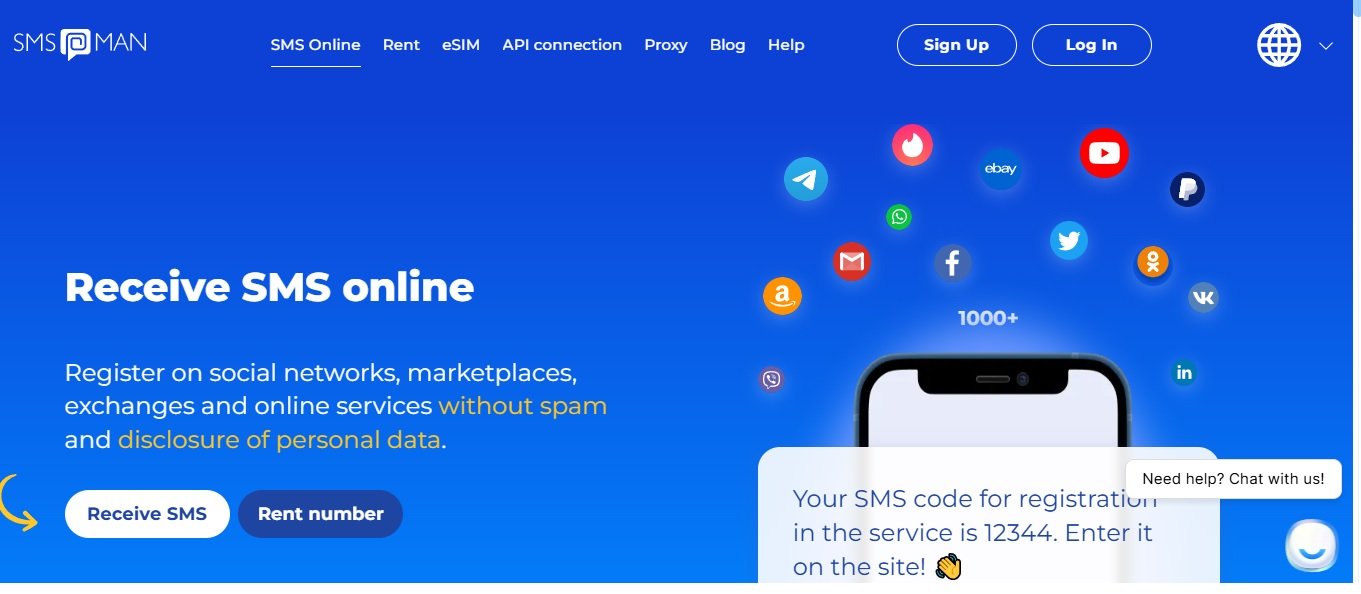
SMS-MAN.com has been my default choice for the past two years, and I have used it heavily enough to have a real opinion. It sits at the top of this list because it consistently delivers on the basics — wide platform coverage, reasonable pricing, and a clean interface that does not get in the way.
The first thing I appreciated when I switched to SMS-MAN was the breadth of supported services. Platforms that other providers list but cannot actually deliver numbers for — SMS-MAN tends to handle them reliably. Their country coverage is genuinely global, with strong availability in regions where other services run thin, like Southeast Asia and parts of Europe.
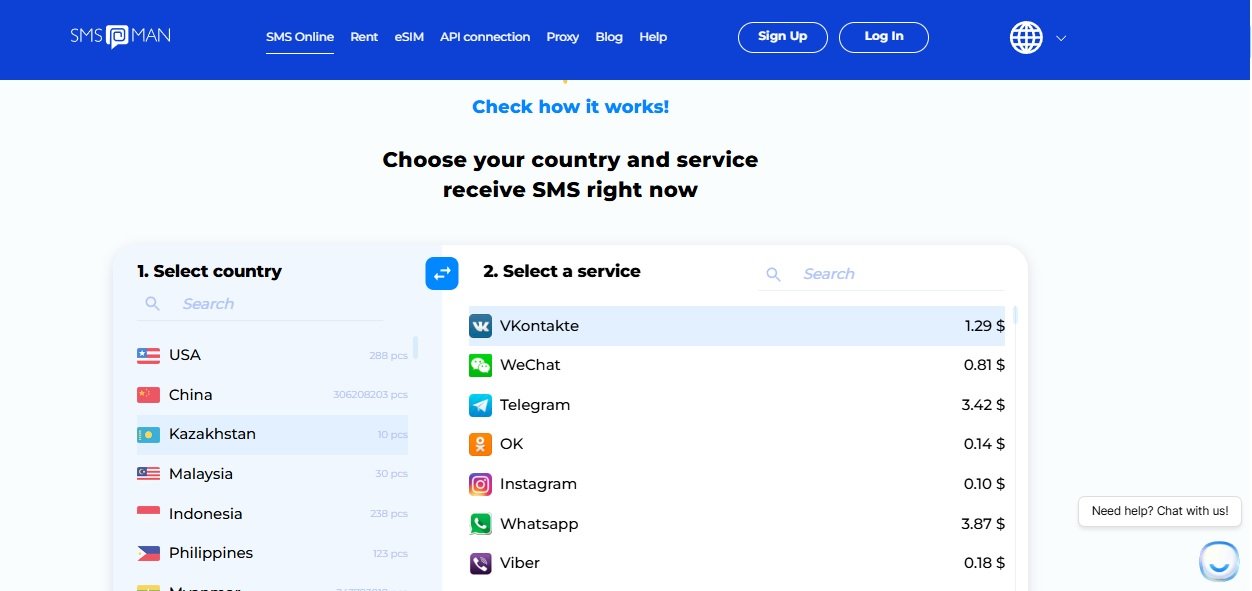
The interface deserves a mention because most services in this category have terrible dashboards. SMS-MAN’s is straightforward. You pick the country, pick the service, get a number, and the code arrives in your inbox view within seconds for most platforms. If the number fails to receive a code within the waiting window, the cost is automatically refunded to your balance. That refund policy alone puts them ahead of several competitors who quietly keep your money when their numbers fail.
Pricing is competitive. Most one-time OTP receipts cost a fraction of a dollar, depending on the platform and country. For higher-volume use, they offer rental options where you keep a number for a set duration.
What I like:
- Wide country and service coverage with consistent availability
- Automatic refunds for failed deliveries
- Clean, fast interface that does not bury essential functions
- Reliable for both common platforms and harder-to-find services
- Reasonable pricing across the board
What could be better:
- Higher-tier accounts get faster support; basic accounts wait longer
- Mobile experience is functional but less polished than desktop
For most people landing on a list like this, SMS-MAN is where I would start. It is not flashy, but it works, and after enough years of testing alternatives, “it works” is what I value most.
2. SMSActivate.com
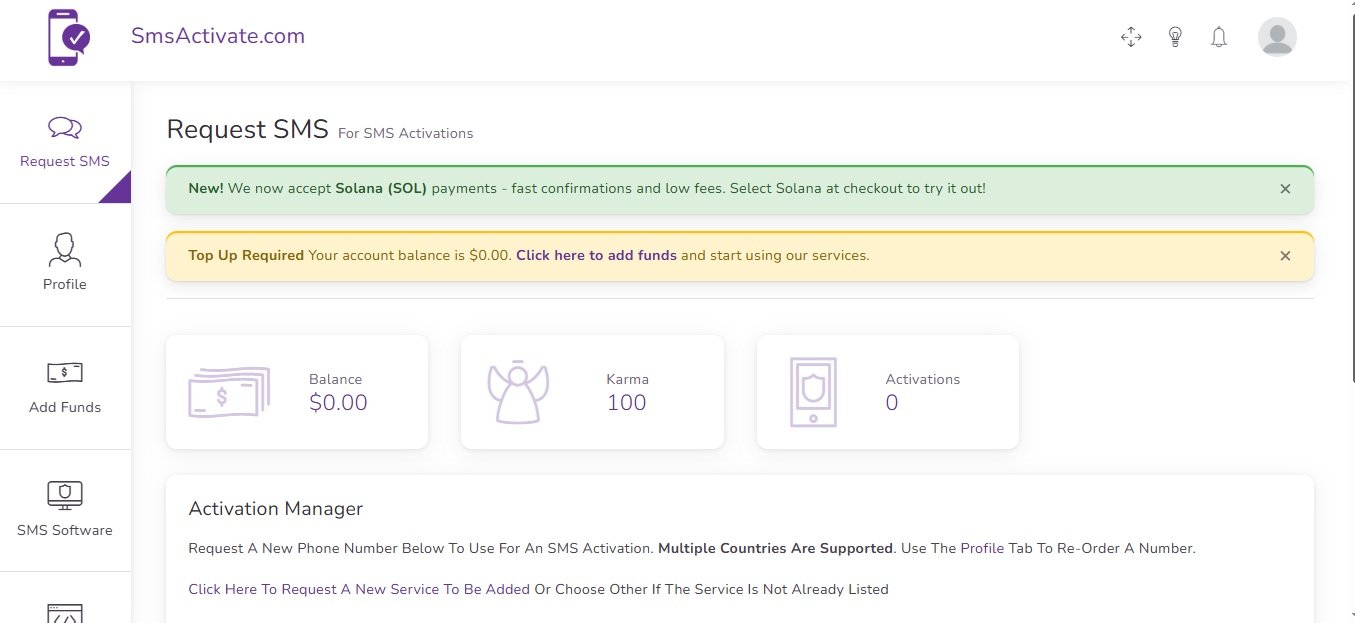
SMSActivate.com is one of the largest and longest-running services in this space, and the scale shows. They support thousands of services and offer numbers from over a hundred countries. For the most common use cases — major social platforms, messaging apps, marketplaces — they are usually available and usually fast.
The trade-off with SMSActivate is that the sheer scale of their operation sometimes produces inconsistency. A number that works perfectly for one service may fail for another, even when the dashboard says it should be supported. Their refund handling is automated and generally fair, but I have run into edge cases where the system marked a delivery as successful when nothing actually arrived.
Their API documentation is genuinely good, which matters if you are integrating SMS activation into a development or testing workflow rather than using it manually.
What I like:
- Massive service catalog covering both popular and obscure platforms
- Strong developer documentation and API support
- Competitive pricing on high-volume rentals
What could be better:
- Occasional inconsistency between dashboard availability and real-world success
- Interface feels dated compared to newer competitors
3. 5sim.net
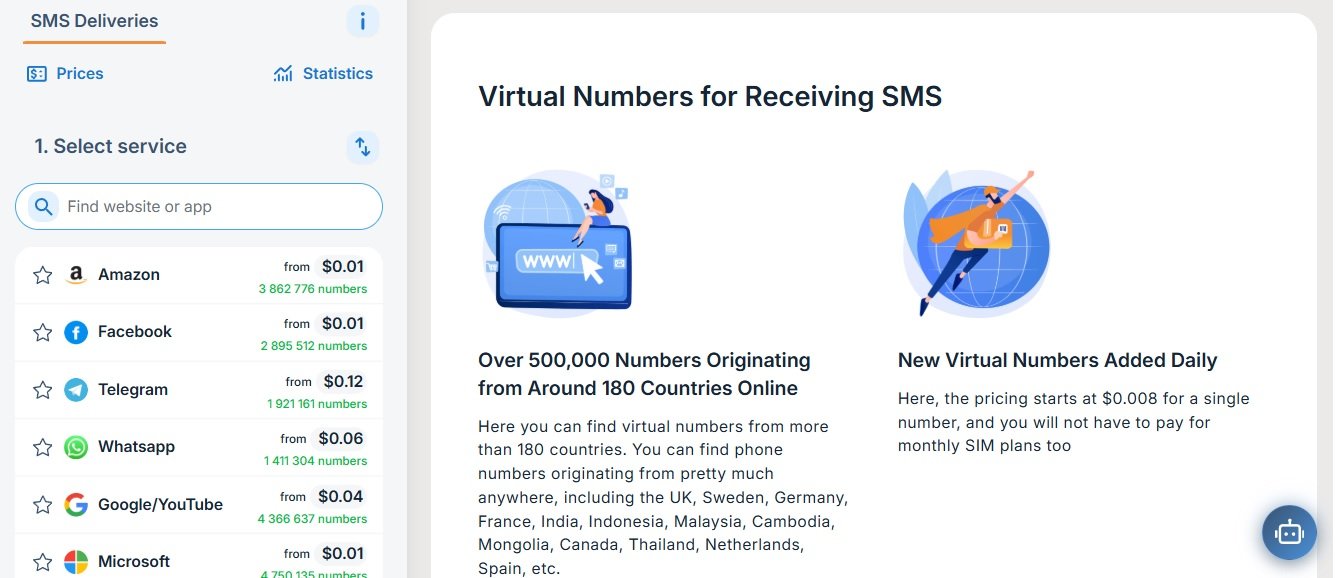
5sim has built a strong reputation in the developer community, partly because their API is well-designed and partly because they have invested in reliability over breadth. They support fewer services than the largest competitors, but the ones they do support tend to work more reliably.
I have used 5sim primarily for projects requiring numbers from specific European countries, where their pool seems to be cleaner than some alternatives. They also offer a feature called “Free Price” where the system picks the cheapest available number across countries, which is useful when geography does not matter and budget does.
Their pricing transparency is a strength. The full price for each service in each country is listed upfront, with no hidden fees or activation charges.
What I like:
- Reliable delivery for the platforms they support
- Clean API and good developer experience
- Transparent pricing with no surprises
- Useful “Free Price” feature for budget-flexible use cases
What could be better:
- Smaller service catalog than the largest competitors
- Country availability fluctuates more than some alternatives
4. SMSPVA
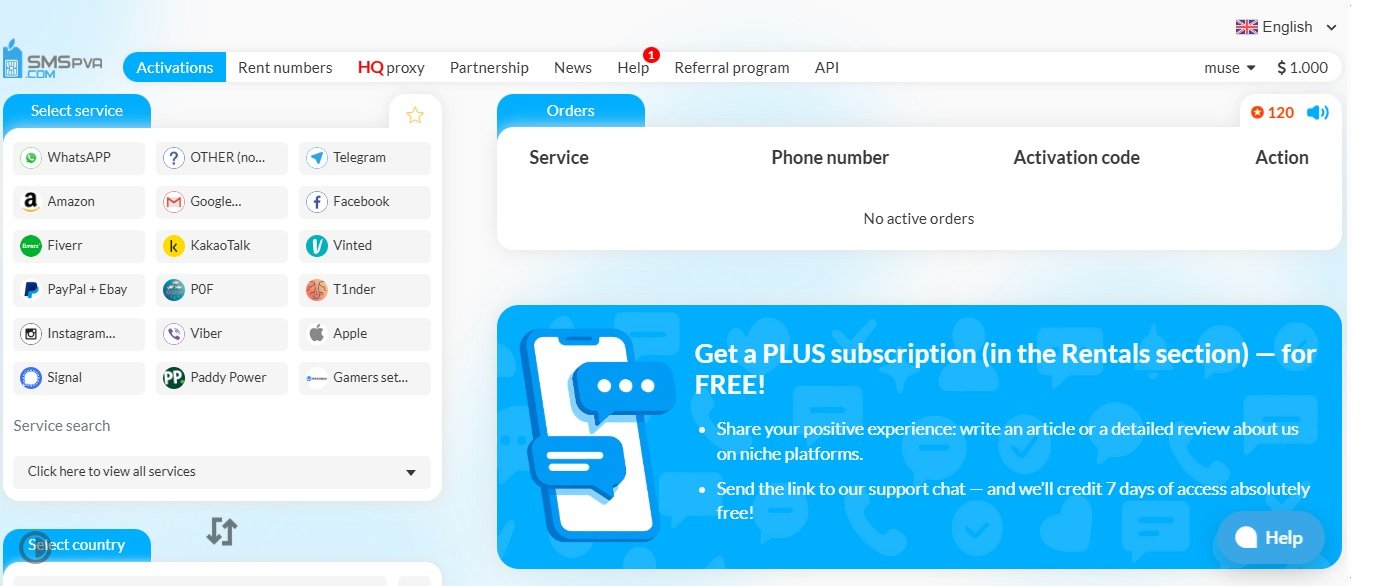
SMSPVA has been around long enough to have earned a loyal user base, and they have a particularly strong reputation for harder-to-verify platforms. When other services fail to deliver codes for a difficult platform, SMSPVA often succeeds, which is why they earn a spot on my regular rotation list.
Their interface is functional but not modern, and the signup process feels older than it should. Once you get past that, the service itself is reliable for what it claims to do.
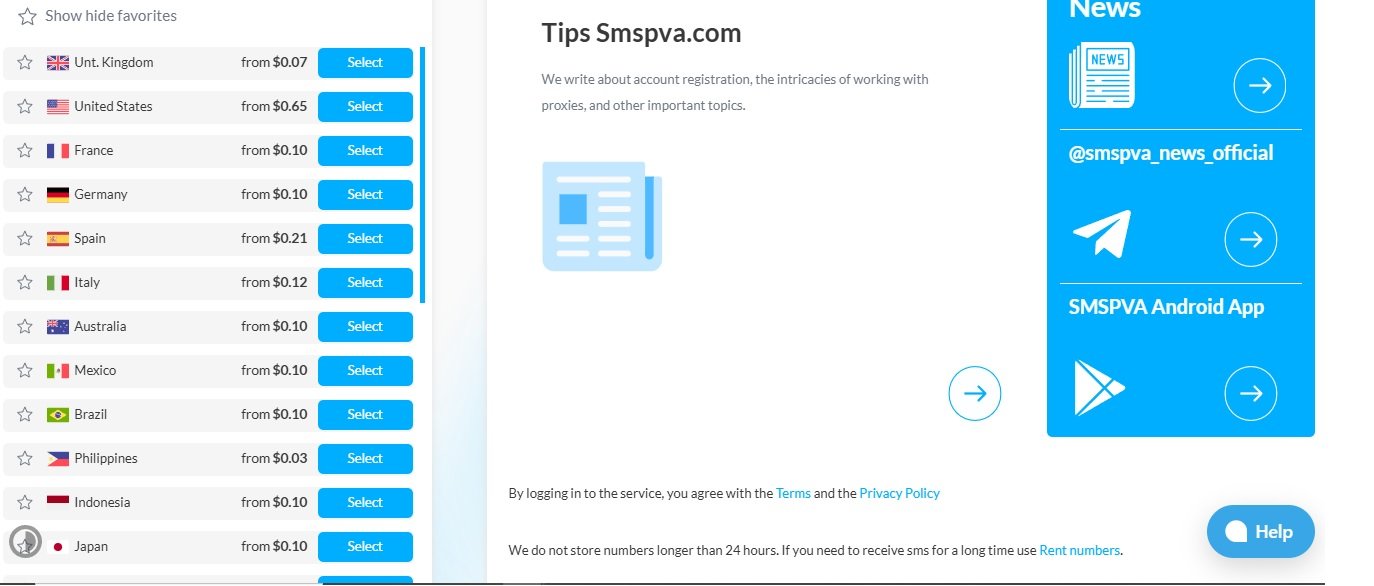
Pricing tends to be slightly higher than the cheapest competitors, which makes sense given that their numbers seem to be of higher quality and less likely to have been used previously for the same platform.
What I like:
- Strong success rate on harder-to-verify platforms
- Cleaner number pool than several competitors
- Long track record of operation
What could be better:
- Dated interface that takes some getting used to
- Higher pricing than some alternatives for WhatsApp
5. Textverified
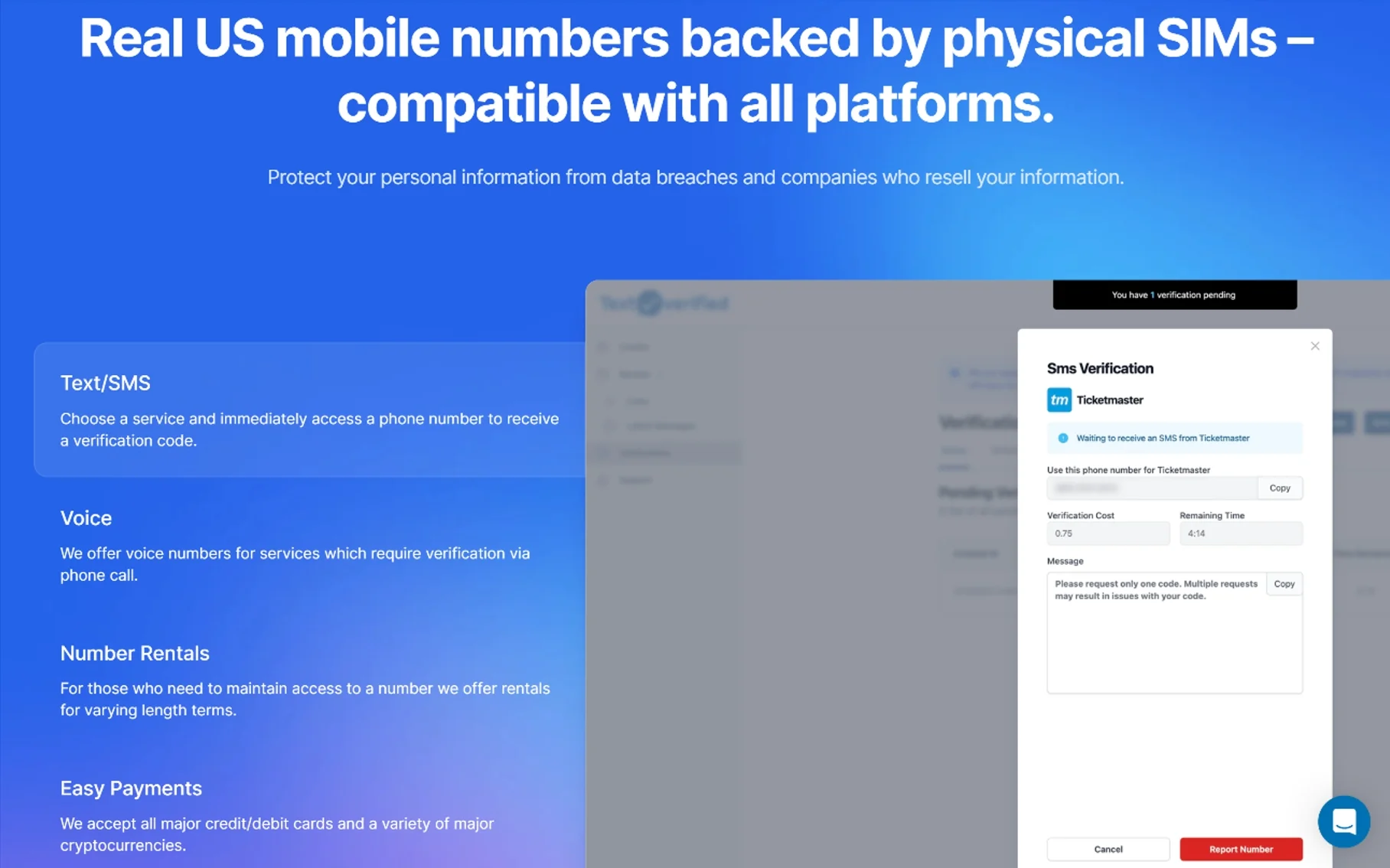
Textverified focuses primarily on US numbers, which is both its strength and its limitation. If you need US-based numbers for verification, their pool is among the cleanest I have used. If you need global coverage, this is not the right tool.
What sets Textverified apart is the quality of their numbers. Many of them are tied to genuinely US-based carriers rather than VoIP services, which matters for platforms that detect and reject VoIP numbers. For services that have become aggressive about rejecting “fake” numbers, Textverified often succeeds where others fail.
The trade-off is that you pay a premium. US verification through Textverified typically costs more than equivalent service from broader providers, but the success rate justifies the price for the right use cases.
What I like:
- High-quality US numbers, often non-VoIP
- Good success rate on platforms that reject typical SMS activation numbers
- Clean, modern interface
What could be better:
- Limited international coverage
- Higher pricing than global competitors
6. OnlineSIM.io
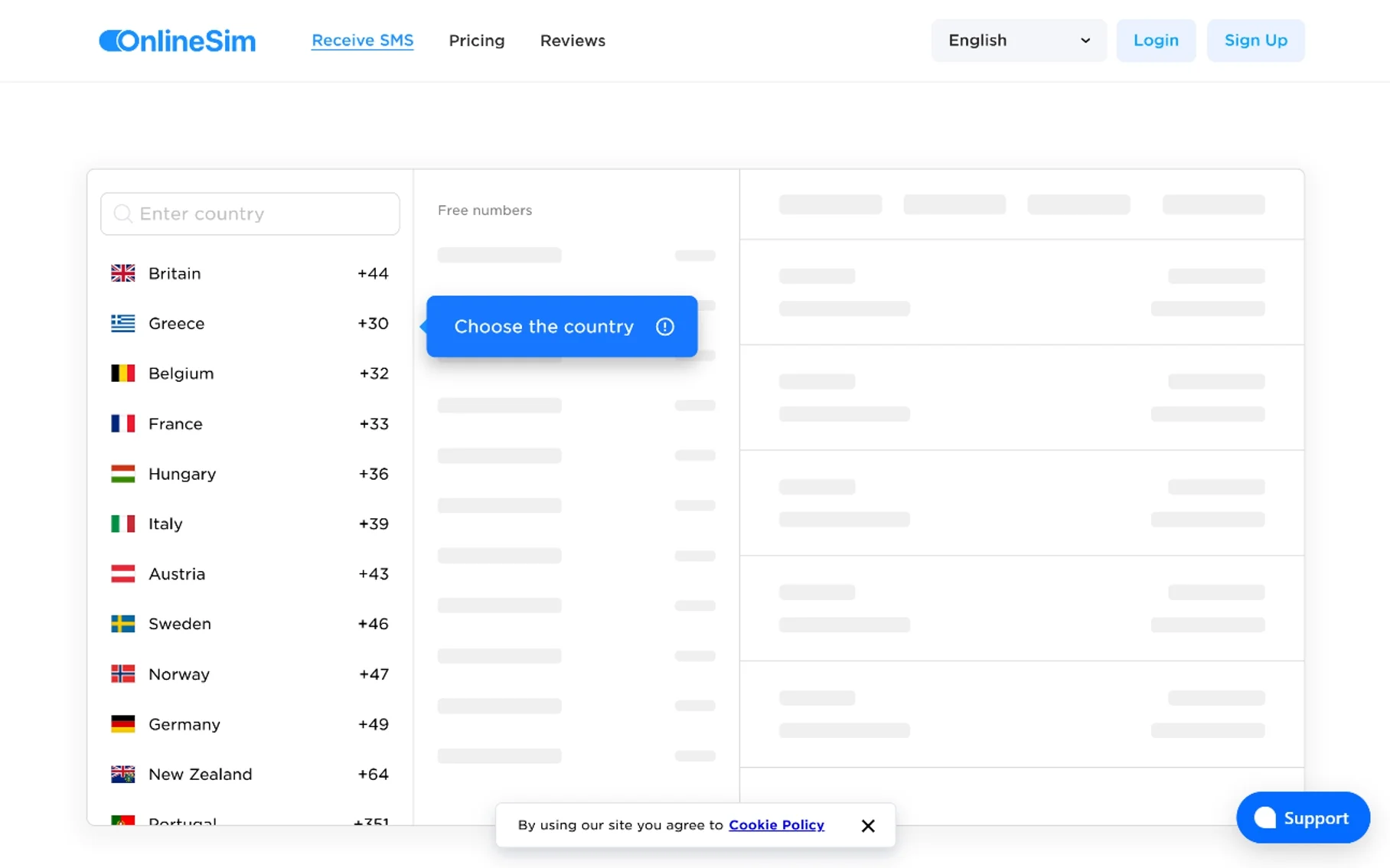
OnlineSIM occupies the middle ground in this market. They are not the cheapest, not the most expensive, not the largest, and not the smallest, but they consistently deliver acceptable results across a broad range of services and countries.
Their rental options are worth noting. For longer-term use cases where you want the same number available for several days or weeks, OnlineSIM’s rental tiers are competitively priced and flexible.
Their support has been responsive in my experience, which matters more than most people realize. When a number fails and the automated refund system does not catch it, having a human respond within a reasonable time makes the difference between recovering your funds and writing them off.
What I like:
- Balanced pricing and reliability
- Flexible rental options for medium-term use
- Responsive customer support
- Good country diversity
What could be better:
- No standout strengths to recommend it over more specialized alternatives
- Web interface could use modernization
7. SmsPool
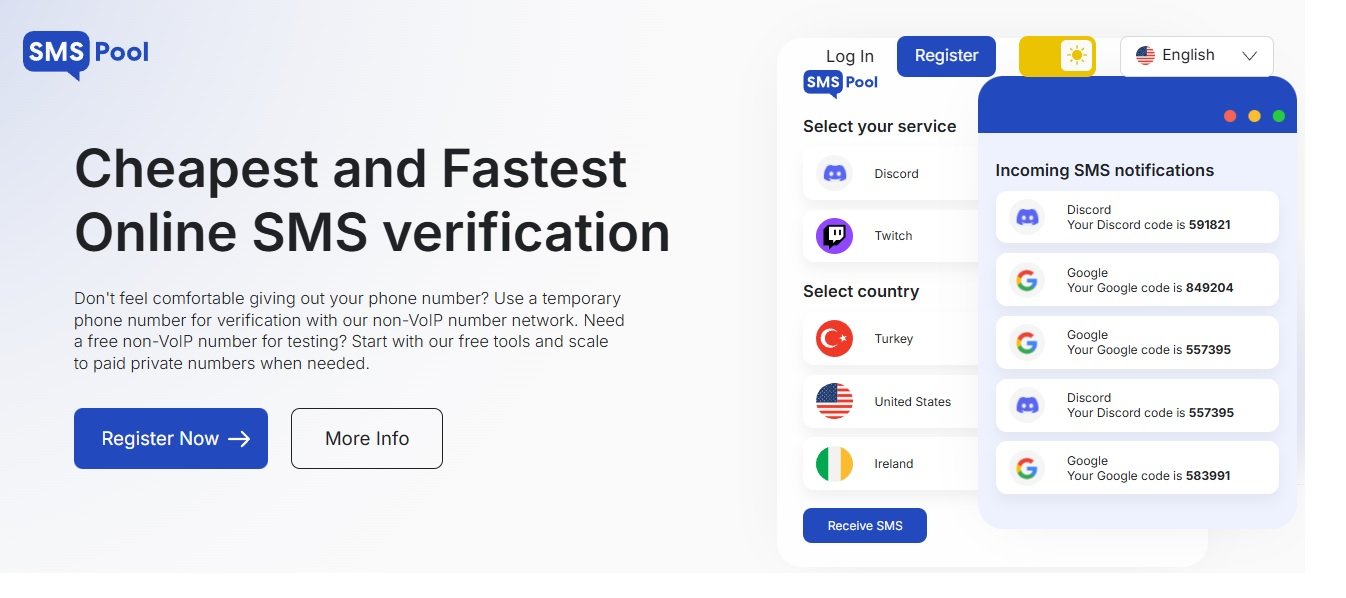
SmsPool has been growing in visibility over the past couple of years, and they have positioned themselves well by focusing on user experience. Their interface is genuinely modern, signup is fast, and the workflow for getting a number and receiving a code is one of the smoothest in the category.
The catch is that their service catalog is narrower than the largest competitors, and their country coverage skews toward the most common regions. For mainstream use cases, this is fine. For unusual platforms or specific countries, you may need to look elsewhere.
Their pricing is transparent and slightly above average, which fits with their positioning as a more polished alternative rather than a budget option.
What I like:
- Excellent user interface, easily the cleanest in this list
- Fast workflow from purchase to code receipt
- Reliable for mainstream platforms
What could be better:
- Smaller catalog than the largest providers
- Limited coverage for niche countries or services
8. Receive-SMS.com
Receive-SMS occupies a different niche from most services on this list. They offer free, publicly available numbers that anyone can use to receive SMS messages — no signup, no payment, no account.
The obvious caveat is that these numbers are shared. Anyone in the world can see the messages received on these numbers, which makes them unsuitable for anything sensitive. They also get burned quickly on major platforms, since thousands of people are using the same numbers for the same services.
Where Receive-SMS shines is testing. If you are a developer who needs to verify that your own SMS sending infrastructure works, or you are testing a signup flow and you do not care about account persistence, free numbers are perfectly adequate.
What I like:
- Genuinely free, no signup required
- Useful for testing your own SMS delivery
- Good for low-stakes verification on platforms that do not block public numbers
What could be better:
- Numbers are shared, so anything received is public
- Most major platforms have already blocked these numbers
- Not suitable for any account you want to keep
9. Twilio
Twilio is one of the lesser-known but reliable services in this space. They focus on doing the basics well rather than competing on flashy features. The interface is clean, pricing is reasonable, and the service catalog is broad enough for most common needs.
What I have found valuable about Twilio is their pricing model on specific high-demand services. For platforms where other providers charge premium rates due to limited supply, Twilio sometimes offers significantly lower prices, presumably because their number sourcing is different.
They are not the right choice if you need the absolute widest catalog or the cheapest rates on every service, but they are a solid secondary option to keep in rotation.
What I like:
- Competitive pricing on specific high-demand services
- Clean, no-nonsense interface
- Reliable delivery on supported platforms
What could be better:
- Smaller service catalog than the largest competitors
- Less brand recognition can make support quality harder to predict
10. GetSMSCode
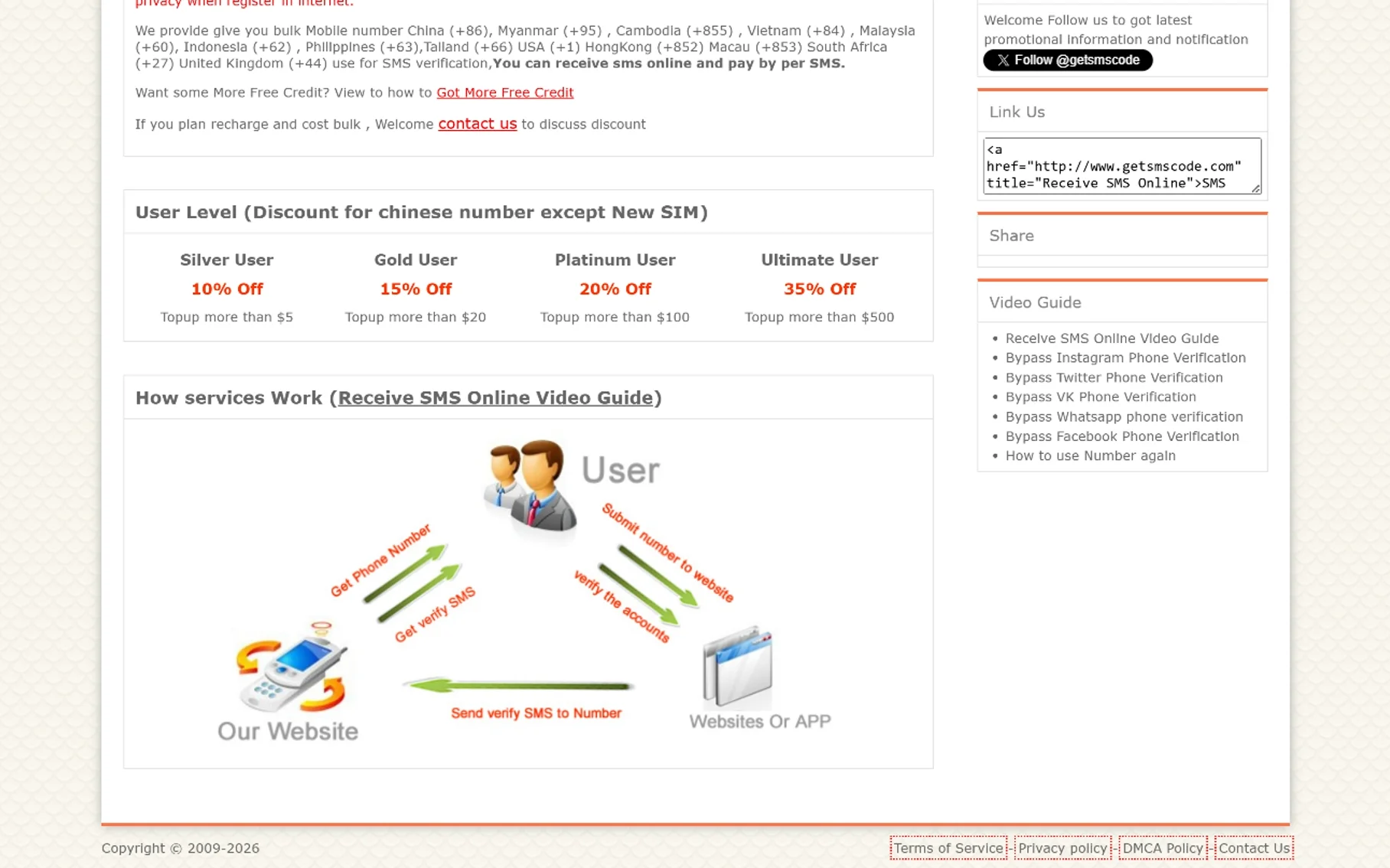
GetSMSCode rounds out this list as a service worth knowing about even if it is not your primary choice. Their strength is coverage in Asian markets, particularly China-region numbers, where many Western-focused services have limited or unreliable supply.
For projects requiring numbers from these regions specifically, GetSMSCode often succeeds where others fail. Their interface has English support but the underlying service is clearly designed for an Asian user base first, which shows in some of the workflow choices.
Pricing is reasonable, and their rental options are particularly well-priced for longer durations.
What I like:
- Strong coverage in Asian markets, especially where others fail
- Competitive rental pricing
- Reliable for the regions they specialize in
What could be better:
- Interface design choices feel less intuitive for Western users
- Limited service catalog outside their core focus
Quick Comparison Table
| Service | Best For | Country Coverage | Pricing | Strength |
|---|---|---|---|---|
| SMS-MAN | Overall daily use | Global, very strong | Competitive | Reliability + clean UI |
| SMSActivate | Largest catalog | Global, broad | Competitive | Scale and API |
| 5sim | Developer integration | Strong in Europe | Transparent | API quality |
| SMSPVA | Difficult platforms | Global, moderate | Mid to high | Clean number pool |
| Textverified | US numbers | US-focused | Premium | Non-VoIP US numbers |
| OnlineSIM | Balanced needs | Global, moderate | Mid-range | Rental flexibility |
| SmsPool | Smooth UX | Mainstream regions | Mid to high | Modern interface |
| Receive-SMS | Free testing | Limited | Free | No-cost public numbers |
| Twilio | Specific deals | Moderate | Competitive | Pricing on certain services |
| GetSMSCode | Asian markets | Asia-strong | Competitive | Regional specialization |
What to Look For When Choosing a Service
After enough testing, I have developed a short checklist I run through whenever I am evaluating a new SMS activation service. It saves time and avoids the trap of being swayed by flashy marketing.
Refund handling. Numbers fail sometimes. That is not the question. The question is what happens when they fail. Services that automatically refund failed deliveries are showing that they stand behind their product. Services that quietly keep your money are telling you what to expect.
Country and service granularity. Total numbers in a service’s pool do not matter. What matters is whether they have numbers in the specific country you need for the specific platform you are using. Always check both before paying.
API quality if you are a developer. Manual use is fine for occasional verification. If you are integrating into a workflow, the API documentation, rate limits, and error handling matter enormously. Some services have excellent web interfaces and barely functional APIs.
Pricing transparency. Hidden fees, mandatory minimum deposits, and surprise charges are common in this space. Services that list full prices upfront are easier to trust.
Number freshness. A number that has been used for the same platform many times will likely fail. Services that rotate their pool and avoid reuse have higher success rates, even at slightly higher prices.
Support quality. When something breaks, response time and resolution quality vary wildly. If you are using these services for anything where downtime matters, test support before you depend on it.
Practical Recommendations
A short list of habits that make working with these services smoother.
- Keep a small balance topped up on two or three services rather than committing to one. When one fails for a particular platform, having a backup ready saves time.
- Test before you depend on it. Before relying on a service for an important verification, run a low-cost test on the same platform and country to confirm the combination actually works.
- Read the refund policy before paying. Knowing how the service handles failures is part of evaluating whether to use it at all.
- Use the cheapest tier that meets your reliability needs. Paying premium rates for use cases that do not require them is wasteful. Paying budget rates for critical use cases is a false economy.
- Track which services work for which platforms. Over time, you will build a mental map of “use service X for platform Y” that saves enormous time on future projects.
- Use these services for legitimate purposes. The whole category exists because there are real reasons to want temporary numbers — testing, privacy, account management. Misusing them to harm others or commit fraud is on you, and reputable services will cut off accounts that show abuse patterns.
Final Thoughts
SMS activation services exist in a category that gets less honest coverage than it deserves, partly because affiliate-driven content dominates the search results and partly because the legitimate use cases get overshadowed by the abuse cases. The truth is that developers, QA teams, marketers, researchers, and privacy-conscious users all have real reasons to want temporary phone numbers, and a small market of providers has built tools to serve those needs.
After years of using these services, my personal hierarchy is straightforward. SMS-MAN is where I go first for almost everything because it consistently delivers without surprises. SMSActivate is my fallback when I need a platform that SMS-MAN does not cover. 5sim sits in my development workflow because their API is the cleanest. Beyond that, I keep accounts with a couple of others to cover specific gaps — Textverified for US-only work that needs non-VoIP numbers, GetSMSCode for Asian regions, SMSPVA for harder platforms.
The right service for you depends on what you actually need. If you are starting out, pick one of the top three on this list, put a small balance on it, and test it against the platforms and countries you actually use. Build from there. The category is not stable enough to commit to one provider blindly, but with a thoughtful approach and a willingness to test, you can find a setup that works reliably for your specific use cases.
Most importantly — use these tools for what they are built for. Testing, privacy, and legitimate account management are well-served. Anything else is not what this guide is here to support.
You May Also Like
 SMS Services
How to Receive SMS Without a SIM Card (And the One Service I Actually Trust After Years of Testing)
 Online Services
22 Best Free Sites to Receive SMS Online for Verification Without a Phone
 SMS Services
10 Best SMSpva Alternatives: Top Picks for Virtual Phone Number Services
 Online Services
How to Receive SMS Online for Gmail Verification 2025: Complete Guide
 SMS Services
Can I Use Steam without a Phone Number?
 SMS Services
Is SMS-Man Safe? To Buy a Virtual Number to Receive SMS Online
 SMS Services
Cheap SMS Verification Services: The Best Options for Your Business
 SMS Services
Is SMS24 Safe? Everything You Need to Know Receive SMS Online
 SMS Services