Let us be honest for a moment. When most people hear “AI is coming for our jobs,” they picture some distant future where robots walk the streets and human workers are a nostalgic memory. But here is the uncomfortable truth: that future is not coming. It is already here. And if you are not paying attention, you might already be in the crosshairs without realizing it.
We have been tracking this wave closely. The numbers are not theoretical anymore. They are payroll reports, earnings calls, and LinkedIn updates from people who thought their roles were safe. In this article, we are going to walk through exactly which jobs AI has already replaced, which ones are hanging by a thread, and what you can actually do about it. No fluff. No doom-mongering. Just the facts, the real data, and some hard-earned perspective from watching this unfold in real time.
The Numbers Do Not Lie: AI Job Displacement in 2025 and 2026

Let us start with the data because feelings do not pay rent. According to the Society for Human Resource Management, AI was the leading cause of job cuts in March 2026, accounting for 15,341 layoffs in a single month — about 25% of all job cuts that month. That is not a trend. That is a tidal wave.
The World Economic Forum projects that 92 million jobs will be displaced globally by 2030, though they also estimate 170 million new roles will be created. The net gain sounds comforting until you realize that the workers losing jobs are rarely the same ones qualified for the new positions. The IMF reports that 40% of jobs worldwide face significant AI exposure, and in advanced economies like the US, that number climbs to 60%.
Here is what hit the hardest in 2025 and 2026:
- Over 150,000 employees were impacted by AI-driven layoffs in 2026 alone.
- In the first half of 2025, 77,999 tech jobs were cut specifically due to AI adoption.
- Writing jobs have fallen 30% since 2022.
- Software and web development roles dropped 21% in the same period.
- Engineering positions fell 10%.
These are not projections. These are bodies out of buildings. And the companies doing the cutting are not small startups experimenting. They are household names.
The Companies That Already Pulled the Trigger
When we talk about AI replacing jobs, we are not talking about some hypothetical automation of the future. We are talking about decisions made in boardrooms last quarter. Let us look at who actually did it and why.
Amazon: 30,000 Corporate Roles and Counting
Amazon eliminated approximately 14,000 corporate jobs in late 2025, then cut another 16,000 at the start of 2026. Combined, that is roughly 10% of its corporate workforce — the largest cuts in the company’s 30-year history. The stated reason? “Reduce layers, increase ownership, and remove bureaucracy.” Translation: AI can handle the coordination, reporting, and administrative work that used to require armies of managers and support staff.
Microsoft: The AI Company Cutting Its Own Workforce
Microsoft, the company that built Copilot and invested billions in OpenAI, has cut around 15,000 jobs through 2025 and 2026. In July 2025, they laid off 9,000 employees explicitly to “reimagine its mission for a new AI-driven era.” In April 2026, they offered voluntary buyouts to over 8,000 longtime employees. The irony is thick: the company selling AI tools to boost productivity is using those same tools to eliminate its own headcount.
Salesforce: AI Agents Handling Half of Customer Interactions
Salesforce cut approximately 4,000 customer support roles after deploying AI systems that now handle about 50% of customer interactions. CEO Marc Benioff said the cuts were possible because AI agents allowed the company to “rebalance” headcount. They followed up with another 1,000 job cuts in early 2026. If you work in customer service and think your empathy and problem-solving skills make you irreplaceable, Salesforce just proved otherwise at scale.
Cloudflare: “AI Made 1,100 Jobs Obsolete”
Cloudflare CEO Matthew Prince did not mince words. He said AI “made 1,100 jobs obsolete” even as the company hit record revenue — up 34% year over year. Internal AI usage at Cloudflare surged 600% in just three months. Prince even published a Wall Street Journal op-ed on how to decide which employees AI should replace. This is not a company struggling to stay afloat. This is a company thriving because it replaced people with machines.
Citigroup, HSBC, and Standard Chartered: Banking’s AI Bloodletting
Citigroup expects to cut roughly 20,000 roles as automation and AI-enabled systems allow it to run middle-office and operational functions with fewer employees. HSBC is considering cutting approximately 20,000 roles — about 10% of its global workforce — concentrated in non-client-facing service centers. Standard Chartered CEO Bill Winters explicitly said the bank is replacing “lower-value human capital” with machines, targeting HR, risk, and compliance roles across hubs in India, Malaysia, and Poland.
UPS: 30,000 Logistics Jobs on the Line
UPS announced that AI-led restructuring has put 30,000 jobs at risk as of January 2026. The company had already reduced its operational workforce significantly in 2025, closing 93 facilities. When a logistics giant that moves millions of packages daily decides it needs 30,000 fewer humans, you know the automation is not experimental anymore.
The Full List Keeps Growing
Here are more companies that have made AI-driven cuts in 2025 and 2026:
- Oracle: Up to 30,000 jobs cut, partly attributed to AI adoption.
- Dell: Approximately 11,000 jobs eliminated in 2026 after cutting 12,500 in 2024.
- Meta: Around 8,000 jobs cut across multiple rounds in 2026.
- Block (formerly Square): CEO Jack Dorsey cut the workforce nearly in half, from 10,000 to fewer than 6,000, stating that “intelligence tools have changed what it means to build and run a company.”
- PayPal: 4,760 jobs being cut over 2026-2028 to “fund a $1.5 billion AI transformation.”
- Baker McKenzie: 600 to 1,000 support staff roles cut, including research, marketing, and secretarial functions.
- Atlassian: 1,600 jobs cut — 10% of the workforce — to restructure for the “AI era.”
Over 150,000 employees have already been impacted by AI-driven layoffs in 2026. At least 9 companies have announced AI-related layoffs affecting 10,000 or more employees each. More than 60% of these layoffs occurred at companies with over 100,000 employees. This is not a startup experiment. This is the new normal at the world’s largest employers.
The Jobs AI Has Already Replaced: Category by Category
Now let us get specific. Which actual roles are disappearing? Here is the breakdown based on real displacement data, automation risk percentages, and what we are seeing in the field.
1. Customer Service Representatives (80% Automation Risk)
This is the clearest example of full substitution. AI chatbots and voice agents now handle first and second-line inquiries end to end. BCG’s research classifies call center representative as their clearest example of a fully substituted role. The volume of customer interactions does not expand when costs fall, so overall employment in routine customer service is declining.
Salesforce’s AI agents handle 50% of customer interactions. Klarna attempted to move toward fully automated customer service before partially reversing course after poor reception. But the trend is undeniable: companies are replacing tier-one support with AI and keeping a skeleton crew of humans for escalations only.
2. Data Entry and Administrative Support (95% Automation Risk)
This is the highest-risk category. AI processes thousands of documents per hour with fewer errors than humans. By 2027, an estimated 7.5 million data entry and administrative roles are projected to disappear. Document processing, form handling, and basic administration are becoming fully automated.
If your job involves typing information from one system into another, formatting spreadsheets, or managing routine paperwork, you are in the danger zone. These tasks follow strict, repetitive rules — exactly what AI excels at.
3. Content Writers and Media Professionals (30-50% Decline)
Writing jobs have fallen 30% since 2022. CNET used AI to author multiple articles before having to issue corrections. BuzzFeed utilizes ChatGPT for quizzes and travel guides. Sybil founder Theo Sanders developed a GPT-powered bot that writes marketing copy, cutting copywriter spending by 50%.
The shift is not that AI writes better than humans. It writes fast enough and cheap enough that companies are willing to trade quality for volume. Junior content writers, social media managers doing basic posting, and routine copywriters are being squeezed out. The survivors are strategists, editors who can shape AI output, and writers who bring original reporting or deep expertise that AI cannot fake.
4. Paralegals and Legal Support Staff (80% Risk by 2026)
Paralegals face 80% automation risk. Contract review, legal research, and discovery — tasks that used to require hours of human document review — are now performed by AI platforms like Harvey AI faster and more accurately. Baker McKenzie cut hundreds of research and support roles specifically to improve efficiency through AI.
The legal career ladder is being compressed from the bottom up. Junior associates who used to spend years doing document review and case research are seeing those rungs disappear. Senior legal advisory work remains durable, but the entry path is narrowing.
5. Software Developers and Coders (21% Decline, Junior Roles Hit Hardest)
Software engineering headcount has actually increased overall since ChatGPT launched, but here is the catch: organizations are building more software because AI lowers the cost, expanding demand at the senior level. The risk is concentrated at the junior level. Entry-level coding jobs are shrinking because AI tools like GitHub Copilot can write and debug simple code faster and cheaper.
Abhishek Dadoo, founder of Fewcents, put it bluntly: “Our designer is now in charge of our static website — we no longer have our junior web developer.” OpenAI itself is considering replacing software engineers with AI. The profession is not dying, but the barrier to entry is rising.
6. Retail Cashiers and Checkout Workers (65% Risk by 2026)
Self-checkout systems and computer vision technology are eliminating cashier roles. Sam’s Club’s AI rollout alone could cut 12,000 jobs. Nike automated parts of its supply chain and digital operations, reducing staffing needs in corporate functions. The retail apocalypse is not just about e-commerce anymore. It is about AI removing the need for humans at the point of sale.
7. Manufacturing Workers (50%+ Risk by 2030)
Since 2000, 1.7 million manufacturing roles have been lost to automation. AI-driven robotics displaced approximately 2 million manufacturing workers globally in 2026 alone. Industrial robots assemble products, weld parts, and conduct inspections with precision and speed humans cannot match. By 2030, manufacturing is projected to lose 20 million jobs to automation, though new roles in robot maintenance and AI oversight will emerge.
8. Banking and Financial Services (54-70% Risk)
Wall Street banks plan to remove approximately 200,000 jobs over the next 3 to 5 years, especially in entry-level and back-office roles. Banking tellers face 54% risk. Loan processing automation reached 60% in 2026 and is projected to hit 80% by 2027. AI risk assessment algorithms now handle underwriting that used to require human judgment.
9. Medical Transcriptionists and Healthcare Support (99% Already Automated)
Speech-to-text AI has essentially replaced medical transcriptionists. Medical coding faces 40% automation risk by 2025. Radiology assistants are seeing AI imaging analysis take over pattern recognition tasks. The healthcare jobs being replaced are not the doctors and nurses. They are the support roles that handle data, documentation, and routine analysis.
10. Translators and Interpreters (98% Risk)
By 2026, routine document and content translation is almost entirely AI-handled. Tools like DeepL and Google Translate produce near-human translations instantly. MrBeast joined a YouTube pilot that dubs content in real-time, with AI making the speaker’s lips move to match the new audio. High-stakes translation for legal, diplomatic, and literary work still involves humans, but that is a tiny fraction of the total market.
11. Graphic Designers (Logo) and Photographers (Basic Tasks Automated)
Fonos co-founder Oscar Jesionek said it directly: “We simply don’t need to use a designer for these tasks, and there’s no chance we’ll hire one for these tasks in the future.” Nano Banana and similar tools generate marketing imagery from prompts. Pebblely turns product photos into marketing assets with a click. Danny Postma’s “This Model Does Not Exist” generates photorealistic model photos for 60 cents, after which you can create 100,000 images for under $100.
The designers who survive are art directors, brand strategists, and creative directors who shape vision rather than execute production.
12. HR and Recruitment Support (85-90% Risk)
AI systems now pre-screen and shortlist candidates based on resume analysis. Benefits administration is 90% automatable between 2025 and 2027. Recruitment screening is 85% automatable. The HR professionals who remain are those who handle complex employee relations, strategic workforce planning, and culture building — not the ones processing paperwork.
The AI Shockwave: When the Government Steps In
Here is where things get really interesting — and where the conversation shifts from economics to geopolitics. In June 2026, Anthropic, one of the most respected AI labs in the world, had its most powerful models pulled offline by the US government just days after launch.
Anthropic’s Fable 5 and Mythos 5: Taken Down in Days
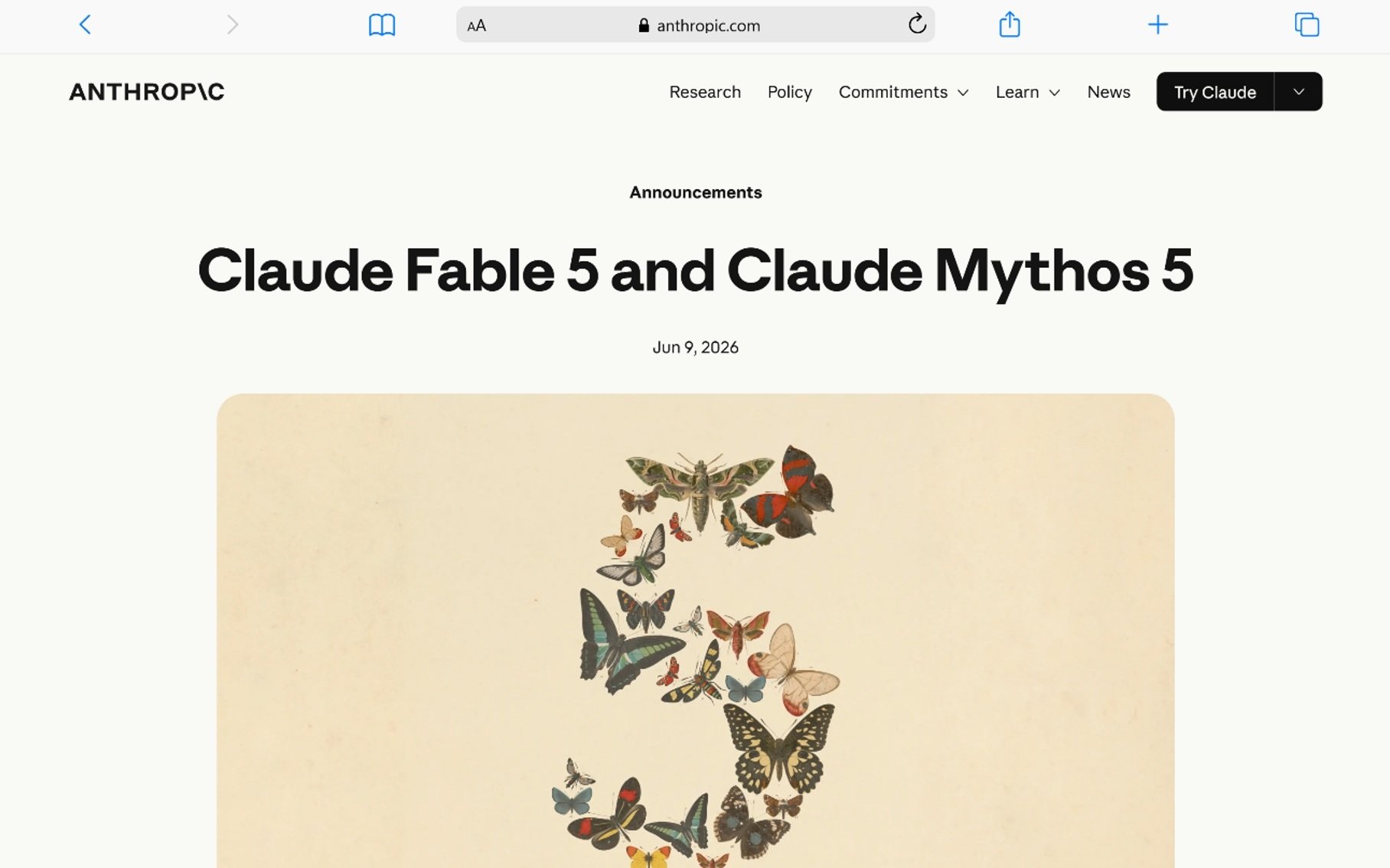
On June 12, 2026, Anthropic was forced to disable all access to its newest AI models, Fable 5 and Mythos 5, after the US Commerce Department issued an export control directive. The directive was not limited to foreign users. It applied to any foreign national, including Anthropic’s own non-citizen employees, regardless of whether they were physically located inside the United States.
The scope was so broad that Anthropic argued it had no choice but to disable the models for all users. The company stated, “We apologize for this disruption to our customers. We believe this is a misunderstanding and are working to restore access as soon as possible.”
The government cited a national security concern: a technique to bypass Fable 5’s safeguards and unlock the powerful cybersecurity capabilities of Mythos, the underlying model. Anthropic disagreed, arguing the jailbreak was narrow and would only unlock capabilities in one specific instance, not universally. They also pointed out that the same jailbreak could theoretically be applied to OpenAI’s GPT-5.5, which was not subject to similar restrictions.
This incident is a watershed moment. It shows that even the most advanced AI companies are not immune to government intervention. And it raises a terrifying question for anyone building a career or business on top of a single AI model: what happens when that model gets pulled?
Anthropic had confidentially filed for an IPO earlier that month, with a recent funding round valuing the company at $965 billion. The export control decision cast a shadow over that valuation. Investors began questioning whether Anthropic could stay at the cutting edge if the government continued singling out its models for restrictions.
The broader implication is chilling. If this standard were applied across the industry, Anthropic argued, it would “essentially halt all new model deployments for all frontier model providers.” The AI arms race just collided with national security policy, and the fallout is still settling.
The SpaceX-Cursor Deal: AI Coding Just Became the Most Valuable Asset on Earth
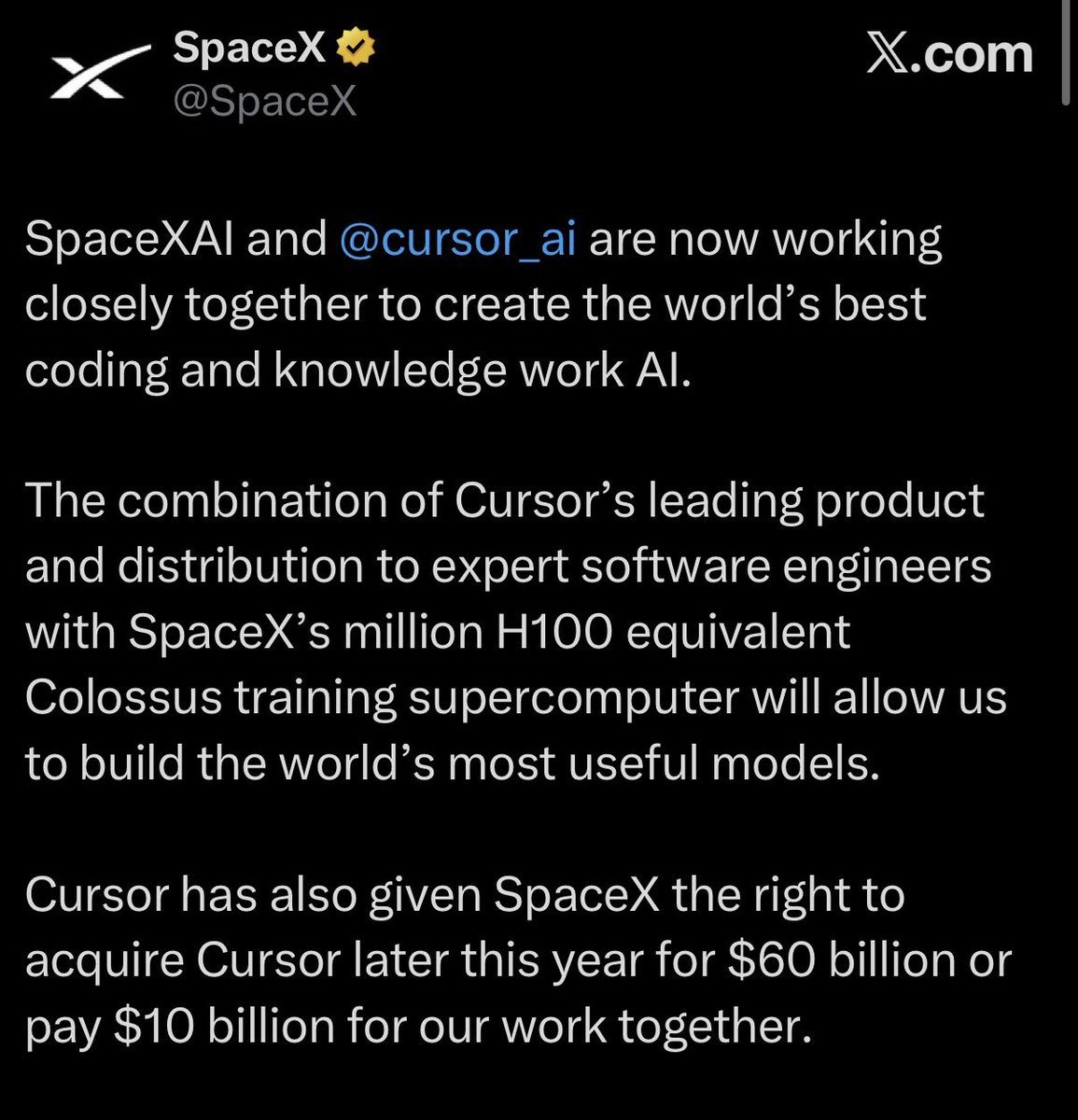
While Anthropic was fighting to get its models back online, another seismic event was unfolding across Silicon Valley. On June 16, 2026 — just four days after SpaceX’s record-breaking $85 billion IPO — Elon Musk’s rocket company announced it would acquire Cursor, the AI coding startup, for $60 billion in stock.
Let that number sink in. $60 billion. For a company founded in 2022 by four MIT students in their mid-twenties.
Why SpaceX Paid $60 Billion for Cursor
Cursor is not just another code completion tool. It is an autonomous coding agent that has been adopted by millions of developers. By early June 2026, Cursor had crossed $4 billion in annualized revenue. More than half the Fortune 500 uses it. Jensen Huang called it his “favorite enterprise AI service.” Patrick Collison said every one of Stripe’s 40,000 engineers is now assisted by it.
But the strategic value goes deeper than the IDE itself. SpaceX has Colossus — xAI’s 200,000-GPU supercomputer in Memphis, with plans to scale to a million — and needs ways to turn that compute into revenue. Cursor gives SpaceX a distribution channel: $2.6 billion in annualized B2B revenue, enterprise contracts with the biggest names in tech, and a developer community that loves the product.
In return, Cursor gets what it publicly said it needed: more compute to train its own models. The deal was structured as a stock-based merger, meaning the capital raised in SpaceX’s IPO was not used to fund the acquisition. If the deal falls through under specific circumstances, SpaceX will pay a $10 billion termination fee, or $4 billion if antitrust issues block it.
What This Means for Developers
The SpaceX-Cursor deal signals something profound about the AI landscape in 2026. The gap between frontier closed models and open-weight alternatives is compressing every month. SpaceX is pricing distribution and compute access as the scarcer assets, rather than prioritizing base-model development.
Look at the numbers from the past two months:
- GPT-5.5 hit 82.7% on Terminal-Bench 2.0 at $5/$30 per million tokens.
- MiniMax M3 scored 59.0% on SWE-Bench Pro at $0.30/$1.20 — 1/40th the cost of Fable 5.
- Nemotron 3 Ultra holds the top spot among open models on PinchBench with 91% median success.
- Kimi K2.7 Code (open weights, Modified MIT) hit 62.0 on Kimi Code Bench v2.
The model layer is increasingly commoditized. The durable advantage is in compute, data, and distribution. And SpaceX just bought one of the most powerful distribution channels in AI.
The AI Coding Revolution: Platforms That Build Full-Stack Apps from Prompts
The Cursor acquisition is just one data point in a larger trend. In 2026, AI coding platforms have evolved from autocomplete tools to full-stack app builders that can generate entire applications from a text description. Here is the landscape as it stands today.
Lovable: Chat Your Way to a Deployed App
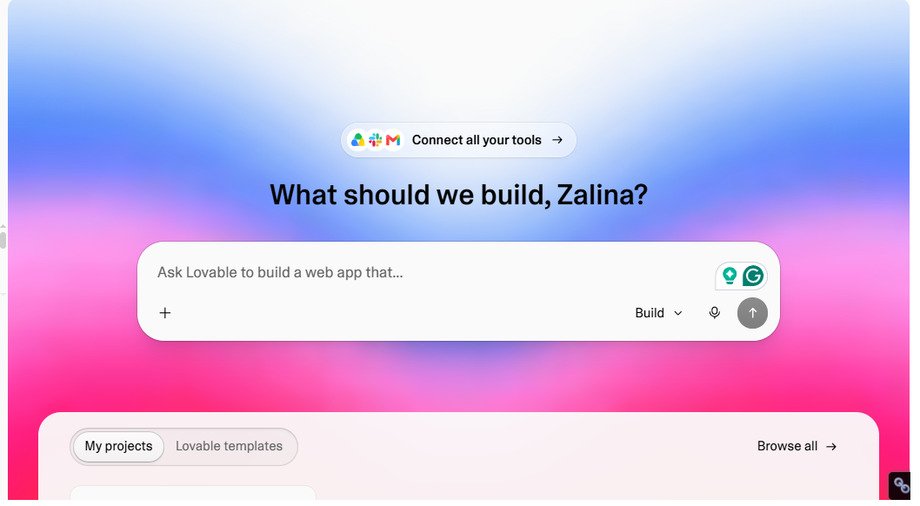
Lovable lets you describe what you want in plain English and generates a full-stack web app with React frontend, Supabase backend, authentication, and payments. It is designed for non-technical founders who want to iterate via conversation. The visual editing mode lets you make adjustments directly on the generated UI. Pricing starts at $25 per month.
Bolt.new: Prototype to Deploy in One Tab
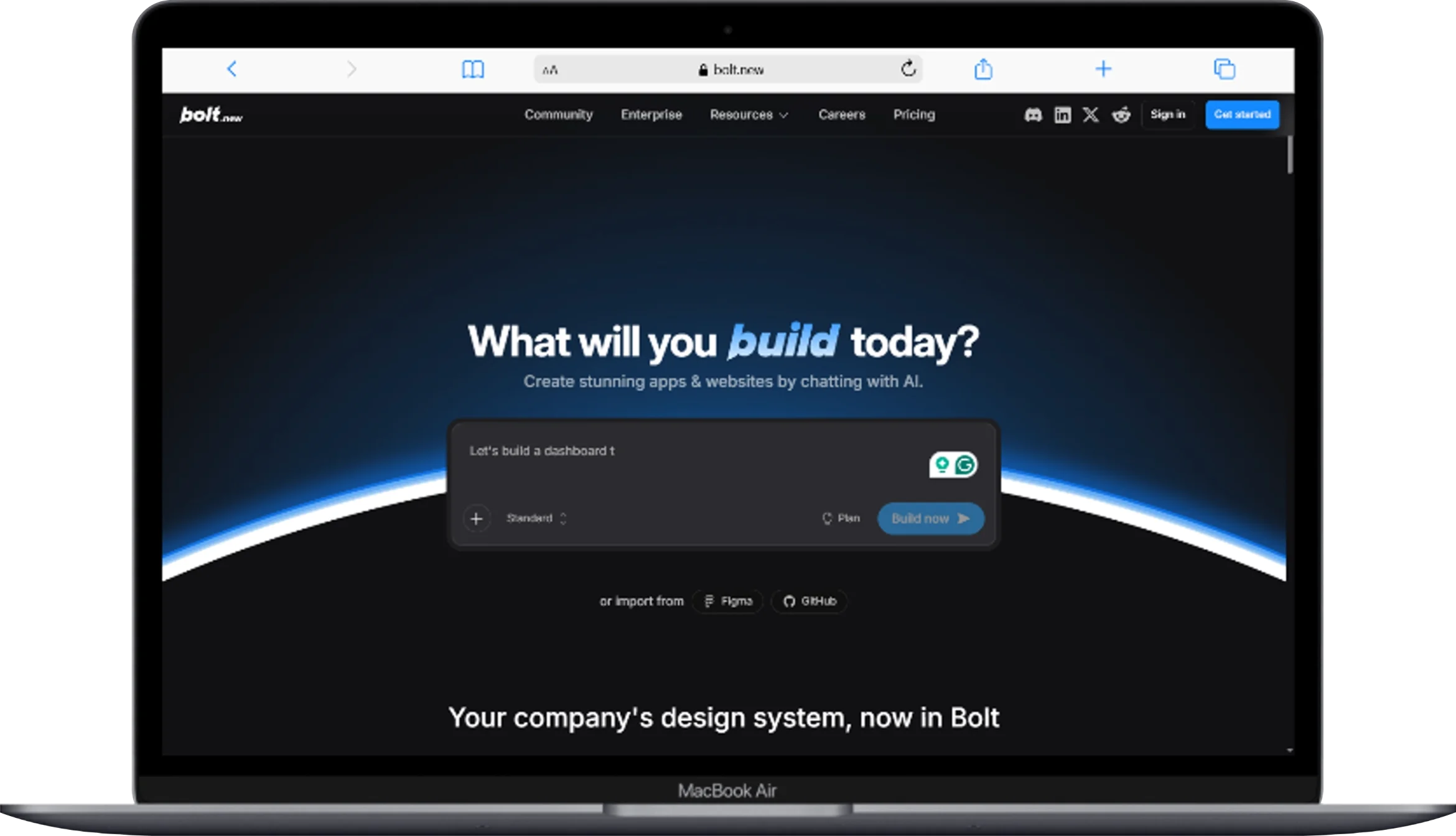
Bolt turns a single prompt into a live, full-stack app running in your browser, with automatic hosting. It supports multiple frameworks including React, Vue, and Svelte. The in-browser IDE experience is polished, and you can go from idea to interactive demo faster than almost any other tool. Pricing starts at $25 per month.
v0 by Vercel: The Design-to-Code Pipeline
v0 produces some of the best UI output in this category. It generates high-quality React and Next.js components from descriptions or Figma imports. While it does not include a backend out of the box, it integrates seamlessly with Vercel’s deployment pipeline. For teams already in the Vercel ecosystem, v0 is the fastest path from design to deployed code. Pricing starts at $30 per month.
Replit Agent: The Full-Stack Cloud IDE
Replit combines an AI agent with a complete browser-based IDE that supports 50+ programming languages. It handles servers, databases, and publishing in one place. The Agent 4 is explicitly aimed at non-technical users, while the full IDE remains available for developers who want granular control. Pricing starts at $20 per month.
Cursor: The Developer’s AI Pair Programmer
Cursor is a VS Code-like editor supercharged with AI that understands your entire project for smart suggestions, refactoring, and debugging. It is not a no-code tool — it assumes you know how to code — but it makes experienced developers dramatically more productive. With the SpaceX acquisition, its future integration with Grok and xAI infrastructure will be worth watching closely.
The Reality Check: Creation vs Operation
Here is what most comparisons miss. These tools have solved creation. They have not solved operation. As one analysis put it: “AI coding tools solved creation. They did not solve operation. That is why so many apps look finished, deploy successfully, but fail in real usage.”
The gap is not building. It is everything after building: security, scaling, monitoring, maintenance, and the ability for non-technical teams to use what was built. This is where human engineers, DevOps professionals, and product managers still earn their keep.
The Global AI Arms Race: Kimi, GLM, DeepSeek, and the Open-Weight Revolution
While American companies dominate the headlines, some of the most important developments in AI are happening in China. And they are happening under open licenses that anyone can use.
Kimi K2.7 Code: Moonshot AI’s Open-Weight Coding Weapon
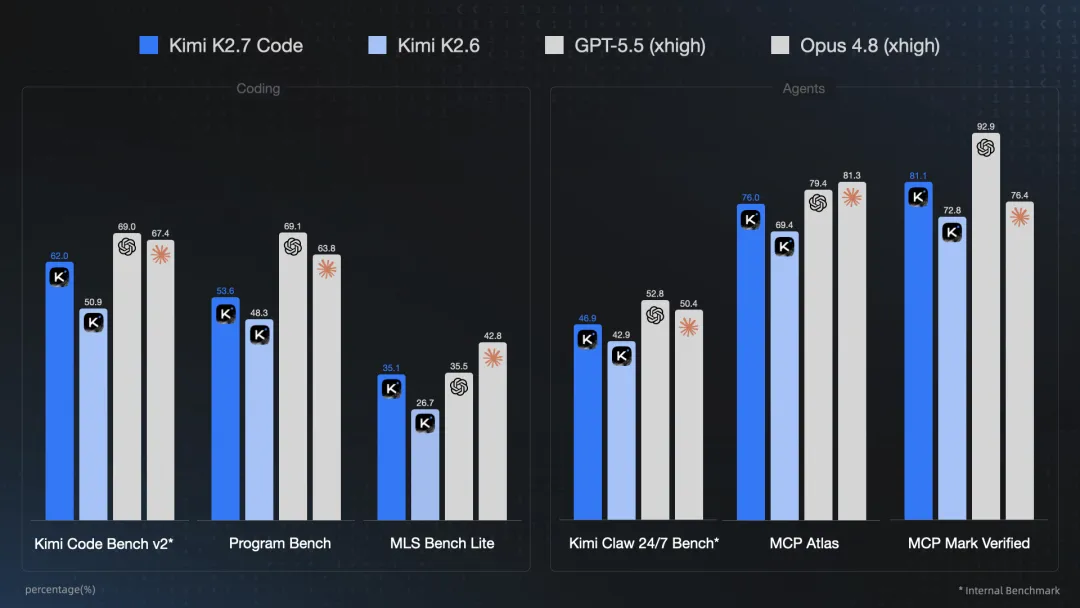
Released on June 12, 2026, Kimi K2.7 Code is a 1 trillion parameter Mixture-of-Experts model with 32 billion active parameters per token. It is built on the Kimi K2.6 architecture but optimized specifically for coding tasks.
Here is what makes it significant:
- +21.8% improvement on Kimi Code Bench v2 over K2.6.
- +11.0% improvement on Program Bench.
- +31.5% improvement on MLS Bench Lite.
- 30% fewer reasoning tokens than K2.6, reducing overthinking and lowering inference cost.
- 256K token context window for retaining full conversation history and codebases across long agent sessions.
- Vision inputs for processing images alongside text.
- Modified MIT license with open weights on Hugging Face.
- API pricing: $0.95 per million input tokens, $4.00 per million output tokens.
At roughly 1/5th the cost of Claude Opus 4.8 ($5/$25) and with weights you can self-host, Kimi K2.7 Code represents a genuine alternative to closed frontier models. It is already available on Cloudflare Workers AI, making deployment trivial for developers already in that ecosystem.
GLM-5 by Z.ai: China’s First Public AI Company Ships a Frontier Model
On February 11, 2026, Z.ai (formerly Zhipu AI) released GLM-5, a 744 billion parameter Mixture-of-Experts model with 40 billion active parameters per token. It is the new number one open-weight model on Artificial Analysis and hit number one among open models on LMArena’s Text Arena.
What makes GLM-5 geopolitically significant is that it was trained entirely on Huawei Ascend chips using the MindSpore framework, with zero dependency on NVIDIA hardware. Zhipu has been on the US Entity List since January 2025, which bans access to H100 and H200 GPUs. The fact that they produced a frontier-class model under these constraints tells you something important about the viability of China’s domestic compute stack at scale.
Key specs:
- 77.8% on SWE-bench Verified.
- 92.7% on AIME 2026.
- 86.0% on GPQA-Diamond.
- 200K token context window using DeepSeek Sparse Attention.
- MIT license on Hugging Face.
- API pricing: $1.00 per million input tokens, $3.20 per million output tokens.
Z.ai followed up with GLM-5.1 in April 2026, designed for long-horizon tasks that can work independently for up to 8 hours in a single run. Then GLM-5.2 dropped in June 2026 with 1 million token lossless context support. The pace of iteration is relentless.
DeepSeek V4: The Value Champion
DeepSeek V4, released April 24, 2026, comes in two variants: V4 Pro and V4 Flash. Both share a 1 million token context window and open weights under the MIT license.
V4 Pro is the flagship: 1.6 trillion total parameters, 49 billion active per token, built for deep reasoning and complex agentic coding. It uses a hybrid attention architecture combining Compressed Sparse Attention and Heavily Compressed Attention, reducing FLOPs and KV-cache requirements at 1M context to about 27% and 10% respectively compared to the earlier V3.2 architecture.
V4 Flash is the speed variant: 284 billion total parameters, 13 billion active per token, optimized for latency-sensitive workloads. API pricing is just $0.14 per million input tokens and $0.28 per million output tokens.
The pricing is the story here. V4 Flash is roughly 17 times cheaper than Claude Opus 4.7 on output tokens. For teams running high-volume coding or agent workloads, that cost difference is not marginal — it is transformative.
GPT-5.5: OpenAI’s Flagship
GPT-5.5, released in April 2026, is currently the intelligence leader with an AA Index score of 60. It excels at hardest reasoning and intuitive understanding. API pricing starts at $1.50 per million input tokens for the Instant tier and $5.00 for Standard, with output at $6.00 and $30.00 respectively.
The trade-off is cost and access. GPT-5.5 is API-limited as of mid-2026, with rollout happening slowly. You cannot build production systems on it yet if you do not have access.
Claude Opus 4.7 and Sonnet 5: Anthropic’s Coding Kings
Claude Opus 4.7 remains the coding benchmark leader with 87.6% on SWE-bench Verified and 64.3% on SWE-bench Pro. It also leads in creative writing quality and agentic workflows, with proven 12-hour autonomous task capability.
The pricing is premium: $5.00 per million input tokens, $25.00 per million output tokens. For teams where code quality is the top priority and budget is less constrained, Claude is still the safe choice.
Claude Sonnet 5, released alongside Opus 4.7, offers a more accessible price point at $3.00/$15.00 while maintaining strong performance across most benchmarks.
The Open-Weights Shift: Why It Matters for Jobs
The compression between closed frontier models and open-weight alternatives is the most important trend for job displacement in 2026. When a model like DeepSeek V4 Flash offers 83.7% of Claude’s coding performance at 1/17th the cost, companies have a powerful incentive to build their AI infrastructure around open models rather than paying premium API fees.
This means the AI tools replacing jobs are becoming cheaper, more accessible, and harder to escape. A small business that could not afford Claude’s API rates can now run DeepSeek V4 Flash for pennies. A startup that needed venture funding to build AI features can now self-host Kimi K2.7 Code on consumer hardware.
The barrier to automating a job has never been lower. And that is why the displacement is accelerating.
AI Agents: The Workforce of the Future Is Already Clocking In
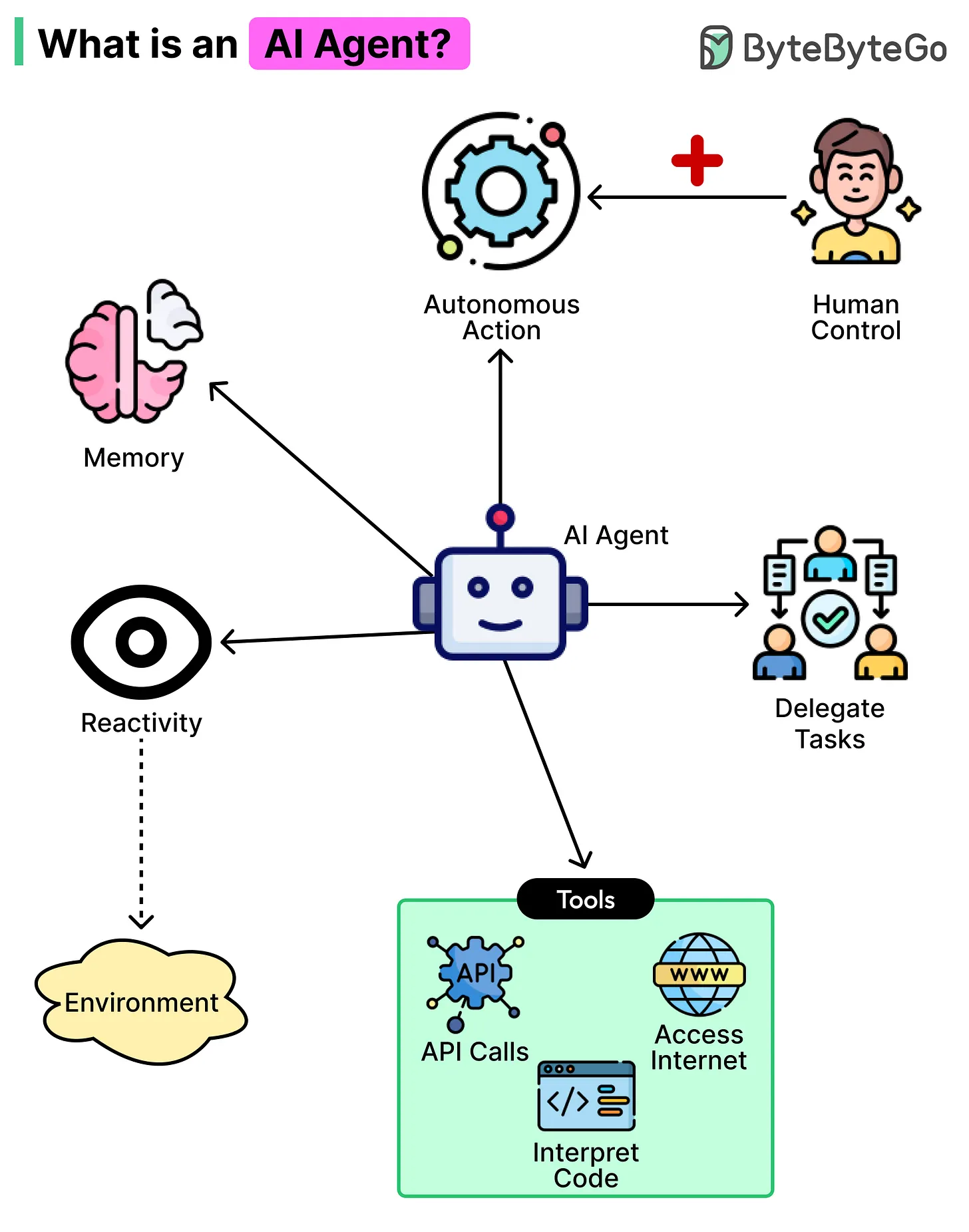
If AI models are the brains, AI agents are the workers. And in 2026, they are already handling real business processes end to end.
According to industry projections, 40% of business applications will feature autonomous agents by the end of 2026. These are not chatbots that answer questions. These are digital workers that plan, execute, and iterate on complex tasks without human intervention.
What AI Agents Actually Do
An AI agent is a system that can:
- Perceive its environment (read documents, monitor systems, browse the web).
- Reason about what needs to be done (break down goals into steps, prioritize tasks).
- Take actions (send emails, update databases, write code, file tickets).
- Learn from outcomes (adjust strategies based on success or failure).
The key difference from traditional automation is adaptability. A traditional script follows a fixed path. An AI agent can handle unexpected situations, revise its plan, and keep working toward a goal even when conditions change.
Real-World Agent Examples in 2026
NoimosAI operates as a complete autonomous marketing team. It orchestrates specialized agents for copywriting, keyword research, and social media management that collaborate 24/7 without human oversight. Organizations using it report a 10x increase in content output and an 80%+ reduction in operational costs.
Microsoft Copilot Studio has evolved from a chatbot builder into a full agentic orchestration platform. It features the Agent-to-Agent protocol, allowing agents to delegate tasks to other agents autonomously. Coca-Cola Beverages Africa uses these agents to run planning cycles and automate fulfillment workflows, saving planners roughly 1.5 hours of manual work daily.
Salesforce Agentforce deploys autonomous digital workers that handle sales development, customer support, and commerce operations directly within the CRM. Heathrow Airport uses it to personalize experiences for 83 million passengers annually, cutting customer response times by 30% to 40%.
ServiceNow’s AI Platform allows IT departments to deploy “AI Specialists” that own entire operational workflows. A Fortune 500 company streamlined employee onboarding from 14 days to 2 days using ServiceNow’s HR Business Partner Agent.
CrewAI Enterprise gives developers a framework to build custom multi-agent pipelines. A Content Creator Flow might involve a Researcher agent gathering data, a Writer agent drafting the post, and an Editor agent polishing the prose — all working together without human intervention.
The Multi-Agent Revolution
The most important trend in AI agents for 2026 is the shift from single-agent to multi-agent systems. Instead of one AI trying to do everything, specialized agents collaborate on complex tasks. One agent researches. Another writes. A third reviews. A fourth deploys.
Microsoft’s Agent-to-Agent protocol is making this interoperability possible across platforms. Open protocols mean agents built on different systems can communicate and delegate work to each other. This is the infrastructure layer that will enable truly autonomous digital workforces.
What This Means for Jobs
AI agents are not replacing jobs one at a time. They are replacing workflows. A single multi-agent system can handle what used to require a team of five people: a researcher, a writer, an editor, a designer, and a publisher.
The jobs most at risk from agents are not the ones requiring physical presence or emotional intelligence. They are the knowledge work jobs that follow predictable patterns: gather information, analyze it, produce a deliverable, and hand it off. That describes an enormous percentage of white-collar work.
The Psychological Toll: How Workers Are Feeling
The Pew Research Center surveyed employed adults in October 2024 and found a workforce in emotional turmoil:
- 52% feel worried about how AI may be used in the workplace in the future.
- 43% worry that using AI at work could make their job obsolete.
- 55% believe AI will eliminate more jobs than it will create.
- Only 6% believe AI will create more job opportunities in the long run.
- Younger workers aged 18 to 24 are 129% more likely to fear job loss from AI compared to older workers.
- Fully remote workers are 42% more likely to believe AI will disrupt their job.
These numbers paint a picture of a workforce that is anxious, uncertain, and increasingly aware that the ground is shifting beneath their feet. The psychological impact of watching colleagues get replaced by AI cannot be overstated. It creates a culture of fear where even secure workers start questioning their future.
The Silver Lining: Jobs AI Is Creating
Here is the part where we refuse to end on a note of despair. Because while AI is destroying certain roles, it is creating others at a remarkable pace. The key is whether the displaced workers can pivot into these new roles.
AI Engineer (+143% Year Over Year Growth)
The number one fastest-growing job on LinkedIn in 2026. Median salary: $150,000 to $250,000. These professionals design, build, and deploy AI systems in production. Skills needed: LangChain, RAG architecture, PyTorch, and cloud infrastructure.
Prompt Engineer (+136% Year Over Year Growth)
What sounded like a joke job title two years ago is now a legitimate career path. Demand surged 135.8% in recent quarters. Salary range: $90,000 to $180,000. These specialists craft the inputs that make AI systems produce useful outputs.
Data Scientist and ML Engineer
The most advertised AI jobs in the US. Salary range: $120,000 to $200,000. As companies embed AI deeper into products, the need for people who can build, train, and maintain these systems keeps growing.
AI Ethics and Governance Specialist
The EU AI Act classifies workplace AI as “high risk.” Every organization needs compliance oversight. This role did not exist five years ago. Now it is emerging as a critical function with salaries from $100,000 to $180,000.
AI-Augmented Domain Expert
This is the most accessible pivot path for displaced workers. Doctors, lawyers, accountants, and engineers who learn to use AI effectively earn a 25% to 56% wage premium over peers in identical roles without AI skills. You do not need to become an AI engineer. You need to become an expert who uses AI better than your competitors.
What You Should Do Right Now
If you have read this far, you are probably wondering what to do with this information. Here is our practical advice based on what we have seen work.
Audit Your Role Honestly
Look at your daily tasks. What percentage involves repetitive, rules-based work that follows a predictable pattern? If it is more than 50%, start planning your pivot now. Do not wait for the layoff notice.
Learn AI Skills That Complement Your Domain
You do not need to become a machine learning engineer. You need to become the best accountant who uses AI, the best marketer who uses AI, or the best project manager who uses AI. The premium for AI-augmented domain experts is 25% to 56% and growing.
Build a Portfolio of Work That AI Cannot Replicate
AI struggles with context, accountability, emotional intelligence, and genuine creativity. Focus your career on tasks that require these human qualities: strategic decision-making, relationship building, complex problem-solving, and ethical judgment.
Stay Informed About Your Industry
Read earnings calls from companies in your sector. When executives start talking about “operational efficiency” and “AI transformation,” that is code for headcount reduction. Do not be the last person in the room to realize what is happening.
Network with People in Growing Fields
The best job opportunities come from relationships, not job boards. Connect with people working in AI engineering, data science, and AI governance. Learn what they do and whether your skills could transfer.
The Bottom Line
AI has already replaced hundreds of thousands of jobs. It is not coming. It is here. The customer service representative who used to answer your call? Replaced by an AI agent. The paralegal who reviewed your contract? Replaced by Harvey AI. The junior developer who built your company’s website? Replaced by GitHub Copilot and a designer with a prompt.
But here is what we want you to remember: displacement is not destiny. The World Economic Forum projects 170 million new jobs will be created by 2030. The question is not whether work will exist. The question is whether you will be qualified for the work that remains.
The workers who thrive in this new landscape will not be the ones who resist AI or ignore it. They will be the ones who learn to work alongside it, who understand its capabilities and limitations, and who position themselves in roles where human judgment, creativity, and connection are irreplaceable.
The AI models are getting cheaper. The agents are getting smarter. The coding platforms are getting more powerful. And the companies are getting more ruthless about cutting costs.
Prepare yourself. The shift is already here. And it is only accelerating.
You May Also Like
 Best Software
12 Best AI Chatbot Software To Increase Your Conversions In 2026
 AI technology
Will AI Replace Customer Service? Data, Trends, and What Comes Next for Human Agents
 AI technology
How AI Is Revolutionizing Business Intelligence: Transforming Data into Strategic Assets
 AI Tools
GLM-4.5 vs GPT-5 Performance Benchmark Comparison
 AI technology
Dynamic Communicator Software: The Future of Communication
 AI technology
How to Remove My AI on Snapchat: Guide to Disabling and Deleting
 AI technology
What is AGI (Artificial General Intelligence) and how does it differ from narrow AI?
 Python
R Vs Python: Which One Is Dominant for Machine Learning and Data Science?
 AI technology