The best photo backup for iPhone is using iCloud Photos. It works automatically in the background, stores full-resolution originals, and syncs across every Apple device you own. For users who want a free and flexible alternative, Google Photos offers 15 GB of free storage and works on both iPhone and Android. Amazon Photos is the top pick for Amazon Prime members because it includes unlimited full-resolution photo storage at no extra cost.
Losing iPhone photos is painful. One dropped phone, one “storage full” warning, or one accidental tap on “Delete All” — and years of memories can disappear in seconds. The good news is that setting up a reliable backup takes only a few minutes and runs on its own from that point forward. There are 7 proven backup methods available for iPhone users, ranging from free cloud apps to physical drives and Mac desktop software.
This guide covers every option clearly. Whether you want automatic cloud backup, free storage, or a local physical copy at home, you will find the right solution here. Each method includes storage limits, pricing, step-by-step setup, and honest pros and cons so you can make the right choice for your situation.
Why Backing Up iPhone Photos Matters
Backing up iPhone photos protects memories from permanent loss. iPhones can be lost, stolen, damaged by water, or corrupted by software errors. When any of those events happen, photos stored only on the device are gone without a backup in place.
Photos are the most important type of personal data stored on smartphones — more valuable to most people than contacts, apps, or documents. Yet a large number of iPhone users skip the backup step entirely until something goes wrong.
There are 3 main reasons iPhone photos get permanently lost:
- Device damage — cracked screens, water exposure, or hardware failure
- Theft or accidental loss — losing the physical device with no copy stored elsewhere
- Accidental deletion — clearing storage to free up space and removing photos in the process
Knowing how to recover lost photos and videos after a data loss event is useful, but prevention through regular backups is always the better strategy. Backing up photos eliminates all 3 of these risks. Most backup methods run silently in the background once activated, requiring no daily effort.
Featured Snippet: Quick Answer: The best way to store iPhone photos without iCloud depends on your priority. For free automatic cloud backup, Google Photos backs up over Wi-Fi with 15 GB free. For offline privacy, a Lightning or USB-C flash drive lets you transfer photos directly without internet. Amazon Photos offers unlimited photo storage for Prime members. For large libraries, connect your iPhone to a Mac or PC and import to an external hard drive via Finder, Photos app, or File Explorer. You also can try pCloud to backup your photos and videos from your iPhone.
What Are the 7 Best Photo Backup Options for iPhone?
Here are we have tested and been using some of them until today: The 7 best photo backup options for iPhone are iCloud Photos, Google Photos, Amazon Photos, Microsoft OneDrive, Flickr, Mac with Time Machine, and an external hard drive. Each option suits a different type of user based on budget, storage needs, and device preferences.
Here is a quick overview before the detailed breakdown:
- iCloud Photos — Best for full Apple ecosystem users
- Google Photos — Best for free storage and smart AI search
- Amazon Photos — Best for Amazon Prime members
- Microsoft OneDrive — Best for Microsoft 365 subscribers
- Flickr — Best for photographers who share images publicly
- Mac with Time Machine — Best for local backup without any subscription
- External Hard Drive — Best for fully offline, subscription-free storage
1. iCloud Photos: The Easiest iPhone Photo Backup
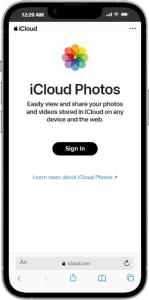
iCloud Photos is the easiest photo backup method for iPhone because it is built directly into iOS and runs automatically. Once enabled in Settings, every photo and video you take uploads to Apple’s servers in the background without any additional steps.
How Does iCloud Photos Work on iPhone?
iCloud Photos stores full-resolution originals of every photo and video. It preserves albums, edits, shared libraries, and the exact organization of your camera roll. The Optimize iPhone Storage feature keeps smaller preview versions on your device to save local space, while full-resolution originals remain safely stored in iCloud and download again when needed.
To enable iCloud Photos, follow these 4 steps:
- Open Settings on your iPhone
- Tap your name at the top of the screen
- Tap iCloud, then tap Photos
- Toggle Sync this iPhone to ON
Photos begin uploading automatically over Wi-Fi after that.
iCloud Photos Storage Plans and Pricing
| Plan | Storage | Monthly Cost |
|---|---|---|
| Free | 5 GB | $0.00 |
| iCloud+ Basic | 50 GB | $0.99 |
| iCloud+ Standard | 200 GB | $2.99 |
| iCloud+ Large | 2 TB | $9.99 |
| iCloud+ Extra Large | 6 TB | $29.99 |
What Are the Pros and Cons of iCloud Photos?
Pros:
- Fully automatic backup with zero manual steps after setup
- Stores full-resolution photos with complete EXIF metadata
- Preserves albums, edits, shared libraries, and organization
- Syncs instantly across iPhone, iPad, and Mac
- Optimize Storage feature saves device space automatically
Cons:
- Free storage is limited to only 5 GB
- Requires an ongoing paid subscription once your photo library exceeds 5 GB
- Works best within the Apple ecosystem; limited on Android or Windows
iCloud Photos remains the top recommendation from major tech publications because it requires zero effort after the initial setup.
Understanding the importance of data security helps explain why keeping photos in a trusted, encrypted cloud like iCloud is smarter than relying on a single device alone.
2. Google Photos: Best Free Backup for iPhone Users
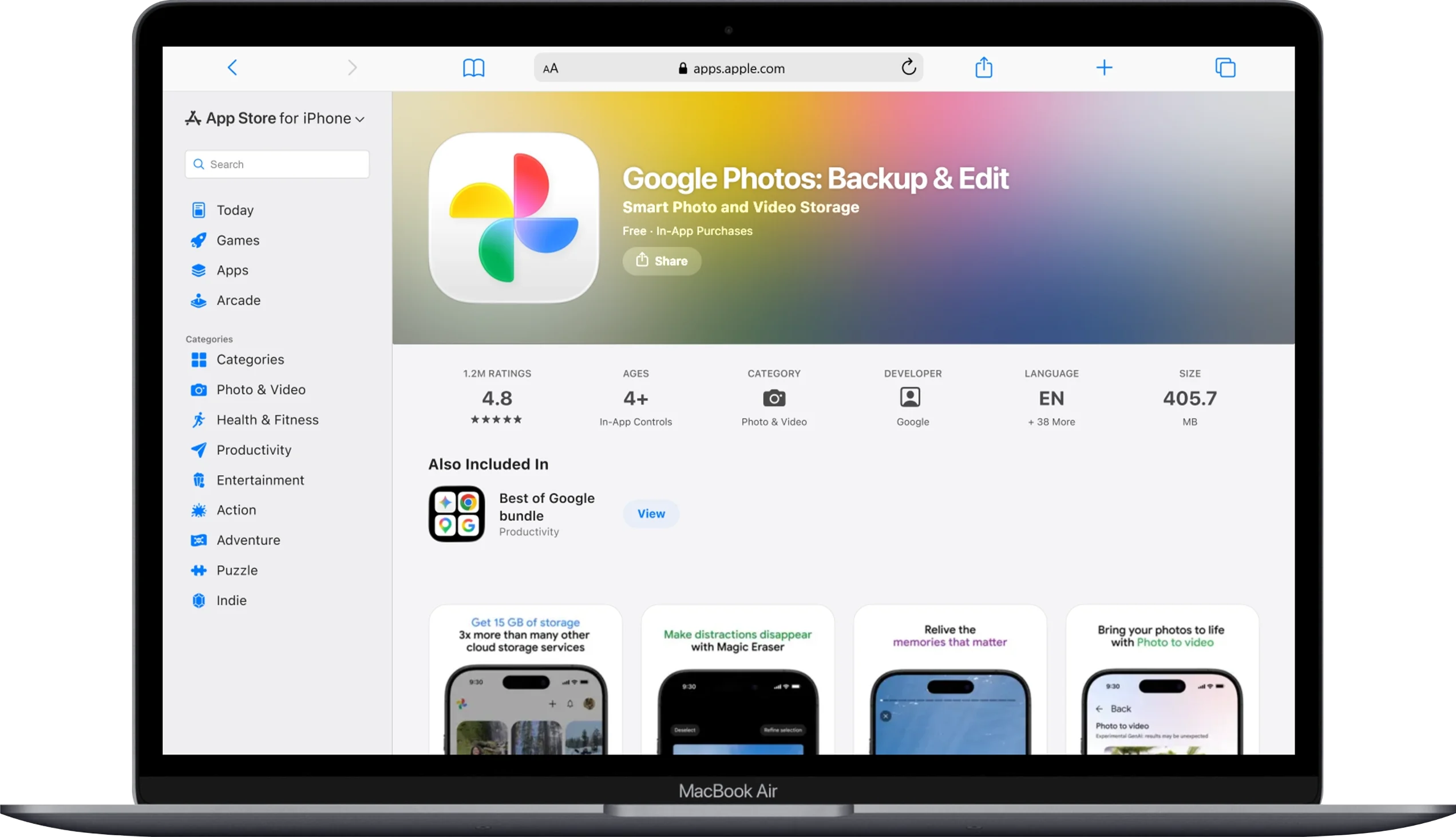
Google Photos gives iPhone users 15 GB of free storage — the most generous free tier of any major photo backup service. It also includes smart AI-powered features like face recognition, automatic album creation, and a search tool that can find photos by location, object, animal, or person name.
How to Set Up Google Photos on iPhone
Follow these 5 steps to activate Google Photos backup on your iPhone:
- Download the Google Photos app from the App Store
- Open the app and sign in with your Google account
- Tap your profile picture in the top-right corner
- Tap Photos settings, then tap Backup
- Toggle Backup to ON and choose between Storage saver (compressed) or Original quality (full resolution)
Google Photos Storage Plans and Pricing
| Plan | Storage | Monthly Cost |
|---|---|---|
| Free | 15 GB | $0.00 |
| Google One Basic | 100 GB | $1.99 |
| Google One Standard | 200 GB | $2.99 |
| Google One Premium | 2 TB | $9.99 |
Note: The 15 GB free tier is shared across Gmail, Google Drive, and Google Photos combined.
What Makes Google Photos Stand Out for iPhone Users?
Google Photos uses AI-powered search that lets you type keywords like “beach trip” or “birthday cake” to find specific photos instantly. It automatically creates collages, highlight videos, and memory albums from your existing library. These features work on iPhone just as well as on Android.
Storage Saver mode compresses photos slightly to reduce file size while keeping quality acceptable for most everyday use. Original quality preserves every pixel exactly as captured, which is the better choice for photographers or users who print large-format photos.
Google Photos also includes a Locked Folder feature that hides sensitive photos behind biometric authentication — a useful privacy tool for iPhone users.
3. Amazon Photos: Best for Prime Members Who Shoot Stills
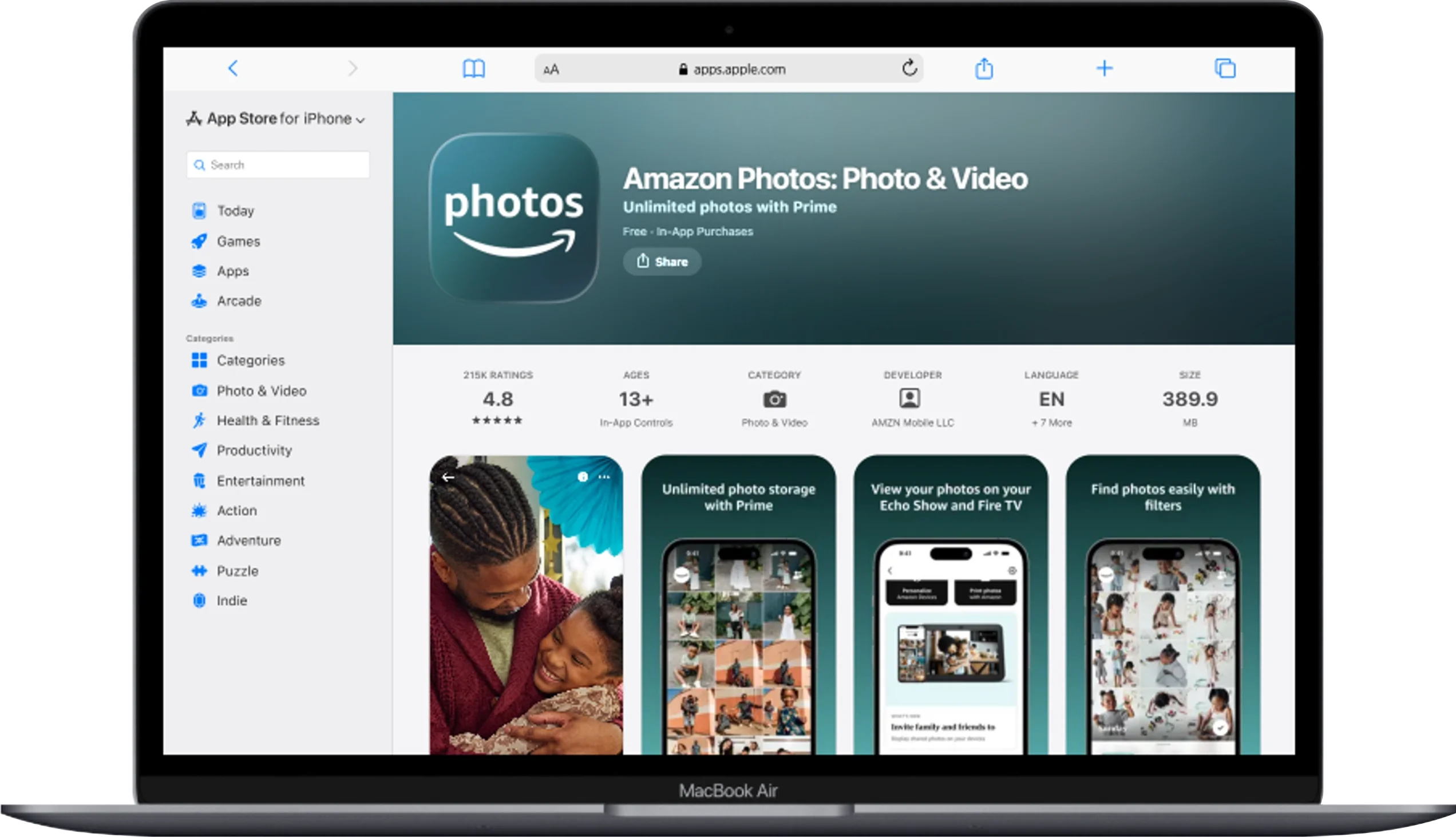
Amazon Photos gives Amazon Prime members unlimited full-resolution photo storage at no extra cost beyond the Prime membership. This makes it one of the most cost-effective backup solutions available for iPhone users who already subscribe to Prime.
What Storage Does Amazon Photos Include?
Amazon Prime members receive:
- Unlimited photo storage at full resolution (all formats including JPEG and RAW)
- 5 GB video storage included for free
- Additional video storage available at $1.99/month for 100 GB or $6.99/month for 1 TB
Non-Prime users receive 5 GB of free storage for both photos and videos combined.
How to Set Up Amazon Photos on iPhone
To activate Amazon Photos backup on iPhone:
- Download the Amazon Photos app from the App Store
- Sign in with your Amazon account
- Tap the menu icon and go to Settings
- Tap Auto-Save and toggle it ON
- Choose whether to back up over Wi-Fi only or also over cellular data
Who Should Use Amazon Photos?
Amazon Photos works best for users who:
- Already have an Amazon Prime subscription
- Primarily shoot still photos rather than video
- Want full-resolution backup without paying extra
- Prefer a simple, straightforward backup app without heavy AI features
For heavy video shooters, Amazon Photos is less ideal because the 5 GB video limit fills up quickly. In that case, iCloud or Google Photos with a paid plan are better options.
4. Microsoft OneDrive: Best for Microsoft 365 Subscribers
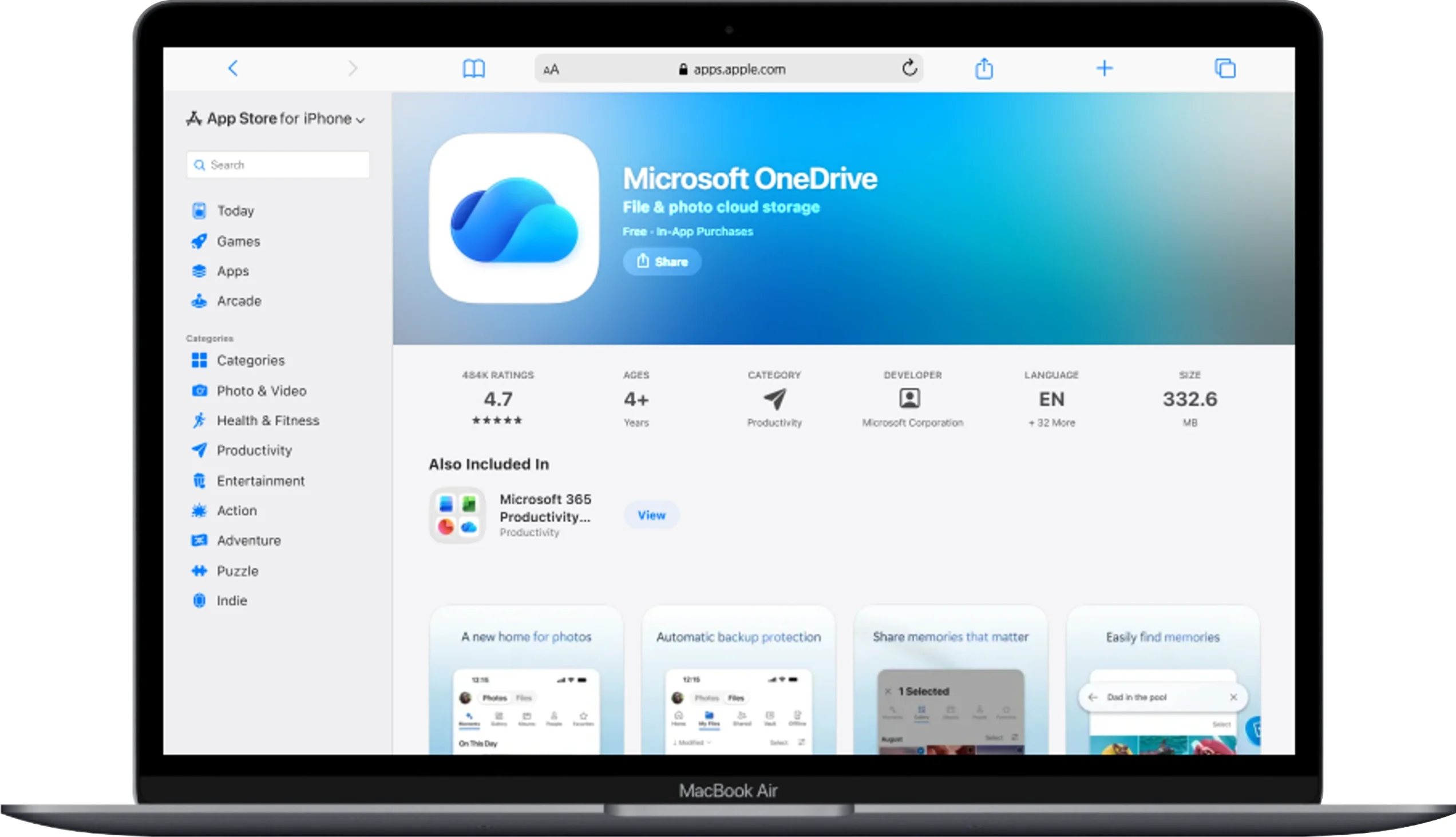
Microsoft OneDrive automatically backs up iPhone photos and is the top choice for users who already pay for Microsoft 365. A Microsoft 365 Basic subscription ($19.99/year) includes 100 GB of OneDrive storage. The full Microsoft 365 Personal plan ($69.99/year) includes 1 TB of storage alongside the complete Office app suite.
OneDrive Storage Plans and Pricing
| Plan | Storage | Annual Cost |
|---|---|---|
| Free | 5 GB | $0.00 |
| Microsoft 365 Basic | 100 GB | $19.99 |
| Microsoft 365 Personal | 1 TB | $69.99 |
| Microsoft 365 Family | 6 TB (6 users × 1 TB) | $99.99 |
How to Set Up OneDrive on iPhone
Follow these steps to activate OneDrive Camera Backup:
- Download Microsoft OneDrive from the App Store
- Sign in with your Microsoft account
- Tap your profile picture, then tap Settings
- Tap Camera Upload and toggle it ON
OneDrive then automatically backs up every new photo to your Microsoft cloud storage.
OneDrive integrates well with Windows 11 and 10, making it easy to access iPhone photos directly on a Windows PC. If you work in a Windows environment, this integration saves time compared to other cloud services.
5. Flickr: Best for Photographers Who Share Their Work

Flickr provides 1,000 free photo uploads for iPhone users and is designed specifically for photography communities. It supports full-resolution uploads and includes tools for organizing photos into albums, collections, and galleries for public sharing.
What Does Flickr Offer for iPhone Backup?
- 1,000 free photo uploads (no storage limit per photo for free accounts)
- Flickr Pro at $11/month or $81.96/year for unlimited uploads
- Full-resolution original file storage
- AutoUploadr app for automatic smartphone backup
- Active photography community for feedback and discovery
Flickr is best suited for users who want both cloud backup and public photo sharing in one platform. It is less ideal as a private family photo vault compared to iCloud or Google Photos.
6. Mac with Time Machine: Best Local Backup Without a Subscription
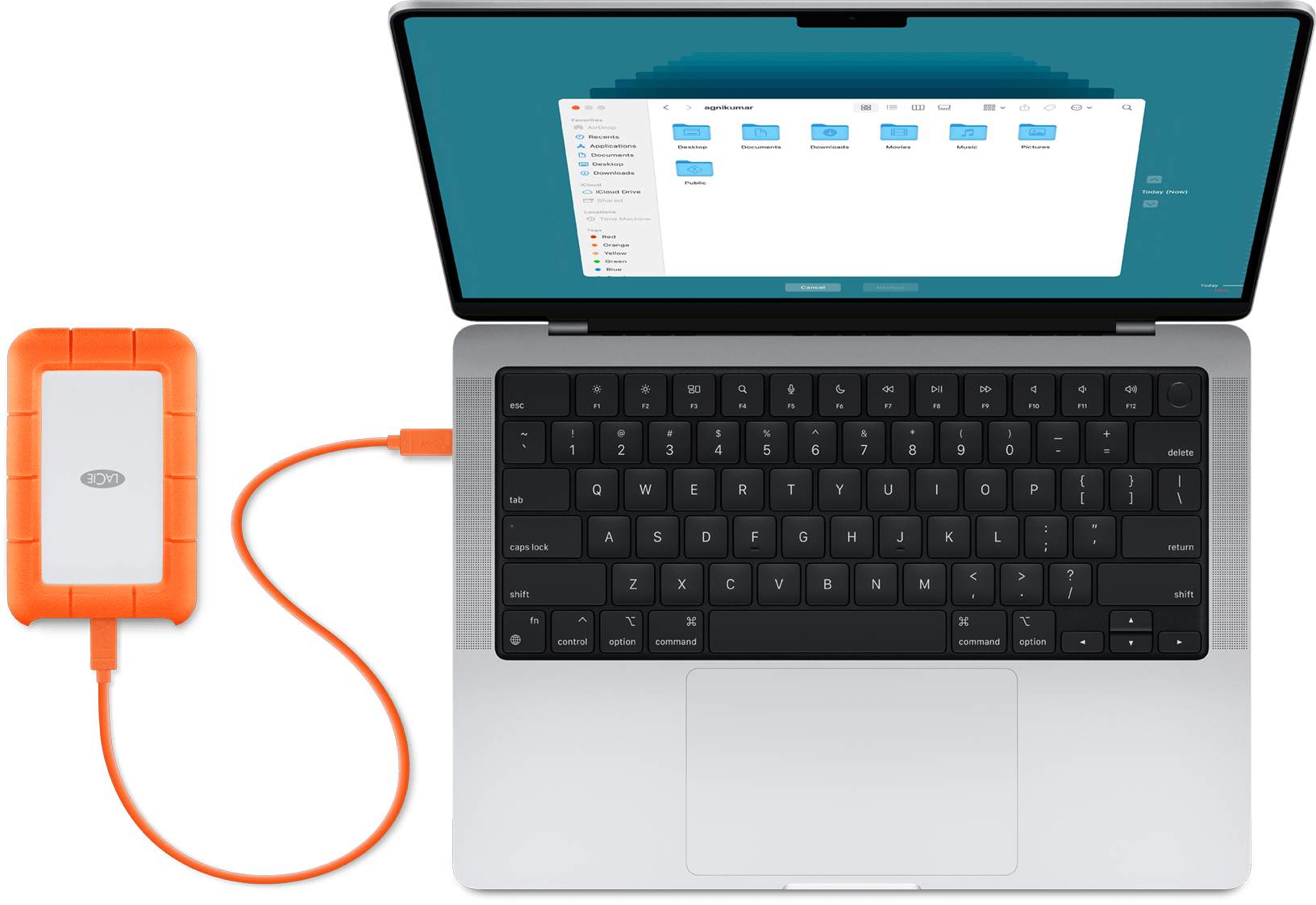
Backing up an iPhone to a Mac using Time Machine is the best subscription-free local backup method available for Apple users. It creates a complete copy of the entire iPhone, including all photos, videos, contacts, and app data, stored directly on a connected external drive.
If you use a Mac and want to avoid paying monthly fees for cloud storage, this method delivers a full backup with no ongoing cost.
How to Back Up iPhone Photos to Mac with Time Machine
Follow these 7 steps:
- Connect an external SSD or hard drive to your Mac
- Open System Settings on your Mac
- Go to General > Time Machine
- Click Add Backup Disk and select your external drive
- Click Set Up Disk to confirm
- Connect your iPhone to the Mac using a USB-C cable
- Open Finder, click your iPhone’s name, then select Back Up Now
After the initial setup, Time Machine handles backups automatically whenever the external drive is connected.
If your Mac is running low on space and you need to clear storage before setting up this backup, reviewing ways to free up space on your Mac first makes the process much smoother and ensures your drive has enough room for a complete backup.
Pros and Cons of Mac Time Machine Backup
Pros:
- No monthly subscription cost after buying the external drive
- Creates a complete iPhone backup including all data, not just photos
- Automatic after initial setup when drive is connected
- Full device recovery possible from a single backup
Cons:
- Requires owning a Mac computer
- Requires physically connecting the iPhone to the Mac
- Not accessible remotely like cloud backups
- Backup only occurs when the drive is physically connected
7. External Hard Drive: Best Fully Offline Photo Backup
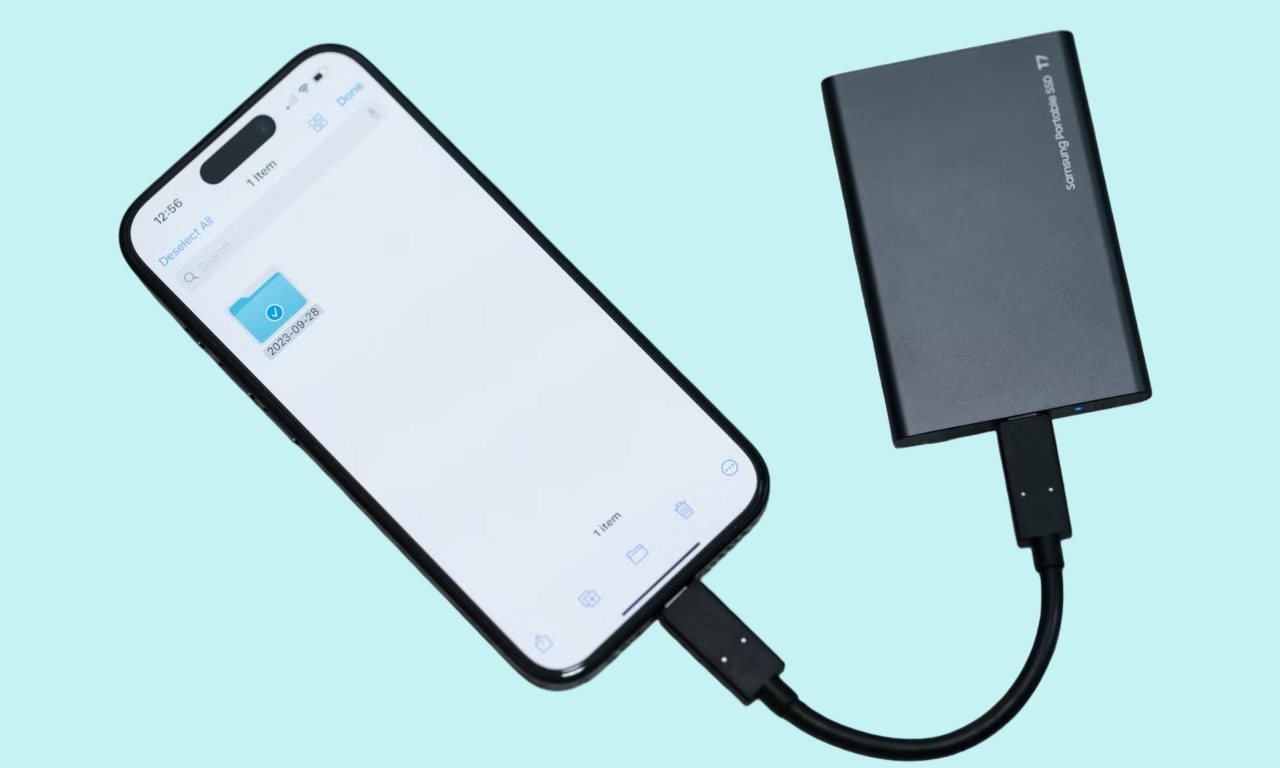
An external hard drive gives iPhone users a fully offline photo backup with no subscription fees and no dependence on internet connectivity. Portable SSDs and USB drives connect directly to an iPhone via USB-C (on iPhone 15 and later) or through a Lightning-to-USB adapter on older models.
How to Transfer iPhone Photos to an External Drive
Follow these steps:
- Connect the external drive to your iPhone using a compatible USB-C cable or Lightning adapter
- Open the Files app on your iPhone
- Navigate to your external drive under Locations
- Open the Photos app, select the photos you want to transfer
- Tap Share, then select Save to Files
- Choose your external drive as the destination and tap Save
Note: This process is manual. It does not run automatically in the background like cloud services. For users who store large RAW photo files or 4K videos, an external drive eliminates monthly cloud storage fees that would otherwise grow significantly.
What External Drives Work with iPhone?
External drives that connect to iPhone include portable SSDs like the Samsung T7, SanDisk Extreme SSD, and Western Digital My Passport. These drives are compact, fast, and reliable for large photo libraries. Drives with built-in USB-C cables work best with iPhone 15 and later models.
How to Choose the Right iPhone Photo Backup Method
The right iPhone photo backup method depends on 4 key factors: budget, storage size, device ecosystem, and level of automation needed.
Here is a decision guide based on common user types:
| User Type | Best Backup Method |
|---|---|
| Apple-only household | iCloud Photos |
| Budget-conscious user with small library | Google Photos (free 15 GB) |
| Amazon Prime subscriber | Amazon Photos |
| Microsoft 365 user | OneDrive |
| Photographer who shares work publicly | Flickr Pro |
| Mac user who wants no subscription | Time Machine + external drive |
| Traveler without reliable internet | External SSD |
The 3-2-1 backup rule is the most reliable approach to data protection: keep 3 copies of your photos, on 2 different types of storage, with 1 copy stored offsite (such as in the cloud). For iPhone users, this means using iCloud Photos as the primary backup and a second service like Google Photos or an external drive as the secondary copy.
5 Tips to Prevent Losing iPhone Photos
These 5 practices prevent permanent photo loss on an iPhone:
- Enable iCloud Backup immediately — Turn on iCloud Photos in Settings as soon as you set up a new iPhone. Do not wait until your storage is full.
- Use 2 backup services — Pair iCloud with Google Photos or Amazon Photos. If one service has an outage or account issue, your second backup remains intact.
- Back up before iOS updates — Always create a full iPhone backup before installing any major iOS update. Software updates can occasionally cause unexpected data issues.
- Avoid storing photos only on the device — A phone is a single point of failure. Any time photos exist only on the device with no backup, they are at risk.
- Check backup status monthly — Open iCloud or Google Photos once a month and confirm that recent photos have uploaded successfully. A backup that stopped working silently is no backup at all.
When an iPhone experiences software failures — for example, when an iPhone gets stuck on the Apple logo during startup — having a recent cloud backup or local Mac backup means your photos survive the recovery process without loss.
Cloud vs Local: Which Storage Type Is Safer?
Cloud storage and local storage both protect photos, but each has different strengths. Using both together provides the highest level of protection.
Cloud storage advantages:
- Accessible from any device, anywhere in the world
- Protected from physical disasters like fire, flood, or theft
- Automatic backup with no manual effort
- Easy to share photos with family or friends
Local storage advantages:
- No ongoing subscription fees after the initial purchase
- No dependence on internet speed or connectivity
- Full control over data without third-party access
- Faster transfer speeds for large libraries
Understanding how to improve cloud computing security is useful for anyone storing sensitive personal photos in a cloud service. Strong passwords, two-factor authentication, and choosing services with end-to-end encryption all improve the safety of cloud photo backups.
Full Storage Plan Comparison for iPhone Photo Backup
| Service | Free Storage | 100 GB Cost | 2 TB Cost | Best For |
|---|---|---|---|---|
| iCloud Photos | 5 GB | $0.99/mo | $9.99/mo | Apple users |
| Google Photos | 15 GB | $1.99/mo | $9.99/mo | Cross-platform users |
| Amazon Photos | Unlimited photos (Prime) | $1.99/mo (video) | N/A | Prime members |
| Microsoft OneDrive | 5 GB | $1.67/mo ($19.99/yr) | $5.83/mo ($69.99/yr) | Windows/Office users |
| Flickr | 1,000 uploads | $11/mo (Pro) | N/A | Photographers |
| External Drive | N/A (one-time cost) | ~$30–$60 one-time | ~$60–$120 one-time | Offline users |
Frequently Asked Questions About iPhone Photo Backup
Is iCloud Backup the Same as iCloud Photos?
No. iCloud Backup and iCloud Photos are 2 separate features that serve different purposes.
iCloud Backup creates a complete copy of the entire iPhone — including app data, settings, messages, and photos. It is used to restore a device after a reset or when switching to a new iPhone.
iCloud Photos specifically syncs and stores your photo library in the cloud. It keeps photos updated across all Apple devices in real time. Both features use iCloud storage, but they operate independently. For full protection, both should be enabled.
Does Google Photos Reduce iPhone Photo Quality?
Yes, but only if you choose the Storage Saver option. Storage Saver mode compresses photos to reduce file size. The compression is light and invisible on most screens and social media platforms. However, if you print large-format photos or edit professionally, choose Original Quality in Google Photos settings to preserve every detail.
Can I Back Up iPhone Photos Without Wi-Fi?
Yes, but with limitations. Most cloud backup services allow cellular data backup, though this consumes mobile data. To enable it in Google Photos, go to Settings > Backup > Mobile data backup and toggle it ON. iCloud Photos also uploads over cellular when enabled under Settings > Photos > Mobile Data. Using cellular for large libraries can exhaust a data plan quickly, so Wi-Fi backup is the recommended default setting.
How Much iCloud Storage Do I Actually Need for Photos?
The amount of iCloud storage needed depends on how many photos and videos you have. A rough estimate:
- 1,000 photos in HEIC format ≈ approximately 4–6 GB
- 10,000 photos ≈ approximately 40–60 GB
- 1 hour of 4K video ≈ approximately 6–8 GB
For most iPhone users with a few thousand photos and moderate video, the 200 GB plan at $2.99/month provides comfortable room with space to grow.
Is Amazon Photos Safe for iPhone Photo Backup?
Yes. Amazon Photos uses encrypted servers and secure connections to store uploaded photos. For Prime members, it provides unlimited full-resolution photo storage with strong security practices. However, Amazon Photos has fewer AI-powered search and organization features compared to Google Photos or iCloud. It works best as a simple, reliable storage vault for still images.
Should I Use One Backup Service or Multiple?
Multiple backup services provide greater protection. Using 2 services — for example, iCloud Photos as the primary and Google Photos as the secondary — means your photos survive even if one account has an issue. The 3-2-1 backup rule (3 copies, 2 storage types, 1 offsite) is the accepted standard for reliable data protection.
What Happens to My Photos If I Cancel iCloud+?
Your photos remain in iCloud for 30 days after cancellation. During that window, you can download them to your device or transfer them to another service. After 30 days, iCloud reduces your storage to the free 5 GB tier, and any data above that limit becomes inaccessible. Apple provides tools to export your photos before that happens. Always download a local copy or transfer to Google Photos before canceling any paid cloud plan.
Conclusion
The best photo backup for iPhone combines at least 2 methods — one cloud service and one local or secondary backup. iCloud Photos remains the top choice for most iPhone users because of its seamless automation, full-resolution storage, and tight Apple ecosystem integration. Google Photos provides the best free tier at 15 GB. Amazon Photos is the smartest option for Prime members who shoot mostly still images.
Here are the 4 key takeaways from this guide:
- Turn on iCloud Photos today — it takes 60 seconds and protects every photo you take going forward
- Add Google Photos or Amazon Photos as a free secondary backup layer
- Use Mac Time Machine or an external SSD if you want a local copy with no monthly fees
- Check your backup status every month — a backup that stopped working without you knowing provides no protection
Photo memories are irreplaceable. Setting up a reliable backup takes just a few minutes. Once it is running, it works silently in the background — and the next time something goes wrong with your iPhone, your photos will be safe.
You May Also Like
 Data Security & Privacy
What Is a Cloud Security Scanner for AWS, Azure, and Google Cloud?
 Cloud Storage
The Ultimate Guide to Sending Large Files Online: Top 20 Services for Easy File Sharing
 Cloud Storage
7 Best Photo Backup Solutions in 2026: Which Cloud Storage Should You Trust?
 Network Security
How to Transfer Files Between Two Laptops Over Wi-Fi: What Actually Works
 Data Security & Privacy
How to Protect Your Data With Google Cloud Platform: Complete Security Guide
 Cloud Storage
13 Best Free Cloud Storage Services to Back up & Keep Your Files Secure
 Cyber Security
Can Ransomware Infect iCloud? Complete Security Guide for Apple Users
 Cyber Security
Is Cloud Storage Safe From Ransomware?
 Cloud Storage