Transferring large files can be a real headache. Whether you’re trying to send a high-resolution video, a collection of professional photos, or a bulky document, traditional email methods often fall short with their strict size limitations. I’ve been in your shoes countless times, struggling to share important files with clients, colleagues, and friends. That’s why I’ve put together this comprehensive guide to help you discover the best file transfer services that make sharing big files a breeze.
I’ve personally used pCloud and Google Drive for years to back up my photos and videos, and I’ve learned a lot about what works and what doesn’t when it comes to file storage and sharing. There’s nothing worse than spending hours uploading your precious memories only to find out the service you chose doesn’t meet your needs. From my experience testing numerous platforms, I’ve found that the right file transfer service can save you time, protect your data, and eliminate the frustration of failed uploads.
When it comes to choosing the right file transfer service, you want something that’s not only easy to use but also secure and reliable. Over the years, I’ve tried dozens of different platforms, each with their own strengths and weaknesses. Some excel at speed, others at security, and some at simplicity. The key is finding the one that matches your specific needs. In this guide, I’ll share my firsthand experience with each service, giving you the inside scoop on what works well and what doesn’t, so you can make an informed decision without having to test them all yourself.
Benefits of Using Online File Transfer Services
Time and Cost Efficiency
Online file transfer services save you both time and money by eliminating the need for physical storage devices like USB drives or external hard drives. You won’t have to worry about shipping costs or the risk of your data getting lost or damaged in transit. I’ve found that these services typically deliver files within minutes, even for multi-gigabyte transfers, which is much faster than traditional methods.
Universal Accessibility
These services work from any device with an internet connection, making it incredibly convenient for both you and your recipients. I love that I can start a transfer from my office computer and have my client download it on their tablet while traveling. This flexibility is especially valuable for remote teams and collaborations across different time zones.
Data Security
Many of these platforms offer robust encryption and password protection to ensure your files remain secure during transfer. This added security layer is crucial when you’re sending sensitive information. From my experience, the top services use enterprise-grade encryption that keeps your data safe from prying eyes.
Drawbacks of Using Online File Transfer Services
Limitations on Free Services
Free versions of these services often come with restrictions, such as file size limits, slower transfer speeds, or a capped number of monthly transfers. If you frequently send large files, you might need to consider upgrading to a premium plan. I’ve learned that while free tiers are great for occasional use, heavy users benefit from the expanded features of paid versions.
Data Privacy Concerns
When you use online file transfer services, you’re trusting a third party with your data. I always recommend reading the terms of service and privacy policies before using any platform to ensure your information is handled responsibly. Some services may scan your files for advertising purposes, so it’s important to understand their data practices.
Potential Downtime
Like any online service, file transfer websites may experience downtime or technical issues that could delay your transfers. I’ve learned to always have a backup plan when dealing with time-sensitive deliveries, though most reputable services maintain excellent uptime records.
Read Also: 10 The Best Free Cloud Storage Services to Keep Your Files Secure
Top 20 Websites to Send Big Files Online
In this section, I’ll dive deep into the features, benefits, and drawbacks of 20 popular websites for sending large files online. I’ve personally tested each of these services to give you firsthand insights into their performance.

1. WeTransfer
WeTransfer is a popular cloud-based file transfer service that allows users to send large files quickly without complicated setup. The platform focuses on simple file sharing, enabling users to transfer photos, videos, documents, and creative assets through email or secure shareable links.
With features like encrypted file transfer, temporary cloud storage, and collaboration tools, WeTransfer is widely used by designers, marketers, and remote teams who need an easy way to move large files online. Its clean interface and browser-based workflow make it a well-known alternative to Dropbox, Google Drive, and other cloud storage services.
Key Features
- Large File Transfers: Send files up to 2 GB for free without creating an account.
- Shareable Download Links: Generate secure links to share files via email, messaging apps, or websites.
- Simple Drag-and-Drop Interface: Upload files quickly using the web-based interface.
- Cloud Storage Integration: Paid plans provide longer file storage and collaboration tools.
- Password Protection: Secure transfers with password-protected download links (paid plans).
- File Expiration Control: Set custom expiration dates for shared files.
- Creative Collaboration Tools: WeTransfer also offers WeTransfer Portal and creative tools for teams.
Pros
- Very easy to use with minimal setup required.
- No registration needed for basic file transfers.
- Clean and fast interface with drag-and-drop uploads.
- Popular and trusted platform used by millions of users.
- Good for sharing media files like videos, images, and design assets.
Cons
- Free plan limited to 2 GB per transfer.
- Files expire after a short time on the free version.
- Limited advanced collaboration features compared to cloud storage services like Google Drive.
- Some security and customization options require paid plans.
Best For
- Freelancers and creatives sending large media files.
- Designers, photographers, and video editors sharing project files.
- Quick one-time file transfers without creating an account.
- Teams that need simple, fast file sharing instead of full cloud storage platforms.
2. Google Drive
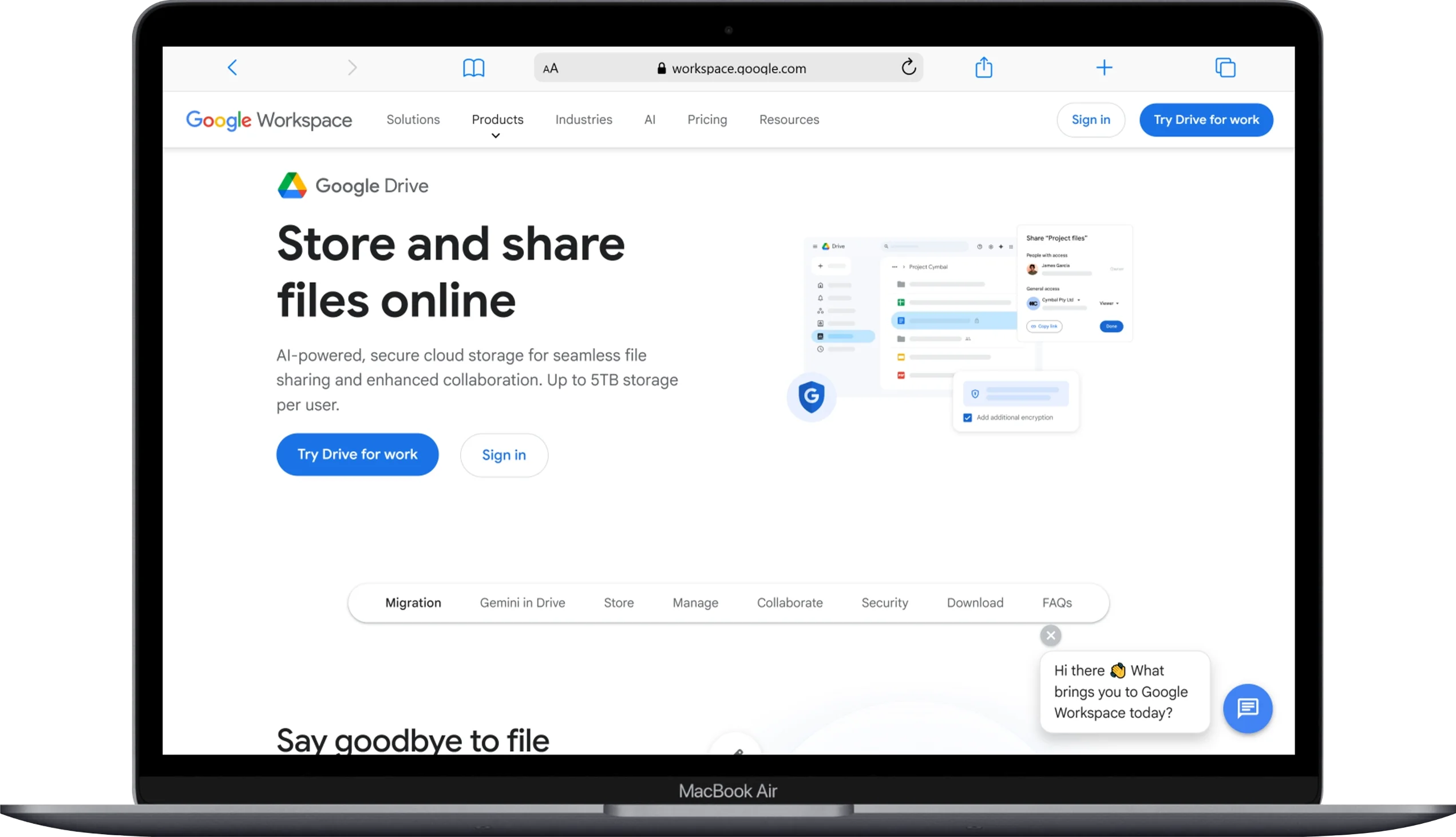
Google Drive is a widely used cloud storage and file sharing platform developed by Google that allows users to store, manage, and share files online. It integrates seamlessly with Google Workspace tools like Google Docs, Sheets, Slides, and Gmail, making collaboration easy for individuals, teams, and businesses.
Google Drive helps users organize documents, photos, videos, and other digital assets from any device. The platform also supports file backup, encrypted data transfer, and sharing through links or email, making it a popular alternative to Dropbox, OneDrive, and other cloud storage services.
Key Features
- Cloud File Storage: Store documents, images, videos, and other files securely in the cloud.
- 15 GB Free Storage: Free users receive 15 GB shared storage across Google Drive, Gmail, and Google Photos.
- Real-Time Collaboration: Multiple users can edit documents simultaneously using Google Docs, Sheets, and Slides.
- Secure File Sharing: Share files via email invitations or secure shareable links with permission controls.
- Automatic Backup & Sync: Backup files from computers, smartphones, and tablets.
- Version History: Track and restore previous versions of files.
- Access Control: Manage view, comment, or edit permissions for collaborators.
- Cross-Platform Access: Available on web, Android, iOS, Windows, and macOS.
Pros
- Generous free storage compared to many file sharing platforms.
- Excellent collaboration tools for teams and remote work.
- Seamless integration with Google services like Gmail and Google Docs.
- Accessible from any device with internet access.
- Reliable cloud infrastructure backed by Google.
Cons
- Free storage is shared across multiple Google services.
- Large files can quickly consume storage space.
- Advanced business features require Google Workspace plans.
- Privacy concerns for some users regarding cloud data storage.
Best For
- Students and professionals managing documents online.
- Teams collaborating on files and projects in real time.
- Users who already rely on Google Workspace tools.
- Backup and cloud storage for personal or business files.
3. Dropbox
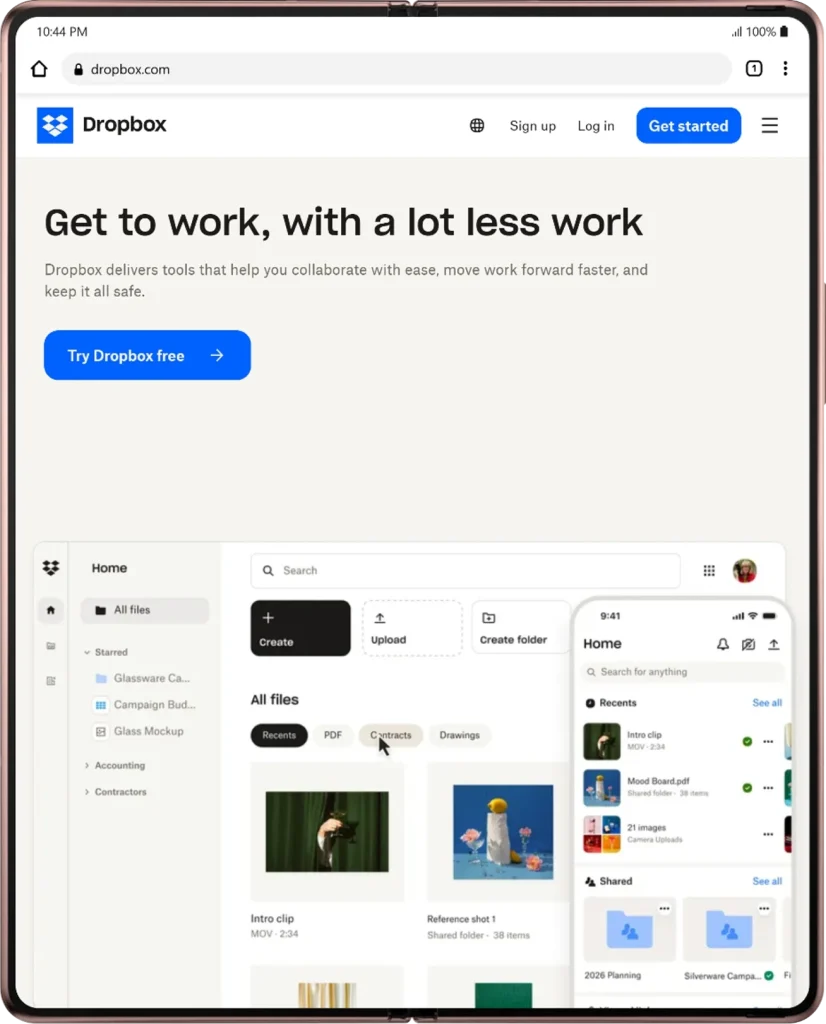
Dropbox is one of the cloud storage and file sharing platforms I often use when I need to keep files accessible across different devices. In my experience, Dropbox makes it easy to upload, sync, and share documents, images, and videos without worrying about losing data. Since it works on Windows, macOS, Android, iOS, and web browsers.
I can access my files anytime with real-time collaboration and collaborate with others using secure shareable links and permission controls. I’ve also found the file version history and automatic sync very helpful when working on projects that require frequent updates. Compared with other services like Google Drive, OneDrive, and WeTransfer, Dropbox focuses strongly on simple file synchronization and reliable cloud backup.
Key Features
- Cloud Storage: I can store documents, photos, videos, and project files securely in the cloud.
- Automatic File Sync: Files automatically synchronize across my computer, smartphone, and tablet.
- Secure File Sharing: I can generate shareable download links to send files quickly.
- Version History: Dropbox keeps previous versions of files, which helps when I need to restore older edits.
- Collaboration Tools: Team members can view, comment, and work on shared folders together.
- Offline Access: Some files remain accessible even when my device is offline.
- App Integrations: Works well with tools like Microsoft Office, Slack, and Zoom.
- Automatic Backup: I can back up important folders from my computer.
Pros
- Very reliable file synchronization between devices.
- Easy-to-use interface, even for beginners.
- Secure sharing options with permission settings.
- Good collaboration features for teams and remote work.
- Strong integration with productivity tools.
Cons
- Free storage is only about 2 GB, which fills up quickly.
- Many advanced features require a paid plan.
- Large files can take time to upload depending on internet speed.
- Storage upgrades may be necessary for heavy users.
Best For
- Freelancers and remote workers who need access to files anywhere.
- Small teams collaborating on shared folders and documents.
- People who want reliable cloud backup and file synchronization.
- Users looking for a simple alternative to Google Drive or OneDrive.
4. Filemail
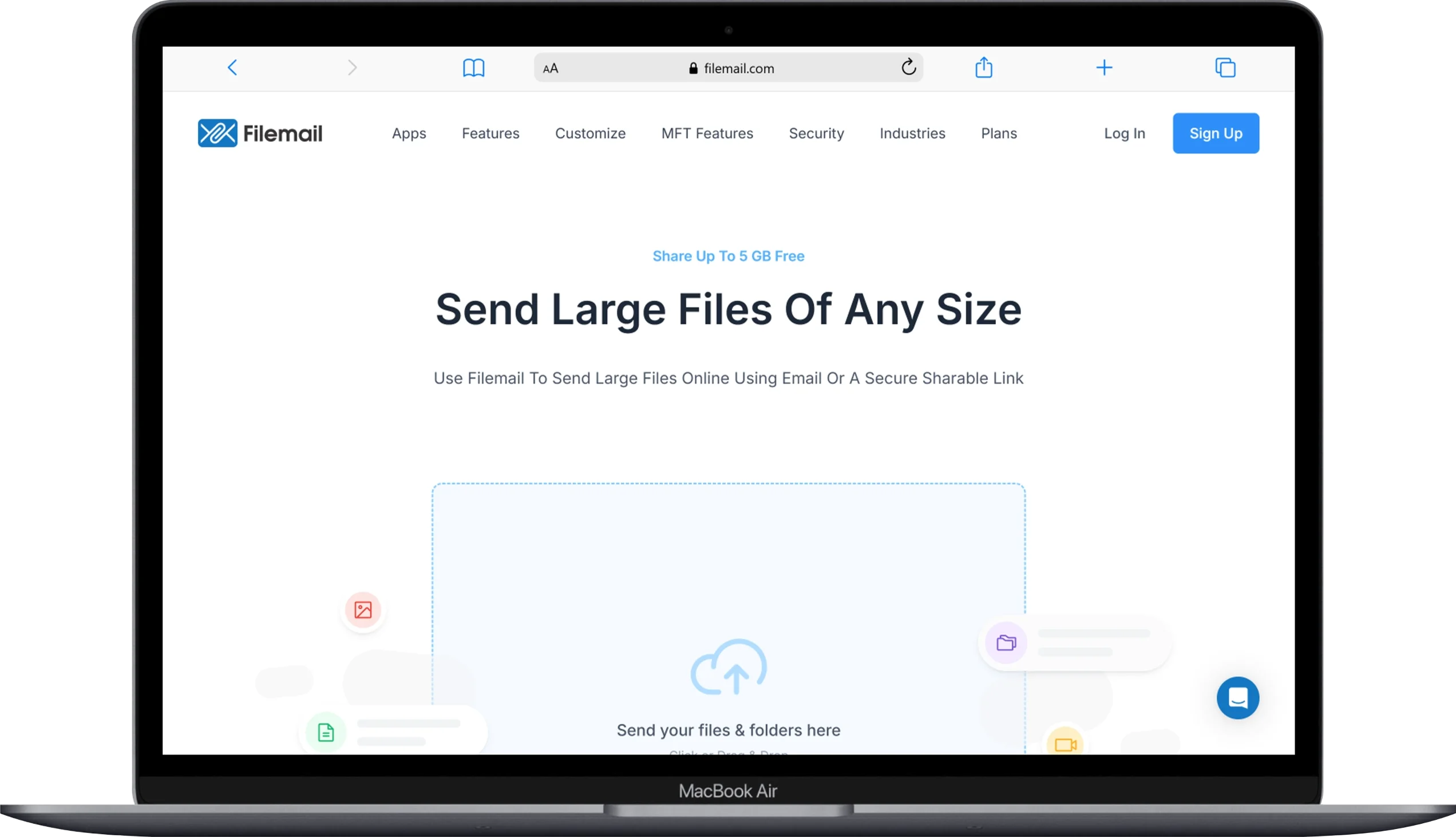
Filemail is a secure cloud file transfer site designed for sending large files quickly and reliably. Unlike traditional email attachments, Filemail allows users to transfer files of any size using high-speed data transfer, making it useful for businesses, creatives, and remote teams. The platform supports file sharing, secure upload, encrypted transfer, and cloud storage integration, ensuring safe delivery of documents, videos, and project files. With features like password protection, download tracking, and custom expiration dates, Filemail improves digital collaboration while maintaining strong data security and privacy.
Key Features
- Large File Transfer: Send large files and folders of any size using Filemail’s cloud-based file sharing platform.
- Free Transfer Option: Users can share up to 5 GB for free per transfer without installing software.
- Secure File Sharing: Includes end-to-end encryption, HTTPS encryption, password protection, virus scanning, and two-factor authentication (2FA).
- Email or Shareable Link: Send files through email delivery or a secure download link that recipients can access easily.
- Cross-Platform Apps: Available on Windows, macOS, Linux, Android, iPhone, and web browsers, plus an Outlook plugin.
- Transfer Acceleration: Uses UDP transfer acceleration and global data centers for faster uploads and downloads.
- File Tracking & Management: Monitor download activity, transfer status, and file management in your dashboard.
- File Request Feature: Request files from clients using custom upload forms or file request links.
- Custom Branding: Paid plans support custom subdomains, branding, and customizable upload pages.
- Enterprise Security & Compliance: Supports SAML/SSO, audit logs, encryption at rest, and compliance standards like GDPR and ISO 27001.
Pros
- Supports very large file transfers, including videos, images, documents, and software files.
- Easy to use interface with drag-and-drop uploads.
- Multiple sharing options including email attachments replacement and shareable links.
- Strong security features with encryption and authentication.
- Works across many platforms with desktop, mobile, and Outlook integrations.
- Download tracking and analytics for better collaboration.
Cons
- Free plan limited to 5 GB transfers.
- Long-term storage and advanced features require paid plans.
- Large file uploads depend on internet speed and connection stability.
- Some enterprise features only available in higher-tier plans.
Best For: Sending very large files occasionally without wanting to commit to a paid plan.
5. MediaFire
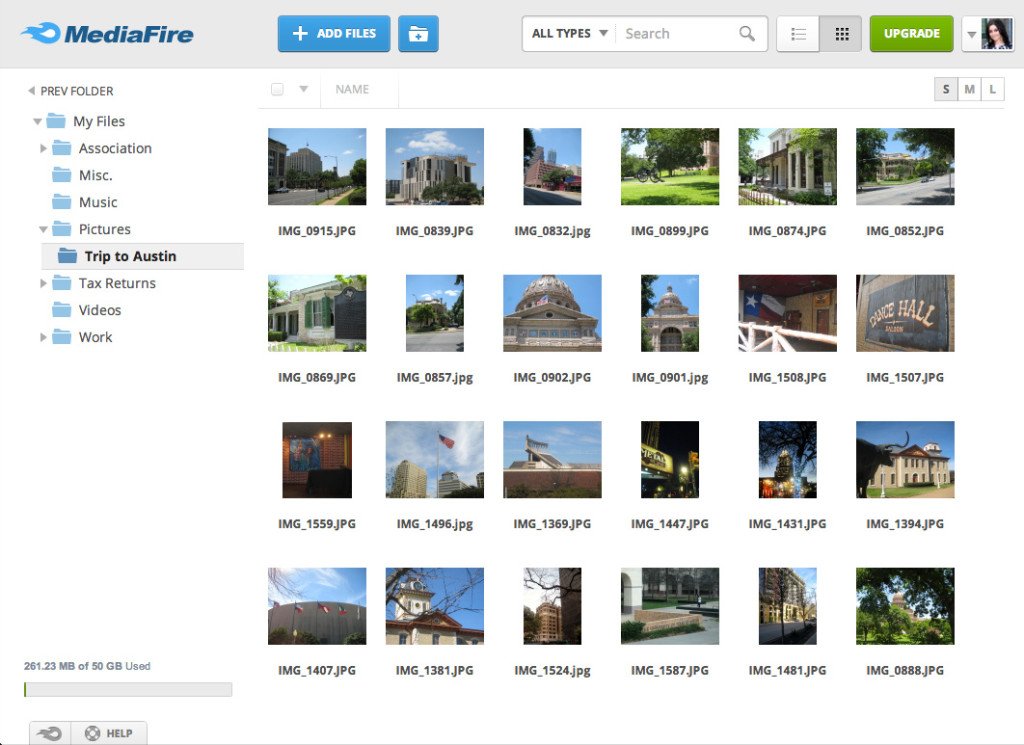
MediaFire is a well-known cloud storage and file transfer service that I’ve used when I need a quick way to send big files or transfer large files online. The platform allows users to upload, store, and share files such as videos, documents, photos, and audio using download links, email sharing, or social media links.
From my experience, MediaFire is helpful when I want to easily send large videos or project files without worrying about email attachment limits. The service offers 10 GB of free cloud storage (up to 50 GB with bonuses) and supports multiple uploads, unlimited bandwidth downloads, and file organization tools. With apps for Android, iPhone, Windows, and web browsers, MediaFire makes file transfer online simple and accessible from almost anywhere.
Key Features
- Free Cloud Storage: Start with 10 GB free storage, expandable up to 50 GB with bonuses.
- Transfer Large Files: Easily send big files and large videos through secure shareable links.
- File Sharing Options: Share files via email, direct download link, social media, or messaging apps.
- Unlimited Downloads: Ad-supported downloads come with no bandwidth limits or wait times.
- Multiple File Uploads: Upload hundreds of files at once using web or mobile apps.
- File Manager: Organize, move, copy, and manage files using an easy cloud dashboard.
- One-Time Links: Share files using temporary links for secure downloads.
- Cross-Platform Access: Available on Android, iPhone, Windows, and web browsers.
Pros
- Good free storage compared with many file sharing platforms.
- Simple way to send big files online without complex setup.
- Unlimited bandwidth downloads for shared files.
- Supports many file types including videos, audio, documents, and archives.
- Accessible from multiple devices and platforms.
Cons
- Free version includes advertisements.
- Maximum file size for free users is about 4 GB per file.
- Advanced features require MediaFire Pro subscription.
- Security features are not as advanced as enterprise file transfer services.
Best For
- People who need to transfer large files online quickly.
- Creators sharing large videos, audio, or downloadable files.
- Freelancers and small teams collaborating on projects.
- Users looking for an easy way to send big files without email limits.
6. pCloud
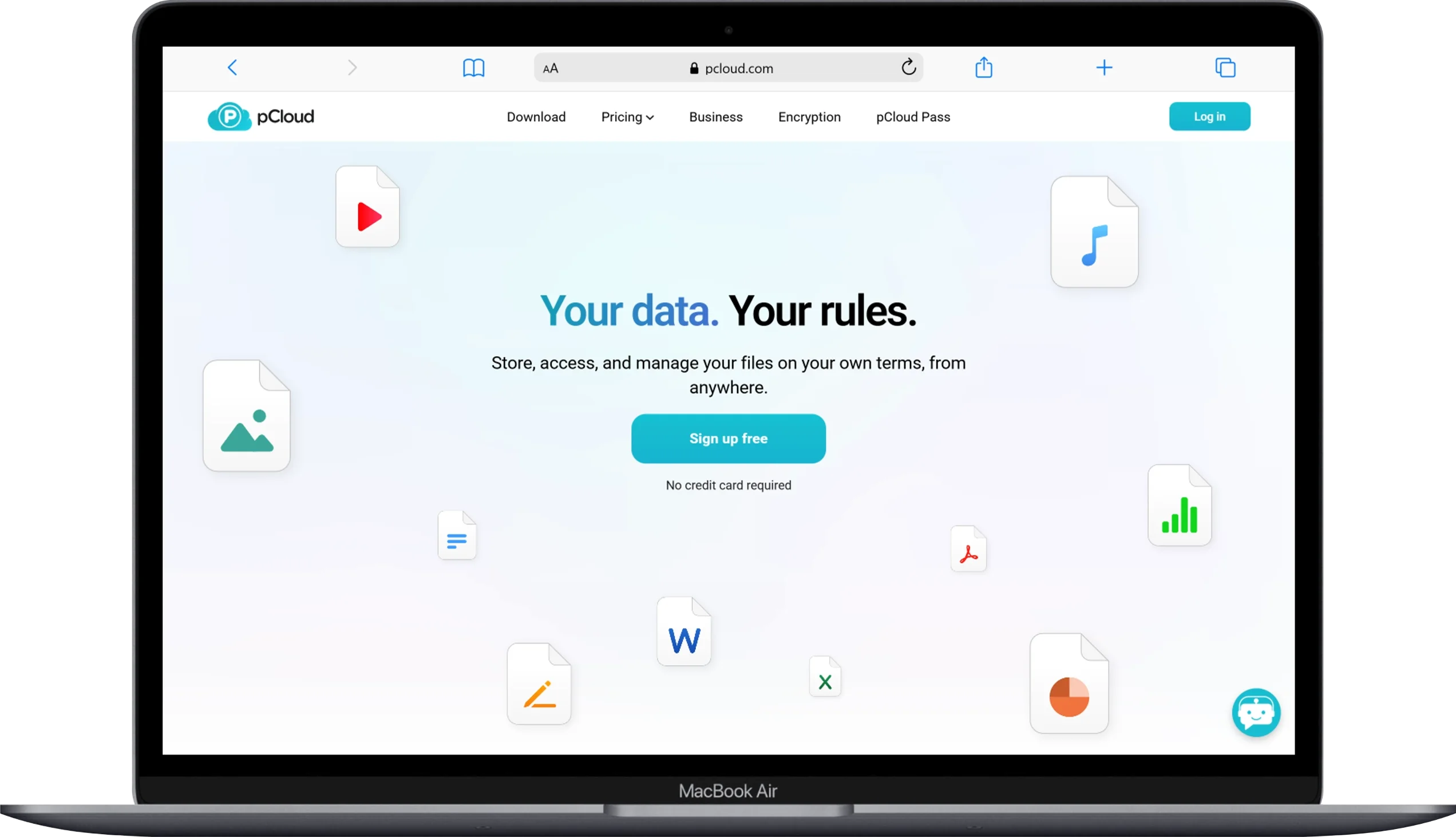
pCloud is a secure cloud storage and file transfer platform that I’ve used when I need a reliable way to send big files online or transfer large folders. The service allows users to upload, store, and share files such as documents, photos, music, and large videos through secure download links or shared folders.
From my experience, pCloud is useful when I want to transfer large files, send GB files online, or perform folder transfer online without worrying about email attachment limits. It supports multiple devices including Android, Windows, Mac, iPhone, and iOS, so I can manage files and perform file transfer online from almost anywhere. With features like encrypted cloud storage, file versioning, and easy sharing links, pCloud works as both a cloud backup solution and a large file transfer service.
Key Features
- Cloud Storage Platform: Securely store and manage files in pCloud cloud storage.
- Transfer Large Files: Easily send GB files online and share large videos using download links.
- Folder Transfer Online: Share entire folders with collaborators through secure links.
- File Transfer Up to 10 GB: Free users can transfer files up to 10 GB with pCloud Transfer.
- Cross-Platform Apps: Available on Android, Windows, Mac, iPhone, and iOS devices.
- Encrypted File Sharing: Optional client-side encryption with pCloud Crypto for secure transfers.
- File Versioning: Restore previous file versions if changes are made.
- Automatic Backup: Sync files between desktop, mobile, and cloud storage.
Pros
- Easy way to send big files and folders online.
- Works across many devices including Android, Windows, Mac, and iPhone.
- Secure sharing options with encrypted file transfers.
- Supports large file uploads including videos and media projects.
- Useful file management and synchronization tools.
Cons
- Advanced encryption features require a paid add-on.
- Free storage is smaller compared to some competitors.
- Large uploads still depend on internet speed.
- Some collaboration features are limited compared to enterprise tools.
Best For
- People who need to transfer large files or send GB files online.
- Users sharing folders or project files with teams.
- Creators who need to easily send large videos or media files.
- Anyone looking for cross-platform cloud storage on Android, Windows, Mac, and iOS.
7. Send Anywhere
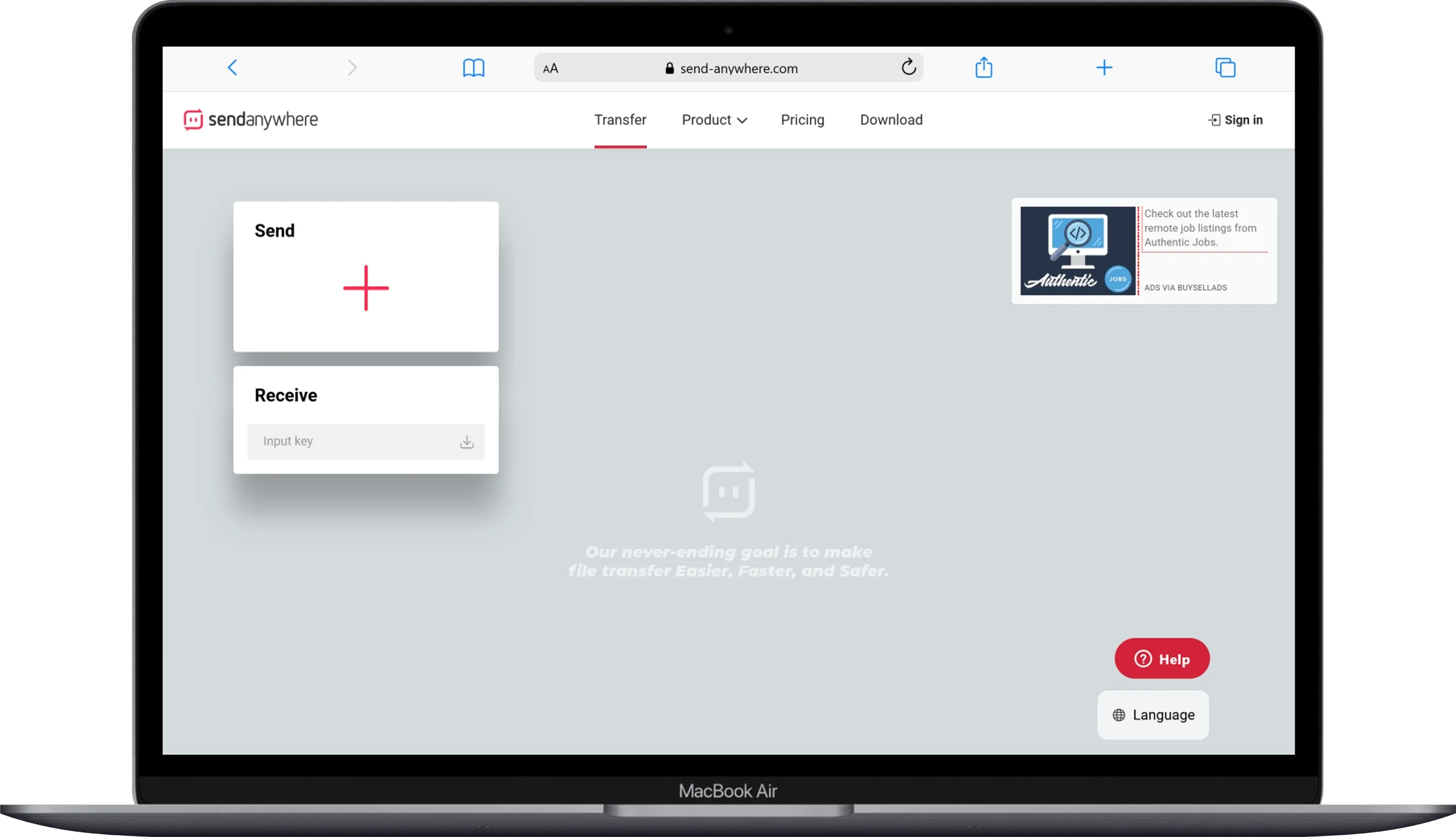
Send Anywhere is a file transfer service that makes it simple to send big files online without worrying about email size limits. When I need to transfer large files, share folders, or send large videos, I sometimes use Send Anywhere because it works quickly across different devices.
The platform uses a 6-digit security key, QR code, or shareable download link so the recipient can instantly receive the files. It supports Android, Windows, Mac, iPhone, and iOS, which means I can easily move files between my phone and computer. In my experience, it’s useful for file transfer online, sending GB files, or transferring large folders when working with photos, documents, or media projects.
Key Features
- Large File Transfer: Send big files, documents, photos, and large videos without email limits.
- 6-Digit Key Sharing: Transfer files instantly using a temporary security key.
- Shareable Links: Create download links to send GB files online.
- Folder Transfer: Upload and share multiple files or entire folders at once.
- Cross-Platform Apps: Works on Android, Windows, Mac, iPhone, and iOS devices.
- QR Code Transfer: Quickly connect devices using a QR code scanner.
- Peer-to-Peer Transfer: Direct device transfer for fast file sharing.
- Cloud Storage Option: Store files temporarily for online file sharing.
Pros
- Fast and simple way to transfer large files online.
- No account required for quick transfers using the security key.
- Works across many platforms including mobile and desktop devices.
- Good for sending large videos and media files.
- Easy interface for beginners.
Cons
- Transfer speed depends on internet connection.
- Free version may show ads in some apps.
- Large transfers sometimes require cloud storage or paid plans.
- Not designed for full team collaboration like Google Drive or Dropbox.
Best For
- Quickly sending big files or large videos online.
- Transferring files between phone and computer.
- Sharing documents, photos, or folders with friends or coworkers.
- Users who want a simple cross-platform file transfer tool.
8. Fromsmash
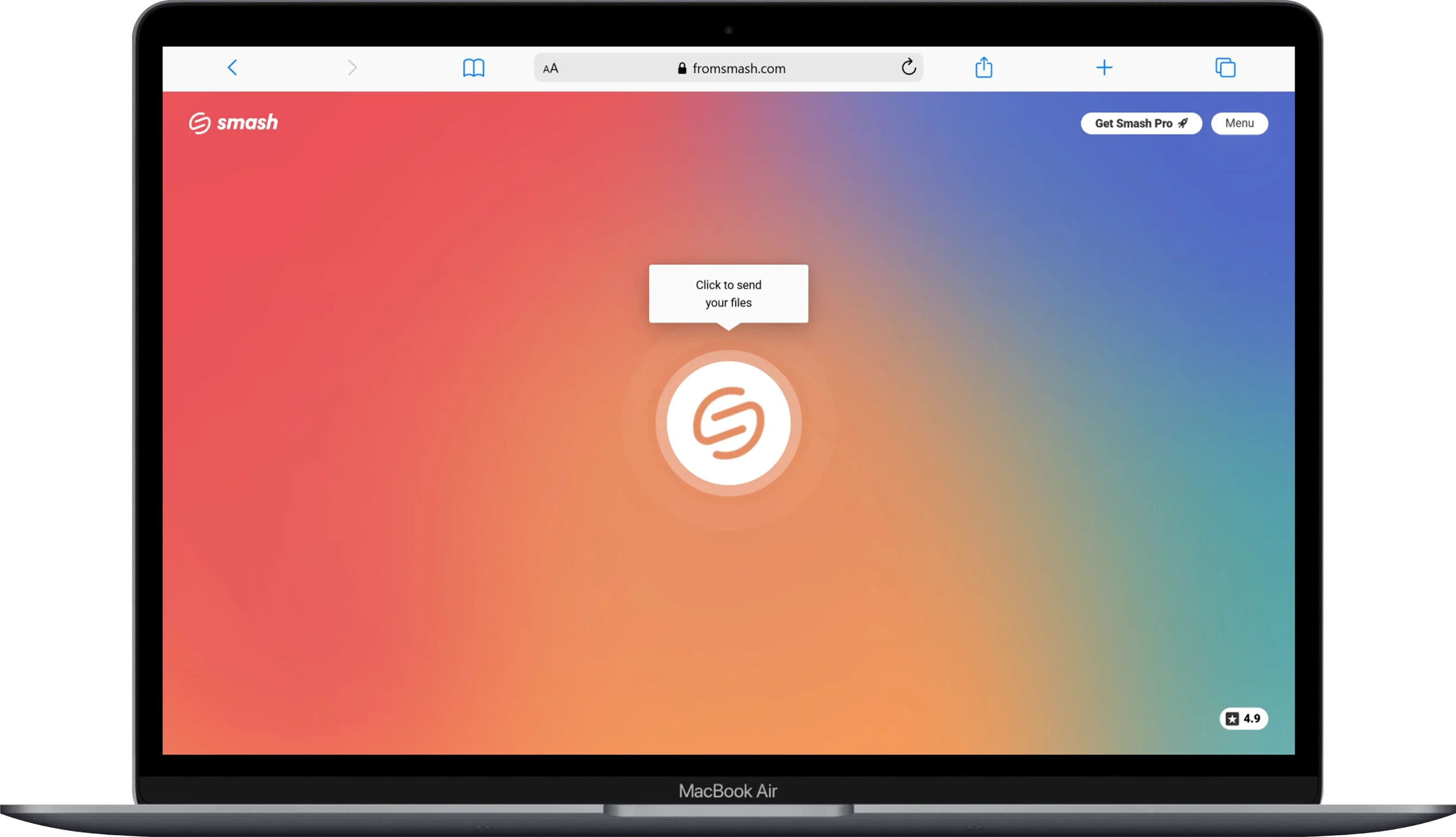
Smash (fromsmash.com) is a powerful, large file transfer service that I’ve used when I need to send big files online without worrying about strict size limits. The service makes it easy to transfer large files, folders, and media projects such as photos, videos, PDFs, and PowerPoint presentations. In my experience, Smash is especially helpful when I need to send GB files online or share very large videos that are too big for email attachments.
What I like is that Smash supports huge file transfers like 10GB, 20GB, 50GB, and even 100GB files, which is useful for photographers, videographers, and businesses working with large digital content. The platform works through web browsers, mobile apps, Outlook plugin, and API, and supports devices like Android, Windows, Mac, iPhone, and iOS, making file transfer online simple and accessible anywhere.
Key Features
- No File Size Limits: Send large files or folders of any size, including 10GB, 20GB, 50GB, or even 100GB transfers.
- Send Big Files Online: Upload files and share them through secure download links or email transfers.
- Large Video & Media Transfer: Easily send large videos, high-resolution photos, and massive PDFs or PowerPoint files.
- Folder Transfer Online: Drag and drop multiple files or entire folders for quick sharing.
- Flexible Transfer Options: Choose email delivery or shareable download links.
- Security Features: Includes password protection, expiry dates, and download notifications.
- Cross-Platform Support: Works on Android, Windows, Mac, iPhone, iOS, and web browsers.
- Outlook Plugin & API: Integrates with Microsoft Outlook and developer tools.
Pros
- Supports extremely large file transfers like 20GB, 50GB, and even 100GB.
- No strict file size limit, which is ideal for media projects.
- Very simple drag-and-drop upload process.
- Secure sharing options with password protection and notifications.
- Works directly from the browser without complicated setup.
Cons
- Free transfers may process very large files more slowly.
- Files are stored temporarily and expire after a set time.
- Advanced customization and branding features require paid plans.
- Upload speed depends on internet connection quality.
Best For
- Creators sending large videos, RAW images, and media projects.
- Businesses transferring large presentations or datasets.
- Users who need to send 20GB, 50GB, or 100GB files online.
- Anyone looking for a simple tool to transfer large files and folders online.
9. Tresorit Send
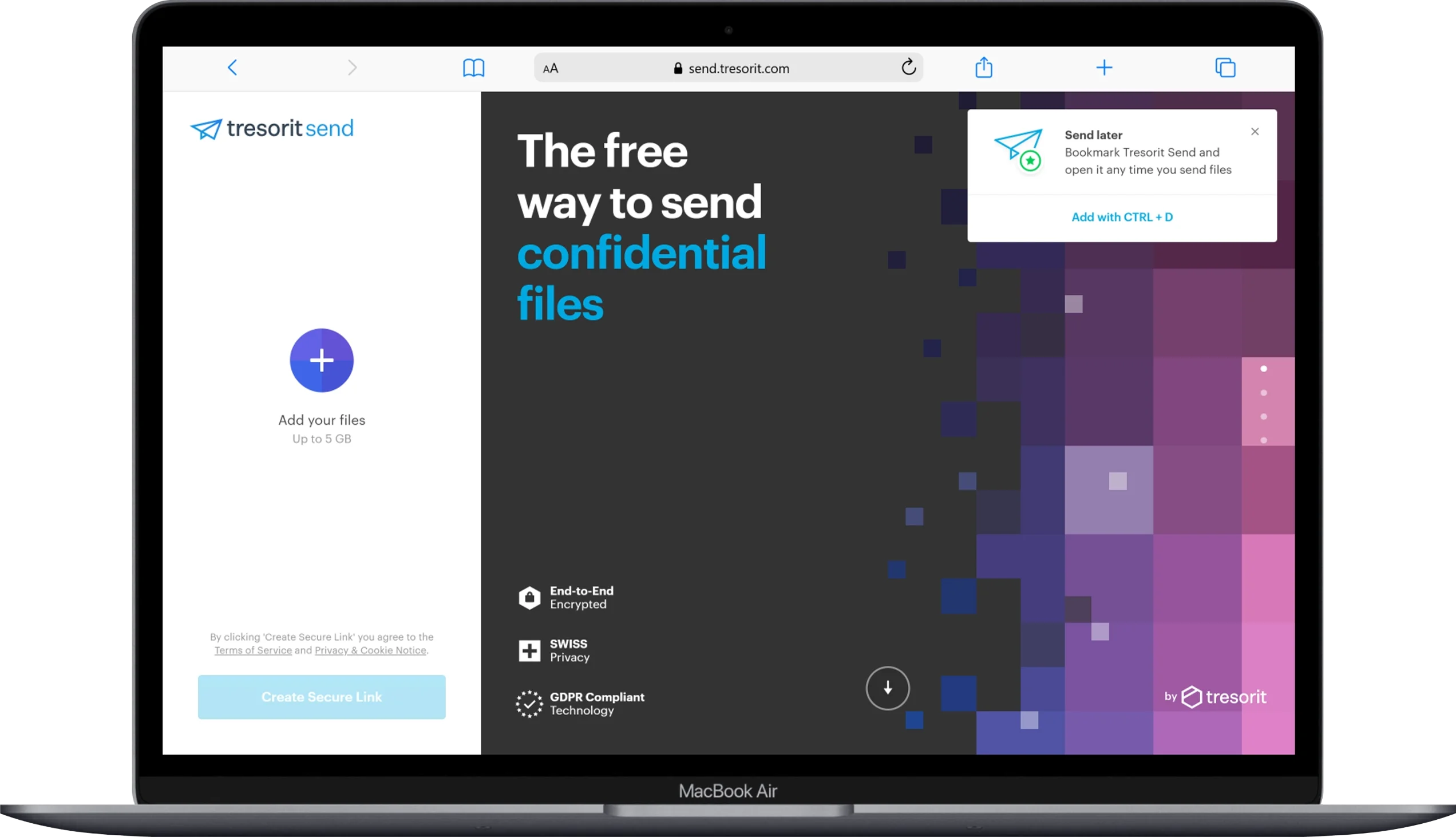
Tresorit Send (send.tresorit.com) is a secure file transfer service designed for people who want to share files online with strong privacy protection. When I need to send documents or media files that may contain sensitive information.
I prefer using Tresorit Send because it focuses on end-to-end encryption and zero-knowledge security. The platform allows users to upload files in a browser and generate a protected download link, making it easy to deliver documents, photos, or videos without relying on email attachments. Tresorit is built on Swiss privacy standards (SWISSPrivacy) and GDPR-compliant technology, which means the service is designed to respect user data protection.
In my experience, the fact that it is ad-free and privacy-focused makes it a reliable option when I want to send files up to 5 GB online while keeping them private.
Key Features
- End-to-End Encryption: Files are protected with zero-knowledge encryption, so only the sender and recipient can access them.
- Send Files Up to 5 GB: Easily transfer files up to 5 GB directly from a web browser.
- GDPR-Compliant Technology: Designed to meet European data protection standards.
- SWISSPrivacy Infrastructure: Built with Swiss-based privacy principles and secure cloud architecture.
- Secure Shareable Links: Upload files and generate private download links for recipients.
- Password Protection: Add a password to control access to the download page.
- Ad-Free File Sharing: The service is completely ad-free, focusing on privacy and security.
- Link Expiration Controls: Set automatic expiration dates to limit access to shared files.
Pros
- Strong security with end-to-end encryption and zero-knowledge privacy.
- GDPR-compliant and Swiss privacy standards for better data protection.
- Free file transfers up to 5 GB.
- Simple browser-based interface with no installation required.
- Ad-free environment, which improves user privacy.
Cons
- Free transfer limit of 5 GB may be small for very large media files.
- Advanced storage and collaboration features require a Tresorit account.
- Primarily focused on secure transfers rather than full cloud storage.
- Upload speed depends on internet connection quality.
Best For
- Sending confidential files or documents securely online.
- Professionals who need encrypted file sharing.
- Users concerned about privacy and GDPR compliance.
- People looking for a secure way to send files up to 5 GB without ads.
10. TransferNow
TransferNow is a secure file transfer and cloud sharing service that I’ve used when I need to send big files online or transfer large folders quickly.
The platform allows users to upload and share files such as photos, videos, PDFs, and documents through email transfers or customizable shareable links.
In my experience, TransferNow is helpful when I want to transfer large files, send GB files online, or easily send large videos that exceed email attachment limits. The free version lets users transfer files up to 5 GB per transfer, while paid plans can handle much larger transfers up to 250 GB or more. It works on Windows, macOS, Linux, Android, iOS, and web browsers, making file transfer online and folder transfer online simple across computers and smartphones.
Key Features
- Transfer Large Files: Easily send big files, photos, documents, and large videos online.
- Send GB Files Online: Share gigabyte-sized files and folders using email transfers or download links.
- Folder Transfer Online: Upload and share multiple files or entire folders in a single transfer.
- 5 GB Free Transfer Limit: Free users can transfer files up to 5 GB per transfer without registration.
- Up to 250 GB Transfers: Premium plans allow large file transfers up to 250 GB.
- Secure File Sharing: Includes password protection, encrypted storage (AES-256), and antivirus scanning.
- File Tracking Dashboard: Monitor downloads, transfer history, and recipient activity.
- Cross-Platform Support: Works on Android, Windows, Mac, Linux, iPhone, and iOS devices.
- Integrations: Supports Outlook add-in, Gmail/Chrome extension, and developer API.
Pros
- Simple drag-and-drop interface for sending files quickly.
- Free plan supports 5 GB transfers, which is useful for everyday file sharing.
- Large transfer capacity (up to 250 GB) for professional users.
- Good security features like password protection and AES-256 encryption.
- Works across many platforms and browsers.
Cons
- Free version limits transfers to 5 GB and 7-day availability.
- Large transfers require a paid subscription.
- Upload speed depends on internet connection quality.
- Temporary storage means files are automatically deleted after expiration.
Best For
- Sending big files or large videos online.
- Businesses sharing documents, presentations, or media projects.
- Users who need to transfer folders or GB-size files quickly.
- Teams using Windows, macOS, Linux, Android, or iOS for cross-device file sharing.
11. DropSend
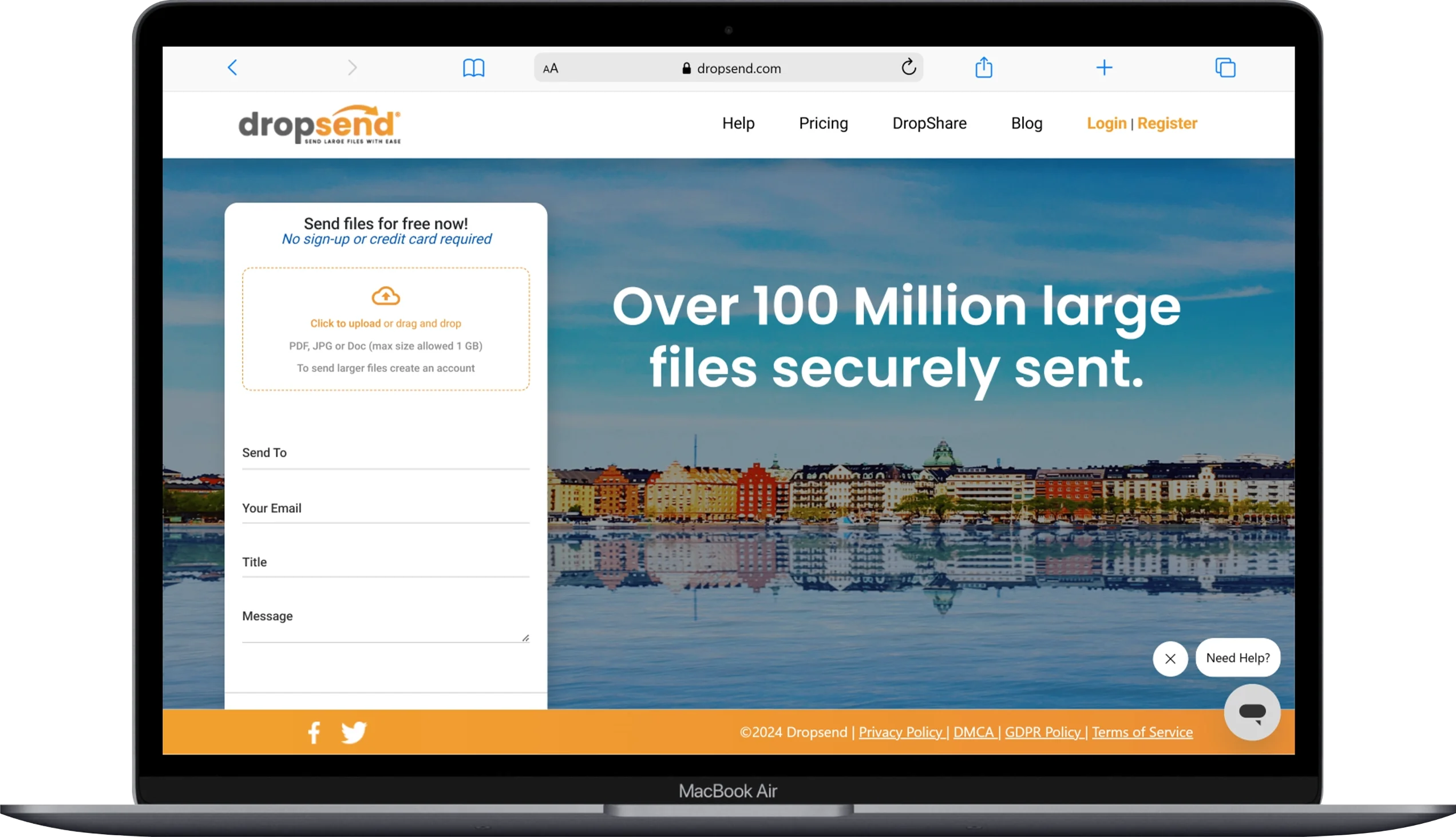
DropSend is an online file transfer service that I’ve tried when I needed a simple way to send large files through email instead of attachments. The platform focuses on secure large file sharing, allowing users to upload files and send them using a download link or email notification.
In my experience, DropSend works well when I want a structured service that tracks transfers and stores files temporarily in the cloud. One important thing to know is that you need to create an account before sending files, even for the free plan.
The free version allows files up to 2 GB with 5 sends per month, while paid plans increase the transfer size up to 50 GB and provide faster speeds and more storage. Because it includes features like drag-and-drop uploads, transfer tracking, and online storage, DropSend can be useful for people who regularly send large documents, videos, or business files online.
Key Features
- Large File Transfers: Send files through email or secure download links.
- Up to 2 GB Free Transfer: Free plan allows files up to 2 GB per transfer.
- Account Required: Users must create an account to upload and send files.
- Drag-and-Drop Upload: Simple interface for uploading files quickly.
- Online File Storage: Free users receive 250 MB cloud storage.
- Transfer Tracking: Monitor sent files and downloads.
- Multiple Paid Plans: Premium plans support files up to 50 GB and faster transfer speeds.
- Dropshare Integration: Higher plans include Dropshare for advanced file sharing.
Pros
- Clear pricing structure with multiple plans.
- Supports very large transfers (up to 50 GB) on paid plans.
- Easy drag-and-drop interface.
- Transfer tracking and file storage included.
- Useful for sending business documents and media files.
Cons
- Account registration is required before sending files.
- Free plan is limited to 5 sends per month.
- Free storage is only 250 MB.
- Many advanced features require a paid subscription.
Best For
- People who regularly send files through email links.
- Businesses sharing documents or presentations with clients.
- Users who need structured file transfer with tracking.
- Professionals who may upgrade to larger plans for 50 GB transfers.
My Recommendation
From my perspective, DropSend is useful if you need an account-based file transfer tool with tracking and structured sending limits. However, because the free plan only allows 5 transfers per month, it’s better suited for occasional business use rather than frequent free file sharing. If you plan to send large files regularly, one of the Basic, Standard, or Professional plans might be more practical.
12. Hightail
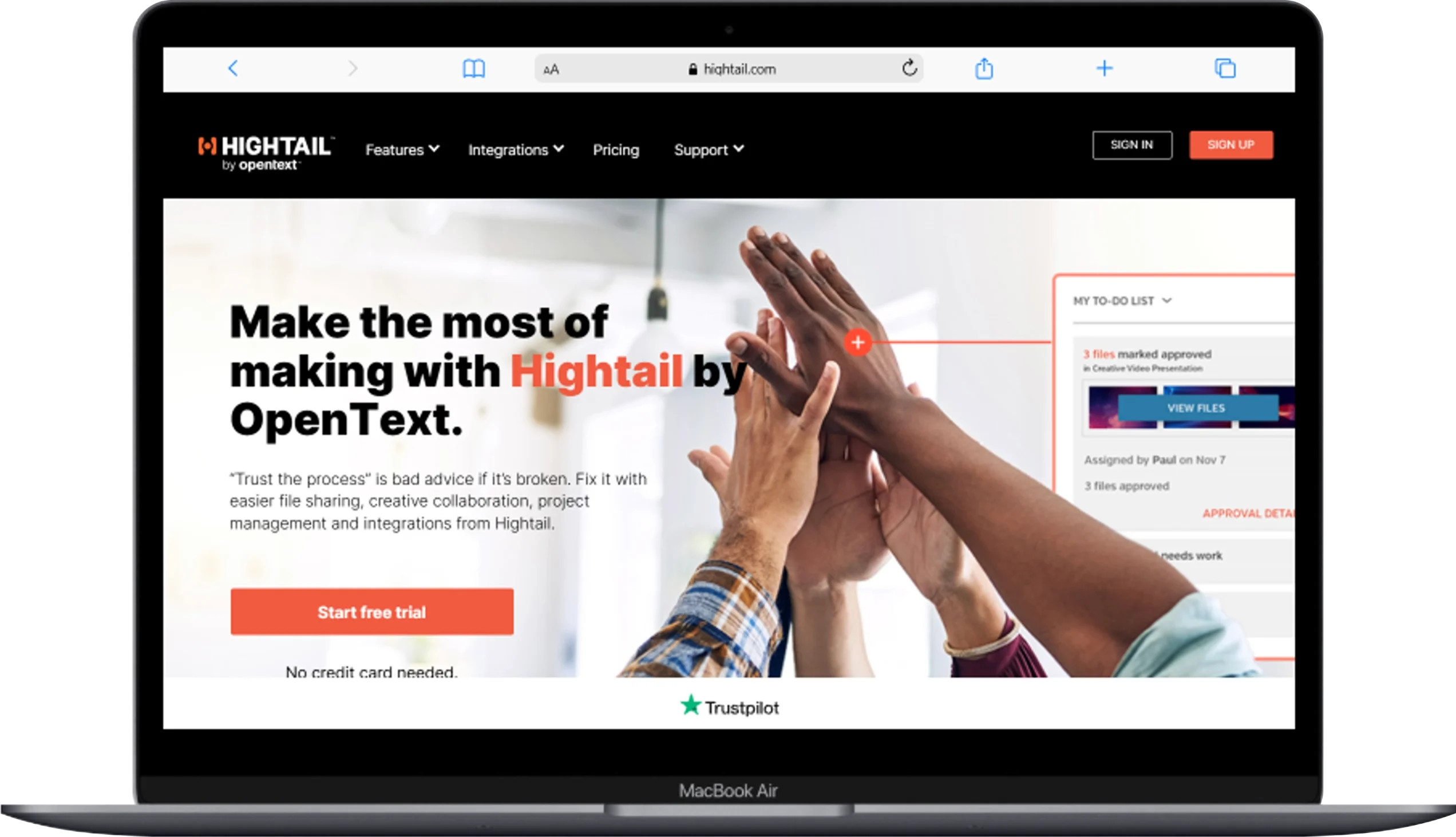
Hightail is a file sharing and collaboration platform designed mainly for creative professionals who need to send large files and collect feedback on projects.
When I tested Hightail, I noticed it’s more than a simple file transfer service because it also includes project collaboration tools, file previews, and approval workflows. The platform allows users to upload and share large videos, design files, documents, and presentations through secure links instead of email attachments.
In my experience, Hightail works well for teams working on media projects, especially when they need to share files online and receive comments or approvals. It runs on web browsers and supports desktop and mobile devices, making it convenient for file transfer and collaboration across different platforms.
Key Features
- Large File Sharing: Send big files, videos, and documents using secure download links.
- Creative Collaboration: Team members can comment, review, and approve files directly.
- File Previews: Preview videos, images, and documents without downloading them.
- Project Workspaces: Organize files into collaboration spaces for teams and clients.
- Secure Sharing: Control access with permissions and secure file links.
- Cloud File Storage: Store and manage files online for ongoing projects.
- Cross-Device Access: Works through web browsers, desktop apps, and mobile devices.
Pros
- Great for creative collaboration and feedback.
- Supports large media files like videos and design assets.
- Preview and commenting tools improve workflow.
- Easy sharing through secure links.
- Organized workspaces for team projects.
Cons
- Free plan has limited storage and features.
- Some advanced collaboration tools require paid plans.
- Not focused purely on fast file transfer like Smash or WeTransfer.
- Learning curve for new users compared with simple file send tools.
Best For
- Creative teams working with videos, graphics, and design files.
- Agencies sharing projects with clients for review.
- Professionals needing collaboration and feedback tools.
- Users who want more than a basic large file transfer service.
13. SendBig
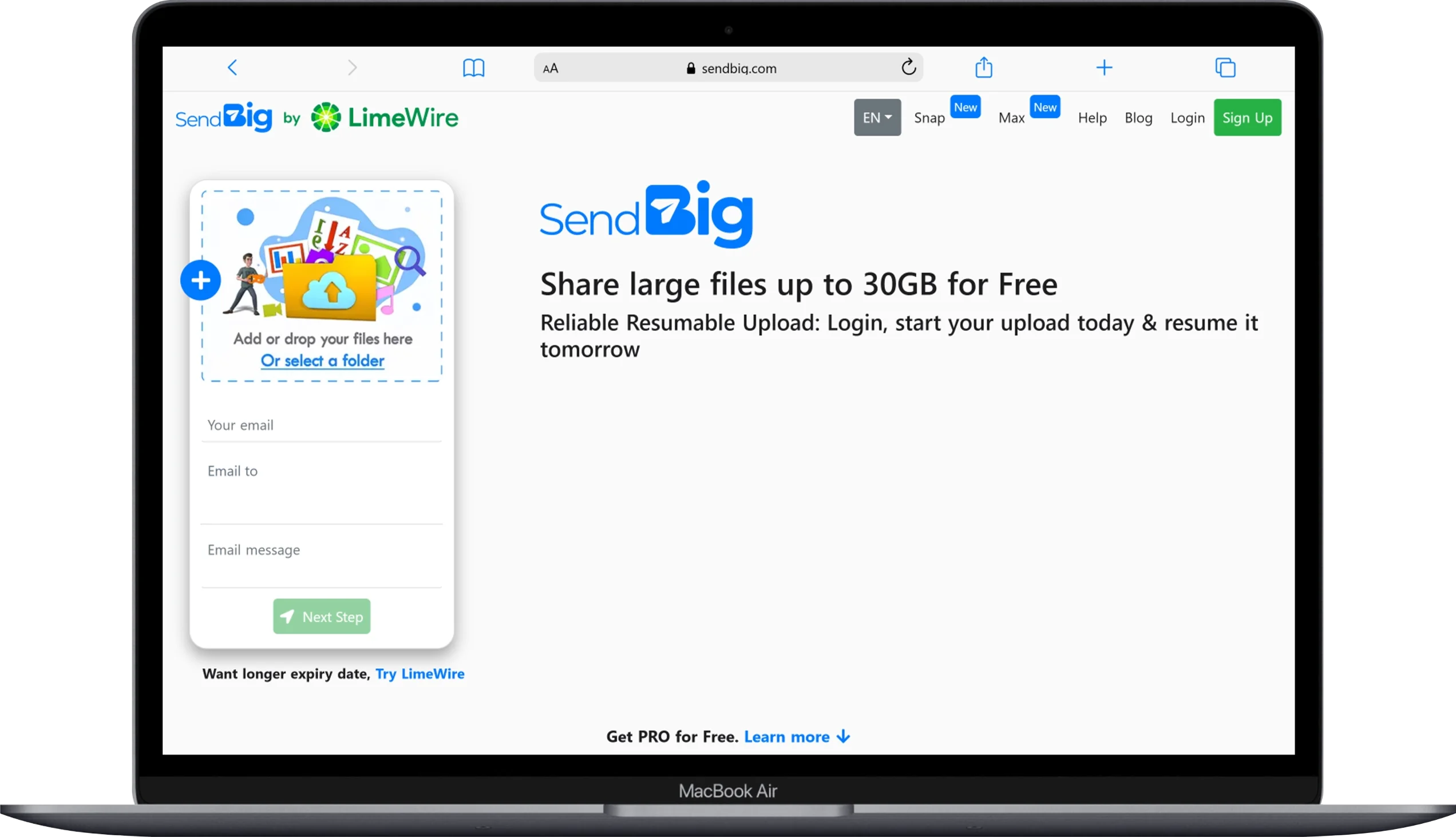
SendBig is an online large file transfer service that I’ve used when I need to send very big files without paying or creating an account. The platform allows users to share files up to 30GB for free, which is much larger than typical email attachment limits.
From my experience, SendBig is useful when I want to send large videos, project files, or folders through a shareable link or email notification. The service also supports resumable uploads and downloads, so if the internet connection stops, the transfer can continue later without starting over. With SSL/TLS security, ISO 27001 certified data centers, and optional end-to-end encryption, SendBig focuses on making large file sharing secure and easy directly from a web browser.
Key Features
- Send Files Up to 30GB Free: Transfer very large files or videos up to 30GB per transfer without payment.
- No Registration Required: Send files instantly without creating an account.
- Shareable Download Links: Generate a secure link to share files through email, websites, or social media.
- Resumable Upload & Download: Continue file transfers even after interruption or system shutdown.
- SSL/TLS Security: Data transfers are protected using Secure Sockets Layer encryption.
- ISO 27001 Data Centers: Files are stored in internationally certified secure infrastructure.
- Email Notifications: Receive alerts when recipients download your files.
- Custom Expiration Settings: Set transfer expiration dates and manage downloads.
Pros
- Large free transfer limit of up to 30GB.
- No account required for basic file sending.
- Resumable uploads and downloads help with unstable internet connections.
- Secure transfers using SSL/TLS encryption.
- Simple browser-based interface.
Cons
- Very large uploads may take time depending on internet speed.
- Some advanced features require SendBig Pro account.
- Files are stored temporarily and expire after a set time.
- Interface is simpler compared with enterprise collaboration tools.
Best For
- Sending large videos or media files up to 30GB.
- Users who want to transfer big files online without registration.
- Sharing downloadable files via links on websites or social media.
- People looking for a free alternative to other large file transfer services.
14. FileDropper
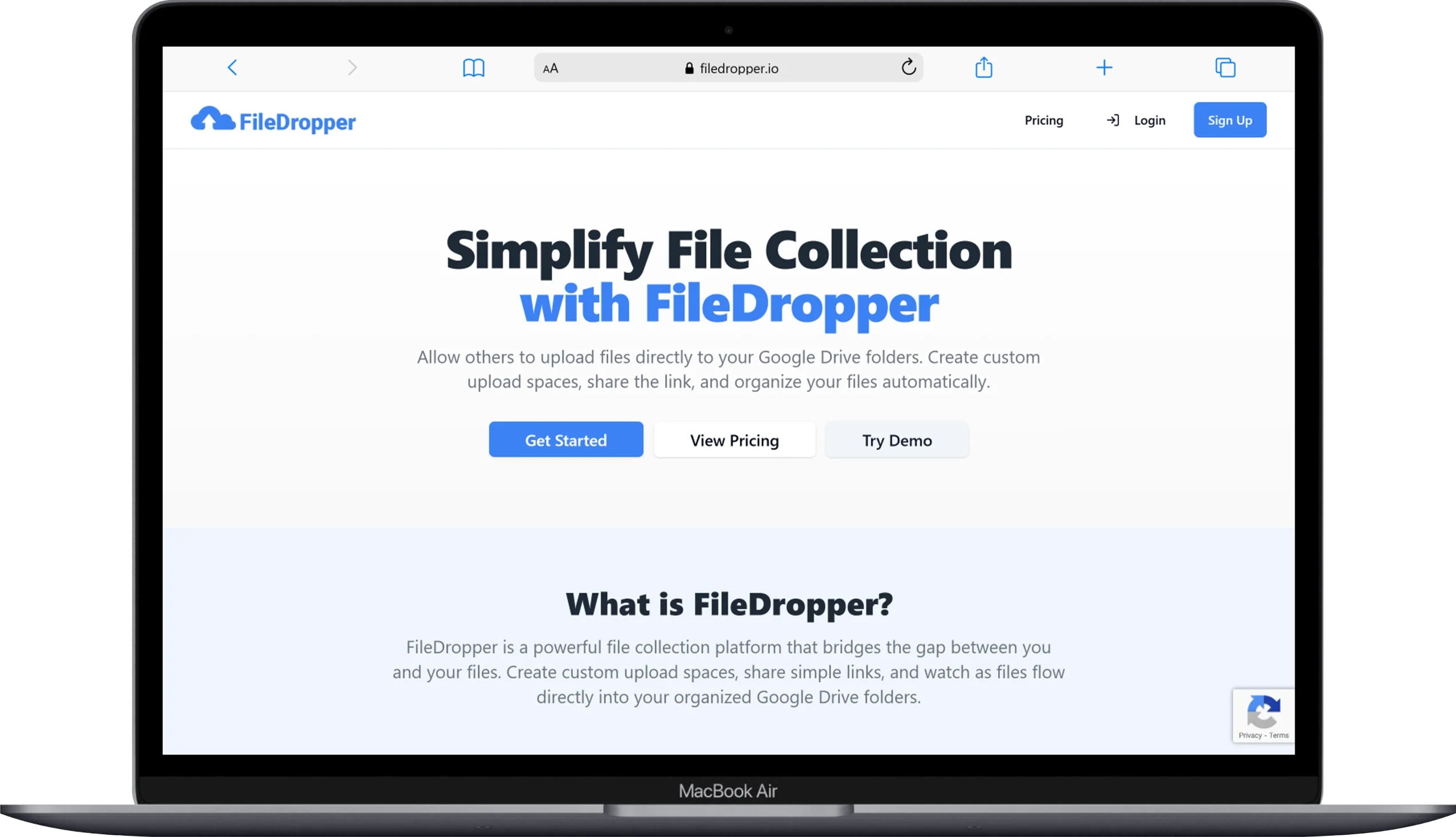
FileDropper.io is a file collection and upload management platform designed to help individuals and teams receive files from others in an organized way. Instead of sending attachments through email, I can create a custom upload space and share a simple link, allowing people to upload their files directly.
What makes FileDropper interesting is that uploaded files go straight into my Google Drive folders, which saves time because I don’t need to download and re-upload them manually. In my experience, this approach is very useful when collecting client documents, team resources, event photos, or project files. With features like custom upload forms, folder mapping, analytics, and Google Drive integration, FileDropper focuses more on file collection and organization rather than traditional file sending.
Key Features
- Google Drive Integration: Uploaded files go directly to your Google Drive folders automatically.
- Custom Upload Spaces: Create unique upload pages with shareable links for collecting files.
- Unlimited File Uploads: Both plans allow unlimited uploads from users.
- Custom Upload Forms: Add fields or options so users can categorize files before uploading.
- Folder Mapping: Assign uploaded files to specific Google Drive folders automatically.
- Embed Upload Forms: Integrate the upload form into your website with simple embedding.
- Upload Analytics: Track upload volume, file types, and usage statistics.
- File Type Control: Restrict uploads to specific file formats for better organization.
Pricing Plans
- Starter Plan – $9/month
- 7-day free trial
- 1 active upload space
- 3 options per space
- Unlimited uploads
- Basic support
- Advanced analytics
- Pro Plan – $19/month
- 7-day free trial
- 15 active upload spaces
- Unlimited options per space
- Unlimited uploads
- Priority support
- Advanced analytics
Pros
- Direct Google Drive integration, which simplifies file organization.
- Custom upload spaces with shareable links.
- Unlimited uploads on all plans.
- Useful analytics to track file submissions.
- Upload forms can be embedded on websites.
Cons
- No permanent free plan, only a 7-day trial.
- Requires a paid subscription for continued use.
- Designed mainly for collecting files, not sending them.
- Requires Google Drive integration for full functionality.
Best For
- Businesses collecting files from clients or customers.
- Teams gathering documents, media files, or project resources.
- Event organizers collecting photos or submissions.
- Website owners who want a simple file upload form connected to Google Drive.
15. TransferXL
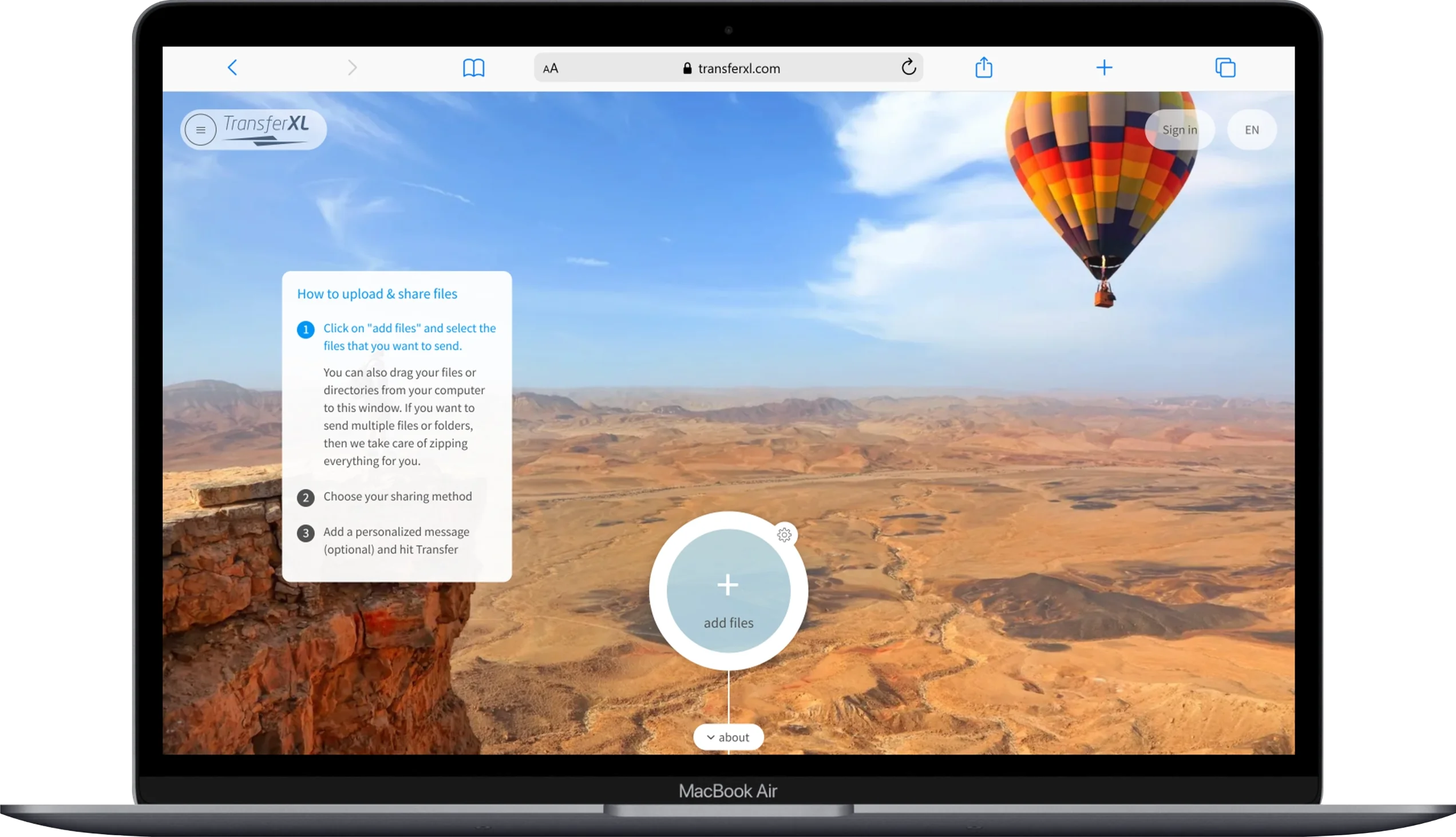
TransferXL is an online file transfer service that I’ve used when I need to send large files quickly and securely over the internet. The platform makes it easy to share documents, photos, and multi-gigabyte videos without worrying about the usual email attachment limits. From my experience, TransferXL is straightforward: I simply upload the files, enter the recipient’s email address, and the service creates a secure file transfer link. The free plan allows transfers up to 5 GB, while paid plans support much larger transfers up to 100 GB or even 200 GB. With features like end-to-end encryption, global servers for faster uploads, and transfer tracking, TransferXL is designed to make large file sharing fast, reliable, and easy to manage.
Key Features
- Send Files Up to 5 GB for Free: The basic plan allows free file transfers up to 5 GB.
- Large Transfers Up to 200 GB: Paid plans support massive file transfers up to 200 GB.
- End-to-End Encryption: Files can be protected with password-based encryption for secure sharing.
- Email & Link Sharing: Send files via email notifications or shareable download links.
- Automatic Compression: Files are compressed automatically before upload to speed up transfers.
- Transfer Tracking: Receive notifications when recipients download the files.
- Transfer History: View sent and received transfers through a timeline dashboard.
- Image & Video Thumbnails: Automatically generate preview thumbnails for media files.
Pricing Plans
- Free Plan – $0/month
- 5 GB max transfer size
- Up to 10 transfers per day
- 10 GB daily transfer limit
- 1-week file retention
- End-to-end encryption
- Up to 5 email recipients
- Pro Plan – $9.99/month
- 100 GB max transfer size
- Unlimited transfers per day
- 200 GB daily transfer limit
- 6-week retention
- Unlimited recipients
- Custom background and subdomain
- Enterprise Plan – $24.99/month
- 200 GB max transfer size
- Unlimited transfers per day
- 400 GB daily transfer limit
- 3-month retention
- Custom branding and domain options
Pros
- Free plan supports 5 GB transfers, which is useful for everyday file sharing.
- Very large transfer capacity (up to 200 GB) on paid plans.
- End-to-end encryption for secure file transfers.
- Fast uploads using global server infrastructure.
- Transfer tracking and history management.
Cons
- Free plan has daily transfer limits.
- Advertisements appear in the free version.
- Larger transfers require paid plans.
- Files are stored temporarily depending on the plan.
Best For
- Sending large videos, photos, and project files online.
- Users who want secure file transfers with encryption.
- Businesses sharing large datasets or presentations.
- Anyone needing to send files bigger than normal email attachments.
16. MASV
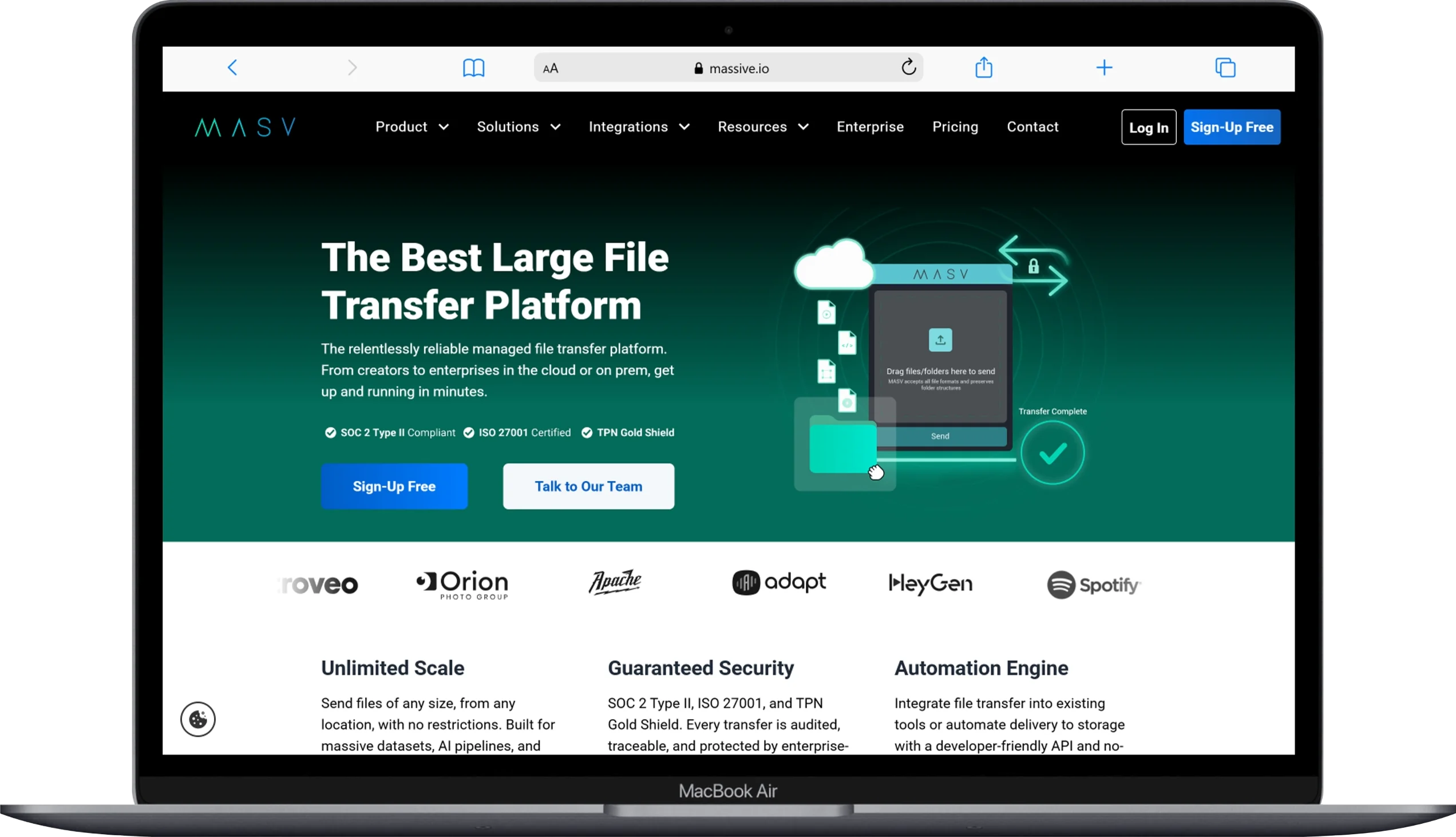
MASV (massive.io) is a professional large file transfer platform designed for creators, production teams, and enterprises that need to move massive datasets quickly and securely. When I looked into MASV, it became clear that the platform focuses on enterprise-grade managed file transfer (MFT) rather than simple file sharing. It allows users to send files of virtually any size—including huge video projects, CAD files, geospatial datasets, or AI training data—without traditional limits. What stands out is its cloud-native infrastructure with more than 400 global servers, enabling extremely fast transfers that can reach up to 10 Gbps per endpoint. With features like automation workflows, secure APIs, and integrations with cloud storage platforms such as Amazon S3 and Frame.io, MASV is built for organizations that need reliable, large-scale data delivery across cloud and on-prem environments.
Key Features
- Unlimited File Size Transfers: Send massive files or datasets of any size without traditional restrictions.
- High-Speed Transfer Network: Global infrastructure with 400+ servers and speeds up to 10 Gbps per endpoint.
- Enterprise Security: Includes SOC 2 Type II compliance, ISO 27001 certification, and TPN Gold Shield.
- End-to-End Protection: Uses AES-256 encryption at rest and TLS 1.2 encryption in transit.
- Automated Workflows: Create automated file transfer pipelines using no-code tools or APIs.
- Cloud & On-Prem Integrations: Connect with Amazon S3, Frame.io, media asset managers, and other cloud storage tools.
- Developer-Friendly API: Integrate secure file transfer features into apps or custom workflows.
- Transfer Tracking: Monitor file delivery with auditing, integrity checks, and transfer logs.
Pros
- Supports extremely large datasets with no file size limits.
- Very fast transfer speeds thanks to its global infrastructure.
- Strong enterprise security and compliance standards.
- Automation features for advanced workflows.
- Integrates with cloud storage and production tools.
Cons
- Designed mainly for professional or enterprise use, which may be complex for casual users.
- Pricing depends on usage or enterprise plans, not always simple for individuals.
- Requires some technical setup for automation or integrations.
- Overkill for simple personal file sharing tasks.
Best For
- Film studios, media production teams, and content creators.
- Companies transferring huge datasets or AI training data.
- Organizations needing secure managed file transfer (MFT).
- Businesses moving files between cloud storage, servers, and production workflows.
17. TitanFile
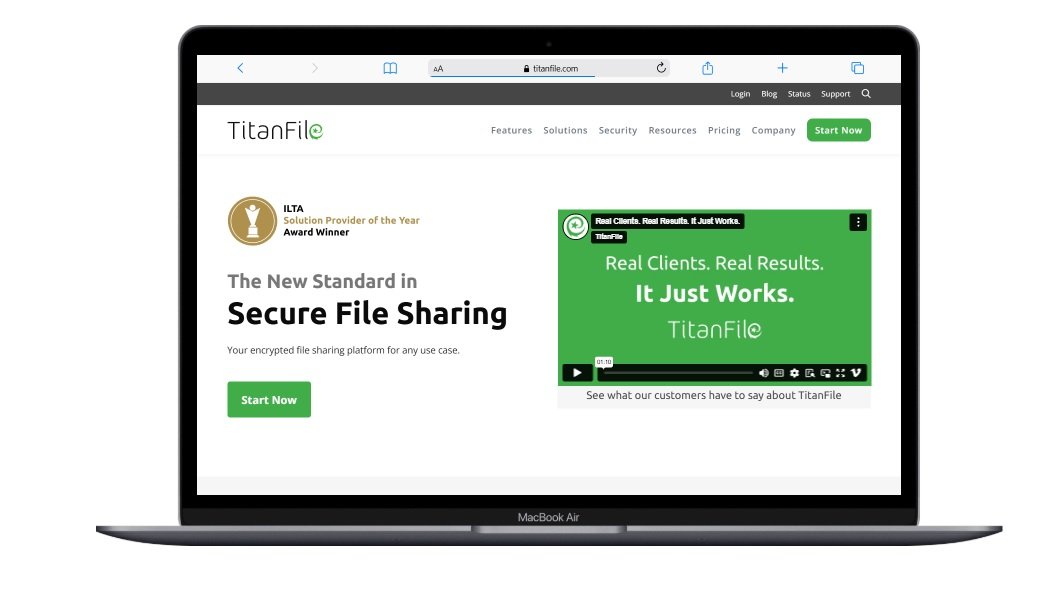
TitanFile is a secure file sharing and client collaboration platform designed mainly for businesses that need to transfer sensitive files safely. When I explored TitanFile, it felt more like a secure communication workspace rather than just a basic file transfer tool. The platform allows organizations to send large files, documents, videos, and folders over 100GB while keeping everything protected with strong encryption and compliance standards. TitanFile is often used by legal firms, financial institutions, healthcare providers, and government agencies because it focuses heavily on data security, regulatory compliance, and encrypted communication. In my experience, the interface is designed to work similar to email platforms like Gmail or Outlook, but with stronger security controls for sharing confidential information.
Key Features
- Large File Transfers: Send files over 100GB including documents, videos, audio, and images.
- End-to-End Security: Files are protected with encryption in transit and at rest.
- Compliance Standards: Meets ISO 27001, SOC 2 Type II, PIPEDA, and HIPAA requirements.
- Secure Workspaces: Create private collaboration spaces to exchange files and messages with clients.
- No File Size or Quantity Limits: Upload unlimited files and folder structures without compressing them.
- Fast Upload Speeds: Supports transfers with speeds up to 500 Mbps.
- Data Residency Options: Store files in US, Canada, or European data centers.
- Email-Like Interface: Designed to be as easy to use as email for sending and receiving files.
Pros
- Very strong security and compliance features.
- Supports extremely large file transfers (100GB+).
- Secure collaboration spaces for teams and clients.
- Easy-to-use interface similar to email platforms.
- Trusted by more than 500,000 professionals worldwide.
Cons
- Primarily designed for business or enterprise use.
- Pricing details require contacting or signing up.
- May be more complex than simple file sharing tools.
- Overkill for basic personal file transfers.
Best For
- Law firms and legal professionals sharing confidential files.
- Financial services and accounting teams handling sensitive documents.
- Healthcare organizations requiring HIPAA-compliant file sharing.
- Businesses needing secure client collaboration and encrypted file transfers.
18. GrosFichiers
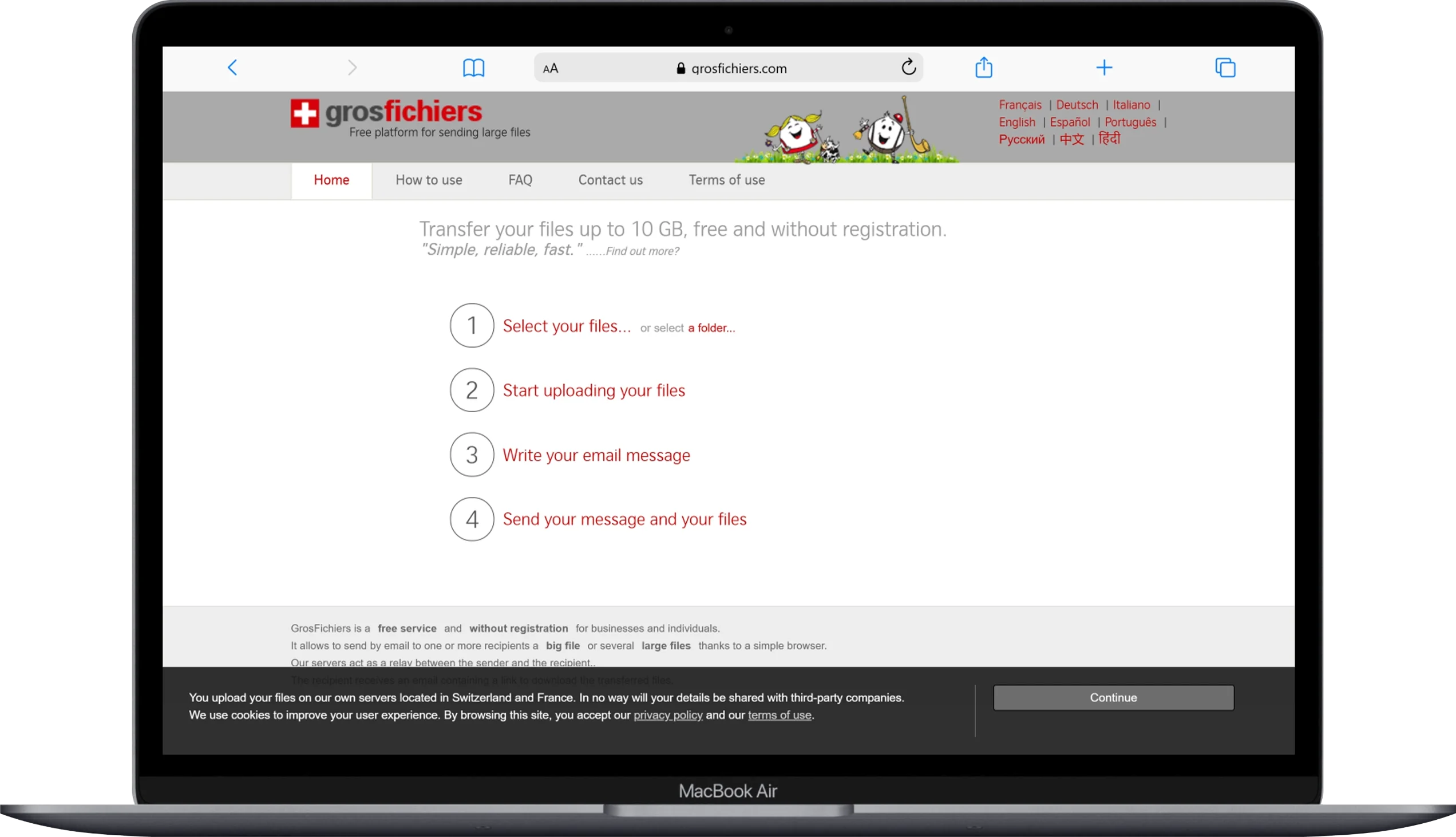
GrosFichiers is a free large file transfer service that allows users to send files up to 10 GB without registration. When I explored the platform, I noticed that it focuses on simple browser-based file sharing, making it easy to upload files and send them directly to recipients by email. Instead of attaching files to email—which usually has a size limit—GrosFichiers stores the files on its servers and sends the recipient a download link. From my experience, this makes it convenient when I need to send big files, videos, or multiple documents at once without installing software. The platform works directly in common browsers like Chrome, Firefox, Safari, or Edge, which makes online file transfer quick and accessible for both individuals and businesses.
Key Features
- Send Files Up to 10 GB Free: Transfer large files or multiple documents up to 10 GB per send.
- No Registration Required: Start sending files instantly without creating an account.
- Email-Based File Sharing: Recipients receive an email with a secure download link.
- Multiple File Upload: Upload several files at once, which can be automatically compressed.
- Browser-Based Transfer: Works directly from web browsers like Chrome, Firefox, Safari, or Edge.
- Multiple Recipients: Send files to one or several email recipients at the same time.
- Temporary Cloud Storage: Files are stored on servers until recipients download them.
- Optional Ad-Free Packs: Paid packs allow up to 50 GB per send without ads.
Pricing (Optional Packs)
- Free Plan
- Up to 10 GB per transfer
- No registration required
- Ad-supported service
- Ad-Free Packs
- €5 – 1 month: Up to 50 GB per send
- €10 – 2 months: Up to 50 GB per send
- €20 – 6 months: Up to 50 GB per send
- No automatic renewal
Pros
- Completely free for transfers up to 10 GB.
- No account or software installation required.
- Simple interface for quick file uploads.
- Supports sending files to multiple recipients.
- Works directly from any modern web browser.
Cons
- Free version includes advertisements.
- Files are stored temporarily on servers.
- Fewer advanced security or collaboration features than enterprise platforms.
- Upload speed depends on internet connection quality.
Best For
- Sending large files quickly without registration.
- Sharing videos, documents, or photos through email links.
- Individuals or small businesses needing a simple file transfer tool.
- Users looking for a straightforward alternative to email attachments.
19. Zend.to
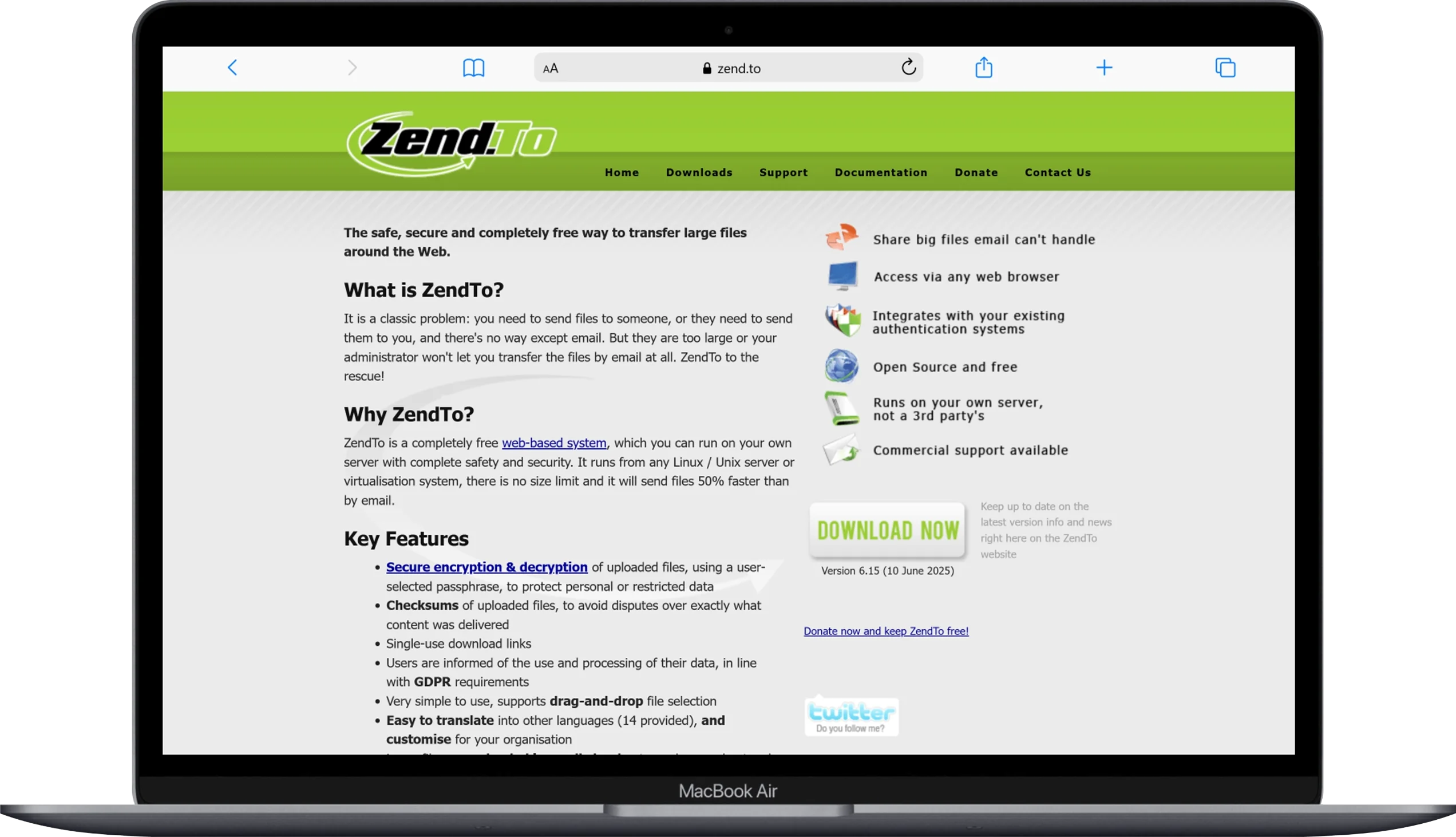
ZendTo is a secure open-source file transfer platform designed to help organizations send and receive large files that are too big for email attachments. From my perspective, ZendTo feels more like a self-hosted enterprise file sharing solution rather than a simple public upload tool. It runs on Linux or Unix servers and allows teams to transfer files through a web interface with drag-and-drop uploads. What I like about it is the strong focus on data privacy, encryption, and compliance, including GDPR-aligned data handling and secure passphrase-based encryption. Because it can integrate with Active Directory, LDAP, SAML, OAuth, or IMAP authentication, it works well for companies that need a controlled and secure environment for transferring large datasets, documents, or media files online.
Key Features
- Self-Hosted File Transfer System: Install ZendTo on Linux, Unix, or Docker environments for complete control over your file transfers.
- No Hard Upload Limits: Designed for large data transfers (50GB or more) depending on server capacity.
- Secure Encryption: Files are encrypted and decrypted using a passphrase to protect confidential data.
- Single-Use Download Links: Recipients can receive one-time download links for better security.
- Chunked File Uploads: Large files upload in small chunks, helping bypass network restrictions and improving reliability.
- Checksum Verification: Ensures file integrity and accurate delivery verification.
- Authentication Integration: Works with Active Directory, LDAP, SAML, OAuth, and IMAP login systems.
- GDPR Compliance Support: Users are informed about data processing and privacy policies.
- Drag-and-Drop Interface: Simple web interface for uploading and sending files quickly.
- API and Automation Support: Can be scripted or integrated with ticketing systems and workflows.
Pros
- Completely free and open-source file transfer platform.
- Highly secure with encryption and passphrase protection.
- No strict file size limit when hosted on your own server.
- Supports enterprise authentication systems like SAML and LDAP.
- Flexible deployment with Docker and Linux servers.
Cons
- Requires server setup and technical knowledge to install.
- Not a plug-and-play public file sharing service like WeTransfer.
- Performance depends on your server infrastructure.
- User interface is more functional than modern SaaS tools.
Best For
- Organizations needing a self-hosted large file transfer solution.
- Universities, enterprises, and IT departments handling sensitive data.
- Secure internal file sharing with GDPR-compliant workflows.
- Teams that want full control over storage, encryption, and authentication.
20. MailBigFile
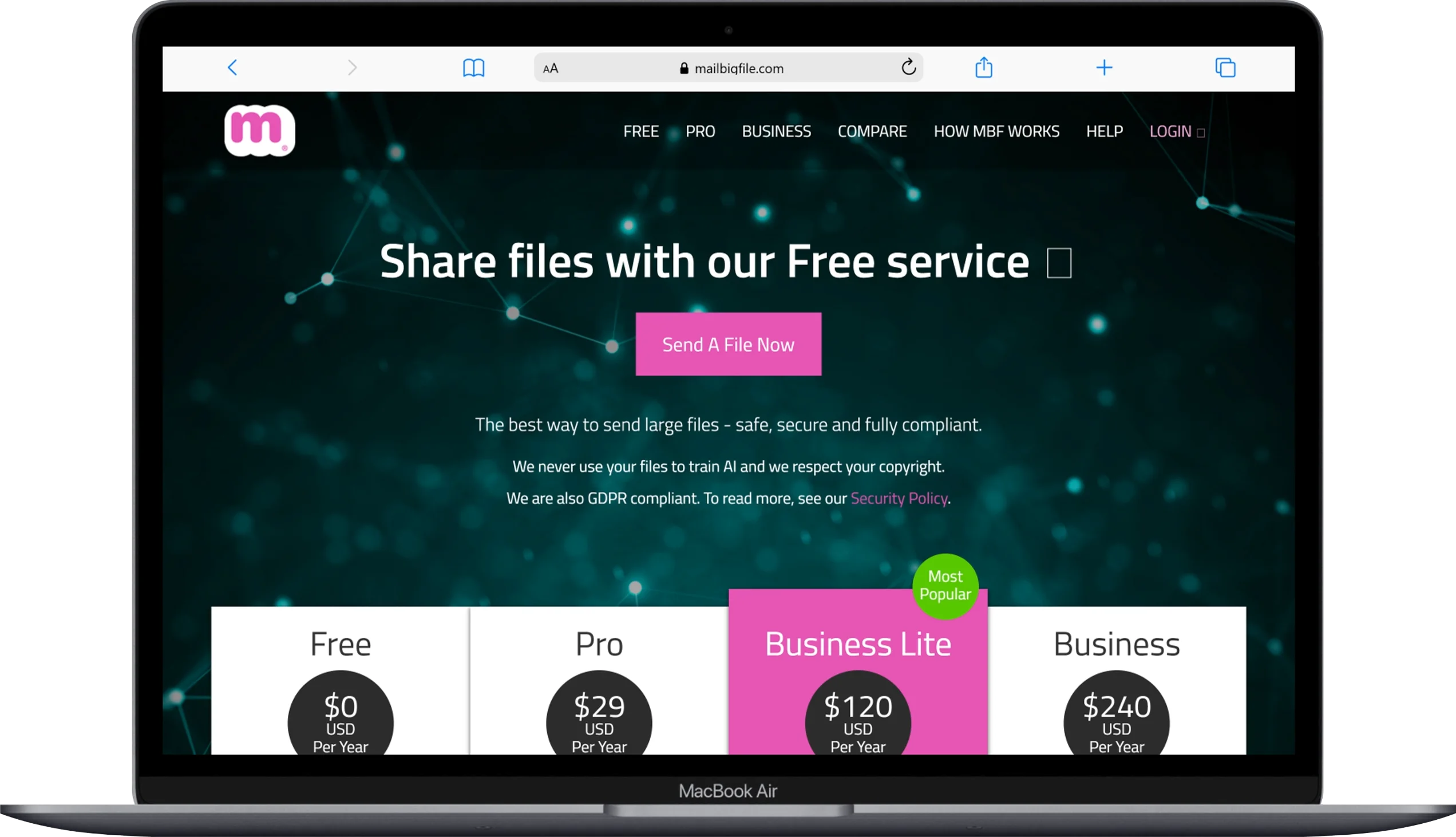
MailBigFile is an online file transfer service that helps individuals and businesses send large files that exceed normal email attachment limits. From my experience exploring the platform, it’s a straightforward tool for sharing big files like videos, documents, photos, or project folders through a secure download link. Instead of struggling with the typical 25 MB email attachment limit, MailBigFile uploads the file to its cloud servers and sends recipients a download link. The service supports secure file transfer with SSL encryption and AES-256 storage protection, while also offering GDPR-compliant data handling. Depending on the plan, users can transfer files from 2GB up to 100GB, making it useful for sending large video files, high-resolution media, and other heavy data online.
Key Features
- Large File Transfers: Send files up to 2GB for free and up to 100GB with Business plans.
- Secure File Sharing: Uses 128-bit SSL encryption for transfers and AES-256 encryption for storage.
- Email & Link-Based Sharing: Upload files and send recipients a secure download link via email.
- Automatic File Zipping: Multiple files can be compressed automatically into a ZIP archive.
- File Tracking: Monitor downloads and transfer activity on paid plans.
- Custom Branding: Business accounts allow custom logos, colors, and branded download pages.
- Temporary or Extended Storage: Files remain available for 10–60 days depending on the plan.
- GDPR Compliance: Built with privacy-focused policies and secure data handling.
Pricing
Free Plan – $0/year
- Send files up to 2GB
- Files available 10 days
- 20 downloads per file
Pro Plan – $29/year
- Send files up to 4GB
- Files available 28 days
- 50 downloads per file
- File tracking
Business Lite – $120/year
- Send & receive files up to 5GB
- Files available 30 days
- 50 downloads per file
- File tracking
- Custom branding
Business – $240/year
- Send & receive files up to 100GB
- Files available 60 days
- 100 downloads per file
- File tracking
- Custom branding
Pros
- Simple web-based large file transfer tool.
- Supports files up to 100GB on business plans.
- Secure file transfer with SSL and AES encryption.
- Download tracking and branding features for businesses.
- GDPR-compliant file sharing service.
Cons
- Free plan limited to 2GB transfers.
- Advanced features require paid plans.
- File availability time is limited unless upgraded.
- Less collaboration features compared with full cloud storage platforms.
Best For
- Sending large files online quickly through email links.
- Businesses needing branded file sharing pages.
- Sharing large videos, project files, or design assets.
- Users looking for a simple alternative to email attachments for big file transfers.
How to Transfer Large Files (100GB to 1TB)

Transferring files larger than 100GB presents unique challenges that require specialized solutions. Having transferred massive files for various projects, I’ll share the most effective methods for each size category.
How to Transfer 100GB Data Online
For 100GB transfers, you’ll need services that go beyond standard free plans. Here are the best options I’ve tested:
Recommended Services:
- MASV: Offers 100GB transfers on their free plan with excellent speed
- Filemail Pro: Allows 100GB transfers with their paid plan
- pCloud: I use pCloud as my file transfer solution. I normally compress my files into a ZIP, upload everything, then use the shared link to download the files on other devices. So far, I’m on the 1TB lifetime plan, which has been really convenient.
- TransferXL Premium: Supports up to 200GB transfers
Best Practices:
- Compress your files if possible to reduce size
- Use a wired Ethernet connection instead of Wi-Fi for stability
- Transfer during off-peak hours (late night or early morning)
- Split the transfer into smaller chunks if the service allows
- Ensure your computer won’t go to sleep during the transfer
Step-by-Step Process:
- Select a service that supports 100GB+ transfers
- Create an account (required for most large transfers)
- Organize your files into a single folder or compressed archive
- Upload the files using a stable internet connection
- Share the download link with your recipient
- Monitor the transfer progress and notify the recipient when complete
How to Transfer 200GB Data Online
At 200GB, you’re entering territory where most free services won’t suffice. Here are the most reliable options I’ve found:
Recommended Services:
- MASV: Their paid plans support up to 15TB transfers
- TransferXL Premium: Specifically designed for 200GB transfers
- Filemail Business: Supports large file transfers with business features
- Dropbox Transfer: With a business account, you can send up to 2GB files, but for 200GB you’ll need their large file transfer add-on
Best Practices:
- Use a dedicated upload tool if the service provides one
- Test your internet stability with a smaller file first
- Close all unnecessary applications to free up system resources
- Consider using a computer with a faster processor and more RAM
- Plan for the transfer to take several hours or even days
Advanced Tips:
- Enable resumable uploads if the service offers this feature
- Use a download manager that supports large file transfers
- Consider splitting the 200GB into multiple 50GB chunks for better reliability
- Use a service that provides transfer acceleration technology
How to Transfer 300GB Data Online
Transferring 300GB requires specialized services and careful planning. Here’s what works best based on my experience:
Recommended Services:
- MASV: Their professional plans handle 300GB transfers efficiently
- Signiant Media Shuttle: Industry standard for media professionals
- Filemail Business: With their large file transfer capabilities
- IBM Aspera: Enterprise-grade solution for massive transfers
Best Practices:
- Use a dedicated server or high-performance computer
- Ensure you have a business-grade internet connection with high upload speeds
- Schedule the transfer during periods of low network usage
- Use a service that offers accelerated file transfer technology
- Have a backup plan in case the transfer fails
Technical Considerations:
- Check your disk space to ensure you have enough room for temporary files
- Verify that your file system supports large files (NTFS, APFS, or ext4)
- Consider using a solid-state drive (SSD) for better performance
- Monitor your system temperature during the transfer
How to Transfer 500GB Data Online
At 500GB, you’re dealing with transfers that can take days on standard connections. Here are the most effective solutions:
Recommended Services:
- MASV Enterprise: Designed for transfers up to 15TB
- IBM Aspera: High-speed transfer solution for enterprises
- Signiant Media Shuttle: Professional media transfer service
- Filemail Enterprise: Supports massive file transfers
Best Practices:
- Use a dedicated fiber optic internet connection
- Employ a service with UDP-based acceleration technology
- Schedule the transfer over a weekend or holiday period
- Use a computer with a powerful CPU and plenty of RAM
- Monitor the transfer closely and be prepared to resume if interrupted
Advanced Strategies:
- Consider using a service that offers peer-to-peer acceleration
- Split the transfer into logical chunks (e.g., by file type or date)
- Use a service that provides real-time transfer monitoring
- Have a technical expert on standby during the transfer
How to Transfer 700GB Data Online
Transferring 700GB is approaching enterprise-level requirements. Here are the solutions that work:
Recommended Services:
- IBM Aspera: The gold standard for ultra-large transfers
- MASV Enterprise: Handles transfers up to 15TB
- Signiant Media Shuttle: Professional-grade solution
- Filemail Enterprise: With their largest transfer packages
Best Practices:
- Use a dedicated server with high-speed internet
- Employ acceleration technology that can utilize your full bandwidth
- Schedule the transfer during a maintenance window
- Use a service that offers automatic resume capabilities
- Have a backup internet connection available
Enterprise Considerations:
- Consider using a content delivery network (CDN) for distribution
- Implement quality of service (QoS) settings to prioritize the transfer
- Use a service that provides detailed transfer logs and reporting
- Consider physical media as a backup option
How to Transfer 1TB Data Online
A 1TB transfer is a significant undertaking that requires enterprise-level solutions. Here’s what works:
Recommended Services:
- IBM Aspera: Can transfer 1TB in hours rather than days
- MASV Enterprise: Specifically designed for terabyte-scale transfers
- Signiant Media Shuttle: Professional solution for massive files
- Filemail Enterprise: With their largest transfer packages
Alternative Methods:
- Physical Media Shipping: Sometimes faster to mail an external hard drive
- AWS Snowball: Physical device for massive data transfers to AWS
- Azure Data Box: Microsoft’s physical data transfer solution
- Google Transfer Appliance: For massive transfers to Google Cloud
Best Practices:
- Evaluate whether online transfer is truly the best option
- If transferring online, use the fastest available internet connection
- Schedule the transfer during a dedicated maintenance window
- Use enterprise-grade acceleration technology
- Have a complete backup of all data before starting
Decision Framework:
- If time is critical and you have enterprise infrastructure: Use IBM Aspera
- If you’re in the media industry: Signiant Media Shuttle is ideal
- If you need a balance of cost and performance: MASV Enterprise
- If you have more time than money: Consider physical media shipping
Physical Transfer Comparison:
- External Hard Drive: Cost: $50-100, Time: 1-7 days shipping
- AWS Snowball: Cost: $200+, Time: 5-10 days including shipping
- Online Transfer: Cost: $500-2000+, Time: 12 hours to 5 days (depending on connection)
For transfers of this magnitude, I always recommend doing a cost-benefit analysis comparing online transfer services versus physical shipping options. In many cases, especially with slower internet connections, shipping a physical drive can be faster and more cost-effective.
Remember that regardless of the method you choose, always verify your data integrity after the transfer completes. Use checksum verification to ensure every bit arrived correctly, especially with transfers of this scale.
Frequently Asked Questions (FAQs)
What’s the fastest way to transfer large files online?
From my experience, MASV offers the fastest transfer speeds for large files, especially for video content. Their accelerated transfer technology can deliver files significantly faster than standard services. For general use, TransferXL and Filemail also provide excellent speeds. Remember that your internet connection speed is also a limiting factor—no service can transfer files faster than your upload bandwidth allows.
Are free file transfer services secure enough for sensitive documents?
While many free services offer basic encryption, I recommend using paid services like Tresorit Send or TitanFile for truly sensitive documents. Free services like WeTransfer and Filemail use encryption during transfer but may not offer end-to-end encryption or password protection in their free tiers. Always check the security features before sending confidential information.
How long does it take to transfer a 10GB file?
The transfer time depends on your internet speed. With a 100 Mbps upload connection, a 10GB file typically takes about 13-15 minutes. At 50 Mbps, expect around 25-30 minutes. Services like MASV can reduce this time through their accelerated transfer technology, which can be up to 200 times faster than standard methods.
Can I transfer files without an internet connection?
For truly offline transfers, you’ll need physical media like external hard drives or USB flash drives. However, some services like Send Anywhere offer device-to-device transfers over local networks, which can work without internet access if both devices are on the same Wi-Fi network.
What happens to my files after they’re transferred?
Most services store your files temporarily (typically 7-30 days for free plans) before automatically deleting them. Paid services often offer longer storage periods or permanent cloud storage. Check each service’s retention policy before uploading, especially for important files you might need to access later.
Do file transfer services scan my files for viruses?
Many services perform virus scans for security purposes, but this varies by provider. Services like Google Drive and Dropbox automatically scan files for malware. If you’re concerned about privacy, look for services with end-to-end encryption like Tresorit, which cannot scan your files because they’re encrypted before upload.
What’s the difference between cloud storage and file transfer services?
Cloud storage services like Google Drive and Dropbox are designed for long-term file storage and ongoing synchronization across devices. File transfer services like WeTransfer and MASV are specifically designed for one-time transfers of large files, with features focused on quick delivery rather than storage. Some services, like pCloud, offer both capabilities.
How can I ensure my files are transferred securely?
To ensure secure transfers, look for services that offer end-to-end encryption, password protection, and secure download links. Always use strong passwords and share them through a separate channel than the download link. For sensitive documents, consider services that offer additional security features like two-factor authentication and detailed access logs.
What should I do if my file transfer fails?
Most modern file transfer services offer resume capabilities, allowing you to restart the transfer from where it left off. If the service doesn’t support resumable transfers, you may need to start over. Check your internet connection, close unnecessary applications, and try again during off-peak hours. For very large files, consider splitting them into smaller chunks.
Are there file size limits I should be aware of?
Yes, each service has its own file size limits. Free services typically cap transfers at 2-5GB, while paid services can handle much larger files—some up to 15TB or more. Always check the file size limits before starting a transfer, especially for files larger than 10GB.
Conclusion
After testing and using numerous file transfer services over the years, I’ve found that there’s no one-size-fits-all solution. The best service for you depends on your specific needs—whether that’s maximum file size, top-notch security, ease of use, or collaboration features.
For casual users who occasionally send large files, I recommend starting with free services like WeTransfer or Filemail. If security is your top priority, Tresorit Send or TitanFile offer excellent protection. Video professionals should look into MASV or MailBigFile for their specialized features. And organizations that want complete control over their data might consider Nextcloud.
Remember to consider factors like file retention periods, transfer speeds, and whether you need additional features like cloud storage or collaboration tools. By choosing the right service for your needs, you can eliminate the frustration of failed transfers and ensure your large files reach their destination quickly and securely.
Looking for more ways to manage your files? Check out our guide on cloud storage services to find the perfect solution for storing and sharing your documents, photos, and videos.
You May Also Like
 Cloud Storage
Best Photo Backup for iPhone: 7 Reliable Ways to Keep Your Memories Safe
 Network Security
How to Transfer Files Between Two Laptops Over Wi-Fi: What Actually Works
 Cloud Storage
Best Photo Backup Solutions in 2026: What 3 Years of Real-World Testing Taught Me
 Data Security & Privacy
What Is a Cloud Security Scanner for AWS, Azure, and Google Cloud?
 Cloud Storage
What Is pCloud Crypto? A Real-World Look at Encrypted Cloud Storage
 Data Security & Privacy
How to Protect Your Data With Google Cloud Platform: Complete Security Guide
 Cloud Storage
13 Best Free Cloud Storage Services to Back up & Keep Your Files Secure
 Cyber Security
Can Ransomware Infect iCloud? Complete Security Guide for Apple Users
 Cyber Security