Online shoppers are impatient. If a question goes unanswered for more than a few minutes, many visitors simply close the tab and buy from a competitor instead. That’s the gap AI chatbots are built to close. A well-configured chatbot sits on your website, in your app, or inside your social channels and does the one thing a human support team can’t do at scale: respond instantly, to everyone, at any hour, without getting tired or inconsistent.
This isn’t a minor convenience. Businesses that deploy conversion-focused chatbots routinely report double-digit lifts in sales, meaningfully lower cart abandonment, and support costs that drop even as ticket volume grows. The rest of this guide breaks down how these tools actually drive revenue, what to look for before you buy, a detailed comparison of the leading platforms on the market, and a practical playbook for getting a chatbot live without wasting months on the wrong setup.
What Is AI Chatbot Software, and Why Does It Move the Conversion Needle?
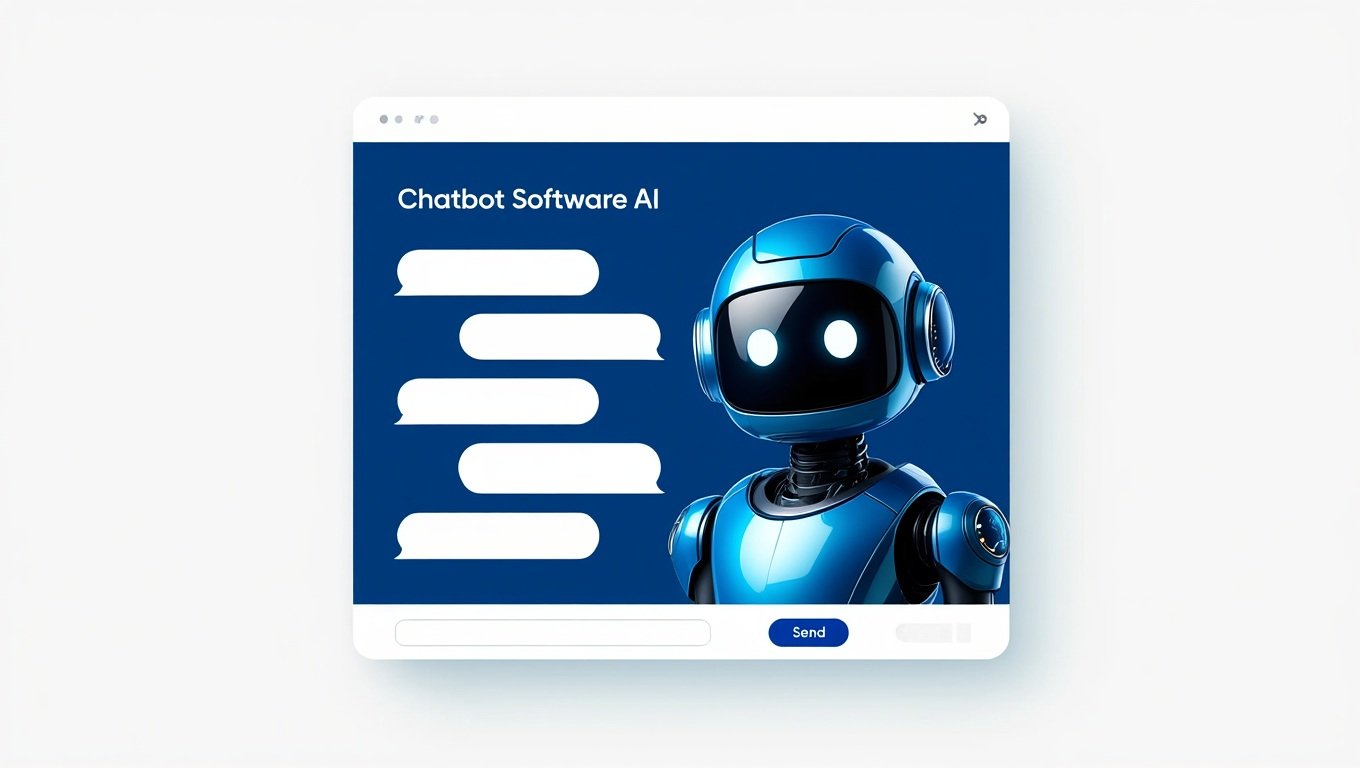
AI chatbot software is a program that holds real-time, text- or voice-based conversations with website visitors and customers. Instead of static FAQ pages or a contact form that might get answered tomorrow, a chatbot reads what a person types (or says), works out what they actually need, and responds in the moment — often well enough that the visitor doesn’t realize, or doesn’t care, that no human is on the other end.
The conversion impact comes from removing friction at exactly the moments friction costs you a sale:
- Speed. Nobody wants to wait. A visitor with an open question about sizing, shipping, or compatibility who gets an answer in seconds is far more likely to complete checkout than one left to dig through a help center.
- Personalized guidance. A majority of shoppers say they want product suggestions tailored to their own behavior, not generic bestseller lists. Chatbots can surface exactly that, using browsing history and stated preferences.
- Round-the-clock coverage. Support teams sleep; chatbots don’t. Every visitor who lands on your site at 2 a.m. with a question is a potential sale a chatbot can capture that a human team simply can’t.
How Chatbot Technology Actually Works
Most modern chatbots blend two underlying approaches rather than relying on just one:
- Rule-based / decision-tree logic handles predictable, repetitive questions — order status, business hours, return policy — with fast, reliable, pre-written answers.
- AI-driven natural language understanding takes over when a question doesn’t fit a template: ambiguous phrasing, multi-part questions, or requests that require reasoning about context from earlier in the conversation.
The best platforms let both systems hand off to each other cleanly, and escalate to a human agent the moment a conversation needs empathy, judgment, or an exception to policy that no rulebook covers.
The Direct Link Between Chatbots and Conversion Rate
Every sale lost to hesitation is a sale a chatbot has a chance to save. The two biggest levers are:
- Reducing cart abandonment. A large share of online carts are abandoned at the final step, often over a question the shopper never got answered — will this fit, when will it arrive, can I return it. A chatbot that proactively offers help at that exact moment converts a meaningful slice of would-be abandonments into completed orders.
- Proactive outreach. Many customers actually want a business to reach out first rather than waiting for them to ask. A chatbot that opens a conversation based on browsing behavior — rather than sitting passively in the corner of the screen — captures intent that a silent website misses entirely.
Why Your Business Needs Chatbot Software Now
Customer expectations have moved past “we’ll get back to you within 24 hours.” People expect an answer the moment they ask, whether that’s 10 a.m. or 2 a.m., and they want to feel like the business remembers who they are rather than treating every visit as a blank slate.
Rising Customer Expectations
Shoppers today compare every experience against the fastest, easiest one they’ve had recently — often with a chatbot from a completely different industry. A slow, generic experience on your site reads as a red flag, even if your product is excellent. Chatbots that remember prior interactions, recall preferences, and respond immediately meet that bar, and customers reward it with repeat visits and referrals.
The Advantage of Moving Early
Plenty of businesses, especially in narrower niches, still haven’t deployed a conversational layer on their site. That’s a window. Getting a chatbot live before your direct competitors do means you’re the one converting visitors around the clock while they’re still relying on a contact form and a 24-hour response promise.
The Return on Investment
Chatbot software tends to pay for itself faster than most software purchases, because the savings show up on both sides of the ledger simultaneously:
- Lower support costs — routine, repetitive questions get handled without a human touching them, which lets a smaller team handle a larger volume of customers.
- Higher revenue per visitor — recovered carts, upsells, and after-hours sales all add directly to the top line.
Most businesses see the software pay for itself within the first six to twelve months; some see it happen inside a single quarter, particularly in e-commerce where cart recovery alone can cover the subscription cost.
Key Features to Look For in a Conversion-Focused Chatbot
Not every chatbot is built to sell. Some are built purely for support deflection. If conversion is the goal, prioritize these capabilities when evaluating vendors.
Natural Language Processing (NLP)
Good NLP is what separates a chatbot that feels like talking to a real assistant from one that feels like filling out a form. Look for a platform that:
- Understands typos, slang, and incomplete sentences, not just exact keyword matches
- Retains context across a multi-turn conversation instead of treating every message as a fresh start
- Can pick up on frustration or urgency in a customer’s tone and adjust accordingly
- Supports the languages your customer base actually speaks, if you sell internationally

Integration Depth
A chatbot that can’t see your inventory, order history, or shopping cart is limited to answering generic questions. The value multiplies once it’s plugged into the systems that run your business — checking stock in real time, pulling up a customer’s past orders, processing a payment, or pushing a qualified lead straight into your CRM. Treat integration breadth as a first-order buying criterion, not an afterthought.
Analytics and Reporting
You can’t improve what you can’t measure. Strong analytics should show you conversation volume, common questions, where conversations stall or get abandoned, and — critically — how much revenue is directly attributable to chatbot conversations. Real-time dashboards paired with historical trend data let you catch problems early and prove ROI to stakeholders.
Customization
A chatbot that sounds like a generic script undermines trust. Look for tools that let you set tone (formal vs. casual), inject brand-specific language, add your logo and color palette, and build conversation flows visually without needing a developer for every tweak.
Top AI Chatbot Platforms for Boosting Conversions
Below is a detailed look at the platforms most commonly recommended for conversion-focused use cases, spanning general-purpose assistants, social and messaging specialists, e-commerce-specific tools, and enterprise-grade suites. Pricing and feature sets change frequently, so treat the figures below as a starting point and confirm current numbers directly with each vendor before budgeting.
1. Lindy

Lindy builds no-code AI assistants that go beyond simple Q&A — qualifying leads, booking meetings, and following up with prospects across email, chat, and voice. Its large library of connectors makes it a strong fit for businesses that want a single assistant coordinating work across many different tools rather than a narrow, single-purpose bot.
Key Features:
- No-code builder for creating AI assistants
- Hundreds of ready-to-use templates
- Works across email, chat, and voice
- Connects to thousands of business tools
- Handles multi-step sales workflows end-to-end
Pros:
- Approachable for non-technical teams
- Genuinely multi-channel, not just web chat
- Enterprise-grade reliability and security
Cons:
- Initial setup takes real time investment
- Some advanced capabilities sit behind higher tiers
Pricing: Free tier available with a monthly credit allowance; paid plans scale from a Pro tier through Business and custom Enterprise pricing.
2. Chatfuel

Chatfuel is purpose-built for Meta’s messaging ecosystem — Facebook, Instagram, and WhatsApp — making it a natural fit for direct-to-consumer brands that drive a large share of sales through social. The drag-and-drop builder means non-technical marketers can ship a working bot without engineering support.
Key Features:
- Visual drag-and-drop builder
- Native Facebook, Instagram, and WhatsApp support
- Pre-built templates for lead gen and cart recovery
- Automated follow-up sequences
Pros:
- Fast to launch, even for beginners
- Deep, native social integration
- Strong templates for common e-commerce flows
Cons:
- Limited to Meta platforms only
- No free plan
- Costs scale with message volume
Pricing: Separate plans for Facebook/Instagram and WhatsApp, with a higher-tier Enterprise option for larger volumes.
3. Tidio

Tidio pairs an AI chatbot (branded Lyro) with live chat, so conversations can hand off seamlessly between bot and human without the customer noticing a break. That blend makes it a favorite among small and mid-sized businesses that want automation without giving up the option of a real person stepping in.
Key Features:
- Lyro AI chatbot for automated responses
- Native live chat for human handoff
- Built-in email marketing and helpdesk tools
- Visual workflow editor
Pros:
- Smooth automation-to-human handoff
- Multi-language support
- Integrates with popular e-commerce platforms
Cons:
- AI features require a paid plan
- Channel support limited mainly to web and Messenger
- Top-tier plans get expensive
Pricing: Free trial available; paid tiers range from an entry Starter plan up through Growth, Plus, and a separate Lyro AI add-on.
4. Rep AI

Rep AI is built exclusively for Shopify, plugging directly into your product catalog so it can answer detailed product questions, recommend items, and recover abandoned carts with accurate, real-time inventory data. Its Shopify-first focus means less generic configuration and faster time-to-value for stores already on that platform.
Key Features:
- One-click Shopify integration
- Real-time product recommendations
- Automated cart recovery
- Behavioral triggers based on shopping activity
- Sales performance dashboard tied to attributed revenue
Pros:
- Purpose-built for Shopify merchants
- Resolves the large majority of shopper questions without human intervention
- Clear, direct ROI reporting
Cons:
- Shopify-only — no fit for other platforms
- No email marketing functionality
- Narrowly scoped to e-commerce use cases
Pricing: Entry-level plans start low for smaller traffic volumes, scaling up with visitor count; custom plans available for high-traffic stores.
5. Chatsimple

Chatsimple is designed for speed of deployment — teams can have an assistant live within minutes, with no technical setup required. It supports both voice and text, works across multiple languages, and is built with data-protection compliance in mind, making it a reasonable option for businesses handling sensitive customer data internationally.
Key Features:
- Fast setup with minimal configuration
- Voice and text conversation support
- Multilingual out of the box
- CRM and email tool integrations
- Compliance-oriented data handling
Pros:
- Very quick time-to-launch
- Voice support is a genuine differentiator
- Solid fit for international businesses
Cons:
- Documentation is thinner than larger competitors
- Pricing isn’t always transparently listed
- Fewer advanced customization options
Pricing: A free tier covers a limited number of monthly responses; paid tiers scale through Pro, Business, and custom Enterprise pricing.
6. Watermelon

Watermelon builds chatbots on top of leading large language model technology and supports well over 100 languages, making it a strong pick for businesses with a genuinely global customer base. The no-code visual builder keeps it accessible, and it can hand conversations off to human agents seamlessly when a conversation needs a real person.
Key Features:
- Built on advanced large language models
- 100+ language support
- No-code visual builder
- Deployable across web, social, and messaging apps
- Human agent handoff
Pros:
- Genuinely advanced conversational AI
- Excellent for multinational businesses
- Works across a wide range of channels
Cons:
- Pricing can be steep for smaller businesses
- Learning curve to use every feature well
- Some capabilities gated behind higher plans
Pricing: Custom pricing based on usage and requirements, with a free trial and direct sales contact for quotes.
7. Customers.ai

Customers.ai focuses on a different problem: identifying anonymous website visitors and initiating conversations that convert them into known leads. Rather than just answering inbound questions, it proactively engages traffic that would otherwise leave without a trace — a useful complement to a more traditional support-style chatbot.
Key Features:
- Visitor identification technology
- Multi-channel engagement across web, social, and messaging
- Automated lead generation
- Conversation-level analytics
- CRM integration
Pros:
- Strong at surfacing otherwise-anonymous potential customers
- Broad channel coverage
- Detailed performance tracking
Cons:
- More complex to configure than simpler tools
- Higher price point
- Steeper learning curve for new users
Pricing: Free trial available, with custom pricing based on feature selection.
8. Intercom

Intercom is a full customer communication platform, with chatbots as one piece of a much larger suite that includes live chat, email, and help desk tooling. Its depth of segmentation and enterprise-grade security make it a common choice for larger organizations with complex support requirements.
Key Features:
- Advanced customer segmentation
- Custom conversation flows
- Enterprise-grade security and compliance
- Multi-channel support
- Detailed analytics suite
Pros:
- Scales well for large, complex organizations
- Highly customizable
- Strong compliance posture
- Extensive integration ecosystem
Cons:
- Expensive for smaller businesses
- Non-trivial implementation effort
- Can be more than a small team actually needs
Pricing: Free trial available; custom enterprise pricing based on requirements.
9. Drift

Drift is squarely aimed at B2B sales teams with longer, more consultative sales cycles. It qualifies leads through conversation, identifies which companies are browsing your site, and books meetings directly — letting sales reps spend their time only on prospects who’ve already shown genuine intent.
Key Features:
- B2B lead qualification
- Account-based marketing support
- Automated meeting scheduling
- Sales pipeline integration
- Company-level visitor identification
Pros:
- Strong fit for B2B sales motions
- Effective lead qualification
- Integrates cleanly with sales tooling
Cons:
- No free plan
- Priced for mid-market and up
- Less suited to consumer-facing (B2C) use cases
Pricing: Custom pricing; contact sales directly for a quote.
10. Zendesk

Zendesk’s chatbot capability lives inside its broader customer service platform, which is where it really shines — tight integration with ticketing, detailed reporting, and mature workflow tools for data-driven support teams. If your business already runs its help desk on Zendesk, the chatbot layer is a natural extension rather than a separate tool to manage.
Key Features:
- Comprehensive conversation analytics
- Custom reporting dashboards
- Deep helpdesk integration
- Automated ticket routing
- Performance tracking across agents and bots
Pros:
- Best-in-class analytics
- Seamless helpdesk integration
- Reliable, mature platform
Cons:
- Setup complexity can be significant
- Costs more than lighter-weight alternatives
- May need technical resources to configure well
Pricing: Free trial available; custom pricing based on plan and usage.
11. WATI

WATI is a WhatsApp specialist, aimed squarely at markets — many in Latin America, Southeast Asia, and the Middle East — where WhatsApp functions as the primary channel for customer communication. It supports broadcast messaging, compliant message templates, and detailed WhatsApp-specific analytics.
Key Features:
- Native WhatsApp Business API integration
- Broadcast messaging to segmented audiences
- Template management for compliant messaging
- WhatsApp-specific analytics
- Multi-agent support for shared inboxes
Pros:
- Deep, dedicated WhatsApp integration
- Approachable interface
- Well suited to WhatsApp-driven marketing
Cons:
- Single-channel — WhatsApp only
- Not a fit for multi-channel strategies
- Fewer integrations outside its core channel
Pricing: Free trial available; custom pricing based on usage.
12. Aivo

Aivo is built for global-scale multilingual support, with accurate coverage across dozens of languages and advanced NLP capable of handling complex requests in each. That, paired with deployment across web, mobile, and messaging plus integration into CRM and help desk systems, makes it a strong pick for companies serving customers across many regions at once.
Key Features:
- 50+ language support
- Advanced NLP for complex queries
- Multi-channel deployment
- Business system integrations
- Custom, brand-specific conversation flows
Pros:
- Excellent multilingual accuracy
- Sophisticated underlying AI
- Strong fit for global businesses
- Highly customizable
Cons:
- No free plan
- Pricing sits at the higher end
- May require technical resources to implement fully
Pricing: Custom pricing; no free tier, contact sales for a quote.
15 Proven Strategies for Turning Chatbot Conversations Into Sales
Buying the right platform is only half the equation — how you configure the conversation determines whether it actually converts. These fifteen strategies cover the mechanisms that move the needle most consistently.
1. Provide Tailored Product Recommendations
Chatbots that reference a visitor’s browsing or purchase history to suggest relevant products consistently outperform generic “you might also like” widgets, because the suggestion feels earned rather than templated.
2. Streamline the Purchasing Process
Walking a customer through checkout step by step inside the chat window — rather than redirecting them to a separate page — removes the moments of confusion where carts get abandoned.
3. Automate Frequently Asked Questions
Instant, accurate answers to routine questions keep visitors from bouncing out of frustration, and free your human team to focus on the harder, higher-value conversations.
4. Send Timely Updates and Notifications
Proactive order confirmations, shipping updates, and appointment reminders build trust and reduce the anxious “where is my order” messages that otherwise flood support queues.
5. Offer 24/7 Sales Support
A chatbot working through the night catches international customers and late-night impulse buyers a human team would simply miss.
6. Capture and Qualify Leads
A chatbot that proactively opens a conversation with new visitors, asks a few qualifying questions, and captures contact details builds a steady pipeline for follow-up without any manual prospecting.
7. Prioritize the Right Leads
Beyond simple capture, a well-designed chatbot filters for budget, timeline, and fit — so your sales team spends time only on prospects genuinely likely to close.
8. Expand Order Value Through Upselling and Cross-Selling
Relevant, well-timed suggestions — a case with a new phone, an accessory with a main purchase — regularly increase average order value when delivered by a chatbot rather than a static “frequently bought together” module.
9. Reduce Cart Abandonment
A chatbot that steps in the moment a shopper hesitates at checkout, offering help or a modest incentive, recovers a meaningful share of carts that would otherwise be lost entirely.
10. Provide Instant Gratification
Immediate answers about stock, shipping timelines, and return policy remove the uncertainty that causes shoppers to delay a purchase decision — often long enough that they never return.
11. Reach the Right Audience With Targeted Messaging
Segmenting messaging by visitor behavior — new vs. returning, browsing vs. cart-abandoning — makes every interaction feel relevant instead of generic, which measurably improves response rates.
12. Increase Customer Engagement
Interactive elements — image carousels, quick-reply buttons, short preference quizzes — keep visitors engaged with the conversation longer, and longer engagement correlates strongly with higher purchase likelihood.
13. Build Customer Loyalty
A chatbot that remembers past interactions and references them (“welcome back — want to see more like the item you bought last month?”) builds the kind of familiarity that drives repeat purchases.
14. Collect and Act on Customer Feedback
Asking simple post-interaction questions surfaces friction points — a confusing checkout step, an unclear policy — that you can fix before they cost you more sales.
15. Reinforce Brand Reputation
A chatbot’s tone and language should match your brand voice consistently. A premium brand that communicates elegantly through its chatbot reinforces the perceived value of what it’s selling; a sloppy, generic bot undercuts it.
Common Implementation Challenges — and How to Solve Them
Technical Integration Difficulties
Connecting a chatbot to existing systems, particularly older or highly customized ones, is often the single biggest source of project delay.
How to address it:
- Map out integration requirements before selecting a platform
- Favor vendors with pre-built connectors for the tools you already use
- Use middleware for especially complex or legacy connections
- Roll out in phases, starting with the systems that matter most
- Budget real technical time, not just marketing or support hours
User Adoption and Trust
Some customers simply prefer a human, or distrust automated responses on principle.
How to address it:
- Always disclose clearly that the customer is talking to an AI
- Offer a visible, easy path to a human agent at any point
- Design conversations that feel natural rather than scripted
- Iterate based on real customer feedback
- Explain the benefit to the customer, not just to the business
Maintaining Conversation Quality Over Time
A chatbot that isn’t maintained tends to degrade in usefulness as products, policies, and customer expectations shift.
How to address it:
- Review conversation transcripts on a regular schedule
- Use direct customer feedback to catch blind spots
- Keep the knowledge base current as products and policies change
- Track performance metrics continuously, not just at launch
- Treat improvement as ongoing, not a one-time setup task
A Practical Implementation Roadmap
Step 1: Set Specific, Measurable Goals
Vague goals like “improve customer service” don’t give you anything to design around. Instead, set targets you can actually measure: reduce cart abandonment by a specific percentage, increase qualified lead capture by a set amount, or cut average response time to under a minute. Concrete goals shape every downstream decision, from which platform you choose to how you design the conversation flow.
Step 2: Design the Conversation Flow Deliberately
Start by mapping your actual customer journey and identifying the specific points where people hesitate or drop off. Design conversation paths around those moments rather than trying to cover every possible question up front. Combine rule-based responses for predictable questions with AI-driven handling for anything more nuanced, and keep language simple and human.
Step 3: Train the Bot on Your Specific Business
A generic chatbot misses your specific terminology, product details, and edge cases. Feed it comprehensive training material: your actual product catalog, common support tickets, company policies, and the tone you want it to use. A hybrid model — bot handles routine questions, hands off complex ones to a human with full context already attached — consistently outperforms a fully automated or fully manual approach.
Step 4: Test Thoroughly Before and After Launch
Test technical functionality first — does every integration actually work as expected. Then test conversation quality with real users, and gather feedback on clarity and helpfulness specifically. After launch, don’t treat the bot as finished; keep monitoring, testing message variations, and optimizing based on what the data shows.
Measuring Chatbot Success: The Metrics That Actually Matter
Core KPIs to Track
- Conversation volume
- Resolution rate (questions fully answered without human escalation)
- Average engagement duration
- Customer satisfaction scores
- Lead capture rate
- Cart recovery rate
- Average order value on chatbot-assisted purchases
- Revenue directly attributable to chatbot conversations
Track these against your pre-chatbot baseline and against relevant industry benchmarks, and watch the trend over time rather than a single snapshot.
Go Beyond the Numbers: Analyze the Conversations Themselves
Raw metrics tell you that something is working or not; transcripts tell you why. Regularly review conversations for recurring questions, points where customers get confused, patterns in successful conversions, and the exact moments where people disengage. Sentiment analysis can flag where the experience is generating frustration even when resolution rates look fine on paper.
Calculate Real ROI
A complete ROI picture includes both revenue impact and cost savings:
- Revenue side: direct chatbot-driven sales, recovered abandoned carts, upsell and cross-sell revenue, and new customers acquired through chatbot-initiated conversations
- Cost side: reduced staffing needs for routine inquiries, faster average response times, and general efficiency gains across the support function
Weigh the combined benefit against total cost of ownership — software, implementation, and ongoing maintenance — to get an honest read on whether the investment is paying off.
Best Practices by Industry
E-commerce
Focus on product discovery, real-time inventory checks, cart recovery, and order/shipping updates. Visual elements — product images, short videos — make the shopping experience richer than text alone, and recommendations should draw on actual browsing and purchase history.
SaaS
Prioritize account-aware conversations, feature tutorials, technical troubleshooting, and usage-based upgrade suggestions. The goal is reducing time-to-value for new users and catching friction points before they turn into churn.
Service Businesses
Calendar integration, real-time availability, location-based suggestions, and clear pricing information matter most. Automated reminders meaningfully reduce no-shows, which directly protects revenue.
B2B
Lead qualification, CRM integration, and meeting scheduling are the backbone of a good B2B chatbot. Conversations should surface genuine business challenges, point toward relevant case studies or proof points, and move prospects toward a next step without feeling like a hard sell.
Where Chatbot Technology Is Headed
More Capable AI and Machine Learning
Ongoing improvements in language understanding mean chatbots increasingly grasp nuance and emotional tone, sustain longer coherent conversations, and personalize recommendations more precisely — all of which compounds into higher conversion rates over time.
Broader Multilingual Support
Automatic language detection and response, paired with genuine cultural sensitivity rather than literal translation, will make consistent global service the norm rather than a premium feature.
Growing Voice Capability
Voice-based interaction is becoming a real expectation rather than a novelty, offering hands-free convenience, faster interaction for many users, and better accessibility. Businesses selecting a platform today should weigh whether it has a credible voice roadmap, even if text remains the primary channel for now.
Frequently Asked Questions
Do chatbots really increase conversion rates?
Yes. Businesses that deploy AI chatbots commonly see measurable sales growth, and some see conversion rates roughly double, driven by instant responses, personalized recommendations, and around-the-clock availability at exactly the moments customers need them.
Are chatbots expensive to implement?
Not necessarily. Many platforms offer free or low-cost entry tiers, with advanced features available on paid plans. Most businesses recoup their investment within months through a combination of increased sales and lower support costs.
Can chatbots fully replace human customer service?
No. The strongest setups combine both — chatbots handle routine, repetitive inquiries, while humans manage the complex, emotionally sensitive, or judgment-heavy conversations that require a real person.
How long does implementation typically take?
It depends on complexity. Simple, no-code chatbots can go live within days; more sophisticated, deeply integrated solutions may take several weeks. Most businesses can have a functioning, conversion-focused chatbot live within two to four weeks with proper planning.
Do customers actually prefer chatbots over humans?
It varies by situation. For simple, routine questions, many customers prefer the speed of a chatbot. For complex or sensitive issues, most still want a human. Offering both, with an easy path between them, serves both preferences well.
Can chatbots handle complex customer questions?
Basic rule-based bots generally can’t. Advanced AI-driven chatbots, particularly those using strong natural language processing, can manage more nuanced conversations — and the best implementations still route the hardest cases to a human agent with full context attached.
Do chatbots work for every type of business?
Broadly, yes, though the ideal setup varies by industry. E-commerce, SaaS, service businesses, and B2B companies all see strong results when the platform and conversation design actually match their specific customer journey.
Is integrating a chatbot with existing systems difficult?
It depends on your systems. Most modern platforms offer pre-built integrations for common CRM and e-commerce tools. Custom or legacy systems may require more technical effort, but a phased rollout starting with your most critical integrations generally keeps the process manageable.
Do chatbots require ongoing maintenance?
Yes. Conversation flows need regular updates, new information needs to be added as your business changes, and performance should be reviewed continuously. The exact maintenance burden depends on the bot’s complexity and how quickly your products and customer needs evolve.
Can chatbots meaningfully reduce customer service costs?
Yes, often substantially. Automating routine tasks reduces staffing needs for basic inquiries while simultaneously improving response times and satisfaction scores — a combination that tends to produce strong overall financial returns.
Final Takeaway
AI chatbot software has moved from a nice-to-have into a genuine competitive lever. The businesses seeing the biggest gains aren’t necessarily using the most expensive platform — they’re the ones that picked a tool matched to their actual use case, integrated it properly with the systems that run their business, and treated the conversation design and ongoing optimization as seriously as the initial setup. Get those fundamentals right, and a chatbot stops being a support add-on and starts functioning as one of your most reliable, always-on sales channels.
You May Also Like
 Best Software
Top 10 Free & Open Source Inventory Management Software in 2026
 Best Software
10 Best Inventory Control Software for Small Business in 2026
 AI technology
Will AI Replace Customer Service? Data, Trends, and What Comes Next for Human Agents
 Best Software
23 Best Free Avatar Creator Sites Online To Create Your Own Avatars
 AI technology
What Jobs Has AI Already Replaced? Prepare Yourself — The Shift Is Already Here
 SaaS
SaaS11 Best VoIP Call Center Solutions for Small Business 2026 (Comparison Guide)
 Best Software
6 Best Software to Record Mouse and Keyboard Actions and Automate Repetitive Tasks
 Best Software
Jira vs Hive: Which Project Management Tool is Right for Your Team?
 Best Software