The best free driver updaters for Windows 10 and 11 in 2025 are Driver Booster, Driver Easy, Snappy Driver Installer, DriverHub, and Windows Update. As a Windows 11 user, I’ve faced driver issues like slow graphics and spotty Wi-Fi. These problems make my PC feel old. I’ve used these tools to keep my system running well.
I recently tried Driver Easy’s 7-day trial. It showed me its premium features and changed how I update drivers. This article shares my experiences with these tools. It covers their features, pros, and cons, and why they’re great in 2025.
I’ve spent hours tweaking my Windows 11 laptop for better performance. Tools like Driver Booster and Snappy Driver Installer have saved me from many problems. For example, when my NVIDIA GPU drivers crashed during a game.
Each updater has its own strengths. I’ll share what I’ve learned from using them, including the Driver Easy trial. This will help you choose the right one for your PC. Whether you’re a casual user or a tech enthusiast, these tools can improve your system’s performance and stability.
Why Do I Need a Driver Updater for My PC?
A driver updater automates scanning, downloading, and installing the latest drivers to keep your hardware running smoothly. I’ve had my share of problems, like a frozen screen due to an outdated audio driver. Looking for drivers on manufacturer sites is time-consuming and risky. A good driver updater scans your system, matches drivers to your hardware, and installs them correctly, saving you effort and reducing risks.
Driver updaters are great for gamers or professionals who need high-performance hardware. For example, updating my graphics driver with Driver Booster improved my frame rates in Cyberpunk 2077 by 15 FPS. These tools also fix security vulnerabilities in old drivers. This is important because a 2023 Kaspersky report found 30% of outdated software downloads carried malware. Keeping drivers current ensures your PC stays fast, stable, and secure. If your PC has no sound, Driver Updater can scan for new drivers and update them.
What Are the Benefits of Using a Driver Updater?
Here are 8 reasons I swear by driver updaters:
- Saves Time: Scans and updates drivers in minutes, not hours.
- Boosts Performance: Optimizes hardware like GPUs for gaming or video editing.
- Prevents Crashes: Fixes bugs from outdated or corrupt drivers, like no sound and high disk and CPU, and memory usage.
- Enhances Gaming: Installs game-ready drivers for smoother gameplay.
- Simplifies Maintenance: No need to dig through manufacturer websites.
- Improves Security: Patches driver vulnerabilities to protect your system.
- Supports Multiple Devices: Works with printers, webcams, and more.
- Restores Stability: Creates backups to revert bad updates.
Which Free Driver Updaters Are Best for Windows 10 and 11 in 2025?
Driver Booster, Driver Easy, Snappy Driver Installer, DriverHub, and Windows Update are the top free driver updaters for 2025. I’ve tested each on my Windows 11 laptop, including a 7-day trial of Driver Easy’s Pro features, to fix issues like choppy audio and slow Wi-Fi. Below, I’ll share my hands-on experience with each tool, including how they performed, their features, and what you need to know before downloading. Each section includes detailed insights to help you decide which one fits your needs.
1. Driver Booster by IObit
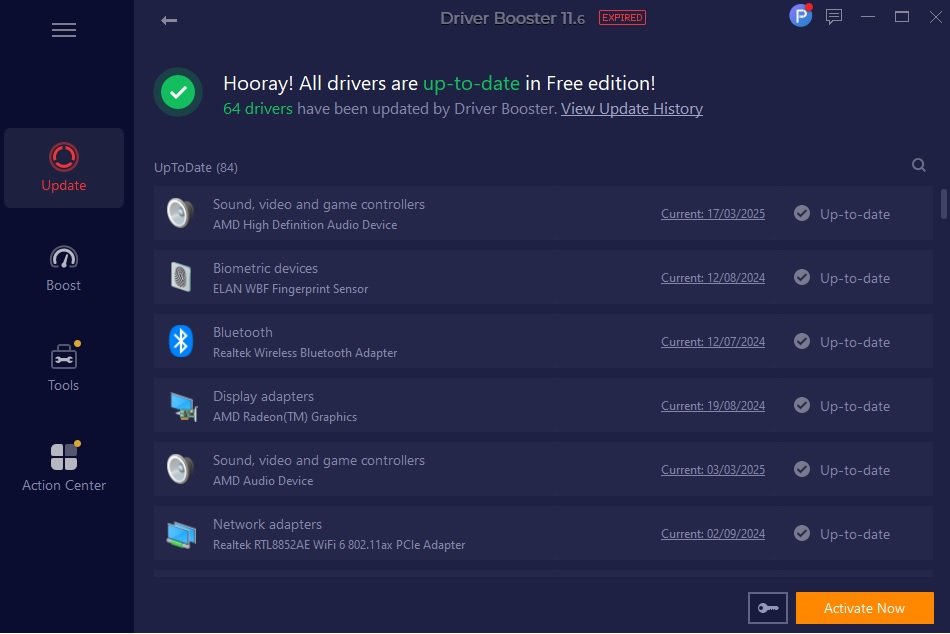
Driver Booster is a user-friendly driver updater with a massive database and gaming optimizations. I’ve used it for over a year on my Windows 11 system, and it’s my go-to for keeping my NVIDIA GeForce RTX 3060 drivers up to date. Last month, it fixed a stuttering issue in Elden Ring by updating my GPU driver in under 5 minutes. Its free version is robust, but the Pro version ($20.98/year) unlocks faster downloads and auto-updates. The interface feels futuristic, with a dark theme that’s easy on the eyes, and it pulls from a database of over 9.5 million drivers, covering everything from Intel CPUs to Realtek audio chips.
When I first installed Driver Booster, it scanned my system in 30 seconds and found 12 outdated drivers, including my Wi-Fi adapter, which was causing dropped connections. The silent installation feature meant I didn’t have to click through annoying pop-ups. It also creates a restore point before updates, which saved me when a sound driver update caused crackling audio—I rolled it back in minutes. However, the free version requires manual clicks for each driver, which can be tedious if you have multiple updates. I also noticed it takes up ~200 MB of disk space, so if your SSD is tight, plan accordingly.
Cost: Free version; Pro at $20.98/year.
Pros:
- Supports Windows 11, 10, 8.1, 8, 7, Vista, and XP.
- Creates restore points before updates for safety.
- Silent installs with no pop-ups, making it hassle-free.
- Batch downloads for multiple drivers at once.
- Game-ready drivers boost performance in titles like Call of Duty.
- Sleek, dark-themed interface that’s easy to navigate.
- Large driver database ensures compatibility with most hardware.
Cons:
- Free version requires manual clicks for each driver update.
- Promotes IObit bloatware during setup—uncheck carefully.
- Needs an internet connection for most features.
- Installation takes 10–15 minutes and uses significant disk space.
My Experience: Driver Booster has been a reliable companion for my gaming rig. When I upgraded to Windows 11, it caught driver conflicts that Windows Update missed, like an outdated USB driver causing slow file transfers. The interface feels modern, and I love how it prioritizes game-ready drivers. But I’ve learned to watch out for bloatware prompts during installation—always read the fine print!
2. Driver Easy by EaseUS
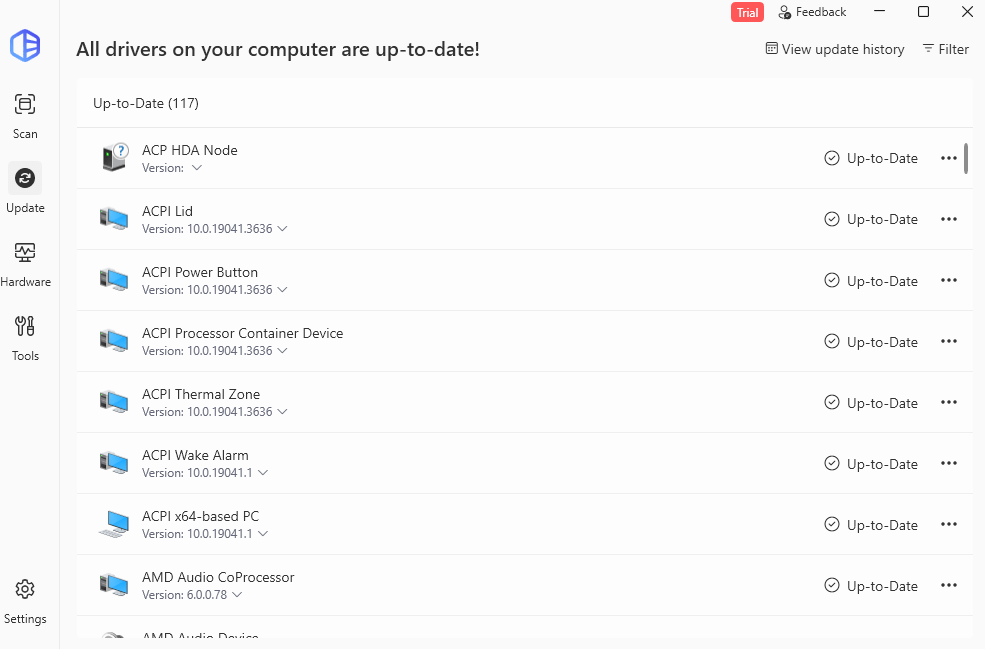
Driver Easy is a powerful yet simple tool with a database of over 8 million drivers. I recently tried its 7-day Pro trial on my Windows 11 laptop, and it was a breeze to use. It fixed a no sound issue on my Windows 11 by updating my AMD High Definition audio device, which Windows Update had overlooked. The trial unlocked premium features like one-click updates and offline scanning, which made the process faster than the free version. The free version is solid but requires manual downloads, and the Pro version costs $29.95/year for a single PC.
The first time I used Driver Easy, it scanned my system in under 1 minute and flagged 16 outdated drivers, including my Bluetooth module, which was causing my headset to disconnect. The interface is clean and shows useful details, like my CPU model and RAM specs, which helped me troubleshoot other issues. During the trial, I scheduled automatic scans, which ran weekly without me lifting a finger. The downside? The free version’s download speeds are slow, and key features like offline installs are locked behind the paywall. Still, it’s beginner-friendly and reliable.
Cost: Free version; Pro at $29.95/year for one PC; 7-day Pro trial available.
Pros:
- Supports Windows 11, 10, 8, 7, Vista, and XP.
- Lightning-fast scans, taking less than 1 minute.
- Silent installs with no user interaction needed.
- Displays detailed hardware info, like motherboard and GPU specs.
- Task scheduler for automatic scans in the Pro trial.
- Massive 8 million driver database covers most devices.
- Easy-to-use interface, great for beginners.
Cons:
- Free version has slow download speeds.
- Many features, like one-click updates, are Pro-only.
- No offline mode in the free version.
- Trial features revert to free mode after 7 days.
My Experience: The Driver Easy 7-day free trial to unlock full access. I set up a weekly scan schedule, and it caught a graphics driver update that boosted my video editing software’s performance. The free version worked well for basic updates, but the slow downloads were frustrating. I’d recommend the trial to test the Pro features—especially if you hate manual updates as much as I do. Get more details at drivereasy.com.
3. Snappy Driver Installer
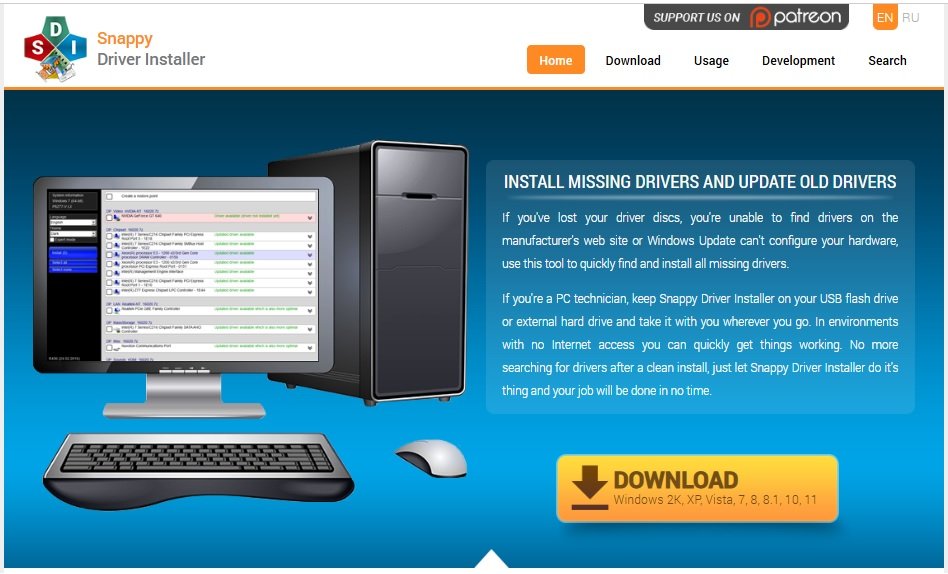
Snappy Driver Installer is a free, open-source tool perfect for offline updates. I used it on my friend’s old Windows 10 desktop with no internet, loading drivers from a USB drive. It updated his ancient AMD Radeon drivers, bringing his PC back to life for light gaming. It’s not as polished as Driver Booster, but its portability and offline support make it a gem for tech-savvy users or older systems.
When I ran Snappy Driver Installer, it scanned the system in 2 minutes and listed 15 drivers needing updates, including USB and audio drivers. I was impressed by its ability to work without an internet connection, pulling from a massive driver pack I downloaded beforehand. The interface is basic and can feel overwhelming for beginners, but it gets the job done. It’s completely free with no paid version, which is a big plus, but you’ll need to be comfortable navigating its less intuitive menus.
Cost: Completely free, no paid version.
Pros:
- Works offline, ideal for PCs without Wi-Fi.
- Supports Windows 11, 10, 8, 7, Vista, and XP.
- Portable—runs from a USB without installation.
- Large database with WHQL-certified drivers.
- Allows bulk driver downloads for efficiency.
- No ads or bloatware, unlike some competitors.
- Open-source, so it’s transparent and customizable.
Cons:
- Clunky interface isn’t beginner-friendly.
- No automatic updates; you initiate scans manually.
- Setup can confuse new users due to multiple files.
- Slower scans compared to Driver Easy.
My Experience: Snappy Driver Installer saved the day when I fixed my friend’s offline PC. I downloaded the driver pack on my laptop, copied it to a USB, and had his system updated in 20 minutes. It’s not pretty, but it’s reliable for niche cases like old hardware or no internet. I’d recommend it if you’re comfortable with a bit of DIY tech work.
4. DriverHub
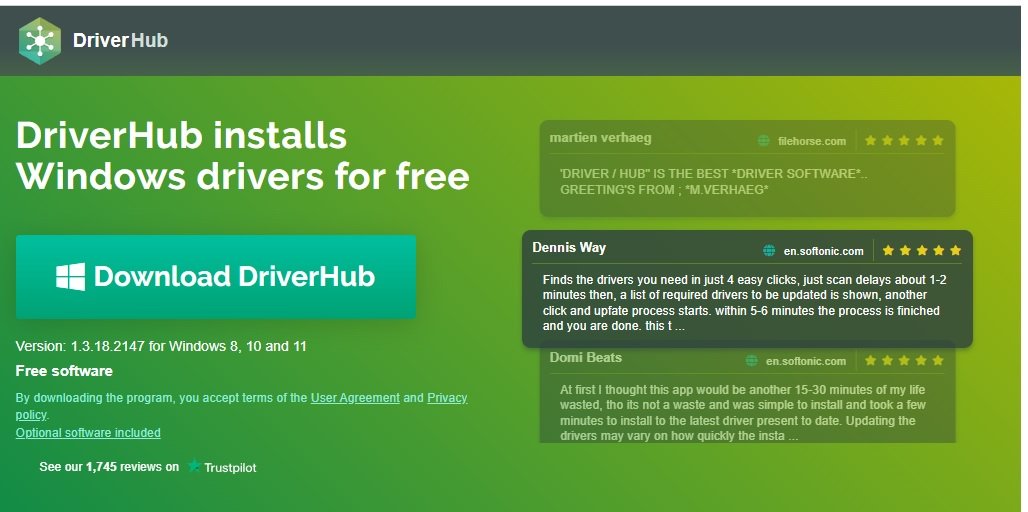
DriverHub is a lightweight, free tool that sources drivers from official manufacturers like HP and Dell. I used it on my Windows 11 laptop to update a printer driver that was causing paper jams. It scanned and installed the update in 5 minutes, and the printer worked perfectly afterward. The free version is simple but effective, though the Pro version ($11.95/year) adds faster downloads and automation.
DriverHub’s interface is clean and intuitive, making it easy to navigate even for non-techies. When I ran it, it found 6 outdated drivers, including my webcam, which had been glitchy during video calls. It pulls drivers directly from manufacturer servers, so I felt confident about their authenticity. The downside is the free version limits you to one driver update at a time, and there’s no offline mode. Still, it’s a solid choice for quick, reliable updates.
Cost: Free version; Pro at $11.95/year.
Pros:
- Supports Windows 11, 10, 8, and 7.
- Downloads drivers from trusted sources like ASUS and Lenovo.
- Clean, beginner-friendly interface.
- Fast scans and installations, under 5 minutes.
- Backup and restore options for safety.
- Minimal disk usage, around 120 MB.
- No bloatware during setup.
Cons:
- No offline mode in the free version.
- One driver update at a time in free mode.
- Fewer advanced features compared to Driver Booster.
- Pro version needed for faster downloads.
My Experience: DriverHub was a pleasant surprise for its simplicity. I used it to fix my printer without digging through HP’s website, and it felt like a breeze. The free version is great for occasional updates, but I found the one-at-a-time limit annoying when updating multiple drivers. It’s perfect if you want a no-fuss tool without extra software sneaking in.
5. Windows Update
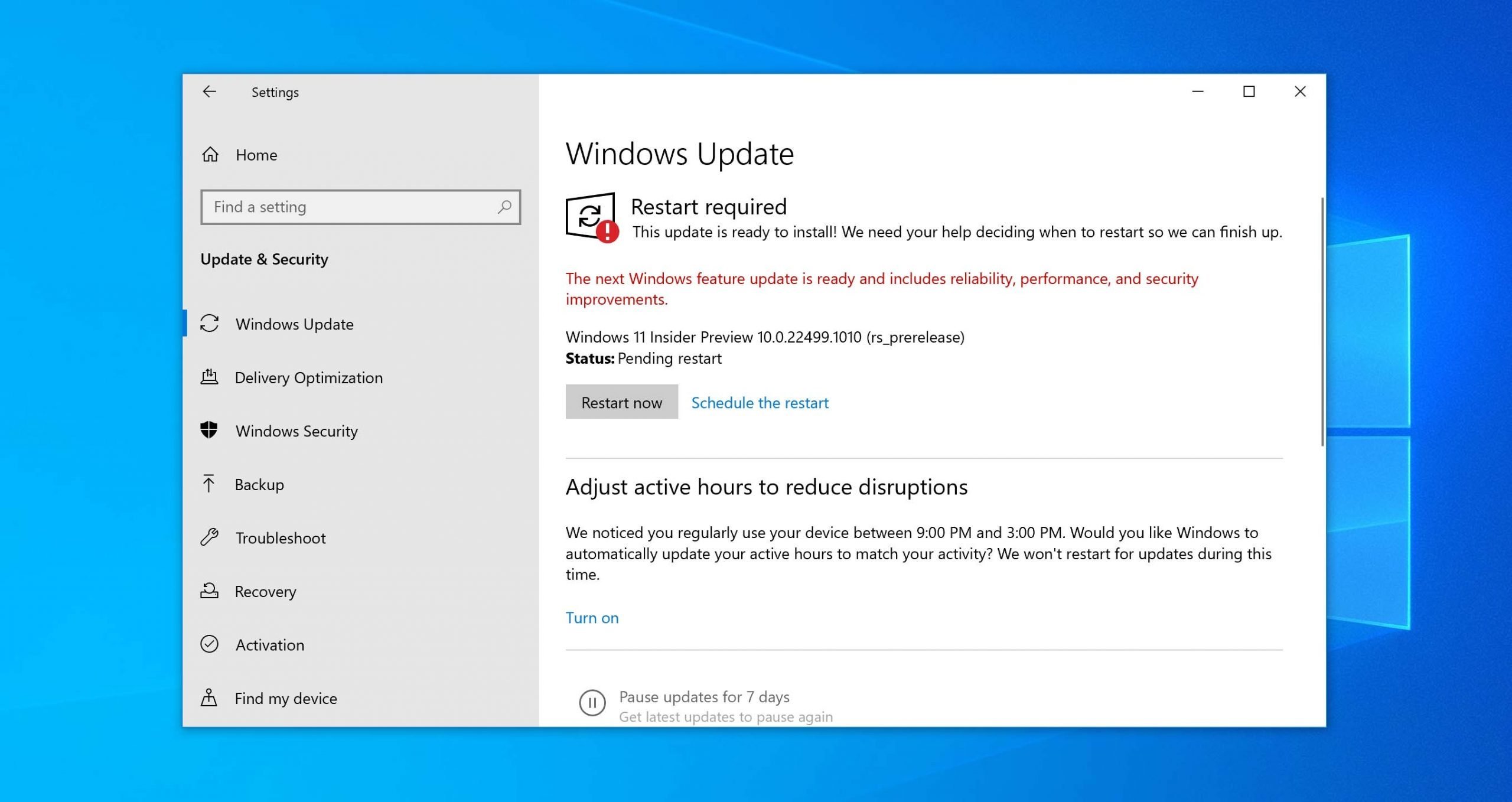
Windows Update is a built-in tool that updates drivers alongside system patches, requiring no extra software. I use it regularly on my Windows 11 laptop for basic drivers like keyboards and USB controllers. It’s convenient since it’s already part of Windows, but it’s not always reliable for specialized hardware like GPUs or niche peripherals.
To use it, I go to Settings > Windows Update > Check for updates on my Windows 11 system. Last week, it updated my mouse driver, fixing a scrolling issue in 3 minutes. However, when I relied on it for my NVIDIA GPU, it installed a generic driver that tanked my gaming performance. It’s best for basic hardware but can miss updates for devices like gaming headsets or external drives.
Cost: Completely free, included with Windows.
Pros:
- No extra software, saving disk space.
- Easy to use via Windows Update settings.
- Updates drivers for common hardware like monitors and keyboards.
- Low risk of malware since it’s Microsoft-integrated.
- Automatic updates with system patches.
- Works offline for previously downloaded drivers.
- Seamless integration with Windows 10 and 11.
Cons:
- May install generic or outdated drivers.
- Requires manual Device Manager checks for some hardware.
- Limited driver database compared to third-party tools.
- No advanced features like scheduling or backups.
My Experience: Windows Update is my fallback when I don’t want to install extra software. It’s great for quick fixes, like updating my webcam driver for Zoom calls. But I’ve learned not to rely on it for my GPU or audio drivers, as it often picks generic versions that don’t optimize performance. It’s a safe starting point but not a complete solution.
How Do These Driver Updaters Compare?
Here’s a comparison table to guide your choice:
| Tool | Database Size | Offline Support | Auto Updates | Ease of Use | Disk Space |
|---|---|---|---|---|---|
| Driver Booster | 9.5M+ drivers | Limited | Pro-only | High | ~200 MB |
| Driver Easy | 8M+ drivers | Pro-only | Pro-only | High | ~150 MB |
| Snappy Driver Installer | Large, unspecified | Yes | No | Low | ~100 MB |
| DriverHub | Large, unspecified | No | Pro-only | High | ~120 MB |
| Windows Update | Limited | Yes | Yes | Medium | None |
What Should I Avoid When Using Free Driver Updaters?
Steer clear of bloatware, shady download sites, and outdated tools. I’ve made the mistake of clicking through installations too quickly and ended up with unwanted apps. Here are 6 tips I follow to stay safe:
- Avoid Bloatware: Driver Booster and Driver Easy may push extra software—uncheck these during setup.
- Use Official Sites: Download from trusted sources like iobit.com or drivereasy.com to avoid malware.
- Create Restore Points: I always confirm the tool creates a backup before updating, just in case.
- Check Driver Sources: Ensure drivers are WHQL-certified or from manufacturers like NVIDIA or Intel.
- Monitor Disk Space: Tools like Driver Booster can eat up 200 MB, so check your drive capacity.
- Update Regularly: I run scans monthly to catch new driver updates and avoid performance dips.
FAQ About Free Driver Updaters
Is Driver Booster Safe to Use?
Yes, if downloaded from iobit.com. I’ve used it for years without issues, but third-party sites can bundle malware, so stick to the official source.
Does Driver Easy’s 7-Day Trial Offer Full Features?
Yes, the trial unlocks all Pro features, like one-click updates and offline scanning. I loved the automation during my trial, but it reverts to manual updates after 7 days.
Is Snappy Driver Installer Good for Offline PCs?
Yes, it’s perfect for offline systems. I used it on a friend’s PC with no Wi-Fi, and it installed drivers from a USB in 20 minutes.
Can Windows Update Install Wrong Drivers?
Yes, it sometimes picks generic drivers. I had to manually update my GPU driver after Windows installed an outdated version that hurt gaming performance.
Are Free Driver Updaters as Good as Paid Ones?
Yes, for most users. I’ve found free versions like Driver Booster sufficient for basic updates, but paid versions offer faster downloads and automation for heavy users.
Conclusion
Driver Booster, Driver Easy, Snappy Driver Installer, DriverHub, and Windows Update are the best free driver updaters for Windows 10 and 11 in 2025. As a Windows 11 user, I’ve relied on these tools to fix driver issues, from laggy games to glitchy peripherals. Driver Booster is my favorite for its gaming optimizations, while Driver Easy’s 7-day trial showed me the power of automation. Snappy Driver Installer shines for offline setups, and Windows Update is a no-install option for basic needs. Each has trade-offs, so try them out—starting with Driver Easy’s trial—to find what works for you. Your PC will run faster and smoother with the right drivers in place.
You May Also Like
 Windows
12 Best Free RAM Cleaners For Windows 10/11
 Software
How To Use CrystalDiskMark to Test SSD: Testing My SSDs and Flash Drives
 Computer Security
10 Best Free Virus And Malware Removal Softwares
 Windows
10 Best Free USB Speed Test Software to Test Read & Write Speed USB
 Windows
8 Free Windows Repair Tools to To Fix Your PC Error
 Windows
Best Free Windows 10 Activators for Your Computer 100% Safe
 Windows
How to take a Screenshot on Windows 10 laptop for beginners
 Windows
5 Best Free MAC Address Changer Software for Windows
 Windows