Have you ever wondered how fast your USB drive really is? USB speed test software measures the real read and write speeds of your USB drives, external hard drives, and other USB storage devices. These tools provide accurate data on how quickly your drive can save and retrieve files. This speed often differs from what the manufacturer claims on the package.
Testing your USB drive’s speed is important if you regularly transfer files, store important data, or rely on USB devices for school or work. When you know how fast your drive actually performs, you can better plan your time and decide if you need a faster drive. The USB speed test software in this article will help you check if your USB drives are working as well as they should be.
Why Testing USB Speed is Important
Understanding USB Performance Limitations
USB drives have speed ratings like “USB 3.0” or “USB 3.1.” These numbers show the maximum speeds, but you rarely achieve them. Actual speeds depend on several factors. These include the types and sizes of files you transfer and the USB port version you use. Testing your USB drive helps you see its true performance instead of relying only on the box’s numbers.
Identifying Potential Issues
Slow USB performance can signal several problems:
- Fake drives that claim to have more storage than they actually do
- File system issues that slow down how files are saved and retrieved
- Problems with your USB port that limit transfer speeds
- Normal wear and tear that happens over time with regular use
Testing your USB drive regularly helps you spot these issues early, which can prevent lost files and ensure your drives work properly when you need them.
Optimizing Your Workflow
If you regularly transfer large files, it’s helpful to know your USB speeds. Video editors, photographers, and students can manage their time more effectively when they understand transfer durations. This insight helps you select the right storage device and avoid frustrating delays.
How USB Speed Tests Work
The Testing Process
USB speed test software measures how fast your drive can read and write data by following these steps:
- Creating a test file of a specific size
- Saving this file to your USB drive
- Reading the file back from the drive
- Calculating how fast both operations happened
The results usually show speeds in megabytes per second (MB/s), giving you a clear picture of how your USB drive performs.
Understanding Read vs. Write Speeds
Read speed shows how fast you can open or copy files from your USB drive. Write speed indicates how quickly you can save files to it. These speeds often differ, with read speeds usually being faster. Both speeds are important because they impact different tasks:
- Read speeds affect how quickly you can access files on your drive
- Write speeds determine how fast you can save new files to the drive
Factors Affecting USB Speed Test Results
Many factors can affect your speed test results:
- Which USB port version you’re using (2.0, 3.0, 3.1, etc.)
- How your drive is formatted (FAT32, NTFS, exFAT)
- The size and type of files being tested
- Other programs running on your computer
- How much storage space is left on your drive
For the most accurate results, test your drive several times under similar conditions and average the results.
10 Best Free USB Speed Test Software
1. CrystalDiskMark

CrystalDiskMark is a popular tool for testing USB drive speed. This free program is a favorite among regular users and tech experts. It provides reliable and detailed information about drive performance. CrystalDiskMark measures sequential speeds, which show how fast it handles one large file. It also measures random speeds, reflecting how well it manages many small files. This helps you understand your drive’s performance in various situations.
The program is easy for beginners but offers features for experienced users. You can test various file sizes and decide how many times to run each test. This helps you check if a new drive meets its promises or find out why an older drive is slow. Whether you’re a student transferring homework or a professional handling large projects, CrystalDiskMark provides the info you need about your USB drive’s performance, including read and write speed.
Main Features:
- Measures both sequential and random read/write speeds
- Offers different testing modes (Peak, Real World, Demo)
- Supports multiple languages
- Includes theme options for customization
- Works with all USB versions
- Available as a portable version that doesn’t need installation
Pros:
- Gives accurate and reliable results
- Simple interface that’s easy to understand
- Comprehensive testing options
- Gets regular updates with new features
- Completely free with no limitations
- Doesn’t use much computer resources
Cons:
- Can wear out SSDs and USB drives if used too often
- Results from different versions can’t be compared
- Some features need administrator rights
- Might be confusing for beginners with all the options
How to Use:
- Download CrystalDiskMark from their website
- Open the program (no installation needed for portable version)
- Select your USB drive from the dropdown menu
- Choose your test settings or just use the defaults
- Click “All” or “SEQ” to start the test
- Look at the results showing your drive’s speeds in MB/s
2. USBDeview

USBDeview by NirSoft is more than a speed test tool. It acts as a manager for all USB devices connected to your computer. Tech support and IT workers love this program because it provides detailed info on every USB device. It shows the device name, description, type, serial number, and the first connection date. This makes it very helpful for troubleshooting USB issues.
USBDeview does more than display information. It tests how quickly your USB drives transfer data. You can disconnect, disable, or uninstall USB devices directly from the program. This feature is useful when a device is causing issues.USBDeview is great for managing multiple USB devices. It helps troubleshoot specific drives and serves as a control center for all your USB connections.
Main Features:
- Lists all USB devices with detailed information about each
- Tests USB transfer speeds
- Lets you disable, enable, or uninstall USB devices
- Shows connection history and when devices were first used
- Works without installation (completely portable)
- Can export test results to different file formats
Pros:
- Gives you lots of information about USB devices
- No installation required—just download and run
- Free from a trusted developer
- Works on all versions of Windows
- Uses very little computer memory
- Can be used on remote computers with admin access
Cons:
- The interface looks pretty old-fashioned
- Speed testing is basic compared to dedicated tools
- Shows too much technical information for casual users
- No graphs or charts for test results
- Limited help documentation for advanced features
How to Use:
- Download USBDeview from the NirSoft website
- Run the program (no installation needed)
- Find your USB drive in the list
- Right-click on it and select “Speed Test”
- Wait for the test to finish and check the results
- Use the export option to save results if you want to keep them
3. AJA System Test

AJA System Test is a tool designed for video editors and those working with video files. This program has become the industry standard because it tests drives as they are used in video editing. AJA System Test measures how well your drive handles various video formats by simulating actual file transfers. This approach is much more relevant for video creators than standard speed tests.
Video professionals trust this tool. It shows which video formats their drives can handle. The program reveals if your USB drive can support standard HD, 4K, or even 8K formats. This helps you avoid issues like dropped frames during editing.AJA System Test helps you check if your storage is ready for video files. This is important for school, YouTube, or professional projects.
Main Features:
- Tests drive speeds using different video file sizes
- Simulates transfers for various video formats
- Shows graphs of performance over time
- Supports multiple video formats and resolutions
- Works on both Windows and Mac computers
- Includes a continuous testing mode for ongoing monitoring
Pros:
- Perfect for video professionals and enthusiasts
- Accurately tests how drives perform with video files
- Clearly shows which video formats will work
- Professional-quality testing methods
- Available for both Windows and Mac
- Completely free to use
Cons:
- Too advanced if you just want basic speed testing
- Focusing on video might not help with other needs
- Larger download than simpler tools
- The interface might be confusing for beginners
- Not many options for customizing non-video tests
How to Use:
- Download AJA System Test from their website
- Install and open the application
- Select your USB drive as the target
- Choose a file size and video format (or use defaults)
- Click “Start” to begin the test
- Review the results showing speeds and supported video formats
4. Flash Memory Toolkit

Flash Memory Toolkit is a toolset to test speed for USB flash drives and memory cards. It’s popular because it does more than test speeds. It also helps maintain and repair your flash drives. This program works with both USB sticks and memory cards. It provides accurate speed measurements and useful features like error checking, secure erasing, and file recovery. Its focus on flash memory makes it great at testing these storage devices’ unique performance.
This toolkit is special because it combines testing with maintenance tools. It not only measures your drive’s speed but also helps recover files you may have deleted by accident. You can check for errors that could lead to issues later and securely erase all data if you need to give the drive away. For students, photographers, or anyone who depends on flash drives for important files, Flash Memory Toolkit is a complete solution. It tests performance and keeps your drives in great condition.
Main Features:
- Tests read and write speeds for flash memory
- Includes fast file recovery for deleted files
- Secure erase function to completely wipe drives
- Extensive error checking for drive health
- Backup function to make exact copies of drives
- Shows detailed information about your USB device
Pros:
- All-in-one toolkit for flash drive maintenance
- Includes both testing and recovery tools
- Simple, straightforward interface
- Works with different types of flash memory
- Regularly updated for new devices
- The free version has all the essential features
Cons:
- The free version has fewer features than the paid version
- Not as detailed as dedicated speed testing tools
- The interface looks a bit outdated
- It might be too much if you only want speed testing
- Some advanced features require upgrading to Pro
How to Use:
- Download and install Flash Memory Toolkit
- Connect your USB drive to your computer
- Open the program and select your USB drive
- Click on “Speed Test” in the main menu
- Wait for the test to complete and view results
- Use other tools for error checking or recovery if needed
5. HD Tune
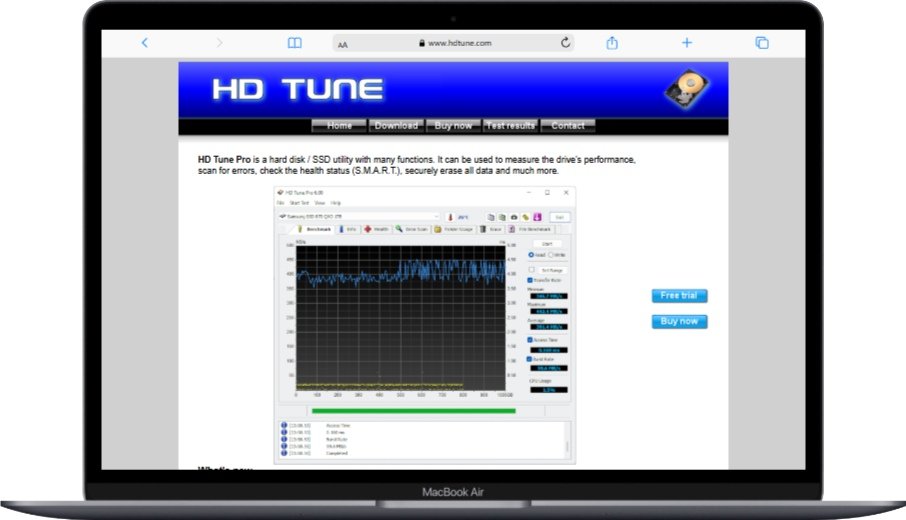
HD Tune has been a trusted tool for many years for checking hard drive health and performance. Originally designed for internal drives, it also works great with external USB drives. HD Tune measures data transfer speeds, checks for errors, and shows detailed health info. It can even securely erase all data. This makes it a complete tool for anyone wanting to fully assess their USB storage.
HD Tune’s growth highlights its popularity. The program provides easy-to-use tests and advanced features for detailed analysis. Whether you’re a casual user checking a new USB drive or a technician performing diagnostics, HD Tune offers the tools to assess your USB storage’s performance.
Main Features:
- Measures transfer rates with visual graphs
- Comprehensive error scanning to find problems
- Displays detailed SMART health information
- Secure erase function for complete data removal
- Benchmark comparison with other drives
- Shows how folders are using your storage space
Pros:
- Comprehensive diagnostic capabilities
- Visual graphs make results easy to understand
- Regularly updated with new features and improvements
- Professional-level testing accuracy
- Works with both traditional hard drives and SSDs
- Free version available with essential features
Cons:
- The free version has limited functionality
- The interface can be too technical for beginners
- Larger program size than simpler tools
- Some advanced features require the Pro version
- Not specifically designed just for USB testing
How to Use:
- Download HD Tune from their website
- Install and run the program
- Select your USB drive from the dropdown menu
- Go to the “Benchmark” tab
- Click “Start” to begin the speed test
- Review the graphical results showing speeds across the drive
6. Blackmagic Disk Speed Test

Blackmagic Disk Speed Test is designed for Mac users working with video files. This simple tool has become the go-to for video editors and content creators on Apple computers. It answers one key question: “Can my drive handle the video files I want to edit?” Using the program is easy—just click start, and it quickly tests your drive, showing which video formats it can support smoothly.
What makes Blackmagic Disk Speed Test great is its simplicity and focus. When the test ends, you get a clear visual display. It shows whether your drive can handle various video formats, from standard definition to 8K. This instant feedback is ideal for video editors who need to know if their storage can keep up with their software. Whether you’re editing a school project or professional videos, this tool reveals exactly what your USB drive can do for video work.
Main Features:
- Tests disk speeds specifically for video workflows
- Shows which video formats your drive can handle
- Simple, visually appealing interface
- Continuous testing mode for ongoing monitoring
- Real-time speed monitoring
- Optimized specifically for macOS
Pros:
- Extremely easy to use—just click and go
- Perfect for video editors and content creators
- Clear visual indication of video format compatibility
- Free from the Mac App Store
- Regularly updated for new video formats
- Designed specifically for Mac computers
Cons:
- Only works on Mac computers
- Limited to video-related testing
- Basic compared to comprehensive benchmarking tools
- No advanced testing options
- Requires macOS to use
How to Use:
- Download Blackmagic Disk Speed Test from the Mac App Store
- Install and open the application
- Select your USB drive as the target disk
- Click “Start” to begin testing
- View the results showing supported video formats
- Use continuous testing mode if you want to monitor over time
7. AS SSD Benchmark

AS SSD Benchmark is designed to test solid-state drives (SSDs), but it also works well with high-speed USB drives, especially those using USB 3.0 or newer. This tool is popular among tech enthusiasts because it gives detailed information about drive performance. It runs specific tests to measure both sequential speeds for large files and random speeds for small files. This provides users with a full picture of their drive’s abilities.
AS SSD Benchmark is unique because of its technical testing method. It offers synthetic tests, which use math, along with practical tests that simulate real-world use. This gives you a clear picture of your drive’s performance. If you have a USB 3.0 drive, you’ll find detailed data, like input/output operations per second (IOPS). AS SSD Benchmark provides the accuracy that simpler tools often lack.
Main Features:
- Tests sequential read and write speeds
- Measures random access speeds with 4K blocks
- Provides an overall score for easy comparison
- Shows IOPS (Input/Output Operations Per Second)
- Includes compression tests
- Has three practical copy tests
Pros:
- Very accurate for SSD and flash-based storage
- Detailed technical performance information
- The overall score makes it easy to compare drives
- Tests both synthetic and real-world scenarios
- Completely free with no limitations
- Lightweight program that runs quickly
Cons:
- The interface is technical and might confuse beginners
- Made primarily for SSDs, not general USB testing
- No visual graphs or charts for results
- Limited help documentation
- It might be too technical for casual users
How to Use:
- Download AS SSD Benchmark from their website
- Install and run the program
- Select your USB drive from the dropdown menu
- Click “Start” to begin the test
- Wait for all tests to complete
- Review the detailed results, including the overall score
8. Parkdale

Parkdale is a simple speed testing tool that focuses on one thing: showing how fast your drive can read and write data. This easy-to-use program is popular among users who want quick results without complicated features or confusing interfaces. Parkdale tests hard drives, CD-ROM drives, and network servers, displaying speeds in Kilobytes, Megabytes, or Gigabytes per second.
What sets Parkdale apart are its three testing modes. QuickAccess is the easiest—just one click gives you your speeds. FileAccess tests normal files, while BlockAccess checks disk sectors directly, skipping the file system. This variety makes Parkdale great for everyone, from casual users wanting to check their drive to advanced users needing detailed testing.
Main Features:
- Tests read and write speeds with three different modes
- QuickAccess mode for one-click speed testing
- FileAccess mode for testing through normal files
- BlockAccess mode for direct disk sector testing
- Shows speeds in multiple units (KB/s, MB/s, GB/s)
- Displays a graph of the transfer rate over time
Pros:
- Very easy to use, especially with QuickAccess
- Three different testing methods for different needs
- No installation required—just download and run
- Works on both Windows and Mac computers
- Lightweight and fast
- Completely free to use
Cons:
- Basic interface without much visual appeal
- Fewer features than comprehensive testing tools
- Less detailed results than advanced benchmarking software
- No technical support available
- Limited documentation
How to Use:
- Download Parkdale from their website
- Run the program (no installation needed)
- Select your USB drive from the list
- Choose a testing mode (QuickAccess, FileAccess, or BlockAccess)
- Click “Start” to begin the test
- View the results showing your drive’s read and write speeds
9. UserBenchMark

UserBenchMark uses a unique method for testing USB drive or hard drive external. It compares your results with thousands from real users. This approach has gained popularity because it shows not just the speed of your drive but also how it stacks up against similar drives. When you run a test, UserBenchMark checks your whole system. It then shows how your USB drive performs compared to others worldwide.
UserBenchMark’s real value is its large performance data database. It doesn’t just show raw numbers. Instead, it indicates if your USB drive is better or worse than average for its model. This info is helpful when deciding to buy a drive or figuring out why your current one feels slow. For those curious about their hardware’s real-life performance, UserBenchMark offers insights that standalone test results can’t provide.
Main Features:
- Tests USB drive speeds as part of overall system benchmarking
- Compares your results with thousands of other user tests
- Provides an overall assessment of your system
- Shows how your performance compares to similar devices
- Large online database of test results
- Easy-to-understand performance ratings
Pros:
- Real-world comparison data from other users
- Performance ratings that are easy to understand
- Tests your whole system, not just USB drives
- Free to use with an extensive database
- Regularly updated with new device information
- Simple, user-friendly interface
Cons:
- Requires an internet connection for comparisons
- Less detailed than dedicated USB speed testers
- Focusing on comparison might hide absolute performance
- Not ideal for users who want technical details
- Limited options for customizing tests
How to Use:
- Download UserBenchmark from their website
- Install and run the program
- Make sure your USB drive is connected to your computer
- Click “Run Benchmarks”
- Wait for the test to complete
- View the USB drive results in the report with comparisons
10. PassMark PerformanceTest

PassMark PerformanceTest is a full testing suite that includes detailed USB drive speed tests. This professional tool is reliable for users needing a deep analysis of their computer’s performance. PassMark PerformanceTest benchmarks all hardware components and compares results to other computers. This gives both absolute performance measurements and relative comparisons.
PassMark PerformanceTest is strong in both depth and flexibility. It provides easy tests for beginners and advanced options for customization. Users can view detailed graphs, full reports, and export results in different formats. If you need more than basic speed results—such as in-depth benchmarking data and complete performance reports—PassMark PerformanceTest has the tools for a thorough hardware evaluation.
Main Features:
- Advanced disk speed testing with multiple test types
- Detailed graphs and visual representations of results
- Compares results with baseline data and other systems
- Can export results to various formats
- Highly customizable test parameters
- Tests the entire system beyond just USB drives
Pros:
- Very detailed and comprehensive testing
- Professional-level accuracy and reliability
- Extensive customization options
- Excellent visual representation of results
- Works on Windows, Mac, and Linux
- Regularly updated with new features
Cons:
- It can be overwhelming for beginners
- Larger download and installation size
- Some advanced features require the paid version
- The interface might seem complex to casual users
- Uses more computer resources than simpler tools
How to Use:
- Download PassMark PerformanceTest from their website
- Install and run the program
- Go to the “Disk” tab in the main interface
- Select your USB drive from the list
- Configure test parameters (or use defaults)
- Click “Run Benchmark” to start testing
- Review the detailed results with graphs and comparisons
Comparison of the 10 Best USB Speed Test Software
| Software | Best For | Ease of Use | Special Features | Platform |
|---|---|---|---|---|
| CrystalDiskMark | Comprehensive testing | Easy | Sequential and random tests | Windows |
| USBDeview | IT professionals | Moderate | Detailed USB device info | Windows |
| AJA System Test | Video professionals | Easy | Video format simulation | Windows, Mac |
| Flash Memory Toolkit | Basic testing | Very Easy | Error checking and recovery | Windows |
| HD Tune | Detailed benchmarking | Moderate | Graphical results | Windows |
| Blackmagic Disk Speed Test | Mac video editors | Very Easy | Video format compatibility | Mac only |
| AS SSD Benchmark | High-speed USB drives | Moderate | IOPS measurement | Windows |
| Parkdale | Quick testing | Very Easy | Multiple test methods | Windows, Mac |
| UserBenchMark | Performance comparison | Easy | Community comparisons | Windows |
| PassMark PerformanceTest | Advanced testing | Moderate | Customizable tests | Windows, Mac, Linux |
How to Choose the Right USB Speed Test Software
Consider Your Technical Knowledge
If you’re new to testing USB drives, choose software with simple interfaces like Parkdale, Flash Memory Toolkit, or Blackmagic Disk Speed Test. These tools give you clear results without overwhelming you with technical details.
If you’re more experienced with computers, consider CrystalDiskMark, AS SSD Benchmark, or PassMark PerformanceTest, which offer detailed information and customizable testing options.
Determine Your Testing Needs
- For basic speed verification: Parkdale or Flash Memory Toolkit
- For video workflow testing: AJA System Test or Blackmagic Disk Speed Test
- For detailed performance analysis: CrystalDiskMark or PassMark PerformanceTest
- For comparative analysis: UserBenchMark
- For comprehensive USB information: USBDeview
Consider Platform Compatibility
Most USB speed test tools work on Windows, but Mac users have good options like Blackmagic Disk Speed Test. Make sure the software you choose works with your computer’s operating system.
Best Practices for Accurate USB Speed Testing
Prepare Your USB Drive
Before testing, get your USB drive ready:
- Format the drive to remove fragmented files
- Remove all files or make sure there’s consistent free space
- Disconnect other USB devices to prevent sharing bandwidth
- Close unnecessary programs to free up computer resources
Test Multiple Times
Run at least 3 tests and calculate the average for more accurate results. USB speeds can vary between tests because of background processes and how your computer is using its resources.
Test with Different File Sizes
Test with both small and large files to understand how your USB drive handles different situations. Some drives work well with large files but struggle with many small files.
Document Your Results
Keep a record of your test results over time to track performance changes. This documentation helps you notice when your USB drive starts to slow down or underperform.
Understanding Your USB Speed Test Results
Interpreting Read/Write Speeds
Read speeds tell you how quickly you can access files on your USB drive, while write speeds show how fast you can save files to it. Both numbers matter, but which one is more important depends on how you use your drive:
- If you frequently open files from your drive: focus on read speeds
- If you frequently save files to your drive: focus on write speeds
- If you regularly transfer files back and forth: both metrics are important
Comparing Results to USB Standards
Compare your results to these typical USB standards:
- USB 2.0: Up to 60 MB/s (480 Mbps)
- USB 3.0: Up to 625 MB/s (5 Gbps)
- USB 3.1 Gen 1: Up to 625 MB/s (5 Gbps)
- USB 3.1 Gen 2: Up to 1,250 MB/s (10 Gbps)
- USB 3.2: Up to 2,500 MB/s (20 Gbps)
- USB 4.0: Up to 5,000 MB/s (40 Gbps)
Your actual speeds will be lower than these maximum numbers because of various factors including drive quality, file system, and overhead.
Identifying Performance Issues
If your USB drive is much slower than expected, consider these possible problems:
- Fake drive with less capacity than advertised
- USB port limitations (using a USB 2.0 port with a USB 3.0 drive)
- Normal wear and tear from age or heavy use
- File system issues affecting performance
- Other programs using computer resources
FAQ About USB Speed Test Software
Is USB speed test software safe to use?
Yes. USB speed test software from trusted sources is safe to use. These programs only read and write test files to measure performance and don’t access your personal files. Always download from official websites to avoid malware.
Do I need to install USB speed test software?
No, not always. Many USB speed test tools like Parkdale, CrystalDiskMark (portable version), and USBDeview don’t require installation. You can run these directly from the downloaded file, making them convenient for testing on different computers.
Can USB speed test software damage my USB drive?
No. USB speed test software is designed to safely test drive performance without causing damage. The reading and writing during testing is no different from normal file operations. However, repeatedly testing a failing drive might cause it to fail completely sooner.
Will USB speed test software work with all USB drives?
Yes. USB speed test software works with almost all USB storage devices, including flash drives, external hard drives, and SSDs. The software communicates with the drive through your operating system, which standardizes how storage devices are accessed.
Can I test USB 3.0 drives on USB 2.0 ports?
Yes, but with limitations. You can test a USB 3.0 drive on a USB 2.0 port, but the results will be limited by the USB 2.0 port’s maximum speed (about 60 MB/s). To get accurate results for a USB 3.0 drive, you must use a USB 3.0 or higher port.
Do USB speed test results vary between different software?
Yes. Different USB speed test software may show different results because of different testing methods, file sizes, and algorithms. For the most accurate assessment, use the same software for all tests and compare results over time.
Can USB speed test software recover lost data?
No. USB speed test software is designed only to measure drive performance, not to recover lost data. For data recovery, you need specialized data recovery software that can scan for and restore deleted or corrupted files.
Is there a difference between testing formatted and unformatted drives?
Yes. Testing a formatted drive gives more accurate results because it simulates how you would actually use the drive. Unformatted drives may show different performance characteristics, but these results aren’t relevant to normal use.
Can I test USB hubs with USB speed test software?
Yes, indirectly. While you can’t test the hub itself, you can test a USB drive connected through the hub and compare the results to testing the same drive connected directly to your computer. A big difference in speed shows how much the hub affects performance.
Do USB speed test software work on Mac computers?
Yes, but with fewer options. While most USB speed test software is designed for Windows, Mac users have excellent options like Blackmagic Disk Speed Test. Some Windows software might work through virtualization or Boot Camp, but native Mac applications are better.
Conclusion
USB speed test software shows you how your USB drive performs. This information helps you make informed decisions for file storage and transfer. The 10 tools in this article offer various features, from quick speed tests to detailed performance reviews.
Testing your USB drives regularly helps spot performance issues early. It also checks manufacturer claims and ensures your devices work well. Knowing your USB drive’s true capabilities lets you work efficiently, prevent data loss, and extend the life of your storage devices.
When choosing USB speed test software, think about your skills, testing needs, and operating system. You might use CrystalDiskMark for detailed testing, Blackmagic Disk Speed Test for video tasks, or Parkdale for quick checks. These tools will help you understand USB performance better.
USB speed testing is just one part of keeping storage devices healthy. Combine regular speed tests with proper drive care, safe removal practices, and consistent backups. This helps keep your data safe and accessible for years.
You May Also Like
 Best Software
10 Best Inventory Control Software for Small Business in 2026
 Best Software
Top 10 Free & Open Source Inventory Management Software in 2026
 Best Software
12 Best AI Chatbot Software To Increase Your Conversions In 2026
 Best Software
23 Best Free Avatar Creator Sites Online To Create Your Own Avatars
 SaaS
SaaS11 Best VoIP Call Center Solutions for Small Business 2026 (Comparison Guide)
 Best Software
6 Best Software to Record Mouse and Keyboard Actions and Automate Repetitive Tasks
 Best Software
Jira vs Hive: Which Project Management Tool is Right for Your Team?
 Windows
12 Best Free RAM Cleaners For Windows 10/11
 Best Software