You have probably come across advertisements for Temu, an e-commerce marketplace known for offering a wide range of products at relatively low prices. However, these advertisements and unusually low prices may sometimes make consumers wonder whether Temu is a legitimate platform or a scam.
Temu is a legitimate e-commerce platform rather than a fraudulent website. According to PDD Holdings’ 2025 annual report, Temu was founded in Boston, Massachusetts, in September 2022 and has since expanded to markets around the world. Temu operates as one of the platforms within the PDD Holdings group and connects consumers with merchants, manufacturers, and brands offering a wide variety of products.
However, the fact that Temu is a legitimate marketplace does not mean that every transaction or product is necessarily risk-free. PDD Holdings itself identifies potential risks involving product quality and authenticity, consumer protection, internet and data security, and the activities of merchants using its platforms. The company has also disclosed legal and regulatory challenges involving Temu and its parent company. Therefore, consumers should still exercise caution when shopping on the platform, particularly when evaluating sellers, product descriptions, payment methods, personal-data requests, and unusually attractive offers.
What Is Temu and How Does It Work?
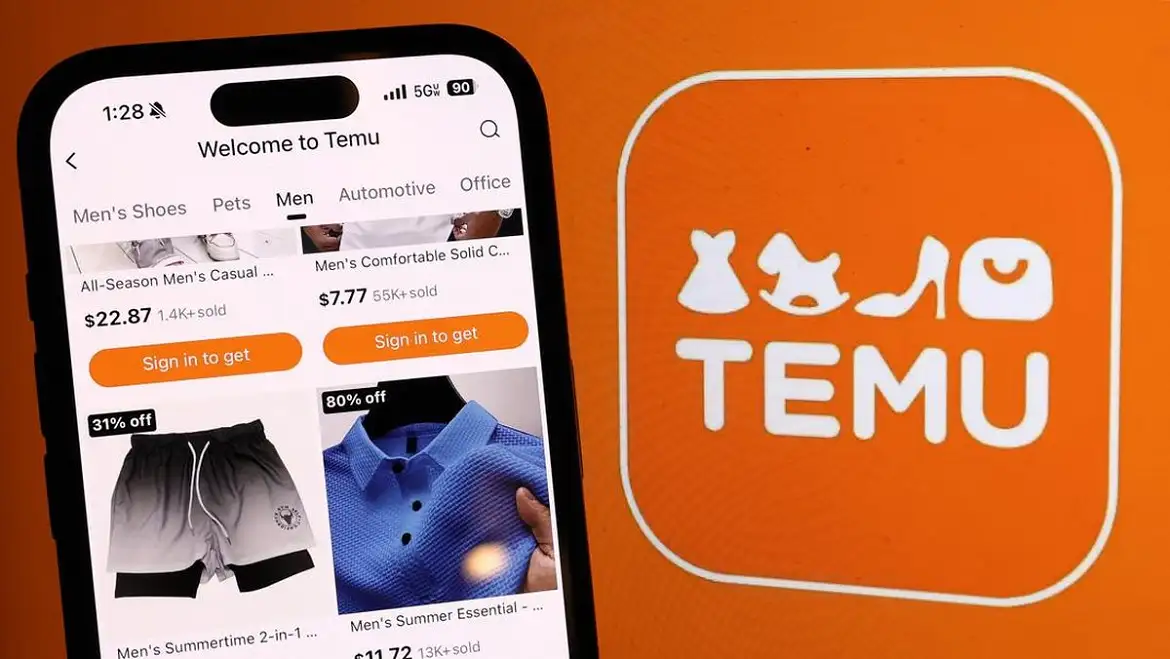
Temu is an online marketplace that connects buyers directly with manufacturers and third-party sellers, primarily based in China. It launched in September 2022 and is operated by WhaleCo, Inc., a subsidiary of PDD Holdings (the parent company of Pinduoduo, China’s largest agriculture-focused e-commerce platform).
The platform works on a direct-from-manufacturer model. This means Temu cuts out many of the traditional middlemen, wholesalers, distributors, and retail warehouses. That’s the main reason prices are so much lower than what you’d find on Amazon or in a retail store. A kitchen gadget that costs $12 on Amazon might be listed at $2 on Temu.
Here’s how the basic shopping process works:
- You browse the app or website. Temu offers millions of products across categories like fashion, home goods, electronics, toys, and beauty products.
- You place an order and pay online. Temu accepts credit cards, debit cards, PayPal, Apple Pay, and Google Pay.
- Your items ship from manufacturers or warehouses. Most products ship from China, though Temu has expanded to include some US-based sellers since late 2024.
- Delivery takes 5 to 15 business days. Standard shipping averages 7 to 15 days. Express shipping brings that range down to 3 to 8 business days.
Temu generated a gross merchandise volume (GMV) of over $21.6 billion in the first half of 2024, according to YipitData. PDD Holdings, its parent company, reported $34.8 billion in total revenue for 2023. These are not the numbers of a fly-by-night scam operation.
Is Temu a Legitimate Company?
Yes, Temu is a legitimate and legally registered company. It is headquartered in Boston, Massachusetts, and operates under WhaleCo, Inc. Its parent company, PDD Holdings, trades on the NASDAQ stock exchange under the ticker symbol PDD.
Several facts confirm Temu’s legitimacy:
- It is a registered US business. Temu operates with a legal US address and corporate structure. This means it is subject to American consumer protection laws.
- The app is available on official platforms. You can download Temu from the Apple App Store and Google Play Store. Both platforms review apps for basic safety standards before listing them.
- It has a buyer protection program. Temu’s Purchase Protection Program offers refunds for items that do not arrive, arrive damaged, or don’t match the product description.
- It processes millions of real transactions. Over 82 million active users in the US completed purchases through the platform in 2023, according to Bloomberg Second Measure data.
However, being a legitimate company does not mean every experience will be perfect. Many shoppers report issues with product quality, shipping delays, and customer service. The BBB has analyzed thousands of complaints and found recurring patterns around these exact issues. I’ll cover those in detail below.
What Are the Most Common Temu Complaints?
The most common Temu complaints involve product quality, shipping delays, customer service, and return difficulties. The Better Business Bureau (BBB) used AI to analyze complaints and identified five major categories.
Here’s a breakdown of each issue area:
- Product quality problems. Customers frequently report items that look different from the photos. Colors, sizes, and materials often don’t match what was advertised. A dress that looks like silk on screen might arrive as thin polyester. This is the single biggest complaint category.
- Shipping and delivery delays. Standard delivery from China takes 7 to 15 business days. Some customers report waiting three to four weeks. Tracking updates can be inconsistent or non-existent during transit.
- Customer service difficulties. Many buyers describe frustration with automated chatbot responses. While Temu offers live chat, hotline, and email support, getting a human agent to resolve a complex issue can take time. Temu claims most users reach a live agent within 30 seconds by phone and within 1 minute via chat.
- Return and refund processing. Temu offers a 90-day return window and free first return shipping on each order. But some buyers report lengthy refund processing times. Others describe confusion around what qualifies for a return. Temu sometimes issues store credit instead of a refund to your original payment method.
- Website and app usability. Some users report difficulties navigating the platform, searching for products, or completing purchases. The app’s aggressive promotional pop-ups and gamified elements can feel overwhelming.
Temu is not accredited by the BBB and holds a customer rating of approximately 1.4 out of 5 stars based on reviews posted to the bureau. On Trustpilot, the platform has over 49,000 reviews with very mixed sentiment. Some users praise the prices and selection. Others describe their experience as a waste of money.
Does Temu Have Data Privacy Problems?
Yes, multiple state attorneys general have filed lawsuits alleging that Temu collects excessive user data and acts like spyware. This is one of the most serious concerns surrounding the platform.
Here’s a timeline of key legal actions related to Temu’s data practices:
| Date | Action | Details |
|---|---|---|
| June 2025 | Nebraska files lawsuit | Alleges consumer protection violations, deceptive practices, and data privacy issues |
| August 2025 | PIRG report published | Calls the Temu app “malware” and claims it collects sensitive data beyond what’s needed |
| September 2025 | FTC penalty | Temu pays $2 million to resolve INFORM Consumers Act violations |
| September 2025 | Oklahoma investigation | Attorney General seeks proposals for legal action over security and privacy concerns |
| December 2025 | Arizona files lawsuit | Alleges covert data harvesting and claims the app functions like spyware |
| February 2026 | Texas files lawsuit | Attorney General Ken Paxton sues over deceptive marketing and data collection |
The lawsuits from Arizona, Texas, and other states allege that Temu’s app collects data beyond what’s necessary for shopping. This reportedly includes device identifiers, location data, and other sensitive information. According to the Arizona complaint, the app can access files and data on your phone that have nothing to do with your shopping activity.
Temu has denied these allegations and stated that it follows applicable data protection regulations. But the number of states taking legal action makes this a concern you should take seriously. If you value your online security and data protection, you need to understand these risks before downloading the app.
How Does Temu Compare to Amazon and Shein?

Temu offers the lowest prices, Amazon offers the fastest shipping and most trust, and Shein specializes in trendy fashion. Each platform serves a different kind of shopper.
Here’s a side-by-side comparison to help you decide where to shop:
| Feature | Temu | Amazon | Shein |
|---|---|---|---|
| Headquarters | Boston, MA (parent in China) | Seattle, WA | Singapore (founded in China) |
| Product range | Very broad (millions of items) | Broadest (hundreds of millions) | Fashion-focused |
| Average price | Very low ($2–$30) | Mid to high | Low ($5–$40) |
| Shipping speed | 5–15 business days | 1–2 days (Prime) | 7–14 business days |
| Return window | 90 days | 30 days (most items) | 35 days |
| Buyer protection | Purchase Protection Program | A-to-Z Guarantee | Buyer protection |
| BBB accreditation | Not accredited | Accredited (A+ rating) | Not accredited |
| Data privacy lawsuits | Multiple state lawsuits | No major lawsuits | Under regulatory scrutiny |
| Product quality | Inconsistent | Generally reliable | Inconsistent |
If you’re looking for the lowest possible price and you’re willing to wait for delivery, Temu wins on cost. If you need your item quickly and want consistent quality, Amazon is the safer bet. Shein sits between the two for fashion items, though it faces its own regulatory and ethical concerns.
One thing to keep in mind: many of the same products sold on Temu also appear on Amazon and Shein, sometimes from the same manufacturers. The difference is in the pricing, logistics, and level of quality control each platform applies. For insights on how e-commerce visual search is changing online shopping, you can explore emerging technology trends.
Is It Safe to Use Your Credit Card on Temu?

Yes, it is generally safe to use your credit card on Temu, but you should take precautions. Temu uses industry-standard encryption (SSL/TLS) to protect payment data during transactions. The platform accepts major credit cards, debit cards, PayPal, Apple Pay, and Google Pay.
Here’s how to protect yourself when paying on Temu:
- Use a credit card instead of a debit card. Credit cards offer stronger fraud protection. If something goes wrong, you can dispute the charge with your bank through a chargeback process.
- Use PayPal for an extra layer of protection. PayPal acts as a buffer between your bank information and the merchant. If Temu doesn’t resolve a dispute, PayPal has its own buyer protection program.
- Don’t save your payment information on the app. Entering your card details manually each time reduces your risk if the app or your account is compromised.
- Monitor your bank statements. After making a Temu purchase, check your account for any unauthorized charges. Report anything suspicious immediately.
- Consider using a virtual credit card number. Some banks and services offer temporary card numbers that you can use for one-time purchases. This limits your exposure if data is breached.
The bigger concern isn’t credit card theft during a transaction. It’s the broader data collection practices described in the lawsuits mentioned above. If your email security matters to you, be cautious about the email address you use when creating a Temu account. Consider using a dedicated email address that’s separate from your primary one.
What Is Temu’s Return and Refund Policy?

Temu offers a 90-day return window with free first-return shipping on every order for most items. This is more generous than Amazon’s standard 30-day return policy and Shein’s 35-day policy.
Here are the key details of Temu’s return process:
- You have 90 days from the purchase date to initiate a return. This applies to most items on the platform, though some categories like food, hygiene products, and worn clothing are excluded.
- Your first return on each order ships free. Temu provides a return label through USPS or UPS. You package your items, attach the label, and drop the package off at the nearest shipping location.
- Additional returns on the same order may incur a fee. After the first free return, subsequent returns may cost you a small shipping fee, typically around $2.50.
- Refunds can go to your original payment method or Temu credit. If return shipping isn’t required, Temu may issue a refund directly. In some cases, Temu offers only store credit, which frustrates many buyers.
- Temu’s Purchase Protection Program covers items that don’t arrive, arrive damaged, or don’t match the description. Under this program, you’re eligible for a full refund.
In practice, the return experience is mixed. Some customers report smooth, hassle-free returns. Others describe long wait times, confusing processes, and being offered store credit when they wanted their money back. If you’re concerned about this, start with a small order to test the process before spending large amounts.
Who Uses Temu the Most?

Temu’s most frequent shoppers in the US are adults aged 59 and older, according to data from Bloomberg and Attain. This challenges the assumption that Temu primarily attracts younger, tech-savvy bargain hunters.
Here’s a breakdown of Temu shopping behavior by age group:
| Age Group | Average Transaction Value | Average Transactions in 2023 |
|---|---|---|
| 18–26 | $26 | 2.6 |
| 27–42 | $28 | 3.3 |
| 43–58 | $28 | 4.5 |
| 59+ | $27 | 5.6 |
Older shoppers make the most frequent purchases, averaging 5.6 transactions per year. The average order value across all age groups hovers around $26–$28. This suggests Temu appeals to budget-conscious shoppers across all demographics, not just one segment.
The platform’s growth numbers tell a compelling story. Temu went from 5.8 million US users in October 2022 to 82.4 million by September 2023. Cumulative global downloads hit 1 billion by mid-2025. Over 40% of all downloads have come from the United States, making it Temu’s largest market by a wide margin.
What Are the Biggest Risks of Shopping on Temu?
The biggest risks include inconsistent product quality, privacy concerns, misleading product photos, and difficulty resolving disputes. While you’re unlikely to lose your money entirely, you may not always get what you expect.
Here are the specific risks you should weigh:
- Products may not match their listings. Because Temu relies on third-party sellers, product photos and descriptions sometimes exaggerate quality. A “leather” wallet might actually be PVC. A “stainless steel” gadget might be flimsy plastic.
- Data privacy is under legal scrutiny. Multiple states allege that Temu’s app harvests excessive personal data. Until these lawsuits are resolved, the full extent of data collection remains unclear.
- Counterfeit and knockoff products exist on the platform. Temu does not carry major brand-name products. Some listings mimic the appearance of popular brands without authorization. This creates intellectual property concerns.
- Customer support can be slow or automated. While Temu offers multiple support channels, many users report struggling to get complex issues resolved by human agents.
- Long shipping times can be frustrating. If you need an item quickly, Temu may not be the right platform. Delivery from China takes 7 to 15 days on average, and delays happen.
- Promotional games can mislead users. Temu uses spin-the-wheel games and “free gift” promotions that require extensive engagement. Many users report that the promised rewards never materialize or require a purchase to unlock.
To minimize these risks, always read product reviews carefully before buying, use secure payment methods, and keep your expectations aligned with the price point. A $3 item is unlikely to match the quality of a $30 item from an established retailer.
How Can You Shop Safely on Temu?

You can shop safely on Temu by using secure payment methods, reading reviews, starting with small orders, and limiting the personal data you share. Taking a few precautions dramatically reduces your risk.
Follow these steps for a safer Temu shopping experience:
- Start with a small test order. Place a low-cost order first to evaluate product quality, shipping speed, and the return process before committing to a larger purchase.
- Read product reviews and check ratings. Focus on reviews that include photos from actual buyers. These give you the most accurate picture of what you’ll receive.
- Pay with a credit card or PayPal. Both offer dispute resolution and chargeback options if something goes wrong. Avoid paying with debit cards or bank transfers.
- Don’t grant unnecessary app permissions. When you install the Temu app, review the permissions it requests. Deny access to your camera, microphone, contacts, and location unless you specifically need those features.
- Use a dedicated email address. Create a separate email account for Temu to protect your primary email from potential spam or data exposure. Learn more about protecting yourself from phishing emails.
- Check sizing charts carefully. Temu sellers often use Asian sizing, which runs smaller than US sizes. Always compare measurements rather than relying on S/M/L labels.
- Set realistic expectations. At these price points, you’re not getting premium quality. Treat Temu purchases as budget-tier items and you’re less likely to be disappointed.
- Consider using a VPN. A VPN on your phone adds an extra layer of privacy by masking your IP address and encrypting your internet connection while shopping.
Has Temu Been Sued or Fined by the Government?
Yes, Temu has faced a $2 million FTC penalty and lawsuits from multiple state attorneys general. These legal actions focus on consumer protection violations and data privacy concerns.
Here’s a summary of the most significant legal actions:
The Federal Trade Commission (FTC) announced in September 2025 that Temu would pay a $2 million civil penalty. The penalty resolved allegations that Temu violated the INFORM Consumers Act of 2023. This law requires online marketplaces to provide consumers with information to help them avoid stolen, counterfeit, or unsafe goods. The Justice Department worked alongside the FTC on this case.
Nebraska filed one of the first state lawsuits in June 2025, alleging consumer protection violations, deceptive practices, and data privacy infringement. The complaint raised concerns about intellectual property issues and misleading product representations.
Arizona followed in December 2025 with a lawsuit claiming Temu’s app acts like spyware. The attorney general alleged that the app harvests sensitive device data that goes far beyond what’s needed for online shopping.
Texas sued in February 2026, with Attorney General Ken Paxton filing the case as part of a broader effort targeting companies with ties to China. The lawsuit focuses on deceptive marketing practices and unauthorized data collection.
Oklahoma also initiated action in September 2025, with the attorney general seeking proposals for outside counsel to investigate Temu’s security and privacy practices.
These lawsuits are ongoing. No final rulings have been issued in most cases. But the pattern of legal action from multiple states suggests that regulators take these data protection concerns seriously. You should monitor these developments to stay informed about any changes to Temu’s operations or policies.
Is Temu Trustworthy Based on Customer Reviews?
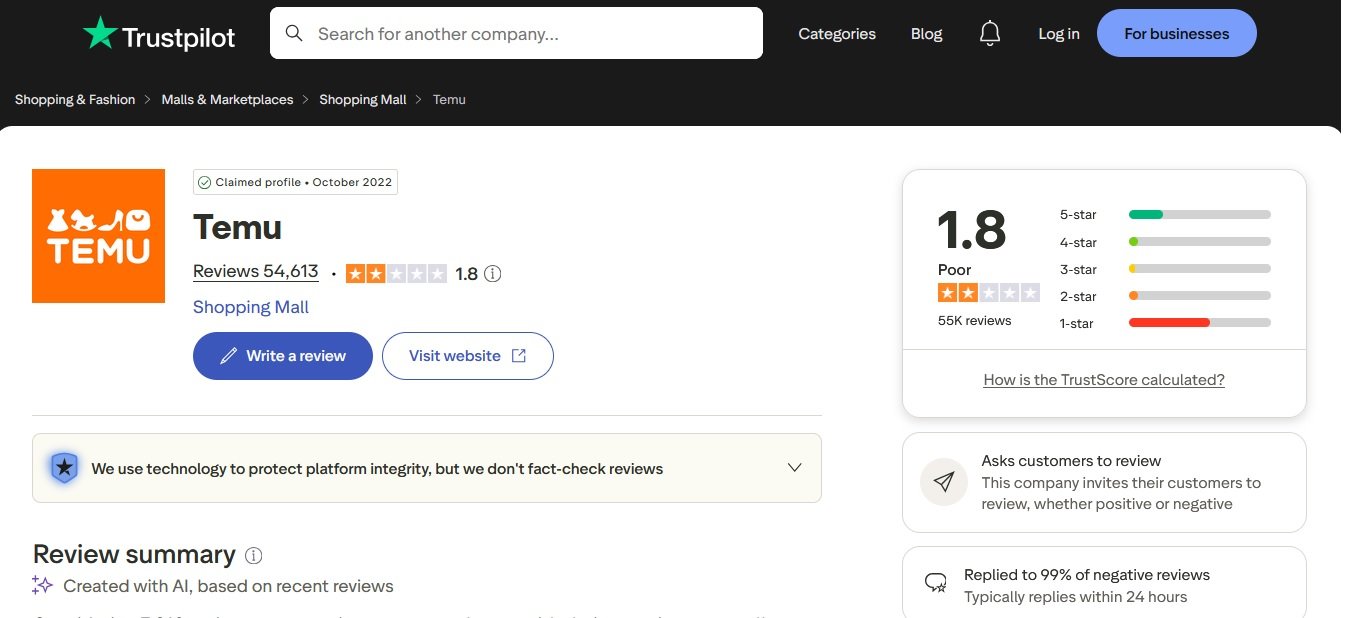
Customer reviews of Temu are deeply divided. On Trustpilot, Temu has over 49,000 reviews with a mix of praise and sharp criticism. Positive reviews highlight low prices and good value for money. Negative reviews focus on poor product quality, shipping issues, and unresponsive customer service.
Here’s what real customers are saying as of early 2026:
Positive feedback themes:
- Prices are genuinely lower than competitors for basic household items and accessories.
- Many items arrive as described, especially low-expectation products like phone cases, crafting supplies, and small tools.
- The 90-day return window gives buyers more time to decide than most competitors.
- Some users report smooth and fast customer service interactions.
I’ve had a mostly positive experience with Temu. I received a wrong or faulty item a couple of times, but customer service resolved the issues quickly. Great service overall! – Reggie Jones
- Great experience so far. The milk frother works really well, and the cycling gloves are surprisingly good quality for the price. No problems with our orders so far. – Kat E
Negative feedback themes:
- Products often look different from the photos — colors, materials, and sizes may not match.
- Refunds sometimes come as Temu credit instead of money back to your card.
- Shipping can take much longer than the estimated delivery date.
- Promotional “free gift” games are widely described as misleading or impossible to win.
- Some users report unauthorized charges or difficulty canceling orders.
- Misleading product description. I ordered 300 solder shrink joints but only received 100. The other 200 were just shrink covers. Temu needs to do better at checking sellers and product descriptions. – GENE RANDALL
- Temu was great until they switched to J&T. My package was never delivered and was incorrectly marked as refused and returned. Very disappointing, especially after being a loyal customer for years. – Jana Christoviciute
- Very disappointing experience with Temu. My package was never received, but they keep saying it was delivered. I provided evidence, but it was ignored. Poor customer service and no proper investigation. – Slama Nour
- Temu has some good cheap products, but you need to be careful. Some items look better online than they are in reality. Check reviews carefully before buying. At least the refund process is easy if something goes wrong. – Ximer from Belgium
- Wrong item delivered by Temu. It was not as described, and returning it has been a frustrating experience. The Evri tracking was also confusing. Very disappointing. – Dr Mohammad Yousif Jamro from the United Kingdom
One Trustpilot reviewer from 2026 wrote that their last two orders never arrived, and it took weeks to receive a refund. Another user praised Temu’s support, saying they “never ever had problems” across several years of shopping. The reality is that your experience will depend heavily on which third-party seller fulfills your order.
If you’re used to using social media to discover products, remember that influencer reviews and paid promotions may not reflect the typical buyer experience. Always look for independent, unsponsored reviews when evaluating a platform like Temu.
Should You Download the Temu App?
You should only download the Temu app if you’re comfortable with the data privacy trade-offs and you plan to make budget purchases. The app offers a better browsing experience than the website, but it also requests more permissions than a typical shopping app.
Consider these factors before downloading:
- The app requests broad permissions. Depending on your device, Temu may ask for access to your camera, storage, location, and contacts. Deny any permissions that aren’t essential to your shopping.
- Push notifications can be aggressive. Temu sends frequent promotional notifications. You can disable these in your phone settings, but the default experience is notification-heavy.
- The app uses gamification to keep you engaged. Spinning wheels, countdown timers, and “limited-time” deals create a sense of urgency that can lead to impulse purchases.
- You can also shop on Temu.com without downloading the app. The website gives you access to the same products without granting the app-level permissions on your phone.
If you decide to shop on Temu, using the website through a browser with a VPN may be a safer option than installing the app. This reduces the amount of data the platform can collect from your device. Make sure your device is also protected with quality antivirus software to reduce exposure to any potential threats.
What Categories of Products Are Safest to Buy on Temu?
Low-cost, non-essential items like phone accessories, craft supplies, and small household gadgets are the safest products to buy on Temu. Items where quality variation matters less tend to produce the most satisfying experiences.
Here’s a general guide to product categories on Temu:
| Category | Risk Level | Why |
|---|---|---|
| Phone cases, screen protectors | Low | Simple products, easy to evaluate from photos |
| Craft supplies, stickers, stationery | Low | Low-cost, quality expectations are minimal |
| Kitchen gadgets (small) | Low to Medium | Basic tools often work fine; avoid anything electronic |
| Clothing and shoes | Medium to High | Sizing is inconsistent; materials may differ from photos |
| Electronics and tech accessories | High | Quality control is poor; safety certifications may be lacking |
| Skincare and beauty products | High | Ingredients may not be fully disclosed; safety is a concern |
| Children’s toys | High | Safety standards and testing may not meet US requirements |
Avoid buying electronics, safety-critical items, or anything that goes on or in your body unless you can independently verify its safety certifications. Products for children deserve extra caution because they must meet specific safety standards that budget manufacturers may not follow consistently.
Conclusion
Temu is a legitimate e-commerce platform — it’s not a scam in the traditional sense. It is a real company with real products, real transactions, and a real refund policy. Over 82 million Americans have used it, and cumulative global downloads passed 1 billion in 2025.
But “legitimate” doesn’t mean “flawless.” The platform has well-documented problems with product quality, misleading photos, aggressive data collection, and inconsistent customer service. Multiple state attorneys general have filed lawsuits over privacy concerns, and the FTC has already levied a $2 million fine for regulatory violations.
If you choose to shop on Temu, go in with realistic expectations. Use a credit card or PayPal for payment protection. Start with small, low-risk orders. Read reviews carefully, and deny unnecessary app permissions. Treat Temu as what it is: a budget marketplace where you trade quality and speed for price.
Your money is your money. Spend it with your eyes open.
Frequently Asked Questions
Is Temu a Legitimate Company?
Yes, Temu is a legitimate company registered in Boston, Massachusetts, and operated by WhaleCo, Inc., a subsidiary of PDD Holdings — a NASDAQ-traded corporation. It processes millions of real transactions and has over 82 million active US users as of 2023. Being legitimate does not guarantee a perfect experience, but the company itself is real and legally operating in the United States.
Is Temu Safe to Buy From?
Yes, Temu is generally safe to buy from if you use secure payment methods like credit cards or PayPal. The platform uses SSL encryption for transactions and offers a Purchase Protection Program for items that don’t arrive or don’t match the description. However, you should limit app permissions and avoid sharing unnecessary personal data due to ongoing privacy lawsuits.
Does Temu Sell Fake Products?
No, Temu does not officially sell counterfeit branded goods. However, the platform does host listings that closely mimic popular brand designs without authorization. Temu does not carry major brand-name products, so most items are unbranded or use generic labels. If a listing appears to be a recognizable brand at a suspiciously low price, it’s likely a knockoff.
Can You Get a Refund From Temu?
Yes, you can request a refund within 90 days of purchase for most items. Temu provides free shipping on the first return of each order. Refunds may be issued to your original payment method or as Temu store credit, depending on the situation. Items that have been worn, washed, or fall into excluded categories like food products cannot be returned.
Has Temu Been Fined by the US Government?
Yes, in September 2025, Temu agreed to pay a $2 million civil penalty to resolve FTC allegations of violating the INFORM Consumers Act. The law requires online marketplaces to provide consumers with information to identify and report counterfeit, stolen, or unsafe goods. Additionally, multiple state attorneys general have filed lawsuits over data privacy concerns.
Is the Temu App Spyware?
No, Temu has not been officially classified as spyware by any federal agency. However, the Arizona Attorney General’s lawsuit filed in December 2025 alleges that the app functions like spyware by harvesting sensitive device data beyond what’s needed for shopping. These are allegations, not proven facts. The legal proceedings are ongoing, and Temu denies the claims.
Is Temu Better Than Amazon?
No, Temu is not better than Amazon for most shopping needs. Amazon offers faster shipping (1–2 days with Prime), more consistent product quality, stronger buyer protection (A-to-Z Guarantee), and BBB accreditation with an A+ rating. Temu’s advantage is price — it’s significantly cheaper for many basic items. If speed, reliability, and brand-name products matter to you, Amazon is the better choice. If you want the absolute lowest price and can accept trade-offs, Temu may work for specific items.
Does Temu Steal Your Information?
No, there is no confirmed evidence that Temu has stolen user information in a traditional data breach. However, multiple state lawsuits allege that Temu’s app collects more personal data than necessary for its function — including device identifiers and location information. Until these cases are resolved, the full scope of Temu’s data practices remains under legal scrutiny. Using a VPN and limiting app permissions can reduce your exposure.
You May Also Like
 Cyber Security
Can Ransomware Infect iCloud? What Mac and iPhone Users Need to Know
 Data Security & Privacy
Is a Password Manager Safe? How to Use One Securely
 WordPress
12 Best Cheap SSL Certificate Providers To Secure Your Website
 Data Security & Privacy
Is Password Protection the Same as Encryption? Differences in Data Security
 Data Security & Privacy
What Is End-to-End Encryption? Your Complete Guide to Secure Communication
 Online Services
8 Best Sites Like Fiverr (Fiverr Alternatives) To Earn Money As A Freelancer
 Data Security & Privacy
What Is a Cloud Security Scanner for AWS, Azure, and Google Cloud?
 Online Services
20 Best Sites To Download Free Stock Photos For Personal and Commercial Use
 VPN
VPN