Did you get a call from an unknown number? Are you confused whether the call is spam or telemarketing? If you experience a case like this, I would strongly recommend you to use reverse phone lookup services to show the identity of an unknown call.
The Growing Epidemic of Unknown Calls: 2025 Statistics
Did you know that Americans receive an average of 9 spam calls per month? According to the latest data from Truecaller’s 2025 analysis, the spam call situation has reached epidemic proportions:
- 3.2 billion spam calls are made to Americans every month
- Americans wasted 248 million hours answering spam calls in the past year alone
- That’s equivalent to 10.3 million days or 339,000 months of wasted time!
- The average spam call lasts 4.78 minutes, giving scammers plenty of time to try to trick you
Who’s most affected? The top 10 states receiving the most spam calls per user are:
- Mississippi
- South Carolina
- Alabama
- Tennessee
- Louisiana
- Oklahoma
- Texas
- Missouri
- North Carolina
- Arkansas
Why Am I Getting So Many Calls From Unknown Numbers?
The Black Market for Your Phone Number
Did you know that phone numbers are being sold? If you have ever had an online transaction, then you must be careful because your data can be sold. According to information, data such as email, cellphone numbers are most often sold on the black market. Even a credit card is a common target of hackers.
This is where privacy engineering becomes crucial in protecting your personal information. Privacy engineering in cybersecurity is the process of building systems that protect personal data from unauthorized access while ensuring compliance with laws. It combines engineering practices with privacy principles to design secure digital environments.
I would strongly suggest you to use different numbers when making online transactions unless you’re dealing with valid e-commerce sites like Amazon, Walmart or target.com. Beyond that, I do not recommend you to use your main mobile number!
How Scammers Get Your Number
Scammers use sophisticated methods to obtain your phone number:
- Data breaches from companies you’ve done business with
- Online forms and surveys that collect your contact information
- Social media profiles where your number might be visible
- Automatic number generators that dial random numbers
- Buying lists from other companies that have your information
To protect your online activities and maintain anonymity, some users turn to proxy servers. A proxy server acts as an intermediary between your device and the internet, helping to anonymize your traffic so websites only see the proxy rather than your original IP address.
What Should I Do When I Get a Call From an Unknown Number?
Immediate Steps to Take
Are you confused when getting a call from an unknown number? Yes, I’m sure you will be upset and angry if you get a call more than once from an unknown number because it could be spam, terror, telemarketing? Whatever it is you have to do first is “Block unknown number”. How do I do that? Please go to call history > scroll down > block. (Unknown number will not be able to contact you again).
Best Practices for Handling Unknown Calls
- Let it go to voicemail first – Legitimate callers will leave a message
- Never give out personal information – No legitimate company will ask for SSN, bank details, or passwords over the phone
- Use reverse phone lookup – Before calling back, check who owns the number
- Report spam numbers – Help protect others by reporting suspicious calls
- Consider call-blocking apps – Prevent future calls from known spammers
Protecting Your Personal Information
In today’s digital world, protecting your personal data is more important than ever. Data encryption is a security method that changes information into a code to stop unauthorized access. It transforms readable data into an unreadable format, ensuring that only those with the correct decryption key can access the information.
While encryption protects your data in transit and storage, you should also be vigilant about who might be monitoring your online activities. Some individuals might even attempt to monitor your social media activities to gather personal information that could be used in phone scams or identity theft.
How Technology Is Fighting Back: The Latest in Call Protection
STIR/SHAKEN: The Future of Caller ID Authentication
The telecommunications industry has implemented STIR/SHAKEN technology, a framework that digitally validates phone calls to combat caller ID spoofing. Here’s how it works:
- STIR (Secure Telephone Identity Revisited) uses digital certificates to verify calling numbers
- SHAKEN (Signature-based Handling of Asserted Information Using Tokens) implements STIR in service provider networks
- Calls are assigned attestation levels: A (full verification), B (partial verification), or C (no verification)
- This technology helps ensure that the number you see on your caller ID is actually the number that’s calling
AI-Powered Reverse Phone Lookup: The Game Changer
Artificial intelligence is revolutionizing how we identify unknown callers. Modern AI-powered reverse phone lookup services use:
- Real-time data analysis – Processing billions of data points from public records, social media, and user reports
- Pattern recognition – Identifying suspicious calling patterns and behaviors
- Machine learning – Getting smarter with each user report and interaction
- Voice and speech recognition – Analyzing recorded calls for scam indicators
- Network-level analysis – Working with telecom providers to track suspicious activity across networks
6 Best Reverse Phone Lookup Services To Find Call From Unknown Number
1. Google Phone Lookup Service

Google Phone Lookup Service
Google is big data and has a sophisticated phone directory for searching telephone numbers. But here Google displays a search based on the numbers listed on the websites. The way to find an unknown telephone number on Google is quite effective because many people experience the same case and they upload spam or fraudulent telephone number data on their forums, websites.
How to use Google for phone number lookup:
- Simply enter the phone number in Google’s search bar
- Try different formats: 555-123-4567, (555) 123-4567, or 555 123-4567
- Google will display any websites or forums where this number has been mentioned
- Look for user reports, scam warnings, or business listings
2. BeenVerified
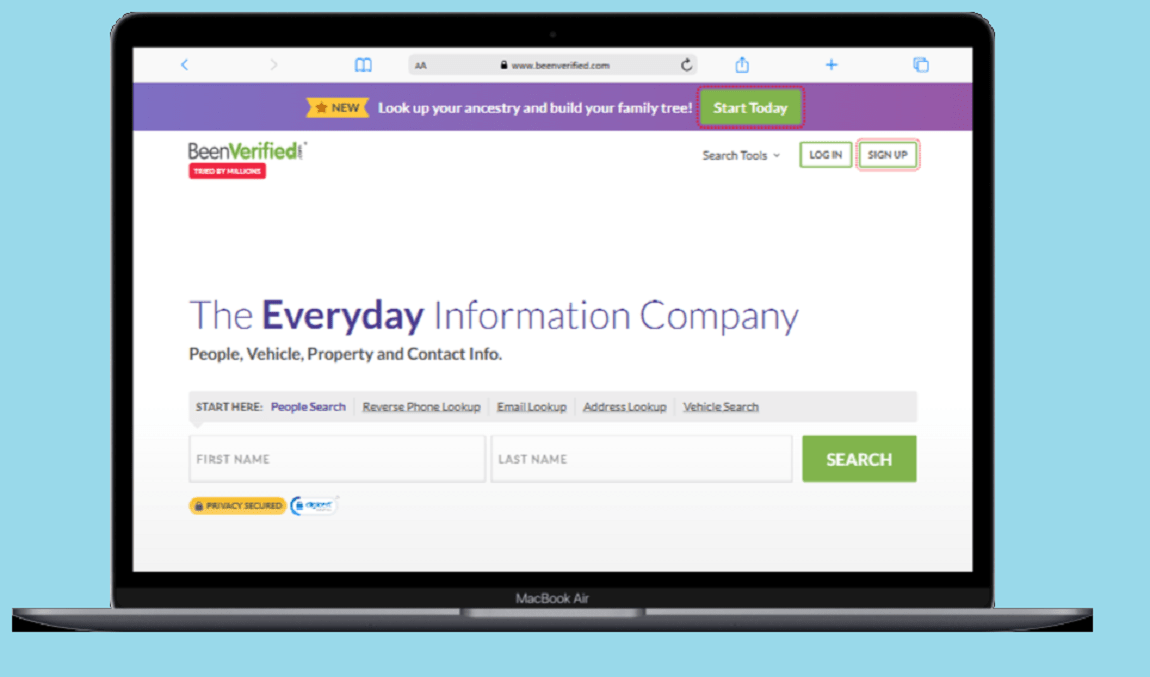
BeenVerified is the best overall reverse phone lookup service in 2025, having run over 32 million confidential reverse phone search reports for its customers. This comprehensive service contains billions of phone data points and allows you to search any phone number to find unknown callers quickly and efficiently.
Key features of BeenVerified:
- Comprehensive database with billions of phone data points
- Highly accurate results with detailed reports
- Multiple search options including reverse phone, reverse email, and people search
- Mobile apps available for both Android and iOS
- Excellent customer support with high user satisfaction ratings
- Affordable pricing starting at $14.86/month
BeenVerified stands out for its ability to provide detailed information about unknown callers, including their name, location, and additional contact details. The service is particularly effective for identifying spam calls, scam attempts, and verifying the legitimacy of unknown numbers.
3. Truecaller
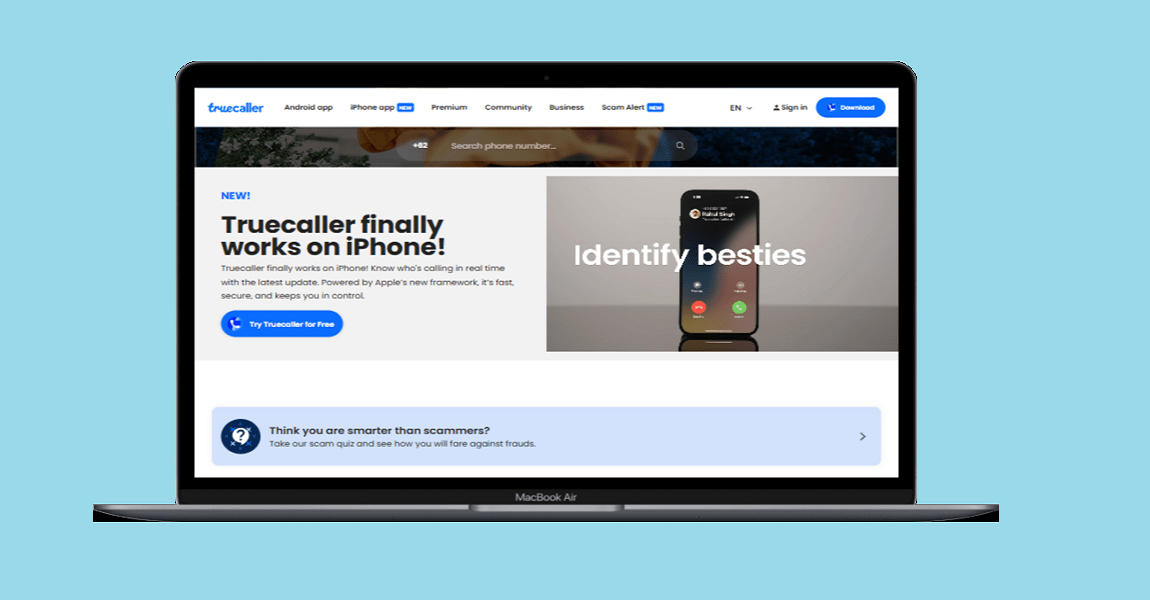
Truecaller is one of the best reverse phone lookup services that is widely used today. More than 150 million users per day trust Truecaller as the best reverse phone lookup service.
Advanced features of Truecaller:
- Caller ID Recognize unknown numbers, fraud, spam, or companies that call before picking up calls! Seeing the identity of any incoming calls anywhere in the world from your home phone or smartphone.
- Spam Blocker Truecaller will Block numbers automatically from robot calls. If you get a spam call from a robot or from hackers who want to deceive you, then automatically the number is blocked.
- Smart Dialer Always contact the right people! Contact friends, family, and identify the names of unknown numbers. Other additional features: Chat, SMS and Calls, Banking secure money transfers.
Why Truecaller stands out:
- Massive user base providing real-time spam detection
- AI-powered scam detection
- Automatic call blocking based on community reports
- Integration with messaging apps for comprehensive protection
4. Unknownphone.com
Reverse Phone Lookup Services
Got a call from an unknown number? Find out “who called me?” for free.
If you got a call from an unknown number and want to find out who called me, then you can use unknownphone.com services. Sometimes there are many calls from unknown numbers, maybe they are telemarketers, scammers, or law enforcement?
What makes Unknownphone.com unique:
- Community-driven database with user comments and experiences
- Free service with no registration required
- Detailed caller information including location and carrier
- User-generated reports about scam attempts and spam calls
5. Whitepages

call from unknown number?
Whitepages is another best reverse phone lookup tool. You can do a reverse phone number lookup here, start by entering a phone number with the area code for example ( 206-967-6309), click the search icon, and review the results page, which will immediately provide you what type of phone is linked to the number. Try here for free and find who is calling you!
Whitepages advantages:
- One of the most established and trusted names in people search
- Comprehensive database with billions of records
- Detailed reports including address history and relatives
- Both free and premium options available
6. Spy Dialer

Spy Dialer
Have a missed call? You need to know who called you or who texted you? Need to know whose number is this or who owns this number? Spy Dialer Phone Number Lookup is one tool that is reliable and of course free! Know who is calling with a reverse phone lookup with Spy Dialer is a powerful way to avoid fraud and worry because of terror.
How Spy Dialer works:
- Collects billions of telephone numbers from website directories based on telephone books, whitepages or yellow pages
- Free service with no hidden costs
- Simple, straightforward interface
- Quick results for basic number identification
Fraud Prevention With Reverse Phone Lookup: Expert Tips
Recognizing Common Phone Scams
If you get a call from an unknown number, please don’t panic! Answer it and if they ask for your personal data please say no! Generally, fraudsters tell stories about family members in trouble, claiming they’re blacklisted or at the police station. Please, don’t believe that! All you have to do is be calm and ask the caller back (about their initials, full name).
Common scam scenarios to watch for:
- Family emergency scams – Someone claims to be a relative in trouble needing money
- Government impersonation – Callers pretending to be from the IRS, Social Security, or police
- Tech support scams – Someone claiming your computer has a virus
- Prize scams – Telling you’ve won something but need to pay fees to claim it
- Utility scams – Threatening to shut off your services unless you pay immediately
What to Do If You’re Targeted by Scammers
If you are experiencing a terror case in which getting calls from unknown numbers and they ask for money you should contact the police and remain calm – no panic!
Steps to take if you suspect a scam:
- Hang up immediately – Don’t engage with the caller
- Document the call – Note the number, time, and what was said
- Report to authorities – File a report with the FTC at ReportFraud.ftc.gov
- Block the number – Prevent future calls from the same number
- Warn others – Share your experience on community forums and reverse lookup sites
Long-Term Protection Strategies
For the future, you must change your telephone number if you’re being harassed and please do not share the telephone number except with family or someone you trust.
Best practices for long-term protection:
- Use a secondary number for online transactions and non-essential services
- Register with the National Do Not Call Registry to reduce legitimate telemarketing calls
- Use call-blocking apps that automatically filter known spam numbers
- Be careful about sharing your number online or in public forms
- Use email or WhatsApp for private messages because they’re much safer!
Advanced Protection: Beyond Basic Reverse Phone Lookup
Carrier-Level Call Blocking
Many phone carriers now offer advanced call-blocking features:
- AT&T Call Protect – Free and paid versions with automatic fraud blocking
- Verizon Call Filter – Identifies and blocks spam calls automatically
- T-Mobile Scam Shield – Free scam blocking and caller ID services
- Sprint Premium Caller ID – Advanced caller identification and blocking
Third-Party Call Blocking Apps
For additional protection, consider these highly-rated apps:
- Hiya – Free and premium versions with advanced spam detection
- RoboKiller – Uses AI to block spam calls and even answer bots
- Call Control – Community-powered blacklist with automatic blocking
- Nomorobo – Blocks robocalls and telemarketers automatically
Conclusion: Taking Control of Your Phone
Dealing with unknown callers can be frustrating and sometimes scary. With the rise of phone scams and telemarketing, protecting your personal information has become more important than ever. The statistics are staggering – Americans waste 248 million hours annually on spam calls, with 3.2 billion unwanted calls made every month.
However, you’re not helpless in this battle. Reverse phone lookup services offer a simple and effective solution to identify unknown callers and protect yourself from potential scams. By using tools like Google Phone Lookup, BeenVerified, Truecaller, Unknownphone.com, Whitepages, or Spy Dialer, you can quickly determine who’s calling you and decide whether to answer, block, or report the number.
The technology is also on your side. With advancements like STIR/SHAKEN caller authentication and AI-powered scam detection, the tools available to protect yourself are more sophisticated than ever. These technologies work behind the scenes to verify caller identities and detect suspicious patterns before you even pick up the phone.
Remember to always be cautious when sharing your phone number online and consider using a separate number for online transactions. Taking control of your incoming calls not only reduces annoyance but also helps protect you from fraud and identity theft.
Stay informed, stay safe, and make the most of these reverse phone lookup services to manage your calls effectively. Your time and peace of mind are valuable – don’t let scammers waste them.
Frequently Asked Questions (FAQs)
1. What is a reverse phone lookup and how does it work?
A reverse phone lookup is a service that allows you to find information about a person or business using their phone number. Instead of searching for a name to get a number (like in a phone book), you enter the phone number to find out who owns it. These services search through databases of public records, user reports, and other sources to provide information about the number’s owner.
2. Are reverse phone lookup services really free?
Some reverse phone lookup services offer basic information for free, while others charge for more detailed reports. Services like Google Phone Lookup and Spy Dialer offer free searches, while others like Truecaller and BeenVerified have both free and premium versions. The free versions typically provide basic information like whether the number is spam or the general location, while paid versions offer more detailed reports including the owner’s name, address history, and other personal information.
3. How accurate are reverse phone lookup services?
The accuracy depends on the service and how up-to-date their database is. Generally, well-known services like BeenVerified and Truecaller maintain large, regularly updated databases and provide more accurate results. However, no service is 100% accurate because phone numbers can be changed, spoofed, or belong to prepaid phones that don’t require registration. The accuracy also depends on whether the number is listed publicly or has been reported by other users.
4. Can I find out who owns a cell phone number?
Yes, many reverse phone lookup services can identify cell phone numbers, though it might be more challenging than identifying landline numbers. Services like Truecaller and BeenVerified specialize in identifying mobile numbers and have large databases of cell phone information. However, privacy laws and carrier policies may limit the amount of information available for cell phone numbers compared to landlines.
5. Is it legal to use reverse phone lookup services?
Yes, using reverse phone lookup services is legal for personal use in most countries, including the United States. However, using the information obtained for harassment, stalking, or other illegal activities is against the law. It’s important to use these services responsibly and only for legitimate purposes like identifying unknown callers or protecting yourself from scams.
6. How can I stop receiving spam calls?
Besides using reverse phone lookup to identify and block spam numbers, you can:
- Register your number on the National Do Not Call Registry
- Use call-blocking apps like Truecaller, Hiya, or RoboKiller
- Enable built-in spam blocking on your smartphone
- Be careful about where you share your phone number online
- Use a secondary number for online transactions
- Report spam calls to your carrier and the FTC
7. What should I do if I receive a scam call?
If you receive a scam call:
- Don’t provide any personal information
- Hang up immediately
- Block the number
- Report it to the FTC at ReportFraud.ftc.gov
- Warn others by reporting the number on community forums
- Consider changing your phone number if you receive repeated scam calls
8. Can reverse phone lookup services identify private or blocked numbers?
Most reverse phone lookup services cannot identify private or blocked numbers, as the caller’s information is intentionally hidden. However, some services might be able to reveal the general location or service provider of the call. For complete protection against unwanted calls, it’s best to use a combination of call-blocking apps, carrier services, and careful phone habits.
9. What’s the difference between caller ID and reverse phone lookup?
Caller ID shows you the number that’s calling you in real-time, while reverse phone lookup allows you to search for information about a number after you’ve received a call. Caller ID is a basic feature that comes with most phone services, while reverse phone lookup is a separate service that provides detailed information about phone numbers. Many modern services combine both features, showing you caller ID information and allowing you to look up additional details about unknown numbers.
10. How do I know if a call is really from my bank or government agency?
Legitimate banks and government agencies will never ask for sensitive information like your Social Security number, bank account details, or passwords over the phone. If you’re unsure about a call:
- Hang up and call the official number from your bank statement or the agency’s official website
- Never trust caller ID, as it can be spoofed
- Be suspicious of calls creating urgency or threatening consequences
- Remember that government agencies typically communicate by mail first, not phone calls
You May Also Like
 Cyber Security
Can Ransomware Infect iCloud? What Mac and iPhone Users Need to Know
 Data Security & Privacy
Is a Password Manager Safe? How to Use One Securely
 WordPress
12 Best Cheap SSL Certificate Providers To Secure Your Website
 Data Security & Privacy
Is Password Protection the Same as Encryption? Differences in Data Security
 Data Security & Privacy
What Is End-to-End Encryption? Your Complete Guide to Secure Communication
 Data Security & Privacy
What Is a Cloud Security Scanner for AWS, Azure, and Google Cloud?
 Cyber Security
Is Temu Legit or a Scam? The Complete Truth You Need to Know
 VPN
VPNHow to Block Ads on FirstRowSports: A Step-by-Step Guide
 Proxies