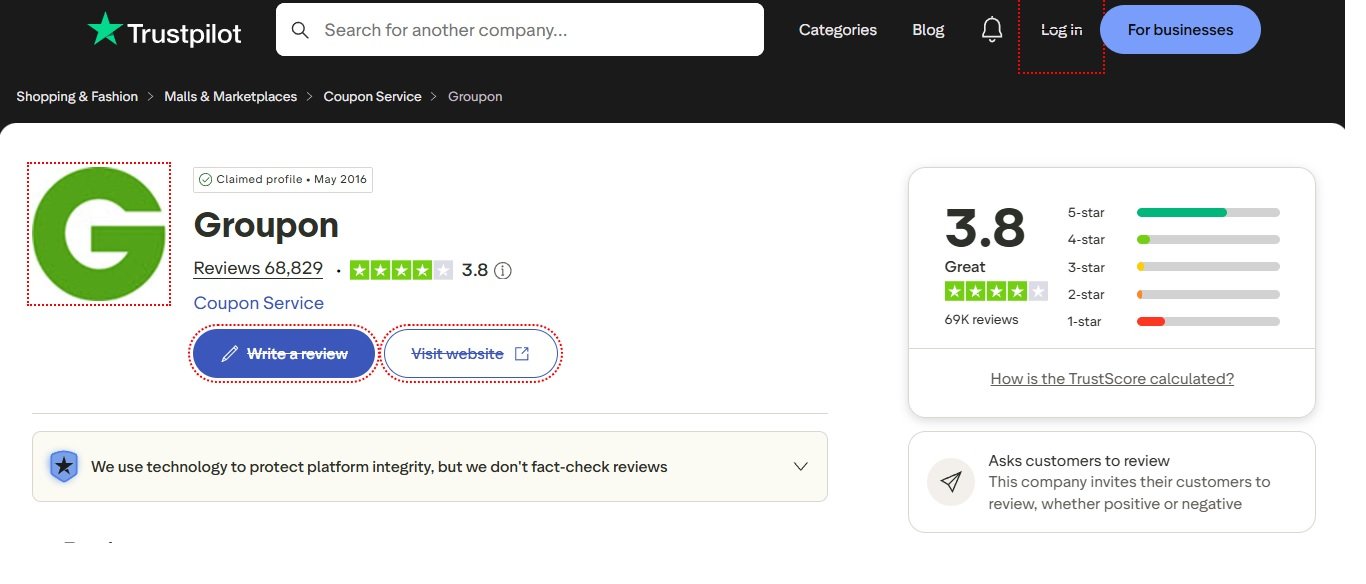
Groupon has been around since 2008. It’s publicly traded on the NASDAQ under the ticker GRPN. It processes millions of transactions every year, partners with hundreds of thousands of merchants, and maintains a 3.8 -star average across roughly 68,000 Trustpilot reviews.
So yes — Groupon is a legitimate, registered, audited company. That part isn’t really in question.
The more useful question and the one most articles dodge is this: Does being “legit” mean you should actually use it? Because legitimacy and a good consumer experience are two very different things. A platform can be entirely legal, financially solvent, and publicly listed, while still leaving a meaningful percentage of users feeling burned.
That’s the gap this article fills. I’ve used Groupon on and off for years, watched its model evolve, tracked complaint patterns across BBB, Trustpilot, Reddit, and Consumer Affairs, and seen the same mistakes get repeated by buyers who didn’t understand what they were actually purchasing. Below is the honest version, not the affiliate-driven puff piece, and not the angry one-star rant either.
Key Takeaways
- Groupon is legitimate. Publicly traded (NASDAQ: GRPN), founded 2008, headquartered in Chicago, operating in dozens of countries.
- Legitimacy ≠ universally good experience. Outcomes vary dramatically by category, merchant, and how carefully the buyer reads the terms.
- The biggest risk isn’t fraud — it’s friction. Most complaints involve refund limitations, expired promotional value, and merchant disputes, not stolen funds.
- Refund window for local deals is narrow — typically 3 days for unredeemed vouchers, after which refunds usually come as Groupon credit.
- Groupon Getaways behaves like non-refundable hotel bookings, not like typical Groupon vouchers.
- Best for low-stakes local experiences and gifts. Worst for high-value purchases requiring strong consumer protection.
What Is Groupon Actually? Are you here for the first time?
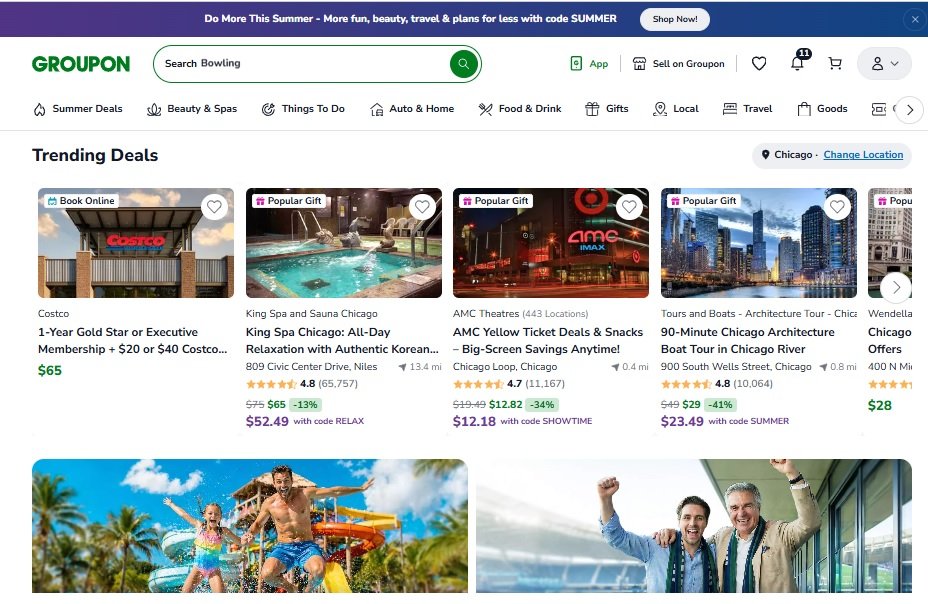
Groupon is a customer acquisition channel for local businesses that you, the consumer, get to ride along with. The deep discount isn’t there because Groupon negotiated hard on your behalf. It’s there because a salon, restaurant, or spa is paying in margin — to put their offer in front of someone who would never have walked through their door otherwise.
That distinction explains almost every weird experience people report:
- Why service sometimes feels rushed or second-tier (you’re a loss-leader, not a regular customer).
- Why some merchants quietly resent Groupon users (after Groupon’s cut and the discount, they often net 25–30% of the menu price).
- Why is deal quality inconsistent (the platform is only as strong as the worst merchant willing to sign on).
Groupon isn’t Amazon. It doesn’t hold inventory, doesn’t ship most products itself, and doesn’t directly control what happens when you walk into a partner business. It’s a marketplace and a payment processor sitting between you and a third party. Once you internalize that, the rest of the platform’s behavior makes sense.
Groupon’s Business Model — How It Actually Makes Money
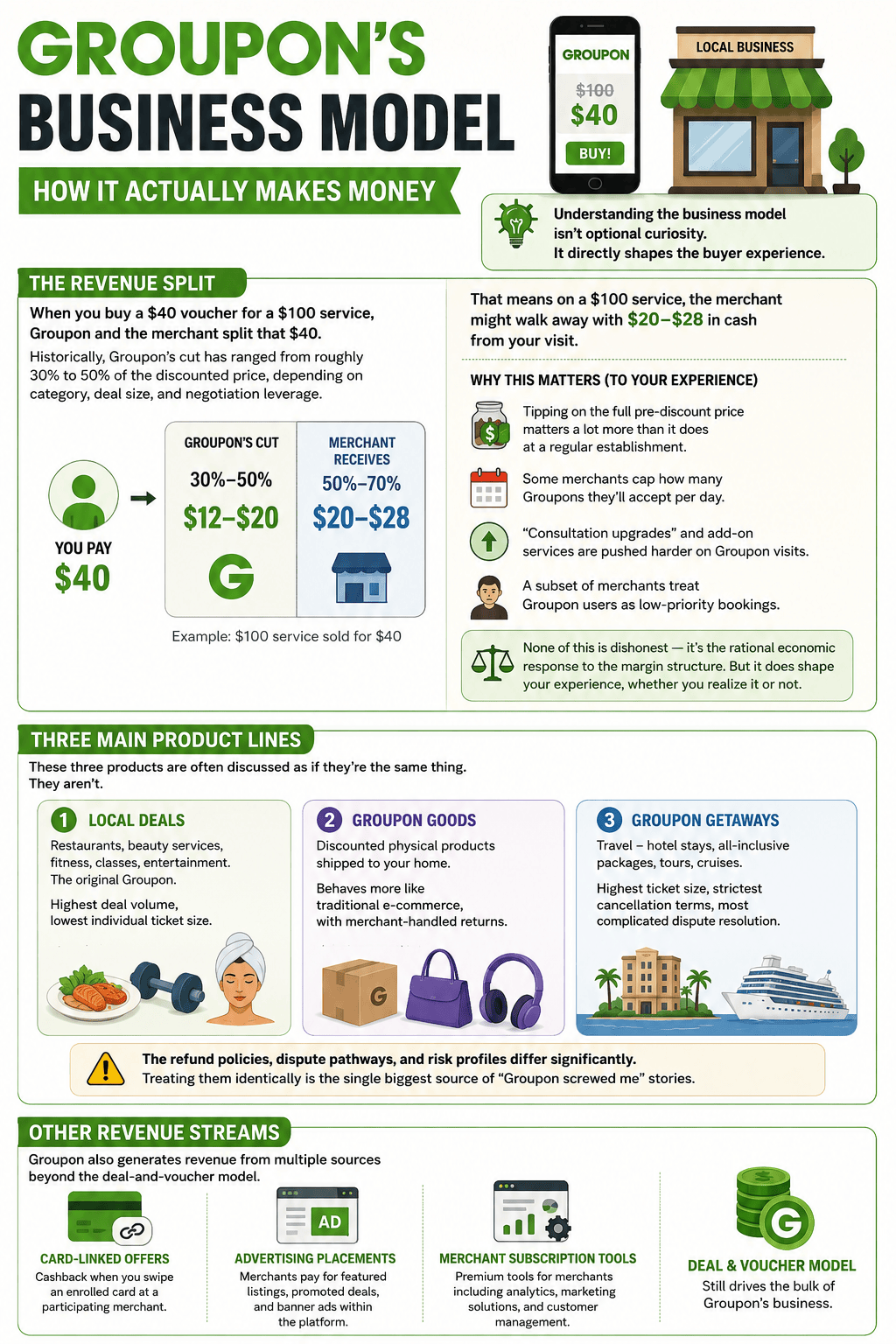
Understanding the business model isn’t optional curiosity. It directly shapes the buyer experience.
The Revenue Split
When you buy a $40 voucher for a $100 service, Groupon and the merchant split that $40. Historically, Groupon’s cut has ranged from roughly 30% to 50% of the discounted price, depending on category, deal size, and negotiation leverage. That means on a $100 service, the merchant might walk away with $20–$28 in cash from your visit.
This is the single most important number in the entire Groupon ecosystem, and most consumers never think about it. It’s also why:
- Tipping on the full pre-discount price matters a lot more than it does at a regular establishment.
- Some merchants cap how many Groupons they’ll accept per day.
- “Consultation upgrades” and add-on services are pushed harder on Groupon visits.
- A subset of merchants treat Groupon users as low-priority bookings.
None of this is dishonest — it’s the rational economic response to the margin structure. But it does shape your experience, whether you realize it or not.
Three Main Product Lines
1. Local Deals. Restaurants, beauty services, fitness, classes, and entertainment. The original Groupon. Highest deal volume, lowest individual ticket size.
2. Groupon Goods. Discounted physical products shipped to your home. Behaves more like traditional e-commerce, with merchant-handled returns.
3. Groupon Getaways. Travel — hotel stays, all-inclusive packages, tours, cruises. Highest ticket size, strictest cancellation terms, most complicated dispute resolution.
These three products are often discussed as if they’re the same thing. They aren’t. The refund policies, dispute pathways, and risk profiles differ significantly. Treating them identically is the single biggest source of “Groupon screwed me” stories.
Other Revenue Streams
Groupon also generates revenue from card-linked offers (cashback when you swipe an enrolled card at a participating merchant), advertising placements within the platform, and merchant subscription tools. But the deal-and-voucher model still drives the bulk of the business.
Which Countries Have Groupon?
Groupon’s footprint has expanded and contracted over the years as the company has focused on its highest-performing markets. As of recent operations, the platform operates in roughly 15+ countries across North America and Europe, with the bulk of activity concentrated in:
| Region | Primary Markets |
|---|---|
| North America | United States, Canada |
| Western Europe | United Kingdom, Ireland, France, Germany, Italy, Spain, Netherlands, Belgium |
| Other Europe | Poland, Czech Republic |
| Asia-Pacific | Australia, New Zealand (currently limited/inactive in some regions) |
The U.S. is Groupon’s largest market by transaction volume by a wide margin. Outside the major English-speaking and Western European markets, the platform has been progressively wound down. Groupon exited several markets (Latin America, parts of Asia, Russia) in earlier strategic resets.
A practical implication often missed: Groupon’s product mix and merchant quality vary by country. The U.S. and U.K. markets have the densest merchant networks and the most active Getaways inventory. Smaller markets sometimes feel thinner, with fewer fresh deals and slower customer service response times. If you’re using Groupon in a smaller country, calibrate expectations accordingly.
Features of Groupon — The Tools That Actually Matter
Most listicles enumerate Groupon’s features superficially. Here’s what each one actually means for a buyer who wants to use the platform competently.
Daily Deals & Curated Categories
Browseable feeds organized by location and category. Useful, but the algorithm prioritizes what Groupon wants to sell, not what’s best for you. Use the search bar to find specific merchants you’ve already vetted rather than passively scrolling.
Mobile App with Push Deals
The app surfaces local, time-sensitive offers. Genuinely useful for travel-day spontaneity (“museum tickets today”). The flip side: push notifications are engineered to manufacture urgency. Treat the countdown timers as marketing copy, not as actual scarcity.
Saved Wishlist & Favorites
Let’s you save deals before purchasing. Underused feature. I’d argue you should never buy a Groupon at first sight — wishlist it, sleep on it, come back the next day. If it still feels like a smart purchase 24 hours later, then buy.
Promo Codes & Stackable Discounts
Groupon regularly issues platform-wide promo codes (typically 10–25% off select categories). They’re real, they stack with the underlying deal, and they’re worth checking before checkout. Codes usually exclude Getaways and high-ticket items.
Gift Vouchers
You can purchase Groupons as gifts and email or print them. Mechanically smooth. The recipient handles redemption and inherits all the fine print, which can be a positive (they pick the timing) or a negative (they bear all the risk).
Card-Linked Offers
Link a credit or debit card to Groupon and earn automatic cashback at participating merchants without buying a voucher first. Lower discount percentage than traditional Groupons (typically 5–15%) but with zero voucher-management overhead. Underrated feature.
“Reviews” and Ratings
Groupon shows merchant reviews from previous Groupon customers. Useful but partially curated. Always cross-reference with the merchant’s standalone Google reviews — they often tell a more complete story.
Groupon Select (Subscription Membership)
A paid loyalty program offering extra discounts, free shipping on Goods, and member-only deals. Whether it pays for itself depends entirely on your usage frequency. For occasional buyers (under 5–6 purchases a year), it generally doesn’t.
How Groupon Works — The Mechanics Most Buyers Miss
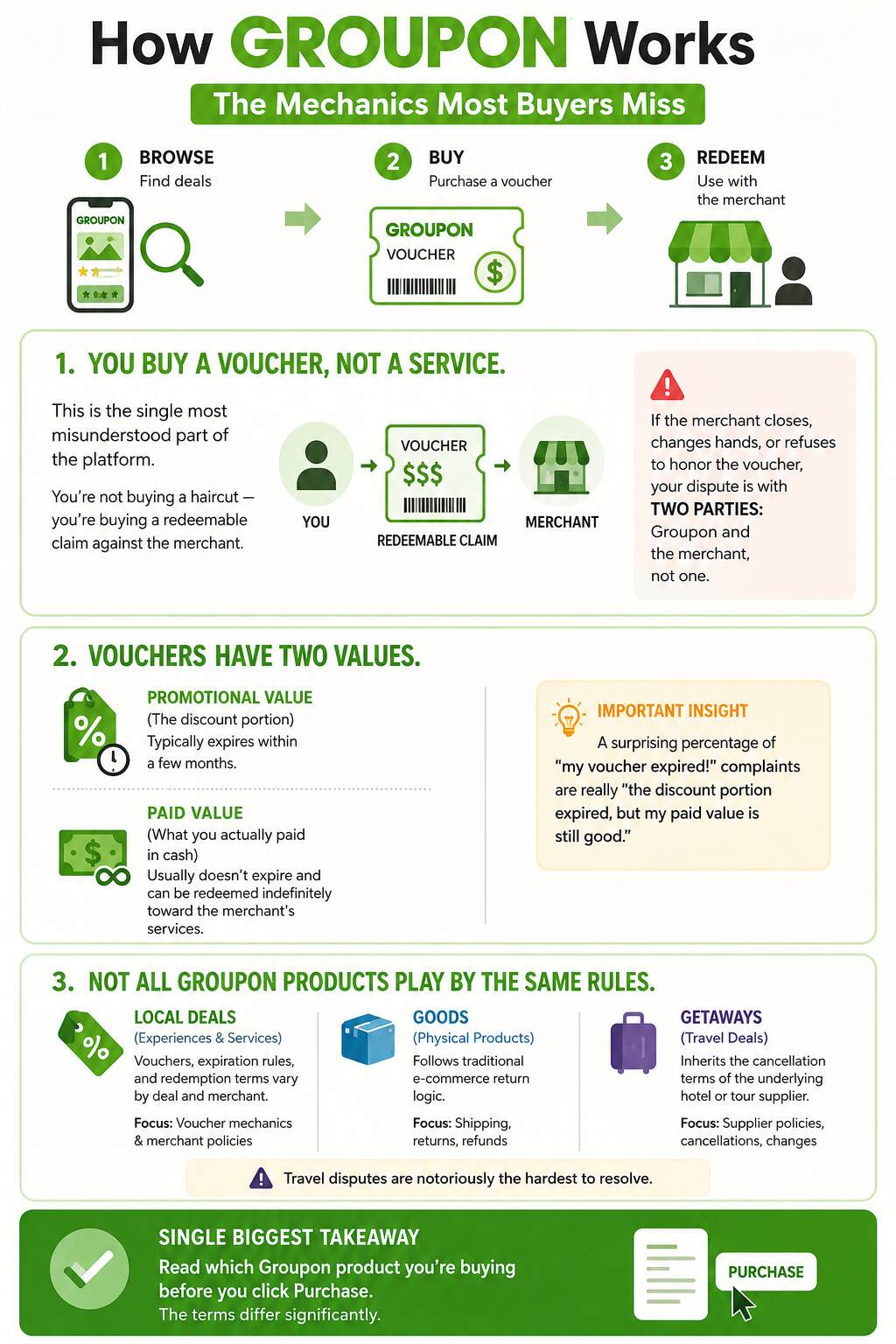
The user-facing flow is simple: browse, buy, redeem. The mechanics underneath determine whether your purchase goes smoothly.
- You buy a voucher, not a service. This is the single most misunderstood part of the platform. You’re not buying a haircut — you’re buying a redeemable claim against the merchant. If the merchant closes, changes hands, or refuses to honor the voucher, your dispute is with two parties (Groupon and the merchant), not one.
- Vouchers have two values. The “promotional value” (the discount portion) typically expires within a few months. The “paid value” — what you actually paid in cash — usually doesn’t expire and can be redeemed indefinitely toward the merchant’s services, though state and country laws vary. A surprising percentage of “my voucher expired!” complaints are really “the discount portion expired, but my paid value is still good.”
- Groupon Goods and Getaways operate under different rules than Local Deals. Goods follow traditional e-commerce return logic. Getaways inherits the cancellation terms of the underlying hotel or tour supplier, which is why travel disputes are notoriously the hardest to resolve.
If a single insight from this article saves you a headache, let it be this: read which Groupon product you’re buying before you click Purchase. The terms differ significantly.
Is Groupon Safe to Use? Security vs. Satisfaction
These two questions get conflated constantly. They shouldn’t be.
On payment security, Groupon is comparable to any major e-commerce platform. SSL encryption, PCI compliance, accepts credit cards and PayPal. I’ve yet to see credible evidence of widespread payment-data breaches. If you pay with a credit card, you also have chargeback rights as a final backstop regardless of what Groupon’s own policies say.
On purchase satisfaction, the picture is messier. Across Better Business Bureau records, Groupon’s corporate profile shows thousands of complaints over the past three years — a number that sounds alarming until you contextualize it against transaction volume in the tens of millions annually. The complaint rate is low; the absolute count is high simply because the user base is huge.
The real risks aren’t “Groupon will steal your money.” They are, in rough order of frequency:
- The merchant closes, moves, or stops honoring vouchers before you redeem.
- You miss a redemption deadline or booking-by date buried in the fine print.
- The actual experience is materially worse than the listing implied.
- A travel deal has restrictions (blackout dates, mandatory add-ons, resort fees) that effectively eliminate the discount.
- Customer service becomes the bottleneck when something goes wrong.
None of these make Groupon a scam. All of them can make a specific purchase feel like one.
When to Be Cautious — High-Risk Deal Categories
Not every Groupon carries the same risk profile. Some categories deserve significantly more scrutiny than others. The ones below are where I’d slow down, read the fine print twice, or simply walk away.
Medical and Cosmetic Procedures
Botox, dermal fillers, laser hair removal, “wellness IV drips,” teeth whitening, semaglutide and other injectables, and dental work. The economic pressure on these merchants to break even on a Groupon visit is severe, which creates incentives to use less experienced staff, run multiple clients in parallel, or aggressively upsell. The variance in outcomes is high, and the stakes of a bad outcome are also high. The savings rarely justify the risk.
High-Value Travel Packages
Anything over $1,000. The Getaways product handles small mistakes acceptably, but high-ticket bookings with strict supplier cancellation policies are where I’ve seen the worst dispute experiences. Always price-check directly against the hotel’s website plus a standard OTA before buying.
New, Unreviewed Merchants
A brand-new salon with five Groupon reviews and a 100% discount headline is essentially asking you to beta-test their operations. Wait for the review base to mature past 50–100 reviews before risking your money.
Heavily Restricted Travel Deals
“From $399 for 5 nights” deals where the $399 rate is only available on specific Tuesdays in non-peak months are technically truthful but practically misleading. Check the actual calendar availability before purchasing.
Multi-Voucher “Stacking” Deals
“Buy up to 3” creates the illusion of compounding savings. In practice, the probability of redeeming all three before expiration drops sharply with each additional voucher. Buy one, prove you can redeem it, then come back for the second.
Branded Electronics and Luxury Goods
Counterfeit and refurbished items have shown up in the Goods category over the years. Stick to direct retailers or authorized resellers for anything where authenticity matters.
Anything You Weren’t Already Considering
This is the most overlooked trap. Groupon’s interface is engineered to manufacture demand. A 70% discount on something you’d never have bought at full price is a 100% increase in your spending, not a saving.
How to Cancel and Get a Refund
This is where consumer expectations break down most often, so it deserves precision.
Refund Windows by Product
| Product Type | Standard Refund Window | Refund Form | Notes |
|---|---|---|---|
| Local Deals | 3 days from purchase, voucher unredeemed | Original payment method | After 3 days, refunds typically come as Groupon credit |
| Groupon Goods | Generally 30 days, varies by merchant | Original payment method, less return shipping | Contact merchant first; refund processed 2–3 weeks after item received |
| Groupon Getaways | Varies by supplier | Varies; often non-refundable | Terms set by the hotel or tour operator, not Groupon |
Step-by-Step Cancellation Process
For Local Deals within the 3-day window:
- Log into Groupon → My Stuff → Find the voucher.
- Click “View Details” → “Get Help with This Order” → “Cancel Order.”
- Select reason and confirm. Refund to original payment method typically lands in 7–10 business days.
For Local Deals after 3 days (still unredeemed):
- Same path through the help center.
- You’ll usually be offered Groupon credit (“trade-in value”), not cash.
- If the deal expired and you have a legitimate reason (merchant closed, illness, etc.), escalate through customer service — outcomes vary.
For Goods:
- Contact the merchant directly first using the contact info on your order page.
- If unresponsive within 48–72 hours, escalate to Groupon customer service.
- Keep your tracking number and photographic evidence of any damaged or wrong items.
For Getaways:
- Check the specific cancellation terms on your booking confirmation — these were set at the time of booking and supersede general Groupon policy.
- Contact Groupon customer service through the help center, not the standard refund flow.
- If the booking is fully non-refundable per supplier terms, your last resort is a credit card chargeback — and that’s only viable if you can document non-delivery or material misrepresentation.
Practical Refund Tips
- Document everything. Screenshots of the listing, of the fine print, of any communication with the merchant. If you eventually need to escalate to a credit card dispute, this is what makes or breaks your case.
- Contact the merchant first for service issues. Most issues resolve faster directly, and Groupon’s customer service team will often ask if you’ve already done this before they’ll act.
- Credit card chargeback is your ultimate backstop. It exists outside Groupon’s policy and can recover funds Groupon will not. Use it as a last resort, but know it’s there.
Decision Framework — Should I Buy This Specific Groupon?
Before clicking Purchase, run through this checklist. If you can’t answer “yes” to most of it, walk away.
| Check | Why it matters |
|---|---|
| Would I buy this at the discounted price even if it weren’t on Groupon? | Filters out manufactured demand. |
| Does the merchant have 100+ reviews averaging 4.3+? | Review volume matters more than headline rating. |
| Have I read the Fine Print tab end to end? | This is where deal-killers live. |
| Can I realistically redeem within the promotional value window? | Lapsed promo value is the #1 cause of “wasted” Groupons. |
| Is the merchant still operating? (Google their website + recent reviews) | Closed merchants are the #2 cause of refund disputes. |
| For travel: have I checked the underlying hotel’s standalone price elsewhere? | Sometimes “Groupon savings” disappear once you factor in resort fees and exclusions. |
| Am I paying with a credit card, not debit? | Your last line of defense if everything else fails. |
Do this for every purchase and your Groupon experience will be measurably better than the average user’s. Most complaints I’ve read trace back to skipping at least two of these checks.
Groupon vs. Alternative Discount Channels
| Channel | Best For | Refund Posture | Hidden Catches | Average Discount |
|---|---|---|---|---|
| Groupon | Local experiences, casual dining, gifts | Restrictive after 3 days; credit-favored | Exclusions, promo value expiration, merchant churn | 30–70% |
| Travelzoo | Curated travel and dining | Varies by supplier; generally cleaner | Limited inventory | 20–50% |
| Hotels.com / Booking.com | Travel | Strong, often free cancellation | Smaller “wow” discounts | 10–30% |
| Direct merchant promos | Anything | Standard retailer terms | Requires hunting | Variable |
| Credit card cashback portals | Stacking on existing purchases | Standard | Requires planning | 1–10% |
| Local independent coupon apps | Hyper-local services | Varies wildly | Smaller merchant networks | 10–40% |
The honest takeaway: Groupon’s discount headlines are higher than competitors, but its refund flexibility is lower. That’s a tradeoff, not a flaw — but one you should price into your decision.
Patterns Most Buyers Don’t See
A few observations from watching this space that rarely make it into the typical Groupon review article:
Merchant economics shape your experience more than the listing does. When a restaurant gives Groupon a 50% cut on a 50%-off deal, they’re netting roughly 25% of menu price. The math forces them to either treat Groupon customers as loss leaders (good service, hoping you return at full price) or as cost centers to be processed quickly. Reading the most recent 10–15 reviews tells you which camp a merchant is in.
The “promotional value” trap is largely a gift-card-law issue. In many U.S. states, gift card laws require the paid amount to remain redeemable indefinitely. So when your voucher “expires,” you can often still walk into the merchant and apply your paid value toward their services. Groupon doesn’t surface this clearly. A meaningful percentage of “expired” vouchers are still partially usable.
Trustpilot’s 3.8-star average masks a bimodal distribution. Pull the actual review breakdown and you’ll typically see a barbell — lots of 5-star and lots of 1-star, fewer in the middle. This is consistent with a platform where outcomes are highly merchant-dependent rather than uniformly good or bad. Don’t read the average rating as a probability of a good experience. Read the variance.
Getaways is structurally riskier than Local. Local deals fail in small ways ($30 voucher, mediocre haircut). Getaways fail in big ways ($1,200 vacation, wrong room, no refund). The dollar exposure per transaction is an order of magnitude higher, but most consumers apply the same casual decision-making to both.
The platform has matured more than its reputation suggests. Early Groupon (circa 2011–2014) was the wild west of overpromised deals and merchant chaos. The current platform has tighter vetting, better dispute tooling, and a more functional refund process — but it still carries reputational debt from that era, and you’ll see that reflected in older blog reviews ranking in search.
Common Mistakes First-Time Groupon Users Make
In rough order of how often I see them tank a purchase:
- Not reading the Fine Print tab. It’s not decorative. It contains the exclusions that determine whether the deal is actually a deal.
- Buying without checking the merchant’s standalone Google reviews. Groupon reviews are useful but partially curated. Cross-reference.
- Waiting too long to book travel deals. Getaways often have booking-by deadlines separate from the redemption window.
- Assuming a 30-day refund window. It’s 3 days for local deals, and only for unredeemed vouchers.
- Paying with a debit card. If anything goes sideways, credit card chargeback rights are your safety net.
- Buying multiple vouchers as “savings.” Three vouchers you’ll never realistically use isn’t saving 70% — it’s losing 100% of what you paid for the unused ones.
- Ignoring blackout dates on travel. That “$499 for 5 nights” deal might exclude every weekend, every holiday, and every month you’d actually want to go.
- Treating Groupon customer service as the first line of dispute. Contact the merchant first. Most issues resolve faster directly.
Practical Recommendations
If you’re going to use Groupon — and there are good reasons to — here’s how I’d approach it:
Treat every voucher like a non-refundable concert ticket. Mentally lock in that the money is gone the moment you click buy. If the deal still feels worth it under that assumption, proceed.
Set a calendar reminder for the promotional value expiration the moment you purchase. This single habit prevents the most common form of Groupon regret.
Use Groupon for net-new experiences, not commodity replacements. A first-time visit to a local pottery class is a great Groupon use case. Buying your weekly groceries is not.
Build a “Groupon shortlist” of vetted local merchants. Once you find a salon, restaurant, or spa whose Groupon experience matches their full-price experience, stick with them. The platform rewards regulars who learn which merchants are good citizens.
Pay with a credit card every time. This is non-negotiable in my book. The dispute leverage of a chargeback is worth more than any cashback differential.
For travel, do the alternative-price check. Look up the hotel directly. Calculate total cost with resort fees, taxes, and any mandatory add-ons. Sometimes the Groupon deal is real. Sometimes the direct rate is within 10% and far more flexible.
Conclusion
Is Groupon legit? Yes, without qualification. It’s a real company, with real merchants, real vouchers, and real customer service that, while imperfect, exists and functions.
Is Groupon worth it for you? That’s a different question, and the honest answer is: it depends entirely on how you use it. Buyers who treat Groupon casually — buying impulsively, ignoring the fine print, assuming standard e-commerce refund terms — frequently end up disappointed. Buyers who treat it the way a sharp shopper treats any marketplace — reading carefully, vetting merchants, understanding the economic model behind the discount — often do quite well.
The platform isn’t a scam. It also isn’t your friend. It’s a marketplace with sharp edges, real value, and a structure that rewards informed buyers and quietly penalizes uninformed ones. Approach it that way and the question of “is Groupon legit?” stops mattering. The question becomes whether this specific deal, with this specific merchant, under these specific terms, is a smart use of your money.
That’s a question only you can answer. But now, hopefully, you have the framework to answer it well.
You May Also Like
 Cyber Security
Can Ransomware Infect iCloud? What Mac and iPhone Users Need to Know
 Data Security & Privacy
Two-Factor Authentication (2FA): How It Works, Which Method to Use, and How to Stay Safe
 Data Security & Privacy
Is a Password Manager Safe? How to Use One Securely
 Data Security & Privacy
19 Best Email Service Providers for Personal and Business Use
 WordPress
12 Best Cheap SSL Certificate Providers To Secure Your Website
 Data Security & Privacy
Is Password Protection the Same as Encryption? Differences in Data Security
 Data Security & Privacy
How Your Digital Footprint Can Make or Break Your Career Opportunities
 Data Security & Privacy
What Is End-to-End Encryption? Your Complete Guide to Secure Communication
 Data Security & Privacy