A human firewall is a collective group of employees within an organization who actively follow security best practices to identify, prevent, and report suspicious or malicious activities. Unlike technical firewalls that protect network infrastructure, a human firewall leverages the power of well-trained people to serve as the first and last line of defense against cyber threats that target the human element of security.
Cybercriminals increasingly target employees through sophisticated phishing attacks, social engineering tactics, and other human-focused threats. 88% of all data breach incidents are caused by or significantly worsened by employee mistakes, making it clear that building an effective human firewall has never been more critical. Organizations must transform their workforce into proactive security defenders who can recognize, respond to, and report potential dangers before they cause significant damage.
The concept of a human firewall goes beyond traditional security awareness training. You create a security-conscious culture where every employee understands their role in protecting organizational assets, feels empowered to make security-focused decisions, and actively participates in maintaining your organization’s overall cybersecurity posture. This people-centric approach to security recognizes that humans can be both the weakest link and the strongest asset in any cybersecurity strategy.
Understanding the Core Components of a Human Firewall
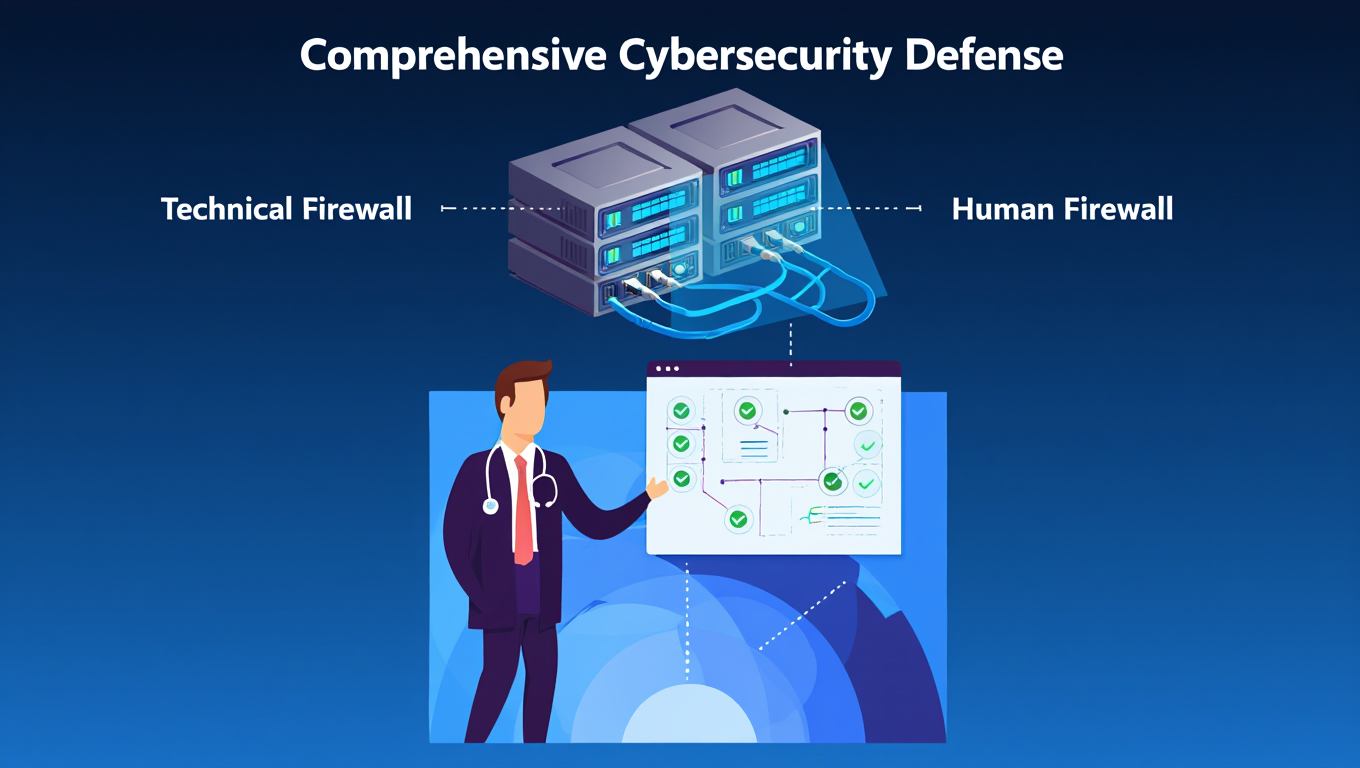
A human firewall strategy represents a fundamental shift from reactive to proactive cybersecurity defense. The core elements that make up an effective human firewall include security awareness training, behavioral security protocols, incident reporting mechanisms, and continuous security culture development. These components work together to create multiple layers of human-centric protection that complement traditional technical security measures.
Key Elements of Human Firewall Architecture
Security awareness education forms the foundation of any human firewall implementation. This involves comprehensive training programs that teach employees to recognize various types of cyber threats, understand the tactics used by cybercriminals, and develop the skills needed to respond appropriately. According to CISA research, organizations with robust security awareness programs can reduce cybersecurity risks by up to 70%.
Behavioral security protocols establish clear guidelines for how employees should handle sensitive information, use company systems, and respond to potential security incidents. These protocols create standardized procedures that help employees make consistent security decisions across different situations and contexts.
Threat detection and reporting systems provide employees with clear channels for reporting suspicious activities, potential security incidents, or concerns about cybersecurity threats. Keepnetlabs found that users who have undergone phishing awareness training are 30% less likely to click on malicious links and significantly more likely to report suspicious emails to IT teams.
Continuous security culture development ensures that cybersecurity awareness remains a priority throughout your organization. This involves regular reinforcement of security principles, ongoing training updates to address emerging threats, and recognition programs that reward employees for positive security behaviors.
The Human Element in Cybersecurity Defense
Employee vigilance serves as the most critical component of a human firewall. When employees remain alert and actively look for potential threats, they can identify and stop attacks that might bypass technical security controls. This vigilance extends beyond email security to include physical security, social engineering awareness, and general cybersecurity hygiene practices.
Security behavior modification focuses on changing employee habits and decision-making patterns to prioritize security considerations. This involves helping employees develop automatic responses to potential threats, creating security-conscious workflows, and establishing security-first thinking patterns that become second nature over time.
Collective security responsibility distributes cybersecurity accountability across your entire organization rather than concentrating it solely within IT or security teams. When every employee understands their role in maintaining organizational security, the human firewall becomes more robust and comprehensive.
Common Cyber Threats That Target the Human Layer
Phishing attacks represent the most prevalent threat facing human firewalls today. These sophisticated social engineering attacks use deceptive emails, messages, or websites to trick employees into revealing sensitive information, downloading malware, or providing unauthorized access to company systems. Research from IBM’s security reports shows that phishing attempts have become increasingly sophisticated, often targeting specific employees with personalized attacks known as spear phishing.
Social Engineering Attack Vectors
Pretexting attacks involve cybercriminals creating false scenarios or pretexts to manipulate employees into sharing sensitive information or providing system access. Attackers often pose as trusted authorities, IT support personnel, or business partners to establish credibility and lower the target’s guard against potential threats.
Baiting schemes lure employees with enticing offers, such as free software downloads, promotional materials, or physical devices like USB drives. These attacks exploit human curiosity and desire for benefits while delivering malware or creating unauthorized access points into organizational systems.
Vishing (voice phishing) attacks use phone calls to manipulate employees into revealing sensitive information or performing actions that compromise security. Attackers often impersonate company executives, IT support staff, or external service providers to create urgency and pressure employees into compliance.
Tailgating and physical security breaches target employees to gain unauthorized physical access to secure areas. These attacks exploit human courtesy and social norms, with attackers following authorized personnel through secure doors or convincing employees to provide physical access to restricted areas.
Technology-Enabled Human Attacks
Malware distribution through human interaction relies on employees to unknowingly install malicious software through email attachments, downloads, or infected removable media. These attacks combine technical threats with social engineering to bypass security controls and establish persistence within organizational networks.
Business Email Compromise (BEC) attacks target employees in finance, accounting, or executive roles to authorize fraudulent wire transfers or provide access to sensitive financial information. The FBI’s Internet Crime Complaint Center reports that BEC attacks resulted in over $2.9 billion in losses during 2023.
Ransomware attacks frequently begin with human error, such as clicking on malicious links or opening infected email attachments. Once deployed, ransomware encrypts organizational data and demands payment for decryption keys, causing significant operational disruption and financial loss. Understanding what ransomware is helps employees recognize and avoid these threats.
Credential theft and account takeover attacks target employee login credentials through various methods, including keyloggers, fake login pages, and password reuse exploitation. Compromised credentials provide attackers with legitimate access to organizational systems and data.
Building an Effective Human Firewall Strategy
Creating a robust human firewall requires a comprehensive approach that addresses multiple aspects of organizational security culture. You need to develop policies, procedures, and training programs that work together to create a security-conscious workforce capable of identifying and responding to various cyber threats.
Establishing Security Policies and Procedures
Risk assessment serves as the foundation for developing effective security policies. You should conduct thorough assessments to identify potential vulnerabilities, evaluate current security practices, and understand the specific threats facing your organization. This assessment should consider factors such as industry regulations, data sensitivity levels, and existing security infrastructure.
Policy development should focus on creating clear, actionable guidelines that employees can easily understand and follow. Your policies should cover acceptable use practices, data handling procedures, incident response protocols, and employee training requirements. These policies must be practical and enforceable while providing sufficient flexibility for normal business operations.
Communication and training ensure that all employees understand their security responsibilities and know how to implement security policies in their daily work. You should provide regular training sessions, create easily accessible policy documentation, and establish clear channels for employees to ask questions about security procedures.
Monitoring and enforcement mechanisms help ensure that security policies are consistently followed throughout your organization. This includes regular audits, incident tracking systems, and appropriate consequences for policy violations. However, enforcement should focus on education and improvement rather than punishment when possible.
Developing Security Awareness Training Programs
Comprehensive threat education provides employees with the knowledge they need to recognize and respond to various cyber threats. Your training programs should cover phishing recognition, social engineering awareness, password security, and safe computing practices. Training content should be regularly updated to address emerging threats and attack techniques.
Role-based training customizes security education based on employee responsibilities and risk exposure. Finance staff may need specialized training on wire fraud prevention, while IT personnel require more technical security training. Executive-level employees often face different threats and may need targeted training on spear phishing and CEO fraud.
Interactive learning methods increase engagement and retention compared to traditional lecture-style training. You should incorporate simulated phishing exercises, hands-on demonstrations, and scenario-based learning to help employees practice security skills in realistic situations. Gamification elements can make training more engaging and motivating.
Continuous reinforcement ensures that security awareness remains top-of-mind for employees throughout the year. Rather than limiting training to annual sessions, you should provide regular security updates, monthly tips, and ongoing reminders about security best practices. Frequent exposure helps reinforce learning and builds lasting security habits.
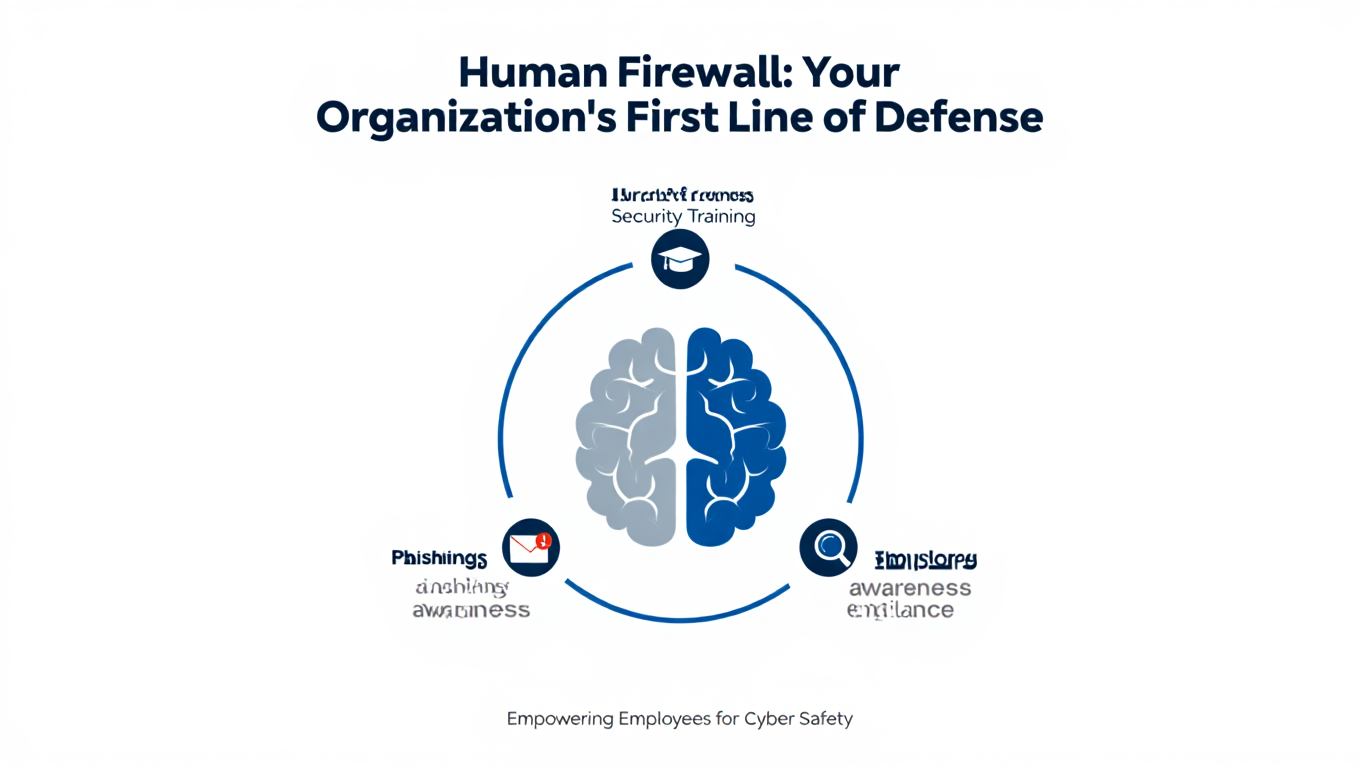
Creating a Security-Conscious Culture
Leadership involvement demonstrates organizational commitment to cybersecurity and sets the tone for security culture throughout your company. When executives actively participate in security training, follow security policies, and communicate about security priorities, employees understand that security is truly important to the organization.
Employee engagement programs encourage active participation in security initiatives rather than passive compliance with policies. You can implement security suggestion programs, recognize employees who report security incidents, and create security champion roles within different departments. Positive reinforcement is more effective than fear-based approaches.
Communication strategies should make security information accessible and relevant to all employees. Regular security newsletters, lunch-and-learn sessions, and security-themed events help maintain awareness and provide opportunities for employees to learn about emerging threats and security best practices.
Feedback mechanisms allow employees to contribute to security improvement efforts and report concerns without fear of punishment. Anonymous reporting systems, regular security surveys, and open communication channels help identify security gaps and improve overall security posture.
Measuring Human Firewall Effectiveness
Tracking the success of your human firewall initiatives requires careful measurement of both security outcomes and employee behavior changes. You need to establish baseline metrics, implement monitoring systems, and regularly evaluate the effectiveness of your security training and awareness programs.
Key Performance Indicators
Phishing simulation results provide direct measurement of employee vulnerability to social engineering attacks. You should track click rates, reporting rates, and time-to-report metrics for simulated phishing campaigns. According to KnowBe4’s security awareness research, organizations that conduct regular phishing simulations see significant improvement in employee security behavior over time.
Security incident metrics help measure the overall impact of your human firewall on organizational security. Track the number of security incidents, time to detection, incident severity levels, and costs associated with security breaches. Effective human firewalls should reduce both the frequency and impact of security incidents.
Training completion and engagement metrics indicate how well employees are participating in security education programs. Monitor training completion rates, quiz scores, feedback ratings, and participation in voluntary security activities. High engagement levels typically correlate with better security outcomes.
Behavioral change indicators measure how employee security practices improve over time. This includes password policy compliance, software update adoption rates, secure file sharing usage, and adherence to security procedures. Long-term behavioral improvements demonstrate the lasting impact of your human firewall efforts.
Return on Investment Analysis
Cost-benefit calculations help justify human firewall investments and identify areas for improvement. Calculate the costs of training programs, security tools, and staff time invested in security activities. Compare these costs to the potential losses from data breaches, ransomware attacks, and other security incidents.
Risk reduction measurement quantifies how your human firewall reduces organizational security risk. Work with cybersecurity professionals to estimate the probability and impact of various threats before and after implementing human firewall initiatives. This analysis helps demonstrate the value of security investments.
Productivity impact assessment ensures that security measures don’t unnecessarily hinder business operations. Monitor how security policies and procedures affect employee productivity, customer service, and business processes. Effective security measures should protect the organization while minimizing operational disruption.
Comparative analysis benchmarks your human firewall performance against industry standards and best practices. Research industry-specific security metrics, participate in security benchmarking studies, and compare your results to similar organizations. This helps identify areas where your human firewall could be strengthened.
Overcoming Human Firewall Challenges
Building an effective human firewall involves addressing various organizational, technical, and cultural challenges. You need to anticipate these obstacles and develop strategies to overcome resistance, resource limitations, and implementation difficulties.
Common Implementation Obstacles
Employee resistance often stems from concerns about productivity impact, privacy issues, or skepticism about security threats. Address these concerns through transparent communication about security risks, clear explanation of policy benefits, and demonstration of how security measures protect both the organization and individual employees. Avoid overly restrictive policies that create unnecessary friction.
Resource constraints may limit your ability to implement comprehensive human firewall programs. Prioritize security initiatives based on risk assessment results and available budget. Consider leveraging free security resources, partnering with cybersecurity organizations, and implementing cost-effective solutions.
Technical complexity can make security policies difficult to implement or maintain. Focus on solutions that integrate well with existing systems and don’t require extensive technical expertise to manage. Provide adequate technical support and training to help employees navigate security tools and procedures.
Cultural barriers may prevent effective security culture development in organizations with established practices or attitudes that conflict with security requirements. Address cultural challenges through gradual change, peer influence, and alignment of security goals with existing organizational values and priorities.
Solutions and Best Practices
Change management strategies help smooth the transition to more security-conscious practices. Develop implementation plans that introduce security changes gradually, provide adequate training and support, and address employee concerns proactively. Communicate the benefits of security improvements and celebrate early successes.
Executive sponsorship provides the authority and resources needed to implement effective human firewall programs. Secure visible support from senior leadership, include security goals in organizational objectives, and ensure that managers at all levels understand their role in supporting security culture development.
Continuous improvement processes help your human firewall adapt to changing threats and organizational needs. Regularly review and update security policies, incorporate lessons learned from security incidents, and stay current with emerging cybersecurity best practices and trends.
Vendor partnerships can provide specialized expertise and resources that supplement internal capabilities. Work with cybersecurity training providers, security consultants, and technology vendors who understand your industry and organizational needs. Leverage external expertise to enhance your internal human firewall capabilities.
Industry-Specific Human Firewall Considerations
Different industries face unique cybersecurity challenges that require tailored human firewall approaches. You should consider regulatory requirements, threat landscapes, and operational characteristics specific to your industry when developing human firewall strategies.
Healthcare Organizations
Healthcare organizations handle sensitive patient data protected by HIPAA and other regulations, making them attractive targets for cybercriminals. According to Verizon’s Data Breach Investigations Report, healthcare experiences some of the highest rates of malicious insider incidents, requiring specialized attention to employee access controls and monitoring.
Medical device security adds complexity to healthcare cybersecurity, as these devices often have limited security controls and may be difficult to patch or update. Healthcare human firewalls must address both traditional IT security and medical device security considerations.
Patient privacy requirements necessitate a careful balance between security measures and patient care needs. Security policies should protect patient information while allowing healthcare professionals to access necessary data for treatment purposes.
Emergency response procedures in healthcare settings require security measures that don’t interfere with critical patient care activities. Human firewall training should address how to maintain security during emergency situations while prioritizing patient safety.
Financial Services
Financial institutions face strict regulatory requirements such as PCI DSS, SOX, and banking regulations that mandate specific security controls and reporting requirements. Human firewall programs must ensure compliance with these regulations while maintaining operational efficiency.
High-value targets in financial services attract sophisticated attackers, including organized crime groups and nation-state actors. Employee training must address advanced threat techniques such as business email compromise, wire fraud, and targeted social engineering attacks.
Customer trust and reputation protection are critical in financial services, where security breaches can result in significant customer loss and regulatory penalties. Human firewall efforts should emphasize the importance of protecting customer data and maintaining institutional reputation.
Third-party risk management is particularly important in financial services, where organizations often work with numerous vendors, partners, and service providers. Human firewall training should address security considerations when working with external parties and sharing sensitive information.
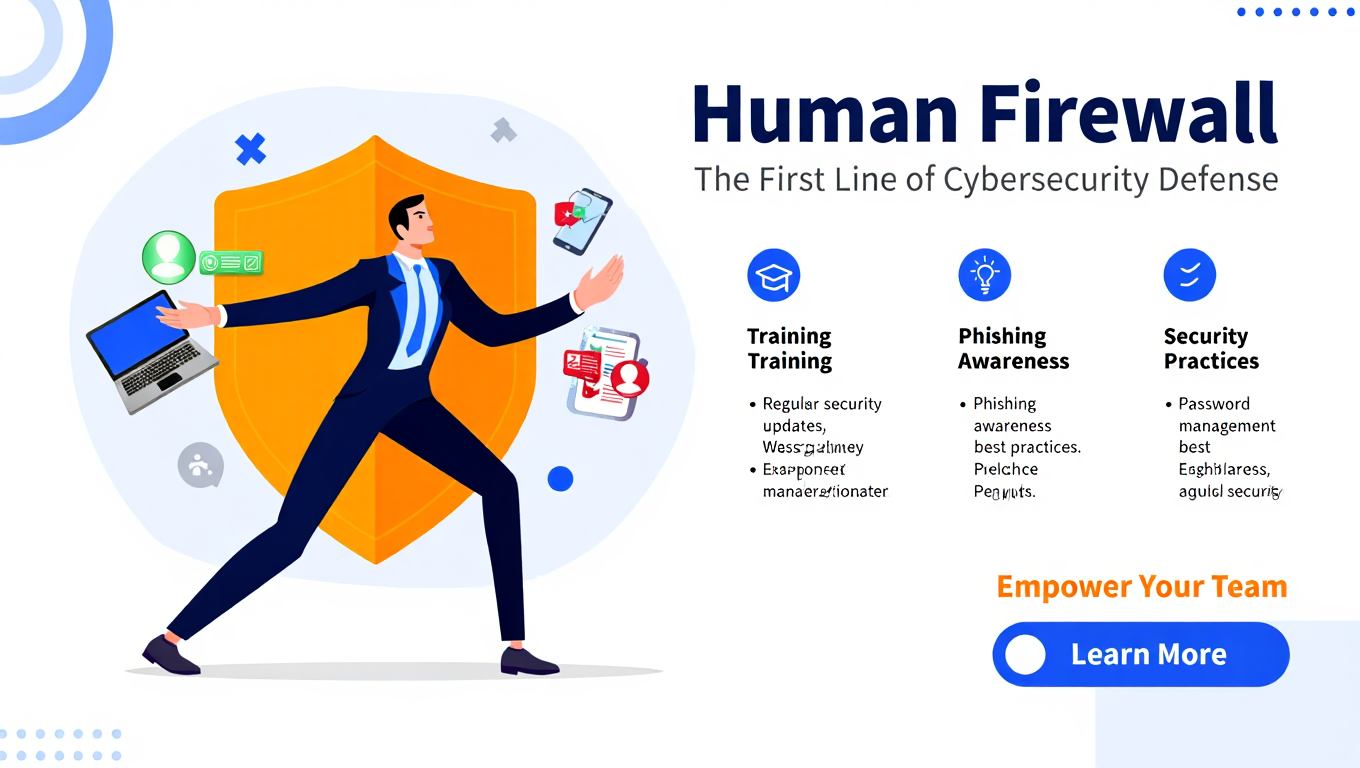
Small and Medium Businesses
Resource limitations in smaller organizations may prevent implementation of comprehensive cybersecurity programs. SMBs should focus on high-impact, low-cost human firewall initiatives such as basic security awareness training, password management, and phishing simulation exercises.
Generalist employees in smaller organizations often wear multiple hats and may not have specialized cybersecurity knowledge. Training programs should be practical, straightforward, and applicable to various job functions within the organization.
Limited IT support means that employees may need to take more responsibility for their own cybersecurity practices. Human firewall training should emphasize self-service security tools and procedures that don’t require extensive technical support.
Outsourced security services can help smaller organizations access cybersecurity expertise they couldn’t afford to maintain internally. Consider partnerships with managed security service providers or cybersecurity consultants who specialize in working with smaller organizations.
Technology Tools That Support Human Firewalls
While human firewalls focus on people and processes, various technology tools can enhance their effectiveness by providing training platforms, monitoring capabilities, and incident response support. You should select tools that complement your human firewall strategy without creating unnecessary complexity or cost.
Security Awareness Training Platforms
Learning management systems designed for cybersecurity training provide structured curricula, progress tracking, and reporting capabilities. These platforms can deliver consistent training content across your organization while allowing customization for different roles and departments.
Phishing simulation tools help test and improve employee responses to social engineering attacks. Regular simulated phishing campaigns can identify vulnerable employees, measure improvement over time, and provide targeted additional training for those who need it.
Gamification features in training platforms increase engagement and motivation by incorporating game-like elements such as points, badges, and leaderboards. These features can make security training more enjoyable and encourage healthy competition among employees.
Mobile learning capabilities allow employees to access security training on smartphones and tablets, making it easier to fit training into busy schedules and reach remote workers who may not have regular computer access.
Monitoring and Analytics Tools
User behavior analytics systems can identify unusual patterns that might indicate security threats or policy violations. These tools help security teams focus on genuine risks while reducing false alarms that can overwhelm monitoring capabilities.
Security information and event management (SIEM) systems collect and analyze security data from across your organization, helping identify trends and patterns that might indicate security incidents or training needs.
Endpoint detection and response tools provide visibility into what’s happening on individual computers and mobile devices, helping identify security incidents and measure the effectiveness of security controls. Understanding endpoint protection helps organizations select appropriate tools for their environment.
Dashboard and reporting tools help communicate security metrics and trends to different audiences within your organization. Executive dashboards might focus on high-level risk indicators, while operational dashboards provide detailed metrics for security teams.
The Future of Human Firewalls
The landscape of human firewall strategies continues to evolve as organizations face new threats and adopt emerging technologies. You need to stay informed about trends and developments that could impact your human firewall effectiveness.
Emerging Threats and Challenges
Artificial intelligence and machine learning technologies are being used by both defenders and attackers to enhance their capabilities. Cybercriminals are using AI to create more convincing phishing emails, deepfake videos, and automated social engineering attacks. According to Cybersecurity Ventures, cybercrime damages are expected to reach $10.5 trillion annually by 2025.
Remote and hybrid work environments create new security challenges that require adapted human firewall strategies. Employees working from home may face different threats and have limited access to IT support, requiring more self-reliant security practices.
Internet of Things (IoT) devices and smart technologies introduce new attack surfaces that employees need to understand and protect. Human firewall training must expand to cover home network security, device management, and IoT-related risks.
Social media and digital communication platforms create new opportunities for social engineering attacks and information gathering. Employees need training on privacy settings, information sharing practices, and recognition of social media-based threats.
Adaptive Human Firewall Strategies
Personalized training approaches use data analytics and AI to customize security education based on individual employee risk profiles, learning styles, and job requirements. This targeted approach can improve training effectiveness and engagement.
Real-time threat intelligence integration helps human firewall programs stay current with the latest attack techniques and threat actors. Organizations can use threat intelligence feeds to update training content and adjust security policies based on current threat landscapes.
Behavioral analytics and predictive modeling can identify employees who may be at higher risk for security incidents, allowing for targeted intervention and additional training. This proactive approach helps prevent incidents before they occur.
Cross-functional collaboration between security, HR, legal, and other departments ensures that human firewall initiatives align with broader organizational goals and compliance requirements. This integrated approach creates more comprehensive and sustainable security programs.
FAQ: Human Firewall Questions and Answers
What is the difference between a human firewall and traditional security awareness training?
No. A human firewall goes beyond basic awareness training to create a comprehensive security culture that empowers employees to actively defend against threats. Traditional training focuses on knowledge transfer, while human firewalls emphasize behavioral change and proactive threat detection.
Can a human firewall prevent all cyber attacks?
No. No security measure provides 100% protection, including human firewalls. However, an effective human firewall significantly reduces security risks and provides a critical layer of defense that complements technical security controls.
How long does it take to implement an effective human firewall?
No quick implementation exists. Building an effective human firewall typically takes 6-12 months to establish basic capabilities and 2-3 years to develop a mature security culture with measurable behavioral improvements.
Do small businesses need human firewalls?
Yes. Small businesses are often targeted by cybercriminals specifically because they typically have fewer security resources and controls. A human firewall can be particularly valuable for SMBs as a cost-effective security measure.
How often should human firewall training be conducted?
No annual training is sufficient. Effective human firewall programs provide continuous education through monthly updates, quarterly training sessions, and ongoing phishing simulations rather than relying on annual training events.
What is the ROI of investing in a human firewall?
Yes, positive ROI is achievable. Organizations typically see returns through reduced security incidents, lower breach costs, improved regulatory compliance, and decreased insurance premiums. Studies show security awareness training can reduce cyber risks by up to 70%.
Can remote employees be effectively included in human firewall programs?
Yes. Remote employees can participate fully through virtual training platforms, online collaboration tools, and cloud-based security awareness systems. However, programs may need adaptation to address remote work-specific risks.
How do you measure human firewall success?
Yes, success is measurable. Key metrics include phishing simulation results, security incident frequency and severity, training completion rates, employee engagement levels, and behavioral change indicators over time.
Should human firewall training be mandatory?
Yes. Security awareness training should be mandatory for all employees due to the critical role everyone plays in organizational security. However, the approach should emphasize positive engagement rather than compliance-only mindset.
What happens if employees resist human firewall initiatives?
No, resistance doesn’t have to derail programs. Address resistance through clear communication about benefits, leadership support, gradual implementation, and addressing specific employee concerns about productivity or privacy impacts.
Conclusion
Building an effective human firewall represents one of the most important investments organizations can make in their cybersecurity strategy. With 55% of insider incidents stemming from employee negligence and cyber attacks becoming increasingly sophisticated, the human element of security has never been more critical.
Your human firewall success depends on creating a comprehensive program that combines thorough risk assessment, targeted training, clear policies, and continuous improvement. The most effective human firewalls transform security from a compliance requirement into a shared organizational value where every employee actively contributes to threat detection and prevention.
Remember that building a human firewall is not a one-time project but an ongoing process that evolves with your organization and the threat landscape. Start with basic awareness training and phishing simulations, then gradually expand to include role-specific training, advanced threat education, and sophisticated behavioral analytics.
The investment in human firewall capabilities pays dividends through reduced security incidents, improved regulatory compliance, enhanced customer trust, and stronger organizational resilience. Organizations that successfully implement human firewalls not only protect themselves more effectively but also create competitive advantages through superior risk management and operational security.
Take action today by assessing your current security culture, identifying gaps in employee awareness, and developing a roadmap for human firewall implementation. Your employees are ready to become your strongest security asset – give them the knowledge, tools, and support they need to protect your organization from cyber threats.
You May Also Like
 Cyber Security
Can Ransomware Infect iCloud? What Mac and iPhone Users Need to Know
 Data Security & Privacy
Is a Password Manager Safe? How to Use One Securely
 WordPress
12 Best Cheap SSL Certificate Providers To Secure Your Website
 Data Security & Privacy
Is Password Protection the Same as Encryption? Differences in Data Security
 Data Security & Privacy
What Is End-to-End Encryption? Your Complete Guide to Secure Communication
 Data Security & Privacy
What Is a Cloud Security Scanner for AWS, Azure, and Google Cloud?
 Cyber Security
Is Temu Legit or a Scam? The Complete Truth You Need to Know
 VPN
VPNHow to Block Ads on FirstRowSports: A Step-by-Step Guide
 Proxies