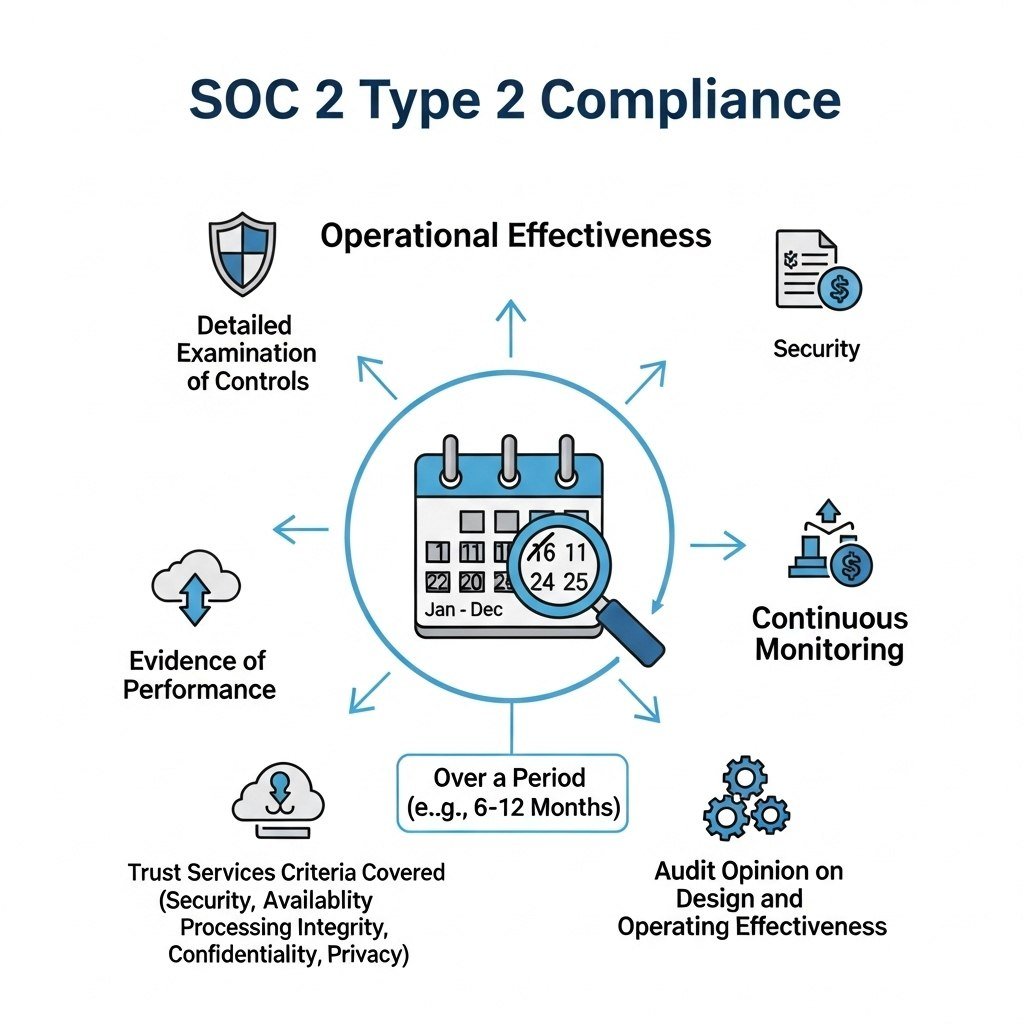
SOC 2 Type 2 compliance is a security audit that checks how well companies protect customer data over time. SOC stands for Service Organization Control. Type 2 means the audit examines security practices for at least six months. This audit helps businesses prove they keep customer information safe.
SOC 2 Type 2 compliance focuses on five key areas called trust service criteria. These include security, availability, processing integrity, confidentiality, and privacy. Companies must show they follow proper security controls consistently. The audit provides detailed reports about data protection practices.
Many businesses need SOC 2 Type 2 compliance to work with larger companies. Clients often require this certification before sharing sensitive data. The compliance process involves extensive documentation and third-party auditing. It demonstrates a company’s commitment to cybersecurity best practices and data protection standards.
Understanding SOC 2 Compliance Basics
SOC 2 compliance comes from the American Institute of Certified Public Accountants (AICPA). They created these standards to help service organizations prove data security. The framework applies to companies that store, process, or transmit customer data in the cloud.
The Difference Between Type 1 and Type 2
SOC 2 has two main types of audits. Type 1 examines security controls at a specific point in time. It’s like taking a snapshot of your security measures. Type 2 goes much deeper by testing controls over an extended period.
Type 2 audits run for at least six months but often last a full year. Auditors test security controls multiple times during this period. They look for consistent implementation of security policies. This ongoing testing proves that companies maintain security standards regularly.
Who Needs SOC 2 Type 2 Compliance?
Technology service providers typically need SOC 2 Type 2 compliance. This includes cloud hosting companies, software-as-a-service providers, and data centers. Healthcare companies handling patient data often require this certification. Financial services firms also pursue SOC 2 compliance for client trust.
Many large enterprises require SOC 2 Type 2 reports from their vendors. Government contracts often mandate this compliance level. Companies processing credit card information may need it alongside other certifications. Privacy engineering principles often align with SOC 2 requirements.
The Five Trust Service Criteria
SOC 2 compliance centers around five trust service criteria. Companies can choose which criteria apply to their business model. Most organizations focus on security as the primary requirement. Additional criteria depend on specific business needs and client requirements.
Security Criteria
Security forms the foundation of all SOC 2 audits. This criterion covers physical and logical access controls. Companies must protect systems against unauthorized access. Network security measures prevent data breaches and cyber attacks.
Security controls include employee background checks and access management systems. Companies need incident response procedures for security breaches. Regular vulnerability assessments help identify potential weaknesses. Endpoint protection often plays a crucial role in meeting security requirements.
Availability Criteria
Availability ensures systems remain operational when needed. Companies must maintain agreed-upon uptime levels. This criterion covers disaster recovery and business continuity planning. Regular system monitoring prevents unexpected downtime.
Backup systems and redundant infrastructure support availability requirements. Companies need procedures for planned maintenance windows. Monitoring applications helps track system performance and availability metrics.
Processing Integrity Criteria
Processing integrity ensures systems work as designed. Data processing must be complete, accurate, and timely. Companies need controls to prevent data corruption or loss. System changes require proper authorization and testing.
Quality assurance processes verify data accuracy throughout processing workflows. Error handling procedures address system failures appropriately. Regular system testing confirms processing integrity remains intact.
Confidentiality Criteria
Confidentiality protects sensitive information from unauthorized disclosure. Companies must classify data based on sensitivity levels. Access controls limit who can view confidential information. Encryption protects data both at rest and in transit.
Data handling procedures specify how employees manage confidential information. Non-disclosure agreements protect sensitive business data. Regular training ensures employees understand confidentiality requirements.
Privacy Criteria
Privacy criteria address personal information collection and use. Companies must have privacy policies explaining data practices. Individuals should control how their personal data gets used. Data retention policies specify how long companies keep personal information.
Privacy controls include consent management and data subject rights. Companies need procedures for handling privacy requests. Regular privacy assessments ensure ongoing compliance with privacy regulations.
The SOC 2 Type 2 Audit Process
The SOC 2 Type 2 audit process typically takes 12 to 18 months from start to finish. Companies spend several months preparing before the actual audit begins. The audit period itself lasts at least six months. Additional time is needed for audit completion and report generation.
Pre-Audit Preparation
Companies must document their security controls before the audit starts. This includes creating policies, procedures, and control documentation. Risk assessments identify potential security vulnerabilities. Gap analyses compare current practices to SOC 2 requirements.
Employee training ensures staff understand new security procedures. Technical controls may need implementation or improvement. Configuration management tools help maintain consistent system configurations.
Audit Execution Period
The audit execution period runs for at least six months. Auditors test security controls multiple times during this period. They review documentation and interview key personnel. System testing verifies that controls work as documented.
Auditors examine logs, reports, and other evidence of control operation. They may request additional documentation or clarification. Regular communication helps address questions during the audit period.
Testing and Evidence Collection
Auditors perform various tests to verify control effectiveness. They review access logs to confirm proper authorization. Network security testing validates firewall configurations. Vulnerability scans check for security weaknesses.
Document reviews verify policies match actual practices. Employee interviews confirm understanding of security procedures. System configurations get compared to documented standards.
Report Generation
The final SOC 2 Type 2 report details audit findings. It describes the company’s control environment and testing results. Any control deficiencies get documented with recommendations. The report provides assurance about data protection practices.
Clean reports show no significant control deficiencies. Reports with exceptions describe areas needing improvement. Management responses explain remediation plans for identified issues.
Benefits of SOC 2 Type 2 Compliance
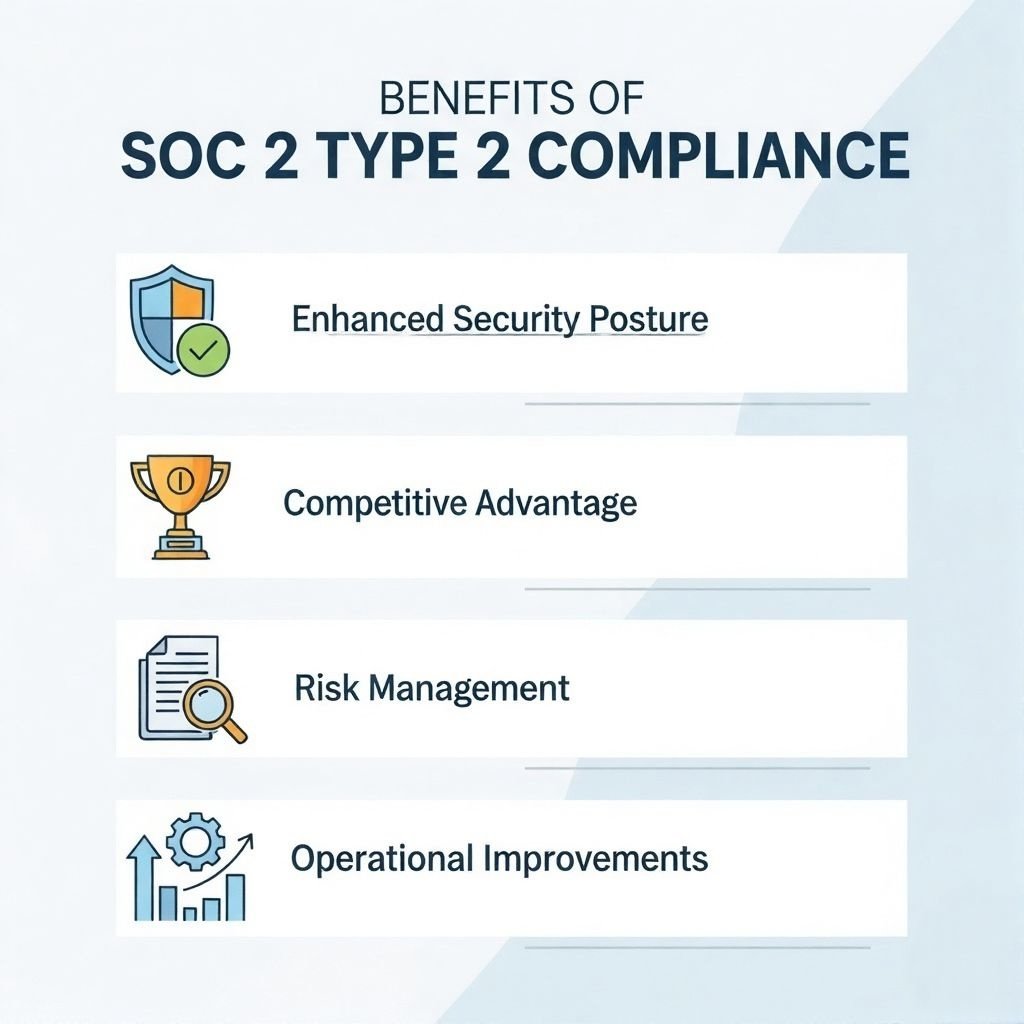
SOC 2 Type 2 compliance provides numerous business benefits beyond regulatory requirements. Companies often see improved security postures and reduced breach risks. Client trust increases when businesses demonstrate security commitments.
Enhanced Security Posture
The compliance process forces companies to examine their security practices closely. Documentation requirements reveal gaps in existing controls. Regular testing ensures security measures work properly. Continuous monitoring improves overall security effectiveness.
Companies often discover vulnerabilities during the preparation process. Fixing these issues strengthens security before potential attacks. Ransomware protection becomes more robust through comprehensive security controls.
Competitive Advantage
SOC 2 Type 2 compliance differentiates companies from competitors without certification. Many clients require this compliance before considering vendors. The certification opens doors to enterprise-level opportunities. Government contracts often mandate SOC 2 compliance.
Sales cycles may shorten when prospects see existing compliance. Security questionnaires become easier to complete. Compliance demonstrates professionalism and commitment to security.
Risk Management
The audit process identifies and documents business risks. Companies develop better risk management procedures. Insurance premiums may decrease with demonstrated security controls. Legal liability reduces when proper safeguards are in place.
Incident response procedures improve through the compliance process. Employee awareness of security risks increases significantly. Regular assessments help maintain strong risk management practices.
Operational Improvements
SOC 2 compliance often drives operational efficiency improvements. Documented procedures reduce confusion and errors. Standardized processes improve consistency across teams. Regular monitoring provides better visibility into system performance.
Change management procedures prevent unauthorized system modifications. Access controls reduce insider threat risks. Software development best practices often emerge from compliance efforts.
Common Challenges in SOC 2 Type 2 Implementation
Many companies face similar challenges when pursuing SOC 2 Type 2 compliance. Resource constraints often limit preparation efforts. Technical complexity can overwhelm smaller organizations. Documentation requirements consume significant time and effort.
Resource Requirements
SOC 2 compliance requires substantial human and financial resources. Companies need dedicated project managers to coordinate efforts. Technical staff must implement and maintain security controls. Documentation creation demands significant time investment.
Audit costs include both internal effort and external auditor fees. Ongoing maintenance requires continued resource allocation. Project management tools help track compliance activities and deadlines.
Technical Complexity
Modern IT environments present complex security challenges. Cloud infrastructure adds layers of complexity to security controls. Multiple systems and applications require coordinated security measures. Integration between different tools can create security gaps.
Legacy systems may lack modern security features. Network segmentation requires careful planning and implementation. Monitoring tools must cover all system components effectively.
Documentation Burden
SOC 2 compliance requires extensive documentation of policies and procedures. Control descriptions must be detailed and accurate. Evidence collection involves numerous reports and logs. Document management becomes a significant challenge.
Version control ensures documentation stays current with actual practices. Regular updates reflect changes in systems or procedures. Training materials help employees understand documented requirements.
Ongoing Maintenance
SOC 2 compliance is not a one-time achievement. Companies must maintain controls continuously after certification. Annual audits verify continued compliance. Control changes require careful documentation and testing.
Employee turnover can disrupt compliance efforts. New staff need training on security procedures. Regular assessments ensure controls remain effective over time.
SOC 2 Type 2 vs Other Compliance Frameworks
SOC 2 Type 2 differs from other popular compliance frameworks in scope and focus. Understanding these differences helps companies choose appropriate certifications. Some organizations pursue multiple frameworks for comprehensive coverage.
SOC 2 vs ISO 27001
ISO 27001 provides a broader information security management framework. It covers all aspects of information security management. SOC 2 focuses specifically on service organizations and customer data protection.
ISO 27001 requires certification from accredited bodies. SOC 2 audits come from licensed CPAs. Both frameworks emphasize continuous improvement and risk management.
SOC 2 vs PCI DSS
PCI DSS specifically addresses payment card data security. It applies to organizations processing credit card transactions. SOC 2 has broader applicability across different types of sensitive data.
PCI DSS has more prescriptive technical requirements. SOC 2 allows more flexibility in control implementation. Companies handling payment cards often need both certifications.
SOC 2 vs HIPAA
HIPAA protects healthcare information in the United States. It applies to healthcare providers and their business associates. SOC 2 can support HIPAA compliance but serves different purposes.
HIPAA focuses on specific privacy and security requirements. SOC 2 provides broader assurance about data protection practices. Healthcare organizations often pursue both for comprehensive coverage.
Preparing for Your SOC 2 Type 2 Audit
Successful SOC 2 Type 2 preparation requires careful planning and execution. Companies should start the process well before their target audit date. Early preparation prevents last-minute rushing and potential control failures.
Conducting a Readiness Assessment
A readiness assessment evaluates current security controls against SOC 2 requirements. This assessment identifies gaps needing attention before the audit. External consultants can provide objective evaluations of readiness levels.
The assessment covers all applicable trust service criteria. It examines both technical controls and operational procedures. Results help prioritize improvement efforts and resource allocation.
Implementing Required Controls
Gap analysis results guide control implementation priorities. Technical controls may require new software or hardware purchases. Operational controls need documented procedures and employee training.
Implementation should happen gradually to ensure proper testing. Each control needs validation before relying on it for compliance. Automation in software testing can help verify control effectiveness.
Documentation Development
Comprehensive documentation forms the foundation of SOC 2 compliance. Policies describe high-level security requirements and objectives. Procedures provide step-by-step instructions for implementing controls. Work instructions give detailed guidance for specific tasks.
Documentation must be clear, accurate, and regularly updated. Version control tracks changes and ensures current versions are used. Training materials help employees understand their security responsibilities.
Employee Training and Awareness
Employee training ensures consistent control implementation across the organization. Security awareness programs help staff recognize and report potential threats. Role-specific training addresses individual job responsibilities.
Regular refresher training keeps security knowledge current. New employee orientation includes security training requirements. User acceptance testing principles apply to verifying training effectiveness.
Maintaining SOC 2 Type 2 Compliance
Achieving SOC 2 Type 2 compliance is just the beginning of an ongoing commitment. Companies must maintain controls continuously to preserve their compliance status. Annual audits verify continued adherence to requirements.
Continuous Monitoring
Continuous monitoring systems track control performance in real-time. Automated tools generate alerts for potential control failures. Regular reports provide visibility into compliance status across all areas.
Monitoring covers both technical and operational controls. Dashboard views summarize key compliance metrics. Exception reports highlight areas needing immediate attention.
Change Management
Formal change management processes ensure modifications don’t compromise security controls. All system changes require approval and documentation. Testing verifies that changes don’t break existing controls.
Change records provide audit trails for compliance purposes. Rollback procedures address changes that cause problems. Communication processes keep relevant staff informed of changes.
Incident Response
Incident response procedures address security breaches and control failures. Rapid response minimizes damage from security incidents. Documentation requirements support compliance reporting needs.
Lessons learned from incidents improve future security measures. Regular drills test incident response effectiveness. Cybersecurity incident handling becomes more systematic through compliance processes.
Annual Assessments
Annual SOC 2 audits verify continued compliance with requirements. Companies must demonstrate ongoing control effectiveness. Any control changes need proper documentation and testing.
Preparation for annual audits should be ongoing rather than last-minute. Regular self-assessments identify potential issues early. Corrective actions address problems before they become audit findings.
Cost Considerations for SOC 2 Type 2
SOC 2 Type 2 compliance involves significant costs that companies must budget carefully. Initial implementation costs are typically higher than ongoing maintenance expenses. Understanding these costs helps organizations plan appropriately.
Initial Implementation Costs
Initial costs include consulting fees, staff time, and technology investments. External consultants may charge $50,000 to $200,000 for readiness assessments and preparation support. Internal staff time can represent substantial opportunity costs.
Technology investments may include security tools, monitoring systems, and documentation platforms. Training costs cover both external programs and internal time. Audit fees typically range from $25,000 to $100,000 depending on organization size and complexity.
Ongoing Maintenance Costs
Annual maintenance costs are typically 30-50% of initial implementation costs. These include ongoing audit fees, staff time, and system maintenance. Regular training and awareness programs require continued investment.
Technology refresh cycles may require periodic upgrades. Staff turnover necessitates training replacements. Continuous improvement efforts drive additional investments in security measures.
Return on Investment
SOC 2 compliance often pays for itself through increased business opportunities. Enterprise clients may represent significantly higher revenue than smaller customers. Reduced security incident costs offset compliance investments.
Insurance premium reductions may provide ongoing savings. Operational efficiency improvements can reduce long-term costs. Azure cloud management benefits may include compliance support features.
Future of SOC 2 Compliance
SOC 2 compliance continues evolving as technology and threats change. Cloud computing and remote work create new compliance challenges. Artificial intelligence and automation may change how controls work.
Emerging Technologies
Cloud-native organizations face unique SOC 2 challenges. Container security and serverless computing require new control approaches. Best cloud hosting alternatives must consider compliance requirements.
Artificial intelligence in security tools may automate some compliance activities. Machine learning could improve threat detection and response capabilities. Blockchain technology might provide new ways to verify control effectiveness.
Regulatory Changes
Data protection regulations continue evolving worldwide. SOC 2 may need updates to address new privacy requirements. International expansion requires understanding different compliance frameworks.
Industry-specific requirements may influence SOC 2 evolution. Healthcare and financial services drive specialized compliance needs. Government requirements continue expanding for critical infrastructure protection.
Market Trends
More organizations pursue SOC 2 compliance as security becomes a competitive advantage. Smaller companies need compliance to compete for enterprise business. Automation tools make compliance more accessible to resource-constrained organizations.
Industry specialization may create sector-specific SOC 2 variants. International harmonization could simplify multi-jurisdictional compliance. Continuous auditing may replace annual assessment cycles.
Frequently Asked Questions
How long does SOC 2 Type 2 compliance take to achieve?
The process typically takes 12-18 months from start to finish. This includes 3-6 months of preparation, 6-12 months of audit period, and additional time for report completion. Companies with stronger existing controls may complete the process faster.
Can small companies achieve SOC 2 Type 2 compliance?
Yes, small companies can achieve SOC 2 Type 2 compliance with proper planning and resources. While challenging, many small organizations successfully complete the process. Cloud-based tools and consulting support make compliance more accessible to smaller businesses.
Is SOC 2 Type 2 compliance required by law?
No, SOC 2 Type 2 is not legally required but may be contractually mandated. Many large enterprises require SOC 2 reports from their vendors. Government contracts often specify SOC 2 compliance as a requirement.
How much does SOC 2 Type 2 compliance cost?
Initial costs typically range from $100,000 to $500,000 depending on organization size and complexity. This includes consulting fees, internal effort, technology investments, and audit costs. Ongoing annual costs are usually 30-50% of initial implementation.
What happens if a company fails the SOC 2 Type 2 audit?
Companies receive reports with exceptions describing control deficiencies. They can remediate issues and undergo additional testing. Some clients may accept reports with minor exceptions. Major deficiencies may require starting over with improved controls.
Do all five trust service criteria apply to every organization?
No, companies choose which criteria apply to their business model. Security is mandatory for all SOC 2 audits. Additional criteria depend on the services provided and client’s requirements. Most organizations include availability alongside security.
How often must companies renew SOC 2 Type 2 compliance?
Annual audits are standard practice for maintaining SOC 2 Type 2 compliance. Some organizations choose longer audit periods, but most clients expect annual reports. Continuous compliance maintenance is required between audits.
Can SOC 2 Type 2 compliance help with other certifications?
Yes, SOC 2 controls often support other compliance frameworks. Many security controls overlap with ISO 27001, PCI DSS, and HIPAA requirements. However, additional work is usually needed for multiple certifications.
Conclusion
SOC 2 Type 2 compliance represents a significant commitment to data security and customer protection. The process requires substantial resources and ongoing dedication. However, the benefits often justify the investment through increased business opportunities and improved security postures.
Companies considering SOC 2 Type 2 should start planning well in advance. Early preparation prevents rushed implementation and potential control failures. Software development lifecycle planning principles apply to compliance project management.
The compliance landscape continues evolving as technology and threats change. Organizations must adapt their approaches while maintaining core security principles. Success requires balancing compliance requirements with business objectives and operational efficiency.
For most service organizations handling sensitive customer data, SOC 2 Type 2 compliance has become essential for competitive positioning. The investment in proper controls and processes pays dividends through enhanced security, customer trust, and business growth opportunities.
You May Also Like
 Cyber Security
Can Ransomware Infect iCloud? What Mac and iPhone Users Need to Know
 Data Security & Privacy
Two-Factor Authentication (2FA): How It Works, Which Method to Use, and How to Stay Safe
 Data Security & Privacy
Is a Password Manager Safe? How to Use One Securely
 Data Security & Privacy
19 Best Email Service Providers for Personal and Business Use
 WordPress
12 Best Cheap SSL Certificate Providers To Secure Your Website
 Data Security & Privacy
Is Password Protection the Same as Encryption? Differences in Data Security
 Data Security & Privacy
How Your Digital Footprint Can Make or Break Your Career Opportunities
 Data Security & Privacy
What Is End-to-End Encryption? Your Complete Guide to Secure Communication
 Data Security & Privacy